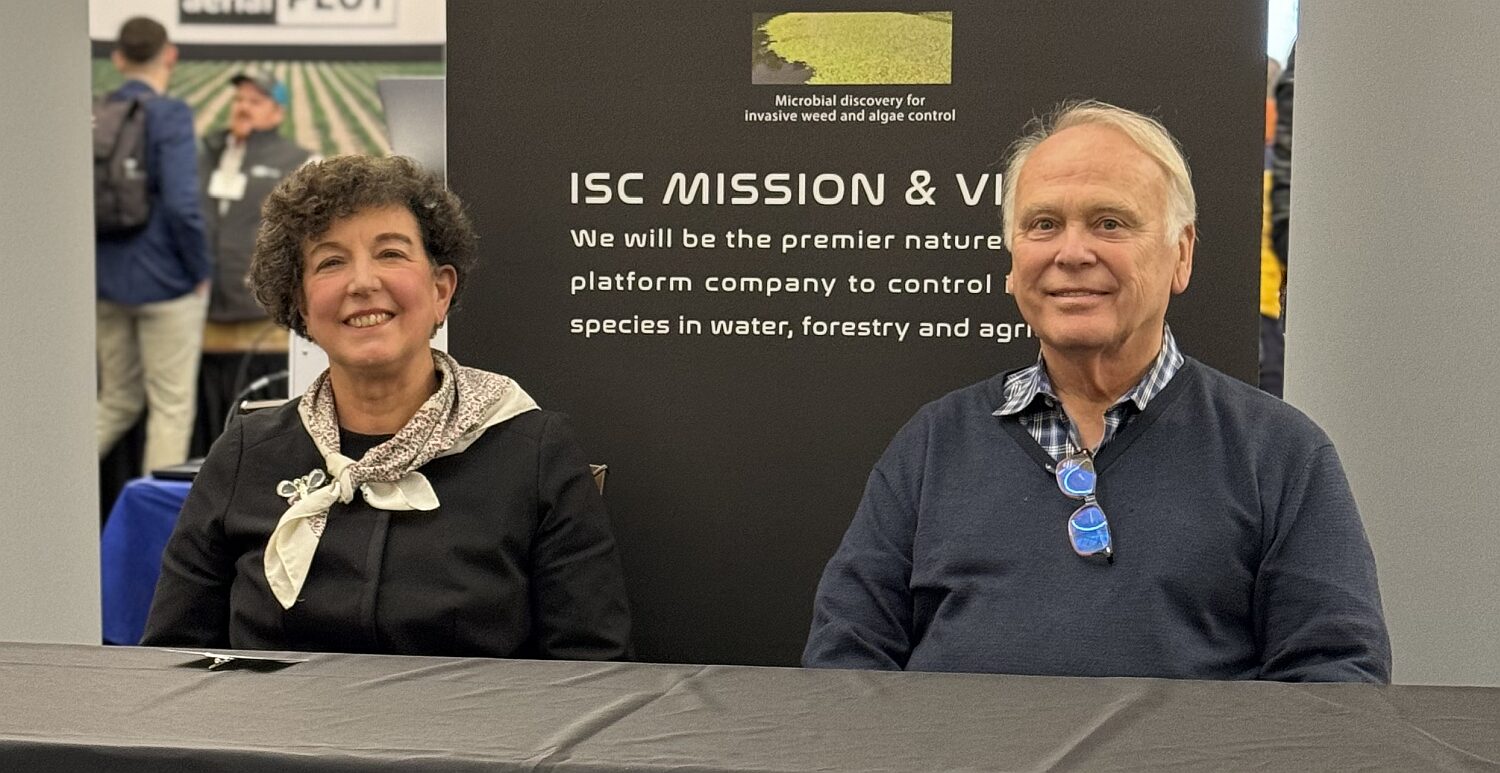
Invasive Species Corporation (ISC) is developing a new class of bioherbicides harnessing metabolite mixtures with broad-spectrum activity against grasses and broadleaf weeds, including glyphosate-resistant species, says CEO Pam Marrone.
Rising resistance and mounting regulatory and legal pressure are intensifying demand for herbicides that work in fundamentally different ways, says Marrone, who is going after new modes of action distinct from conventional chemistries.
“We’re going after some unknown sites, usually novel receptors on the plant,” Marrone tells AgFunderNews. “And that’s by design, because we want something that’s going to work on resistant weeds.”
The company is currently advancing two lead microbial candidates with a focus on replacing or complementing products such as pre-emergent atrazine—a chemical herbicide often used to control weeds before they emerge—and post-emergent glyphosate, which is used on visible weeds.
These candidates have already been tested in greenhouses and small outdoor plots in California and are now entering a more extensive field trial program across the Midwest and Southeast in crops including corn and soybeans, with potential expansion into cotton and tree crops.
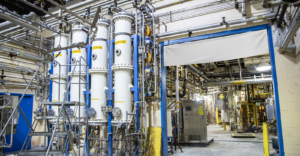
Progress has been partly constrained by the need to scale up production, but the company is now running pilot fermentations at facilities in California, working with a contract manufacturer for larger volumes, and has brought in a fermentation specialist to optimize output.
A cocktail of metabolites
Founded in 2022 by Marrone and Jim Boyd to tackle invasive species damaging everything from crops to freshwater fisheries, ISC has already developed biological controls for invasive aquatic species such as mussels and certain fish, says Marrone.
“But then everyone said, ‘Pam, your life’s dream is to do herbicides. So why aren’t you working on weeds?’ So we added that to the platform.”
The Holy Grail: long-lasting, broad-spectrum effects for pre- and post-emergent application
According to Marrone, many bioherbicides currently deploy “burn-down” products that work rapidly but don’t provide long-lasting control: “They are not systemic, so they don’t go down to the roots so you have to reapply over a period of time with high use rates.”
Other bioherbicides, meanwhile, rely on highly targeted approaches focused on single compounds that may not provide broad-spectrum control such as deploying RNAi to disrupt specific genes in specific pests.
ISC’s goal is to develop products featuring novel modes of action that in all other respects behave more like conventional herbicides.
The Holy Grail, says Marrone, is a product that is long-lasting and suitable for pre- and post-emergent application, with broad spectrum effects to address the growing challenge of multi-resistant weeds in major row crops.
How the platform works
Rather than genetically engineering microbes to produce specific metabolites, ISC screens naturally occurring microbes and uses AI to mine and sequence their genomes.
The platform uses algorithm-driven screening to identify naturally occurring microbes that produce herbicidal compounds, and delivers a far higher hit rate for herbicidal activity versus what was possible through earlier, less targeted screening.
The goal is to develop products featuring cocktails of metabolites, typically with one to three dominant active compounds that may be supported by weaker or synergistic ones that are not characterized or well understood.
“From my experience,” says Marrone, “you generally don’t know what you’re going to find. However, now we can do the bio-synthetic gene clusters analysis and metabolomics up front, we have an idea of what the microbes are making, and that informs which microbes to pick and to move forward with.
“We find the most important ones [metabolites] and develop analytical methods to detect and track those in fermentation and then optimize the fermentation [to produce the metabolites in higher quantities].”
Fermentation broth used as is, without extracting and purifying metabolites
As ISC is developing broad-spectrum herbicides, ISC might need a mixture of a couple of different microbes to get full spectrum effects, says Marrone. “We have tested 14 of our top microbes against eight of the most important weeds, grasses and broad leaves. If you want [to kill] this group of weeds pre emergence, and you want [to kill] this group of weeds post emergence, we have the entire menu.”
Rather than extracting the metabolites from the microbes, the fermentation broth is harvested as is, minimizing downstream processing to keep costs competitive with chemical herbicides, she says.
“If we require a little more concentration, then it would be a filtration [step] to keep the metabolites in there, but as we optimize, we likely won’t need to do that. It’s more likely that we can just use the use the whole optimized cell broth as is.”
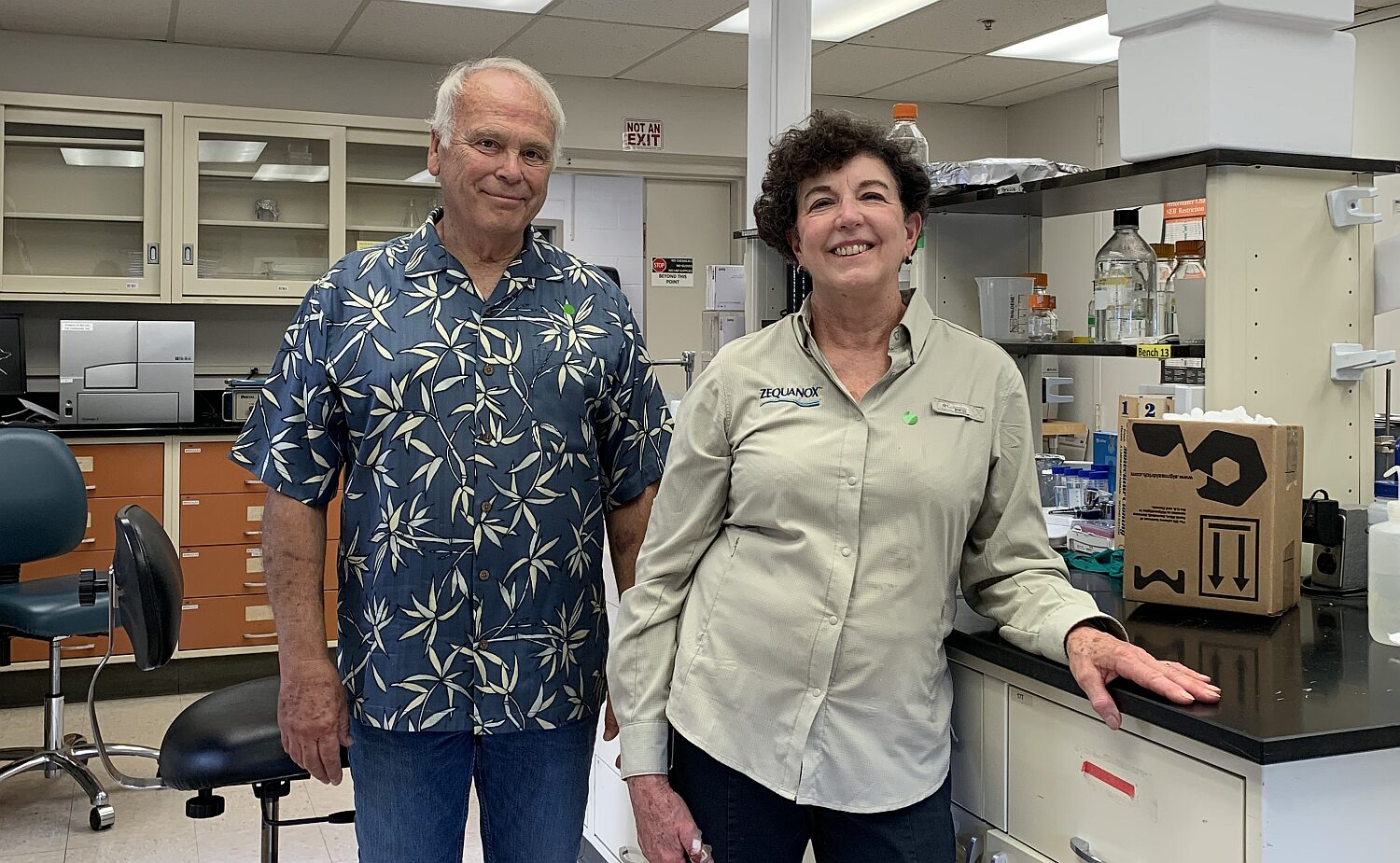
Optimizing fermentation
Notably, ISC is prioritizing broad-spectrum, pre- and post-emergent activity (weedkillers applied before and after weeds emerge), which Marrone says is unusual.
Commercial viability hinges on achieving broad spectrum effects at low use rates and low cost, with the expectation that optimizing the fermentation via process improvements guided by machine learning can increase metabolite yields over time, she claims.
“Say you have a recipe that you know works. There are now algorithms we can apply to that process, and it will then tell us what our next five experiments should be to optimize those metabolites.”
There are multiple levers you can pull to optimize fermentation, she says. “You can change the media, aeration, temperature, the ratio of carbon, nitrogen, oxygen… all these things. And transcriptomics tells you exactly when the microbe is producing the metabolites. And then you can see what the microbe will need nutritionally to increase the level.
“And that’s really powerful. We didn’t have those tools before. We worked out the methodology for being able to track the genes that are expressing the production of the metabolites.”
Regulatory pathway
As for the regulatory pathway, says Marrone, “If we wanted to put [the target metabolites] into a different host [via genetic engineering] it’s a different regulatory pathway because then it becomes a biochemical or even a chemical, depending on the mode of action. So having this mixture approach gets us [classified as a] biopesticide pretty much globally.
“That said, Europe can be a little tricky. If it’s [the microbe] not alive, Europe can treat it like a chemical, but the rest of the world pretty much sees it as a biopesticide.”
Algorithm-driven approach delivers higher hit rate
Stepping back, she says, “I have not found anyone doing things this way, using mixtures of metabolites. Either they’re using living microbes or they’re doing a single, extracted metabolite approach. But I do believe we will have some imitators at some point.
“Some of our testing is with weeds that are already known to be resistant to glyphosate and we’re killing them. The modes of action are just different. At [previous company] Marrone Bio [Innovations] we tested 18,000 microbes against weeds and had a 1% hit rate, meaning 1% of the microbes we tested were active against weeds.
“With ISC, our hit rate is 30% using this algorithm-driven approach.”
Further reading:
🎥 Beyond glyphosate: Quercus Bio targets weeds with designer proteins
Yeast-powered RNAi is the future of precision pest management, says Renaissance Bioscience

Sign up for our weekly newsletter.