As resistance to legacy chemical herbicides spreads and biologicals struggle to scale, a new class of crop protection tools is emerging that aims to combine the best of both worlds.
Quercus Biosolutions is designing “mini proteins” from scratch—leveraging AI tools first developed in drug discovery—to target sites of action inside plants and unlock new modes of action in weed control.
If the approach delivers, such designer proteins could account for half of the crop protection market within the next 10-15 years, predicts cofounder Jonathan Lightner, PhD.
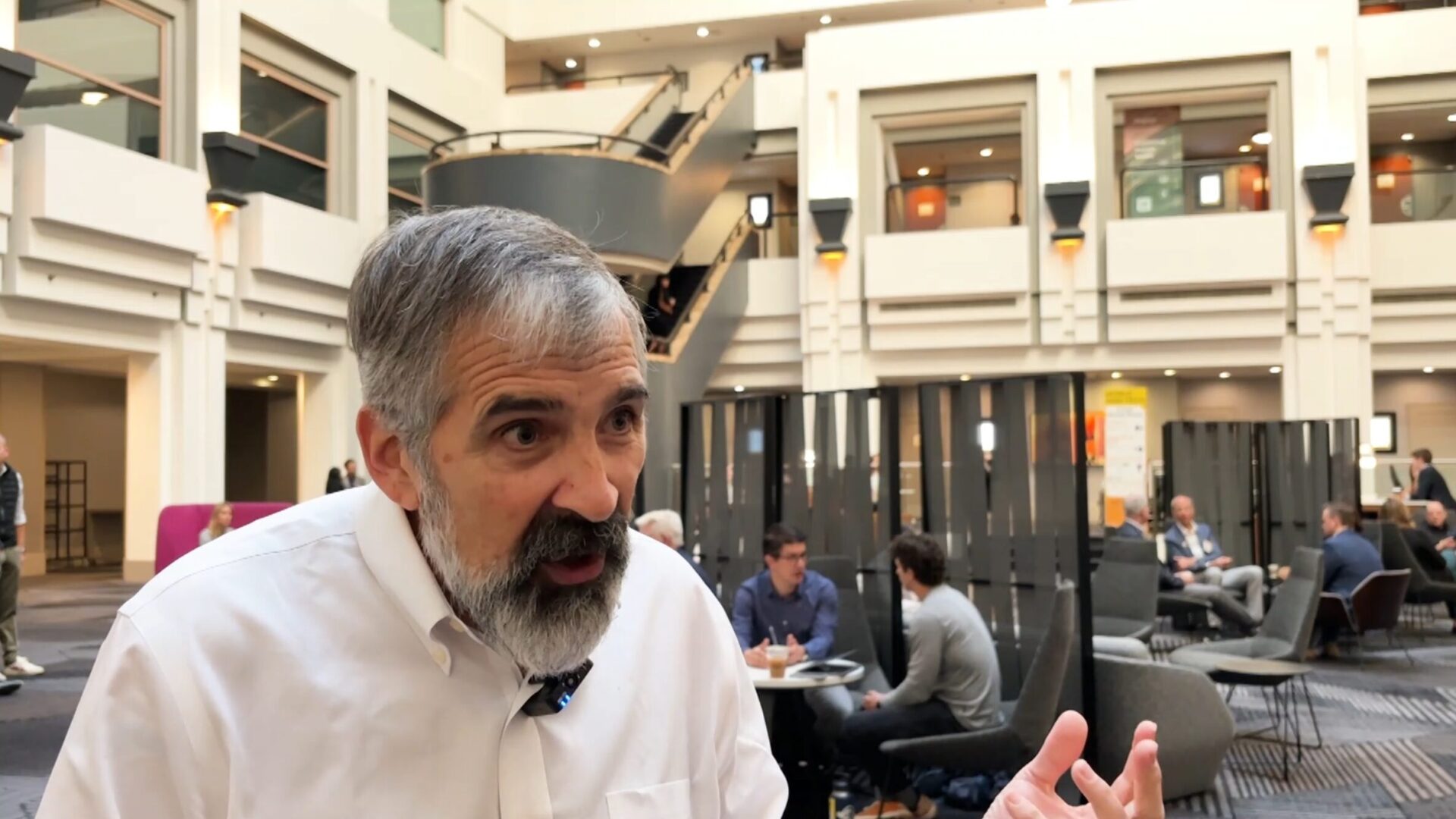
AgFunderNews (AFN) caught up with Lightner (JL) at World Agri-Tech in San Francisco to discuss how advances in protein structure prediction and AI-driven design are now making their way into agriculture.
AFN: What’s attractive about mini proteins in crop protection?
JL: We think mini proteins are really exciting. I see proteins in general and small designed proteins specifically, really sitting in a great space between chemical crop protection and biologicals.
Chemical crop protection has 95% of the market and strong COGS. It works. It’s consistent. Biologicals can be more complex, where we go out and we find an exciting organism in nature, maybe a mycorrhizal fungus, maybe some interesting bacteria.
When you go all the way to an organismal solution, you find amazing things because nature does amazing things, but turning that into a product can be really challenging. You’ve got a domestication problem. Nature often doesn’t think a lot about cost of goods as it builds solutions. Those mycorrhizal fungi are getting a free ride from their plant partners. Plants don’t worry much about energy. They have the opposite problem.
[In contrast] proteins are a defined molecular entity, just like a chemical but they have many of the environmental benefits and regulatory advantages of a biological, so we think it’s a great segment and a great opportunity.
AFN: How is Quercus Biosolutions developing its proteins?
JL: We’re using the toolkit that’s been developed for protein structure and function prediction that was the object of the 2024 chemical Nobel Prize to build novel proteins from scratch to target specific sites of action that will have the effects in crop protection that we want.
We’ve chosen to focus on an area of weed control where nature doesn’t actually have a lot of starting points for a protein herbicide. We started with two key problems. The first is that all the sites of action we’re interested in are inside of plants, usually in plant cells. They’re often in organelles within plants, and sometimes they’re only active in special tissues in the plants. So we had to build proteins that can enter and move within a plant, and then we had to target things that we thought would create a herbicidal activity.
To really minimize the variable space, we chose to first look at existing sites of action so that we could get a proof of concept and show this approach could work. Importantly, because protein-protein interactions can be quite different than a protein-small molecule interaction, we can develop proteins that will have a different mechanism of inhibition at an existing site of action.
So we might actually be able to control, for instance, resistant weeds straight away with a protein inhibitor where there’s already a chemical site of action and a chemical inhibitor that has resistant weeds.
AFN: How have you deployed tools first developed in drug discovery?
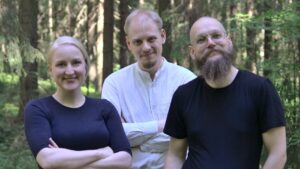
JL: My cofounder Matt Crisp and I really looked across the sector, but we felt that the most richly funded area, human medicine, would have the most advanced application of these technologies.
We looked at more than 10 potential partners in that space and did deep dives with three. We identified our partner, Ordaōs Bio, through a deep investigation, and as well as an ability to align incentives.
They’ve been building their platform for pharmaceutical design proteins for five years; they’ve brought in over $20 million of investment, so they’re really quite far along, and the fact that we’ve made so much progress since our founding less than two years ago, is in part because of the capabilities that their platform has brought for us.
AFN: So when you’re designing these proteins, it’s not just about mode of action and efficacy, but factoring in practical constraints from the outset, including manufacturability?
JL: That’s exactly right. We see AI both as highly impactful in the discovery phase, where, of course, the first question is, can we target a site of action? Can we inhibit its activity? But equally in the things we would usually address in early and even late development or even regulatory, the platform at Ordaōs can handle multi-factor constraint-based optimization against many, many design objectives.
So we can ask for strong micromolar inhibitors of a given target, but we can also ask that it be less than five Kd, as in small and therefore somewhat easier to manufacture.
We can ask for stability. We can screen against non-target organism impacts, which in some categories, is especially important. So we actually see the process we’re building for these new designed protein crop protectants as a process that’s going to learn and get faster and faster with every new challenge we tackle.
AFN: How is this different to how crop inputs are typically developed?
JL: The linear process is what’s given us 95% of what we buy in crop protection today. The chemical, small molecules that are still used, they’re solid performers. They are cost effective, and they have a dominant share in the market. They’ve all come from that linear process.
Now there are some great innovations, and some of the folks here [at the show] are trying to enhance that process. But when you defer those second or third order properties, when you don’t address those until three or four or five years into your process, of course, you’re sometimes going to fail.
And the reality is in that chemical process, something like 99% of what gets discovered doesn’t make it through the process.
We want to pull as much of that forward as possible as well as continue to learn and teach our AI from those downstream development challenges, from those regulatory challenges.
We think we can pull all that forward. And I think that opportunity creates a dynamic where, honestly, we could look ahead 10 to 15 years and half the crop protection segment could be these types of molecules.
AFN: What are you focusing on first?
JL: Our first minimum viable product idea is simply a broad acting herbicide that controls lots and lots of weeds. Importantly, we’d control weeds that are resistant to some of our major chemicals today like glyphosate and some of the other chemical solutions and it could just be used pre plant, and would work the way Roundup did 30 years ago before it started to have economic-level resistance in the field.
We’re working on targets that can deliver that today, and we’ve achieved initial proof of concept results. We’ve built, first in the world, designed protein herbicides that show activity on weeds that is very similar in terms of a molecule per molecule activity basis, to chemicals that target that same site of action.
AFN: What’s the regulatory pathway?
JL: One of the things that’s exciting about the biological category is that in many jurisdictions, the US is one, and Latin America has some very good jurisdictions… we can come to the market in the US [where there is a] well-established, precedented EPA, the EPA biopesticide registration framework is what we can use to bring these products to market. That’s less than two years, less than $2 million of investment.
So in addition to partnering with the big businesses where I’ve spent half my career, like Corteva and Bayer, we can also partner elsewhere in the chain to bring these solutions forward.
And we think that’s really important for us as a business, because it expands the opportunity set beyond just the five companies that might be discovering new chemistry solutions today.