Vertical farming company Oishii this week announced the first close of a $150 million Series C round, which founder and CEO Hiroki Koga says was made possible by the firm’s continued focus on proving unit economics instead of chasing revenues.
“Ultimately, many companies in the sector [vertical farming] struggled to raise capital because they couldn’t convincingly prove their unit economics to investors,” he explained to AgFunderNews. “We crossed that chasm, which is why we were able to successfully raise our Series C.”
‘A highly differentiated category’
The vertical farming sector has taken a well-documented beating over the last few years as erstwhile unicorns such as Plenty, Bowery, and Aerofarms failed to live up to over-hyped expectations and sky-high valuations.
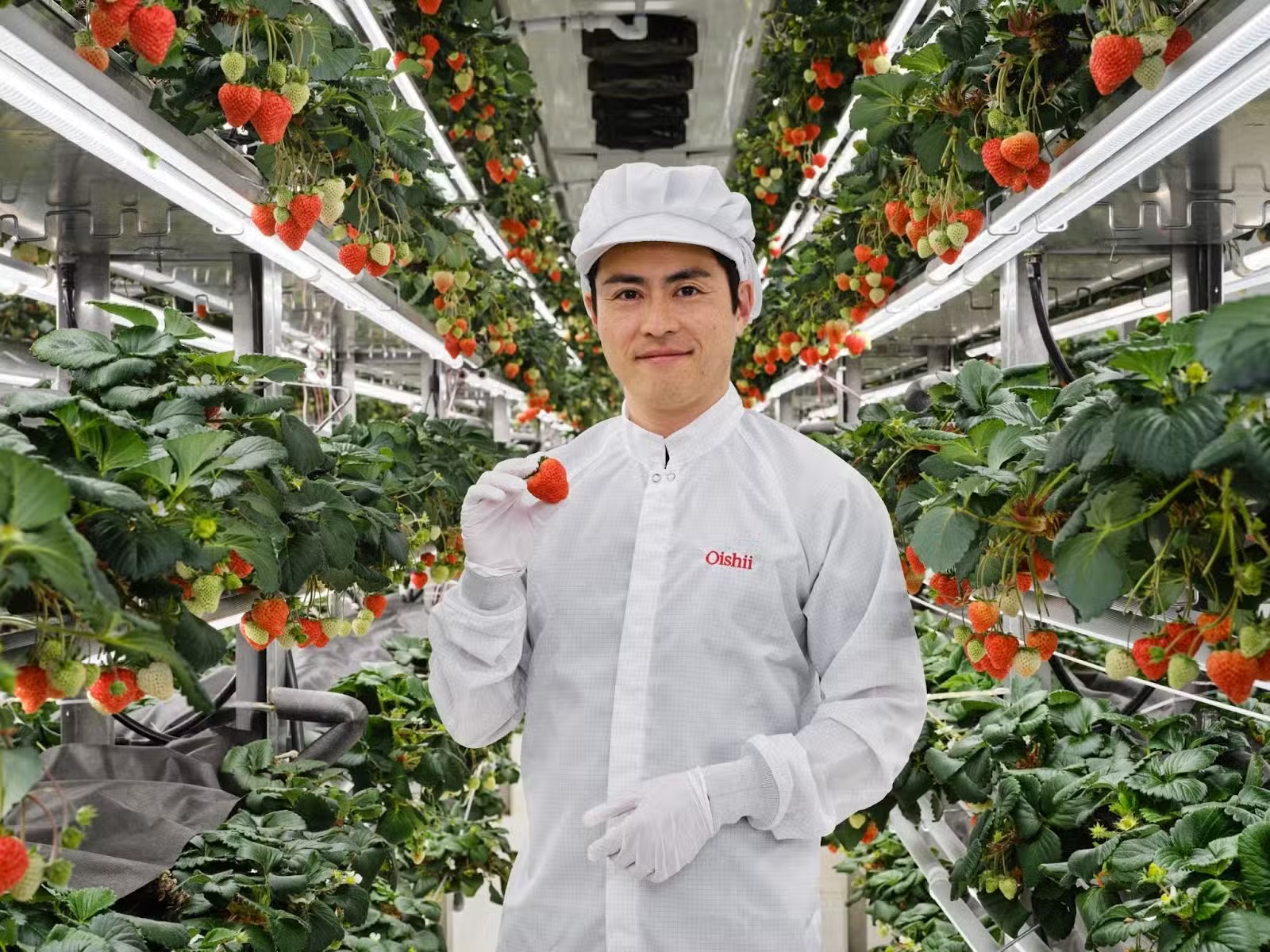
However, the majority of those companies were growing salad greens, something Oishii founder and CEO Hiroki Koga says his company has purposely avoided over the years. Oishii, once known for growing strawberries that cost $5 a pop, has over the years expanded from that ultra-premium category to appeal to a wider base of purchasers.
It’s also unique in that it combines deeptech (robotics, automation) with Japanese growing techniques that are thousands of years old.
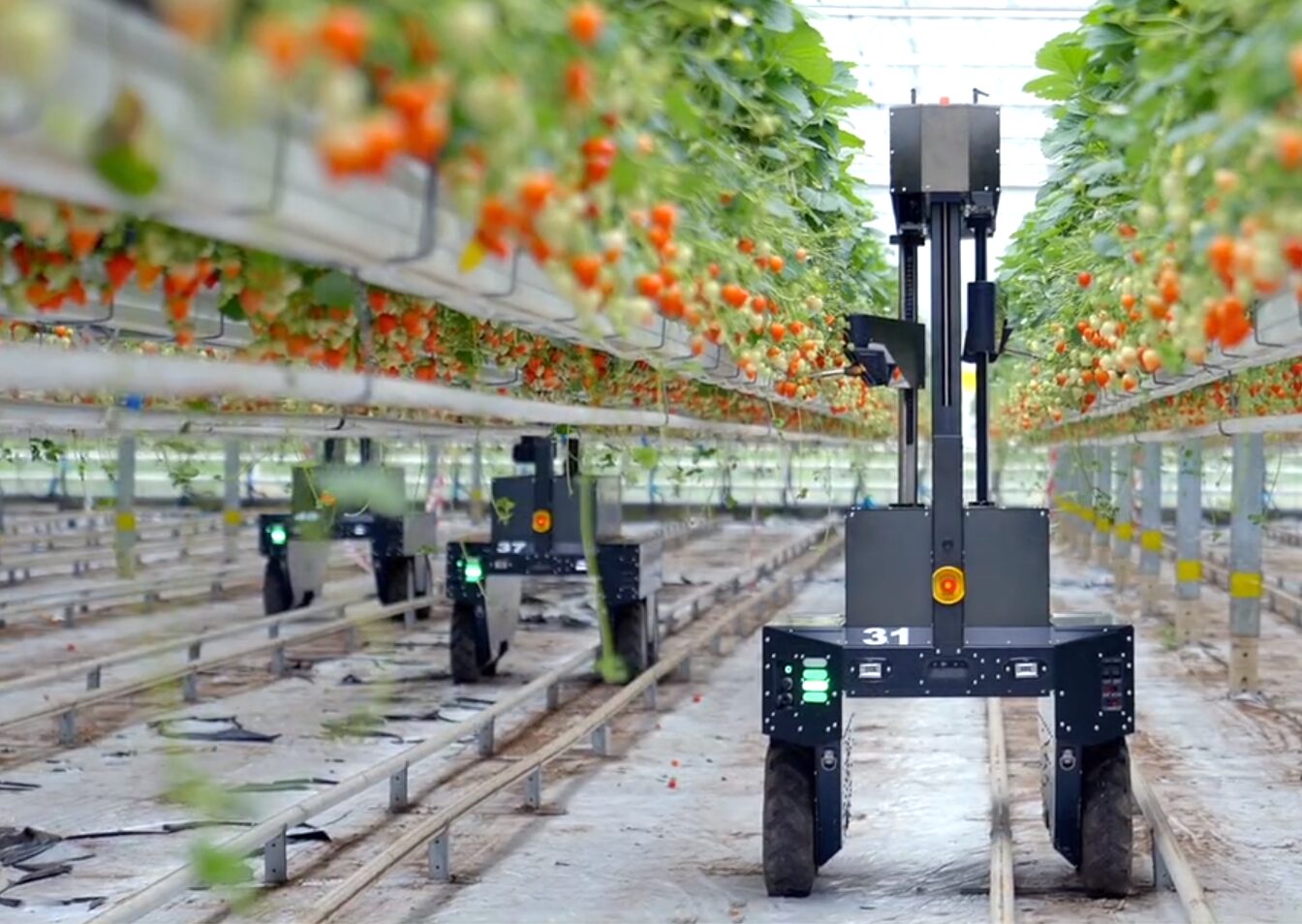
Last year saw the company, which operates its vertical farm in New Jersey, expand to 18 different states, launch its berries in Canada, and announce an R&D innovation center in Japan. This was in addition to its continued integration of robotics and automation into the growing process, helped through acquisitions like that of Tortuga AgTech and a partnership with MISUMI group.
“We made a very strategic decision to focus on premium strawberries. By operating in a highly differentiated category without significant competitive pressure, we were able to stay disciplined and focused on proving out the operation and unit economics before chasing revenue,” he explains to AgFunderNews. “Many companies in the category started with leafy greens and expanded too quickly without first demonstrating a sustainable business model.”
Koga has in the past said that he witnessed the rise and fall of the leafy green “plant factory” craze in Japan a decade before it reached the States, and says the fallout of the last few years was “completely anticipated.”
As to what has let Oishii withstand the market correction, he highlights “building a strong foundation while continuously evolving both our product and our brand to create a durable competitive moat.
“We’ve vertically integrated much of our core technology and operations in-house, which allows our teams — from executives to farm operators — to rapidly iterate across technology, production, and execution. Combined with strong support from Japan alongside innovation and business capabilities in the US, we’ve created a unique foundation for long-term growth.”
Patient capital ‘remains critical’ for vertical farming
In Oishii’s case, SPARX Asset Management led the round, with the remainder of the capital coming from Resilience Reserve, Nomura Real Estate Development Co., Ltd., MISUMI Group Inc., Mizuho Bank Ltd., and others.
Of course the vertical farming correction has significantly impacted VC funding to the space and led many to question if it’s even an appropriate vehicle here.
Koga says it depends on the type of VC.
“Investors like SPARX and Resilience Reserve, who understand deep tech and the long-term value of sustainable technology, can be extremely helpful. But those kinds of investors are still relatively rare. A lot of capital today is oriented toward short-term opportunities, especially as AI and crypto attract so much attention.”
Indoor agriculture takes a different mindset, he adds, and capital must recognize the long-term value that is possible through “differentiated technology, proprietary assets, and operational excellence.”
“In that sense, patient capital remains critical for the category.”
The new capital bumps Oishii’s total funding to $370 million. In the near term, the company will increase production capacity and farm infrastructure and continue to invest in R&D in the US and Japan.

Sign up for our weekly newsletter.