
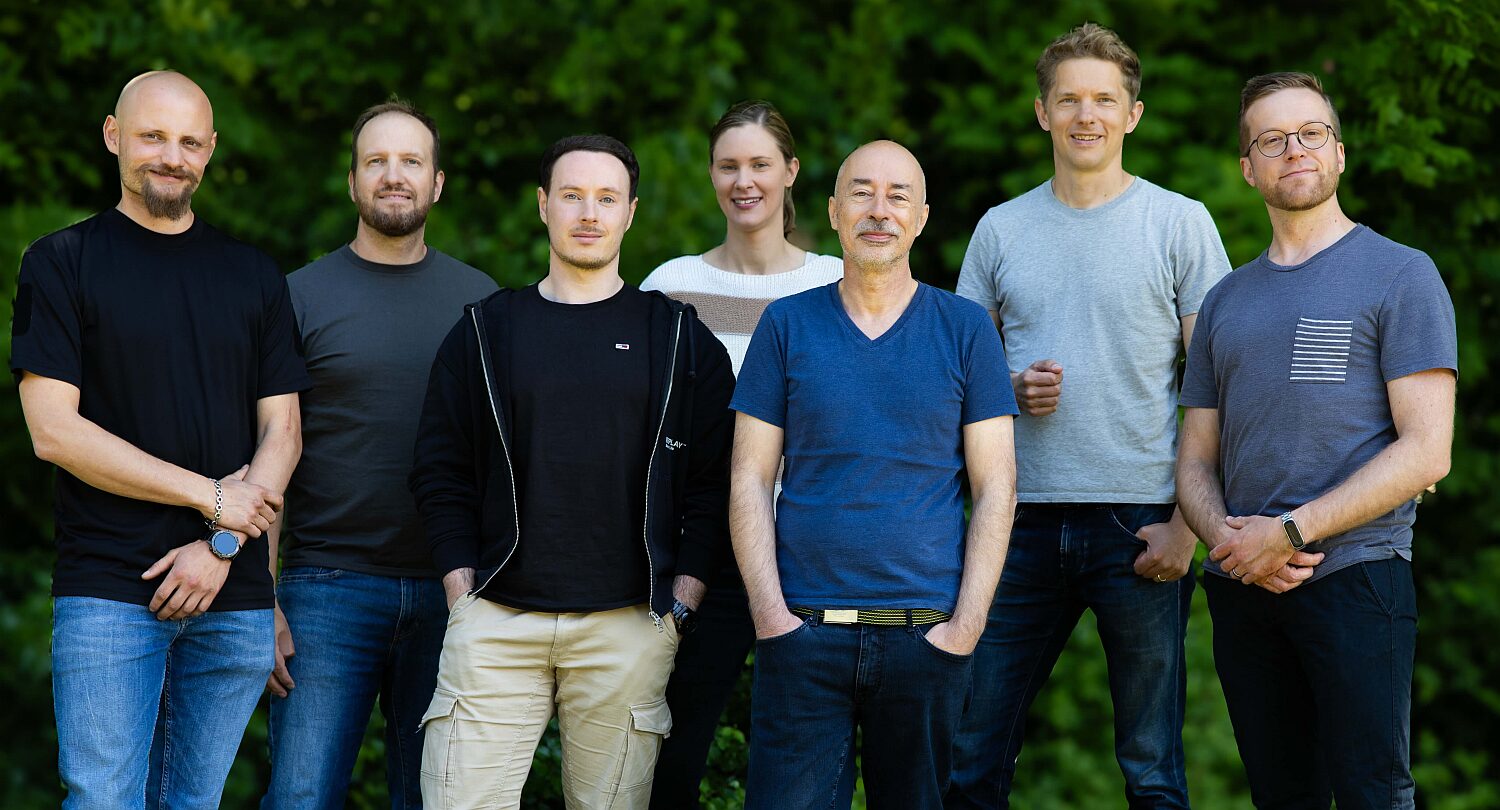
SenseUP—a startup developing biopesticides featuring double-stranded RNA (dsRNA) to selectively zap plant pests via RNA interference—has raised €3 million ($3.5 million) in a seed round led by Capnamic.
The round, which was supported by Simon Capital, Rockstart, CHECK24 Impact and HBG Ventures, will help the Cologne, Germany-based startup build its portfolio, grow its team and expand strategic collaborations with leading ag industry players.
Why it matters
By using RNA (nucleic acids that play essential roles in gene expression and regulation) to selectively interfere with target genes in insects, nematodes, fungi, and viruses, RNA interference (RNAi) can be used as a precision tool to attack pests without damaging soil, plants, or wildlife. This makes it an attractive alternative to traditional chemical pesticides, which are becoming less effective and come with environmental baggage.
Unsurprisingly, multiple players are therefore exploring RNAi in crop protection, says SenseUP founder Georg Schaumann, who developed single-cell biosensors for microbial strain development by natural evolution during his PhD at the German Institute for Biotechnology at Forschungszentrum Jülich.
The challenges are around stability (RNA is inherently unstable), cost, and breadth of applications (a precision tool, dsRNA is designed to attack specific pests, not multiple pests at once, which is what many farmers want).
SenseUP, claims Schaumann, has patented tech that can address all three challenges:
Stability: SenseUP encapsulates dsRNA within the cell wall of its host microbes (strains of Corynebacterium). This enables the biopesticides to be stored at room temperature for 18+ months and remain effective “as long as they don’t get too wet,” says Schaumann.
Cost: By using biosensors that light up in high-producing strains of Corynebacterium, SenseUP can screen millions of strains and rapidly identify the best host candidates, enabling the production of biopesticides that can potentially compete with synthetic chemicals on price.
According to Schaumann: “With fluorescence activated cell sorting you have a machine that can screen 50,000 cells a second. For each cell, it gives you an optical readout to show how strong the fluorescence signal is [reflecting how much dsRNA it produces]. Let’s say we identify 10 cells out of 100,000 [with potential]. We recultivate those cells and do it again and again.”
Breadth of applications: By combining multiple sequences of dsRNA in a single cell, SenseUP can develop single biopesticides that attack multiple pests at once, rather than launching multiple individual products that would each require separate regulatory approvals, says Schaumann. “We can not only produce one kind of dsRNA in one strain [of Corynebacterium], but let’s say four or five.”
How it works:
👉 SenseUP engineers Corynebacterium strains to produce specific dsRNA sequences designed to disrupt genes in a target pest. It then uses patented biosensor tech to rapidly identify the highest-producing strains.
👉 The bacterial cells serve as a natural encapsulation/delivery vehicle for the dsRNA.
👉 When pests attack plants sprayed with the biopesticides, the dsRNA interferes with their essential genes and disables them.
Why Corynebacterium, not yeast or E. coli
According to Schaumann, identifying and producing dsRNA that will disable specific genes in specific pests is not the hard part. The challenge is finding microbial hosts that will both protect the dsRNA and produce it cost effectively in high amounts, he says.
Yeast cells—used by some other startups developing RNAi-based crop protection—are not as productive as bacteria, he claims. “To my knowledge, the dsRNA concentrations they can do in yeast are far, far lower than ours, which means the cost of goods are probably too high for many applications.
“Other researchers have tried using E. Coli [bacteria] in the lab, and we also tried, but we found back in 2019 that Corynebacterium is great for making dsRNA, and we quickly filed patents to use it for dsRNA production and for this kind of application, which now blocks this way for others.”
“SenseUP’s Corynebacterium-based dsRNA platform makes truly sustainable crop protection viable at scale—combining cost-effective production with durable encapsulation.” Dr. Friedrich Droste, managing director, Simon Capital
How the dsRNA reaches its target
But how does the dsRNA get into the pest in question to disable it? Does it only work with chewing pests that bite through the cell walls of the Corynebacterium to get to it?
According to Schaumann: “This is indeed a fascinating aspect, because it is not really understood how exactly some pests take up the dsRNA from within our encapsulation. For chewing insects, it’s relatively easy to see how they access it, but for plant pathogenic fungi or plant viruses, it’s more complex.
“But we know that our product enters the plant and we’ve shown that [the biopesticide] works, so we’re starting many experiments to unravel the exact route the dsRNA takes in those instances.”
What’s next?
SenseUP’s plan is to “partner with established players for different pests” says Schaumann. “We did our first field trials last summer, which went really well, and we’re now developing around 15 different products. 2026 will be super exciting because for many, if not all of those products, we will get first trial results, first from the greenhouse, then from the field.”
Regulatory submissions will likely be made in partnership with big partners who understand the complexities of the process in different markets, he said. “The US and South America are the first markets although Europe is also a target market for us.”
For investors, he said, “Having trial data was super important along with data regarding stability and the platform character of our technology.” However, having the buy-in of leading ag players was the clincher: “We even had not only one big player who was willing to talk to VCs saying, ‘What these guys have is great.’ And this was really the magic soup.”
Mark Durno, managing partner agrifood at Rockstart, which participated in the latest round, added: “Rockstart invested because the need to transition to non-chemical applications in agriculture is critical, and SenseUp solved two of the biggest barriers for widespread adoption of dsRNA products: production cost and stability. After successful trials, we are excited to see the first SenseUp products mature.”
Further reading:
Yeast-powered RNAi is the future of precision pest management, says Renaissance Bioscience
Tropic to launch non-browning bananas in March, extended shelf-life bananas by year-end