
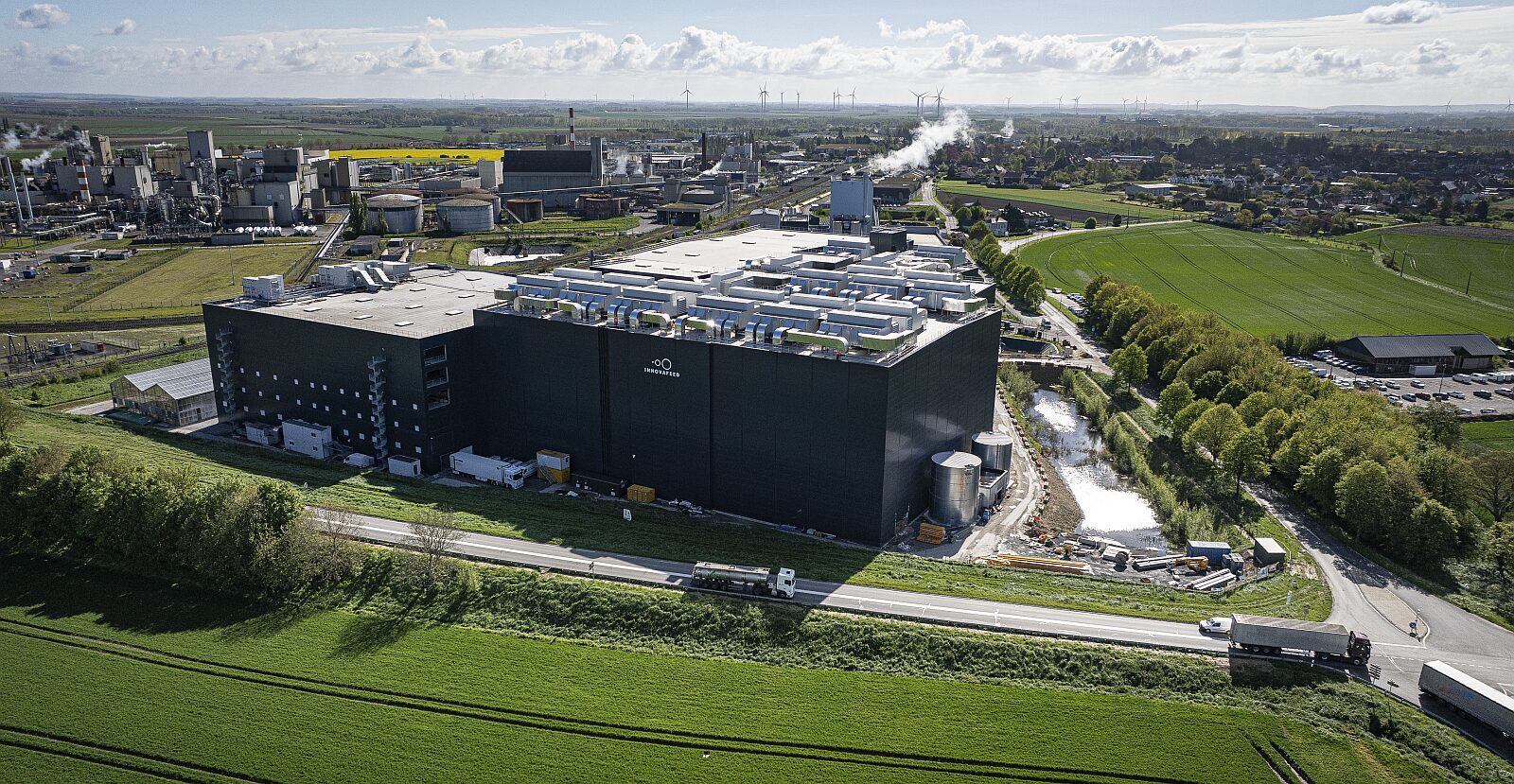
French insect ag firm Innovafeed has raised a €51 million ($59 million) round and unveiled plans to consolidate activities at its commercial-scale black soldier fly larvae production facility in Nesle, France.
The move is part of a reorganization that will reduce headcount by 60 people (out of 300), the bulk of whom are based at Innovafeed’s R&D/pilot facility in nearby Gouzeaucourt.
The firm, which has previously said that it is targeting profitability at Nesle by the end of 2027, did not provide an update on the status of plans to build a large-scale facility next to an ADM corn milling plant in Decatur, Illinois. In March, it had described the plans as “very much alive.”
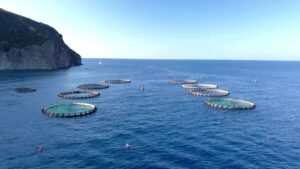
“Innovafeed’s products represent one of the key solutions for more sustainable and high-performing aquaculture. After many years of studying the benefits of this raw material in the nutrition of sea bass, sea bream, and trout, we have made the decision to use these new ingredients on a very broad scale. This scale-up is made possible today by Innovafeed’s technological breakthrough, which is currently the most advanced in Europe.” Fabio Brambilla Ph.D., NaturAlleva
Fresh capital, tighter focus
The round, which takes its cumulative funding including grants to over $500 million, was backed by existing shareholders Creadev, QIA, Temasek, FFC, ABC Impact, and ADM along with banking partners, said Innovafeed, which was founded in 2016 by Aude Guo, Bastien Oggeri, and Clément Ray.
“Following an intense phase of R&D and industrial development that successfully cleared critical operational maturity milestones, the company is embarking on a new stage of its growth. It is initiating a reorganization of its activities, specifically the reduction of zootechnical R&D activities and their integration from its historical Gouzeaucourt site into the Nesle facility.”
He told AgFunderNews: “The Gouzeaucourt site is expected to close in the longer term. However, the process is only just beginning and will follow a structured and regulated framework, including the appropriate consultation process. Its implementation is expected to take place during 2027.
“In parallel, we will be working over the coming weeks with local stakeholders and authorities to explore potential options for the future use and redevelopment of the site.”
Following a $250 million Series D round in 2022, Innovafeed has increased production volumes at Nesle tenfold, while costs have been “divided by seven,” claimed the firm. “The scale achieved, critical for product competitiveness, is unprecedented in this sector and is currently three times larger than the world’s second-largest player.”
Revenues have doubled each year, driven by partnerships with clients in aquaculture and petfood who are prepared to pay a premium for nutritional performance and functional benefits, claimed the firm, which has struck partnerships with BioMar, Auchan, and NaturAlleva for aquaculture.
“Over the past five years, Innovafeed has won its industrial bet and developed a world-unique asset: a fully operational large-scale production facility that enables highly optimized production of ingredients with functional properties that are valued by pet food and aquaculture players.” Bénédicte Monpert, Creadev
Industrial proof point
CEO Clément Ray did not disclose the capacity of the Nesle site but told AgFunderNews that, “At the beginning of this year, we reached an average output of approximately 1,000 tons of insects per week with stable and controlled production parameters.”
The Nesle site—which uses wheat byproducts from a co-located Tereos starch processing plant as feedstock—is now at “full industrial scale, transitioning from a demonstration and phased expansion stage into a fully operational commercial production asset,” he claimed.
“The industrialization phase encompasses the end-to-end execution of the plant’s deployment: from construction and ramp-up—a critical stage where many projects in the sector have failed—to the achievement of operational targets across all key dimensions, including production volumes, process stability, product quality, unit economics, and environmental performance.
“All of these parameters are now within target range, confirming that the site is fully operational and that production is no longer a limiting factor in our scale-up trajectory.”
Improvements to Innovafeed’s cost structure are primarily a function of increased scale along with “ongoing process optimization across the entire value chain,” he said.
“In terms of strategy, we remain fully focused on scaling our existing platform [protein, oil, frass] and strengthening our commercial traction in aquaculture and pet food, where we continue to see strong demand. We see increasing willingness to adopt alternative proteins when they deliver nutritional and functional performances on top of sustainability benefits.”
Insect ag’s reckoning
The insect ag industry is littered with the corpses of startups who found out the hard way that scaling biological systems is not as easy as it looks, prompting a wave of think pieces suggesting its days are numbered.
Despite the sector’s well-publicized struggles, however, its death may well have been exaggerated, say stakeholders AgFunderNews has caught up with in recent weeks, who note that no two insect ag operations are quite the same.
That said, a string of bankruptcies, restructurings, and stalled projects—from Ÿnsect’s liquidation to ENORM’s collapse and the receivership of Aspire Food Group—has forced a rethink of what scalable, profitable insect agriculture looks like, with some European firms such as Protix now setting their sights on Asia, where they say cost structures and a more favorable regulatory climate make the economics look far more appealing.
However, that doesn’t mean players in Europe should pack up and go home, says Larry Kotch at UK-based FlyBox, which has developed a new system called the Fortress that he argues can dramatically lower capex and opex costs.
In the current funding environment, however, you can forget trying to raise VC capital to build a large-scale vertically integrated insect farm, says Kotch. Instead, he says, firms are more likely to make progress if they focus energies on helping waste management companies or waste producers solve a problem. It’s far easier to make money if you are being paid to handle waste than having to pay for your own feedstock, he points out.
“Waste managers are actually very interested in this technology, but they want to see a big reduction in capex and a guaranteed off-take market.”
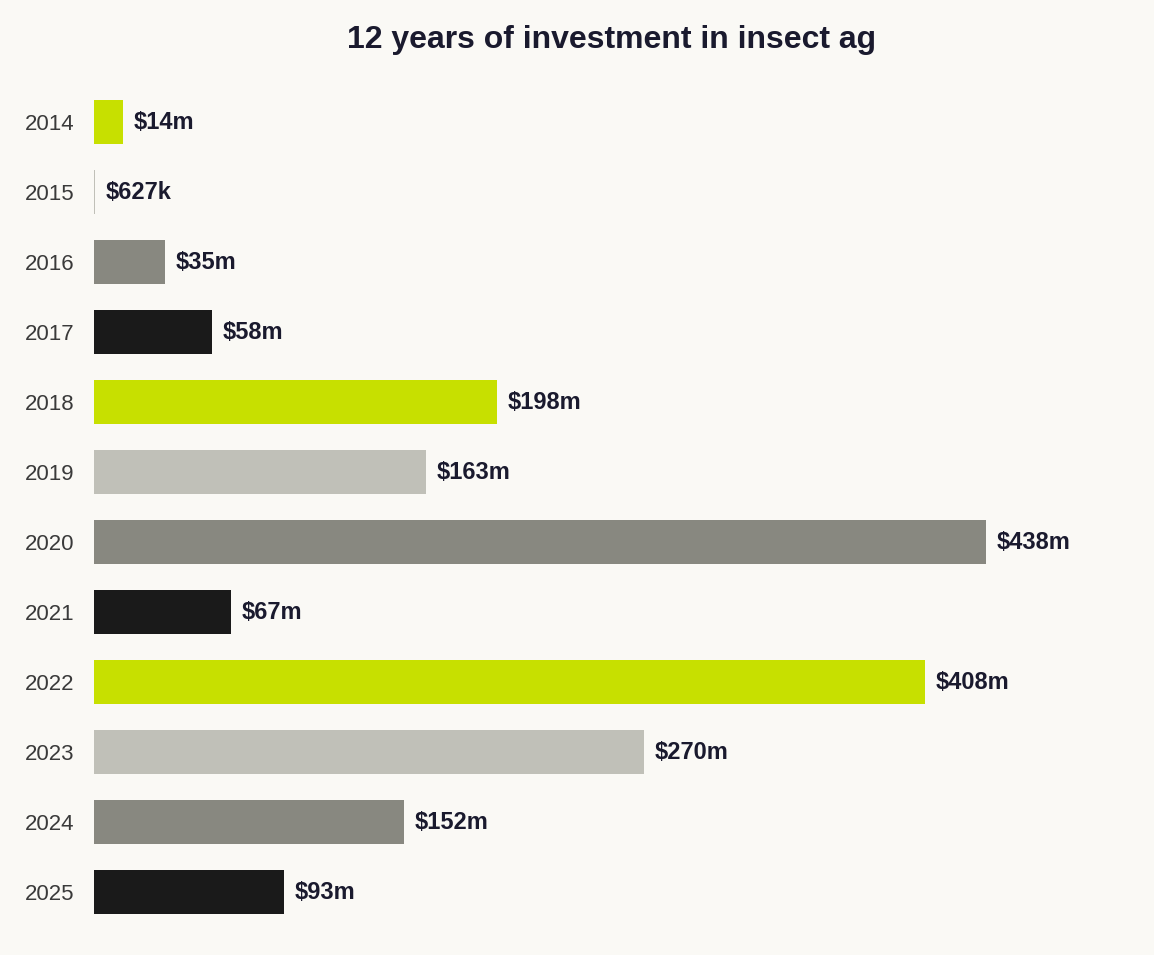
Recent funding rounds in insect agriculture (US dollars):
2025: $92.95 million
- Volare (black soldier fly larvae, Finland): $30 million
- nextProtein (black soldier fly larvae, France/Tunisia): $21 million
- Protix (black soldier fly larvae, Netherlands): $11 million/debt
- Proteine Resources (lesser mealworms, Poland): $11.1 million
- Elmentoz (black soldier fly larvae, India): $4.5 million
- GreenGrahi (black soldier fly larvae, India): $3.7 million
- Loopworm (silkworms, India): $3.25 million
- Insectius (black soldier fly larvae, Spain): $2.9 million
- BetaBugs (black soldier fly genetics, Scotland): $2.7 million
- InsectBiotech (black soldier fly larvae, Spain): $1.7 million
- Viridian Renewable Technology (black soldier fly larvae, Australia) $700k
- Enthos Circular Feed Technologies (black soldier fly larvae, Colombia): Undisclosed
- FlyBox (black soldier fly larvae, UK): $400k
2024: $151.9 million
- Entosystem (black soldier fly larvae, Canada): $42 million
- Protix (black soldier fly larvae, Netherlands): $40 million
- Tebrio (mealworms, Spain): $32.6 million
- FreezeM (black soldier fly neonates for breeding, Israel): $14.2 million
- Chapul Farms (black soldier fly larvae, US): $9 million
- Nasekomo (insect ag franchisor, black soldier fly neonate supplier, Bulgaria): $8.7 million
- Entocycle (enabling tech for insect ag, UK): $2.6 million
- Viridian Renewable Technology (black soldier fly larvae, Australia) $1.7 million
- Insectius (black soldier fly larvae, Spain): $1.1 million
Source: AgFunder data [disclosure: AgFunder is the parent company of AgFunderNews
Further reading:
Insect ag recalibrates after a brutal shakeout: Where are the key players now?
Dutch insect ag firm Protix shifts focus to Asia: ‘We could be cost competitive there from day one’
FlyBox founder: Insect farming can work in Europe, but not as a VC-backed protein play