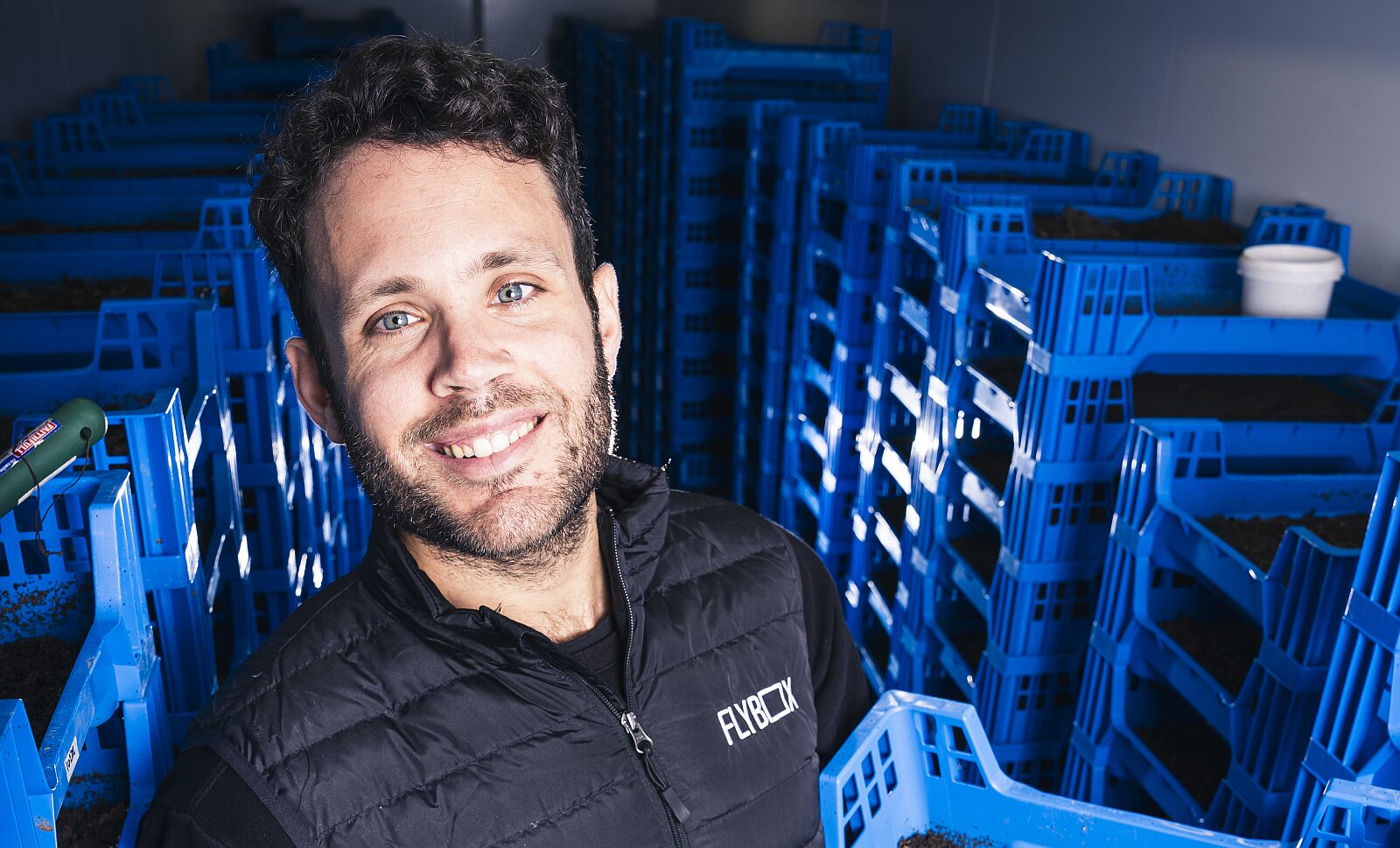
The insect farming industry is going through a “painful correction” says FlyBox founder Larry Kotch. Ÿnsect, Enorm, Aspire, and others all failed for different reasons, but one common thread was that they assumed the market would pay premium prices for insect protein meal, he says. “It did not.”
Commodity protein buyers want black soldier fly meal at under £1.50 ($2) per kilo, claims Kotch, a UK-based entrepreneur building insect waste management systems, from low-tech polytunnel farms in East Africa to industrial-scale facilities in Europe. “Most Western producers need £3 ($4) or more just to break even.”
The math, he tells AgFunderNews, doesn’t add up.
But that doesn’t mean everyone should pack up and go home, says Kotch, who still believes black soldier fly larvae operations have a future in Europe, but only if they are treated less like a novel feed ingredient and more like a waste management solution.
The shift from “insect farming” to “insect waste management,” Kotch’s preferred term, represents a shift in business models and perspective, he says.
You can forget trying to raise VC capital to build a large-scale vertically integrated insect farm today, says Kotch. Instead, focus your energy on helping waste management companies or waste producers solve a problem. It’s far easier to make money if you are being paid to handle waste than having to pay for your own feedstock, he points out.
Metabolic recirculation
As for capex and opex, successful models also require a flexible, lower-cost setup that reduces climate control costs—a major cost driver in insect ag—by capitalizing on the fact that insects produce large amounts of heat, says Kotch.
Rather than paying huge sums to warm up or/and cool insects down, FlyBox’s new “Fortress” system deploys a novel approach that exploits the larvae’s own metabolic heat.
Unlike older tray, rack, or belt-based systems that require costly climate control on each level, Fortress is a multi-level “zigzagging” tower in which feedstock enters at the top and moves down each day as the larvae mature, with heat from older larvae channeled upward to warm younger larvae, which don’t produce as much heat.
“In the first four or five days of their life, the larvae need heat, but for the rest of their life, giving off heat actually becomes a problem,” explains Kotch. “But with these first-generation systems, the larvae are all aging at the same time, so every level needs the same conditioning, and heat is rising the whole time, so they opted for these very expensive systems, which basically control the climate level by level, and that’s super expensive.
“We thought wouldn’t it be nice if you could get the older ones to be underneath the younger ones?”
Kotch, who originally supplied plug-and-play insect farms in shipping containers, says FlyBox’s new system has changed the game.
“About a year ago, I said we’re either going to figure this out or we’re going to move on, because I only have one life on earth and I don’t want to spend it flogging a dead horse. But when we went through all the numbers it was just such an exciting prospect, because you can actually produce the stuff at below fishmeal prices, and that’s when it starts getting interesting.
“China’s producing at that price, and they are just exploding in growth in this sector.”
Waste managers enter the frame
According to Kotch, FlyBox is talking to the six largest waste managers in the UK with one already signed up to build something in the next couple of years. It is also in advanced conversations around a larger joint project with a major waste manager in the Gulf, a particularly promising region given its interest in food-security, abundance of cheap energy, low labor costs, and relatively underdeveloped organic waste treatment infrastructure, while governments are considering ambitious landfill-diversion targets, says Kotch.
In short, says Kotch, insect farming can work in the UK and the EU with facilities co-located with waste managers, using stranded pre-consumer fruit and vegetable waste, supplied with juvenile larvae by specialist breeders, and tied to realistic offtake markets.
Indeed, the UK may even have an advantage if facilities can access the right feedstocks, he says. Some UK insect farms are being paid around £20/ton ($27/ton) to take pre-consumer fruit and vegetable waste from processors, packhouses, or non-meat-containing de-packaged lines, whereas some European operators using brewer’s grains as feedstock for their insects are paying around €40/ton ($47/ton).
The premium protein problem
When it comes to end markets, Kotch is cautious about defatted insect protein as a broad commodity play, especially where it must compete with low-cost rendered meals. He sees more immediate opportunities in wet or frozen larvae pulp for pet food, where insect material could compete with fresh beef or chicken inputs, and in whole dried larvae for markets such as game birds in Europe and backyard chickens in the US.
He also sees frass (insect waste) as important to the economics, saying large waste managers have indicated they would buy frass at around £100–150/ton if available at scale.
Stepping back, he says, as in many alt protein segments, the first wave of VC-backed players overpromised and underdelivered. This created a chilling effect on firms trying to develop alternative engineering approaches, as smaller players assumed the heavily funded companies must have validated the right model.
“When you’re building an insect engineering company, you assume that people raising half a billion dollars must know a thing or two that you don’t. So I think it did have a chilling effect because all of the messaging from those first factories was like it’s so great, and they paid for all these papers about health benefits but never said how that benefit would be priced or affect willingness to pay in real case studies.”
From insect farmers to insect waste management
As for the regulatory environment in Europe, where insects reared for food or feed are treated as farm animals, rules still prevent firms from using post-consumer waste, manure, slaughterhouse waste, meat- or fish-containing former foodstuffs, or other unapproved animal byproduct, says Kotch. This, coupled with competition from subsidized alternatives such as biogas, still holds the segment back, he says.
However, Fortress has brought production costs down to a point where locally produced insect products in Europe could compete with landed product from Asia and potentially even come in below fishmeal pricing, he claims.
“The idea of there being insect farming companies as if it’s a separate thing, though, is for the birds. Those guys are washed out now and the VCs are not interested anymore.
“It’s got to be we have insect waste management solutions for waste managers, the people that operate anaerobic digestion sites or composting sites. There’s a space for the insect industry to partner with them as an operational layer, a technology layer, and also supplying the juvenile larvae.
“Waste managers are actually very interested in this technology, but they want to see a big reduction in capex and a guaranteed off-take market.”
Vertical integration is not the way forward
Flybox favors a hub and spoke model that disaggregates breeding from waste management so that firms do not need a full breeding operation with adult flies, egg production and mating rooms, but can source juvenile larvae from a specialist breeder and then run a nursery/early-stage grow-out step before the larvae enter the main rearing towers.
Most operators underestimate the volatility of breeding, “resulting in production gaps, inconsistent supply, and stranded assets,” claims Kotch. “We’ve seen this failure loop dozens of times, so we engineered it out of the equation. By offloading the entomology to us, you eliminate a massive capex liability and a catastrophic operational risk.
“It’s how they do it in China. There are something like 23 breeders across China now; you can order 10 kilos now and it’ll be with you in the evening, anywhere you are in the country.”
The future, he says, as in most mature agrifood systems, is not vertically integrated. “Let the entomology people do the breeding, and if you need a technology quote, go to a technology company, and for operational oversight, there’s an experienced insect farming team and so on.”
As for the optimal size for an insect waste management plant, there’s no one-size-fits all model, he says, but cautions against the “Gen 1” centralized model of building a large insect factory and then trying to pull waste in from a wide radius.
Instead, he favors a more decentralized model whereby insect grow-out capacity is built where the waste already is. If a site has 500 tons/day of suitable feedstock, it may make sense to build a 500-ton/day plant, but if the available stream is only 50 tons/day, the facility should be sized accordingly.
The sweet spot in conversations Kotch is having in the UK is around 30–100 tons/day, depending on the feedstock source, co-location opportunities, electricity/waste-heat economics, and whether the waste manager, insect technology provider, breeder, and offtake partners can all be aligned.
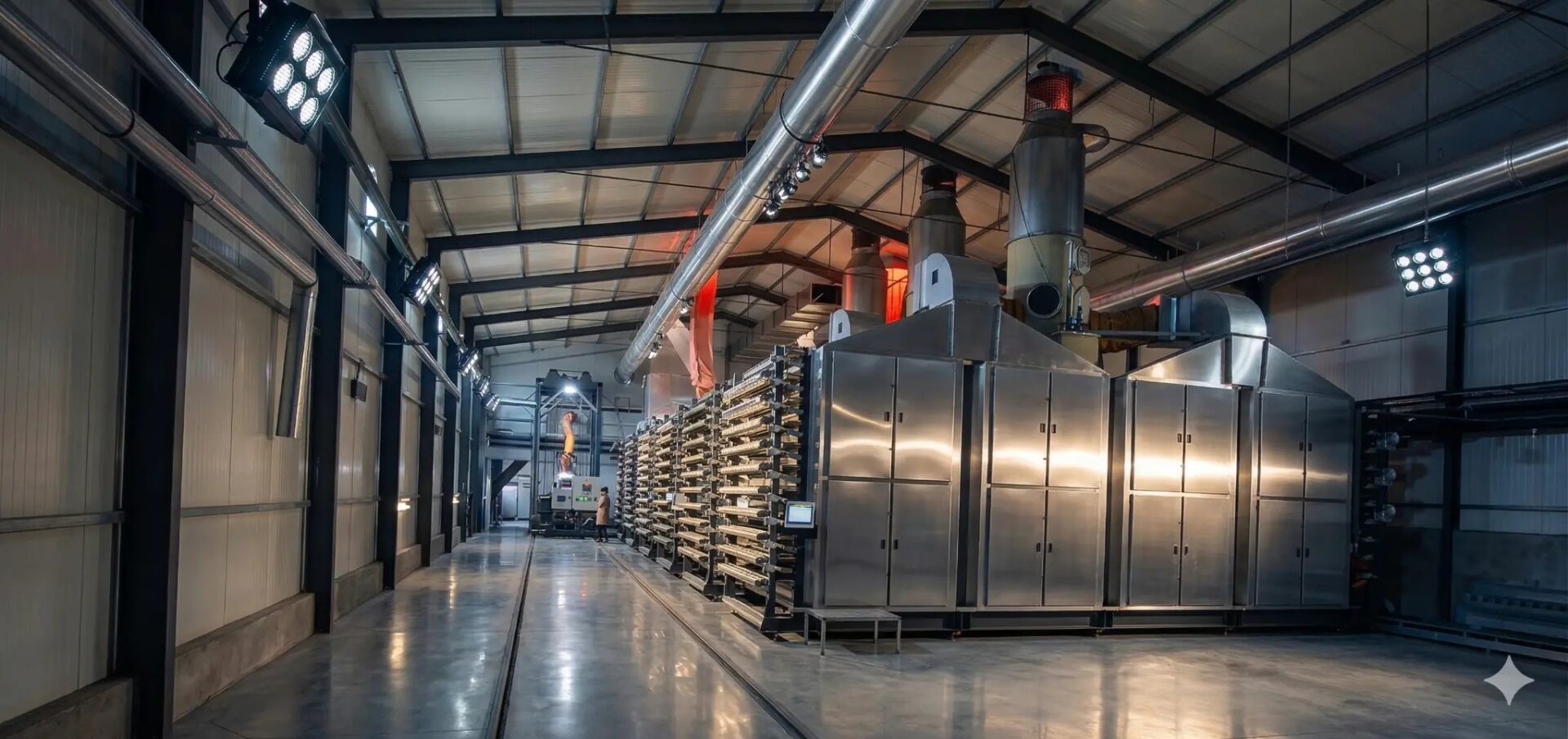
The FlyBox Fortress
A lower-cost, waste-focused black soldier fly larvae production platform, the Fortress is designed to tackle two of the biggest headaches that have dogged first-generation insect farms: climate control and capex, says Kotch.
👉 Partners source juvenile larvae from a specialist breeder and then run a nursery/early-stage grow-out step before the larvae enter the main rearing towers.
👉 The pre-processing line gets waste to 70–75% moisture with a porridge-like consistency. As every waste stream is different, FlyBox configures the right line for partners’ feedstock.
👉 The core is a series of modular, multi-level belt towers. Young larvae and feedstock enter together and spend 7–10 days bio-converting the material into frass fertilizer and larvae. Each module handles 10 tons per day (TPD). The system scales to 500 TPD.
👉 After the larvae and frass leave the tower, FlyBox uses air/density separation and sieving to separate the larvae from the frass particles.
Further reading:
Insect ag recalibrates after a brutal shakeout: Where are the key players now?
Dutch insect ag firm Protix shifts focus to Asia: ‘We could be cost competitive there from day one’
Exclusive: Aspire Food Group’s Ontario cricket farm sold to new owner as firm collapses under debt
South African insect ag co Inseco calls it quits amid power cuts, pivots: ‘We ran out of time’
Breaking: Danish insect ag firm ENORM declared bankrupt after failed reconstruction process