Latam sugar giant Magdalena is diversifying beyond sugar, ethanol and energy to build a biological manufacturing business featuring a 650,000-liter precision fermentation facility in Guatemala, a value-added protein business from spent yeast and a biochem unit in Portugal.
The move reflects a strategic shift to reduce exposure to volatile sugar markets and reposition the company as a producer of higher-value ingredients developed both in-house and externally, tapping into existing infrastructure and feedstocks to lower production costs.
The new strategy has three pillars: Biorbis, an R&D and innovation hub in Portugal acquired out of Amyris’ restructuring; Proteva, which upcycles spent yeast into functional protein ingredients for feed and pet food; and a contract manufacturing platform in Guatemala designed to convert sugar into high-value molecules at scale. The company is also investing in precision fermentation startups via a ventures arm.
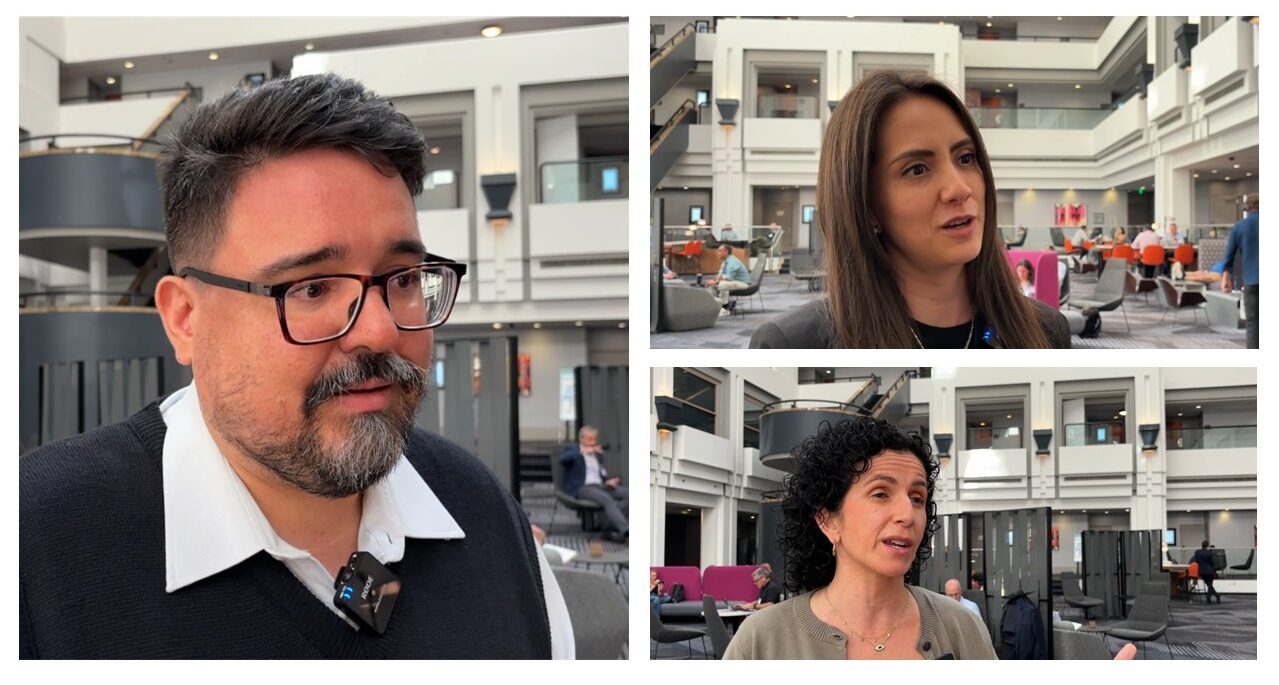
AgFunderNews (AFN) caught up head of industrialization Wagner Pinton Ferreira (WPF), portfolio manager Ligia Castañeda (LC), and Biorbis general manager and innovation head Raquel Madureira (RM), at Future Food Tech in San Francisco.
AFN: What are the benefits of building the precision fermentation facility next to your sugar mill in Guatemala?
WPF: You can cut the transportation costs of sending sugar to your facility, plus you can use the utilities, share logistics, admin, everything…
LC: Magdalena has been in the industrial space for four decades. We have a very good location for the US market and access to the Pacific and the Atlantic Ocean, so Guatemala is strategically located. We also have low costs, not only in feedstock but also in manpower. It’s considerably cheaper than in the US or in Europe. It could be competitive with Asia, of course, but location, again, will be a game changer for us.
We’re trying to build an ecosystem that helps innovation, that helps partners scale up through this industrial integration we have, taking advantage of the feedstock and energy that we produce in our sugar mill that will drive the costs down for them and allow us to have higher margins.
AFN: What’s the scale up plan for the new precision fermentation facility?
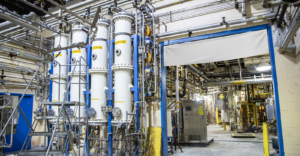
WPF: We are going to build it in three phases. The first one for 2027 will be a pilot/demonstration facility with 50 cubic meters [50,000-L] of fermentation capacity, and two cubic meters [2,000-L] for the pilot. And then in 2028 we’ll have 200 cubic meters [200,000-L] and in 2030, we’ll add two more 200 cubic meter [200,000-L] fermenters [totaling 650,000-L].
From the beginning, the downstream [capabilities at the facility will be] adapted for proteins, enzymes, that type of product. But in the future, we are going to expand this [to accommodate other types of ingredients].
AFN: Do CMOs often lack the specific downstream capabilities that startups need?
WPF: It’s common that a facility has all the downstream [processing equipment] except the spray dryer. Then you have to transport water far away which is really expensive and you can spoil all the product. The idea [at Magdalena] is to have all [the DSP capabilities including a spray dryer] in Guatemala.
The biggest problem in scalability is the downstream [setup]. And not only at commercial scale, it’s more complicated at the early stage of development too, because you need at least a pilot facility. The downstream [process] could [also] be completely different from molecule to molecule or from microorganism to microorganism. So I think this is the biggest challenge.
Most of the time, firms will have one team for fermentation upstream and another team taking care of the downstream development. They are different teams, different leadership, and they are not necessarily talking to each other at every stage. It’s really common that companies invest a lot in fermentation and not that much in downstream. This is a huge mistake, because you can produce a lot, you can improve productivity, yield, anything, but if your downstream process is not correct, you throw everything away.
AFN: What’s your commercial plan for the facility?
LC: We’re trying to anchor two or three main companies that will produce their molecules there on a regular basis, and we will also have some capacity for spot clients.
AFN: Magdalena is also investing in startups in precision fermentation?
LC: We have done previous investments in [three startups]: Amplifye [enzymes claimed to optimize protein digestion], VinZymes [enzymes for the wine industry], and Oobli [sweet proteins] via a ventures arm launched in 2023.
We’re partnering up for different opportunities and trying to help partners with other applications. With our R&D arm Biorbis in Portugal, we see the potential of producing their molecules [via the new precision fermentation facility] and we also are trying to find space for distributing [their ingredients] or helping commercialization in the region, it could be Central America, also South America. We see a lot of value for them to integrate with a company like Magdalena.
AFN: What does Biorbis do?
RM: Biorbis is a biochem innovation center that supports process development and application testing. We have a team composed of 34 collaborators, and 31 have PhDs, so they are very highly qualified in different backgrounds.
For co-creation, we offer our hand-to-hand process from molecule selection and development to application, testing, scaling and commercialization for ingredients for animal feed, pet food, aquaculture, nutraceuticals, functional foods, biochemicals and cosmetics.
Biorbis is using AI for discovery and innovation and because we have [insight into] every stage of the process [from molecule discovery to scale up], we have a lot of data, so we can train these [AI] tools [to deliver] benefits. We are also trying to develop bioinformatic tools to identify how molecules interact with cells and predict biological benefits and the other way around so we know [what we are looking for from a] molecule in terms of chemical structure, to interact to the cell [to confer] the desired benefit.
We are also in the GLP-1 field… finding the chemical structures to interact with cells and stimulate the production of GLP-1 is one of the areas we are working on.
AFN: You also have a business unit called Proteva that functionalizes protein from spent yeast using enzymatic hydrolysis?
RM: We are commercializing ingredients with higher performance. We deliver protein with the best nutritional profile in terms of amino acid content but we have also developed other ingredients such as beta glucans. Spent yeast contains nucleotides and other compounds that have high biological value, but also functional benefits such as texturizing.
Further reading:
🎥 21st Bio on strains, scale, and the valley of death: Fixing precision fermentation’s weak links
🎥 Future Food-Tech: Big ideas, hard truths, and the path to scale
Amplifye debuts enzyme to supercharge protein digestion and unlock new health benefits

Sign up for our weekly newsletter.