At Future Food-Tech in San Francisco last week, we spoke to key stakeholders on everything from crossing biomanufacturing’s valley of death to the Institute of Food Technologists’ new AI-powered CoDeveloper platform to speed up the product development process.
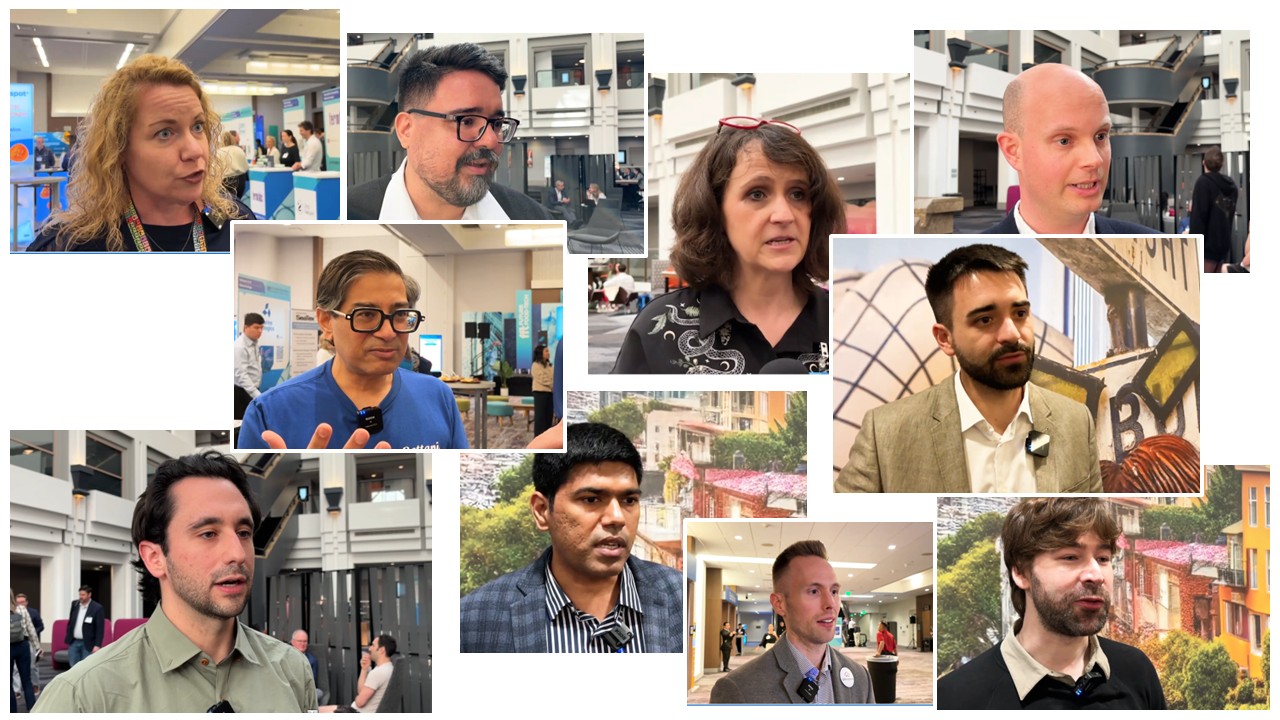
We’ll share the full interviews over the next couple of weeks, but here’s a quick mashup of our conversations with Checkerspot (high-value fats from fermentation), Magdalena (sugar giant-turned industrial-scale fermentation co), 21st.Bio (precision fermentation), Fermelanta (microbial production of rare plant metabolites), Michroma (natural colors via fermentation), and Laurus Bio (building large-scale fermentation capacity).
We also caught up with Kawa Project (upcycling coffee waste), Bettani Farms (dairy-free cheese), Totality Biosciences (plant-based HMO production), Dogodan (epigenetic regulation to increase the concentration of high-value proteins already present in milk such as lactoferrin), and the leader of IFT’s new AI-enabled CoDeveloper platform.
👉 J. Casey Lippmeier, PhD, CTO, Checkerspot
Not every ingredient has the luxury of a just-waiting-for-you high-value market to start with, right? Sometimes you do have to start at the middle or maybe even a little bit towards the bottom. And for that, you do need some more advanced technologies to be able to achieve those unit economics.
My favorite one today is continuous processing. I’ve been talking about this in a number of different contexts for a number of different kinds of products, everything from pharmaceuticals to materials and especially food ingredients.
Continuous fermentation is already a fairly well-established process in the pharmaceutical world, not as well established in in our world, the food ingredient world, Checkerspot does what we would call a semi-continuous fermentation. So it’s the very last step on the way to fully continuous but we can’t stop there, because in order for that to really make any sense, we need also fully continuous downstream processing. So that’s the extraction, purification, refining steps. That would be a tour de force, and it is something that we are working on.
In particular, there are a number of partners that we’re talking to about that as well, that I can’t talk about yet in more detail, but that is a technology I’m very excited about.
👉 Wagner Pinton Ferreira, head of industrialization, Magdalena
One challenge we often see is that firms have one team for fermentation upstream and another team taking care of the downstream development. They are different teams, different leadership and not necessarily talking to each other at every stage. It’s also really common that companies invest a lot in fermentation and not that much in downstream, and this is a huge mistake, because you can produce a lot, you can improve productivity, and yield, but if your downstream process is not correct, you throw everything away.
👉 Henrik Geertz-Hansen, PhD, chief of development and R&D operations, 21st.Bio
Today, the key ingredients [produced via precision fermentation] are enzymes and pharmaceutical products, but the tech is now making its way into the true bulk ingredient space. We’re really excited about some of the technology developments [enabling the production of animal-free food ingredients such as] ovalbumin, beta-lactoglobulin, caseins, alpha-lactalbumin… that are starting to come online at relevant price points.
I think we will see in the next couple of years that we will unlock prices of below $15, even below $10 a kilo for some of these ingredients, which will bring us into the price range where we can long term compete against animal derived protein.
👉 Lucas Mixich, PhD, business development manager, Fermelanta
What our biomanufacturing process [using engineered E.coli bacteria] enables us to do is access really rare ingredients [including secondary plant metabolites that are very costly and inefficient to extract from plants] that were previously not available or available in such small quantities that you can’t produce them efficiently at scale. We enable companies to make existing ingredients more efficiently and more cheaply and also enter new markets.
👉 Ricky Cassini, founder, Michroma
By using this technology, high value ingredients, high margin ingredients, are where fermentation is going to be successful first and then we will continue to [look at] lower [value] types of [ingredients such as] proteins that eventually will be cost competitive. But I think we are not there yet.
👉 Henrik Geertz-Hansen, PhD, chief of development and R&D operations, 21st.Bio
What many startups are forced to do is to use the strains that are readily available, either from academic labs or from some of the suppliers that are out there. And what they’re typically selected for is speed in their ability to be manipulated.
So they’re really good for proof of concepts, but once you want to take them into industrial scale, where the conditions are very, very different than they are at lab scale, these strains are no longer thriving, and so their performance tends to decrease significantly, and it makes the iterations going from lab to pilot to full scale very, very tough, error prone, expensive and time consuming.
What we need to do in the industry is rally around a smaller number of chassis strains that are dedicated and optimized for thriving at full scale, such that we can avoid running into this slow iteration, expensive learning [phase and move] more in an engineering fashion, moving predictably from lab scale to full scale production with the same performance.
👉Aditya Ravi, director of business development, Laurus Bio
Laurus Bio is investing in large fermentation capacity. We have a vision to build 2-million liters of fermentation capacity in the next few years, and we are on course with that vision. Our new site is going to come up in October this year with half a million liters of additional capacity.
👉 Aaron Feigelman, founder, Kawa Project
Raising money has been pretty challenging… I think that one of the smart ways that we figure out how to bring in cash to the business is to do paid pilots with coffee factories that have waste streams and are interested in doing paid R&D, of looking at their waste, understanding what value is in there, and what applications there are in the chocolate market.
We did one paid pilot with Nabeiro Group in Portugal, which was very helpful for our business and for them. And the same can be done with companies that are buying chocolate or cocoa that are looking to figure out… can they look at substitutes? But it’s not easy to do. Not everyone wants to pay…
👉 Sandeep Patel, CEO, Bettani Farms
One of the big things we did [with fresh funding and new leadership in 2025] is take a step back and look at what are the biggest areas of the market that makes sense for us to focus on.
So our blue cheese was a phenomenal product our team developed, but there’s a fairly small market and it’s very difficult to make. So we decided let’s just go after the biggest prize, which is mozzarella. It’s 40% of the US cheese market, which is about 15 billion pounds, and that’s really where our proprietary protein, which we call Caseed, which mimics a lot of the functionality of [the dairy protein] casein, really shines.
👉 Leila Strickland, PhD, CEO, Totality Biosciences
[Large food companies] are looking to expand HMOs [human milk oligosaccharides] into other age categories. They’ve done well with HMOs in premium infant formulas, but a lot of these companies have also funded clinical trials in other populations across the lifespan. So they want to see them in pediatric children’s nutrition, as well as in food products and beverage products for all ages, and they’re really thinking about HMOs as part of their health and wellness specialized nutrition portfolios.
They’re also really frustrated with the high cost of HMO ingredients [currently produced via microbial fermentation] and have had a hard time justifying extending the molecules into those applications. So we’re getting a lot of positive response to the possibility of a more affordable and accessible cost for those buyers [by producing HMOs in plants instead].
👉 Maria Cho, president, Dogodan
We’re focused on epigenetic regulation of the lactation process in cows. So in the cow, think of genes and DNA as hardware and epigenetics as the operating system.
We’re doing an upgrade to the operating system in the cow. We’re not changing the infrastructure or supply chain but increasing the amount of proteins such as lactoferrin that are produced in cow’s milk to, let’s say, 20x of what it is today.
👉 Jay Gilbert, PhD, director, CoDeveloper, Institute of Food Technologists (IFT)
We’ve taken IFT’s proprietary knowledge and insight and designed a platform that puts science at the center. It leverages artificial intelligence for users to tap into that knowledge to accelerate what they do.
It [draws upon a] proprietary data set that we’ve been acquiring over 85 years since our conception. That includes things like the Journal of Food Science, Comprehensive Reviews In Food Science And Food Safety, Food Technology magazine, and a lot of content that has been curated by our community that is peer reviewed and trusted, allowing us to really set ourselves apart from other technology or AI providers.
Further reading:
🎥 Ag’s new toolkit: AI, genomics, and robotics converge at World Agri-Tech

Sign up for our weekly newsletter.