Can tiny biological production factories ever give petrochemicals or animals a run for their money? And do we need cheaper feedstocks to unlock the next generation of bioproducts?
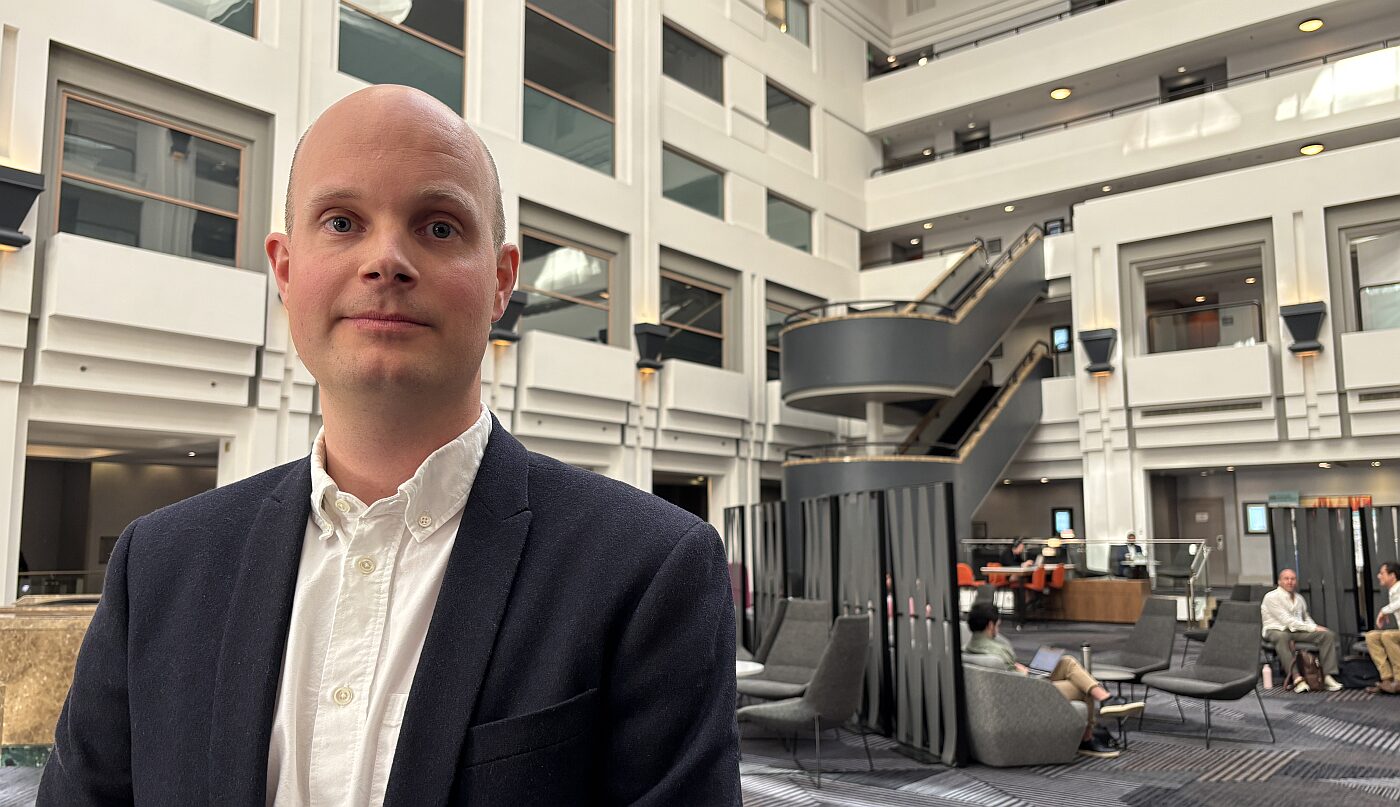
AgFunderNews (AFN) caught up with Henrik Geertz-Hansen (HGH) at 21st Bio at Future Food-Tech in San Francisco to discuss the path to cost parity, the bottlenecks holding startups back, and how 21st Bio can help startups cross the valley of death in biomanufacturing.
AFN: Can biomanufacturing really compete with petrochemicals or animals?
HGH: We are getting very, very close. And I think you’re right. We’ve been through a cycle of hype and now there’s more realism and conservatism in the industry, which I think is a good thing.
I think we’ve generally underestimated as an ecosystem what it takes to bring truly affordable, scalable and desirable bio manufactured products to the market. But now companies are much better aware of what it takes, deploying capital in the right way, and forming the right partnerships to make it happen. ‘
So I’m very optimistic that we will see the full promise of the bioeconomy and biomanufacturing come to fruition in the next decade.
AFN: At the moment, does precision fermentation only makes sense for very high value ingredients?
HGH: I think we’re absolutely seeing that today, the core ingredients are enzymes and pharmaceutical products, and then it’s making its way into the true bulk ingredient space. We’re really excited about some of the technology developments that are being secured where 21st Bio is among the leaders, and there are certainly others too, where ovalbumin, BLG, caseins, alpha lactalbumin, are starting to come online at relevant price points.
I think we will see in the next couple of years that we will unlock below $15, even below $10 a kilo for some of these ingredients, which will bring us into the price range where we can, long term, compete against animal derived protein.
AFN: What are some of the biggest challenges facing startups trying to cross that valley of death?
HGH: I think what many startups are forced to do is to use the strains that are readily available, either from academic labs or from some of the suppliers that are out there. And what they’re typically selected for is speed in their ability to be manipulated.
So they’re really good for proof of concepts, but once you want to take them into industrial scale, where the conditions are very, very different than they are at lab scale, these strains are no longer thriving, and so their performance tend to decrease significantly. And this makes the iterations going from lab to pilot to full scale, very, very tough, error prone, expensive and time consuming.
So I think what we need to hopefully see in the industry is that we rally around a smaller number of chassis, strains, that are dedicated and optimized for thriving at full scale so we can move predictably from lab scale to full scale production.
AFN: Is 21st Bio there to help firms get to the tech transfer stage?
HGH: That’s exactly right. We don’t produce ourselves and we don’t pride ourselves with being masters in discovery. Companies that we work with will have to do their own discovery, their own application, understanding and tailoring their solution to the market that they’re going into.
We will then prepare the manufacturing technology from strain to fermentation to downstream process if they want us to, and then tech transfer that to a CMO [contract manufacturing organization] of their choice, or if they have access to own internal production.
We think that can be the equivalent of how computers were developed in the beginning, where lots of different software was running on other people’s hardware, and very few, if any, were trying to cover the whole stack simply because of the complexities that they’re facing.
I think biology needs to return to some of those same principles and distribute the labor and the development work that’s required to bring about some of these innovative solutions that we all need.
AFN: Do you see a disconnect between teams working on upstream and downstream processes in biomanufacturing?
HGH: These things cannot be developed in a sequential manner. Sometimes you need to do that because of resource constraints or team size constraints or funding constraints. But in the big biotech companies, such as Novonesis, in the pharmaceutical industries, all of these things are happening at the same time.
And you are, so to speak, iterating from end to end. And so you get to a first generation strain, you start optimizing the fermentation at the same time as you’re optimizing the DSP [down stream process]. It’s the only way to win, but it has to be done from a mindset of striving for simplicity to your point, such that you don’t introduce complexities in one stage [eg. upstream] that will make it impossible to succeed at another stage [downstream].
So getting to this notion of platform technologies, platform strains and recipes, where you’re re-using the same basic principles, maybe with slight modifications depending on the product you’re producing, can alleviate a lot of that complexity and risk where decisions in one team are negatively impacting decisions in other teams.
AFN: What enabling technologies are you excited about in biomanufacturing?
HGH: Obviously, continuous fermentation is a hot topic, and it’s been around conceptually for a long time.
We are going to the market with batch fermentation for the first couple of generations, just because it’s tried and tested. But there are some potentially really attractive advantages of transitioning to continuous [fermentation], although you do need to see it move up in scale such that we are also confident that the benefits that are currently maybe at the 10-15,000-liter scale can be replicated in a 200,000-L or even 400,000-L equivalent type facility.
But I’m sure that will make its way and in due time, that could be a really interesting technology to tap into.
AI is also bringing about a lot of opportunities, both in discovery, where we can tap into new protein functionalities and certainly more directed designs, to targets or functions that humans want but nature didn’t need. But also in the way we engineer the strain and make sense of its metabolic mysteries to direct more of its efforts towards protein engineering. I’m sure AI will help us understand the data sets that we can already generate cheaply, but perhaps not get the full understanding of.
AFN: Do we need cheaper feedstocks for the next generation of biproducts?
HGH: For the first generation of products, I think glucose can get us where we need to be. But I think when we are thinking longer term, and certainly we’re thinking about local production, some of these food ingredients, for example, or ag solutions, or other things, then we need strains and processes who work for the substrates that are locally available, whether that be glucose or sucrose or even lactose.
And we believe that the same strains that we are using today can absolutely be adapted to some of these carbon sources. But there are, of course, some performance drops that we’re seeing that need to be closed and that will take development effort.
But it is the way that we can regionalize and localize biomanufacturing, which I think will mean that many communities can take back control of their nutritional challenges and also their supply challenges, for example, for biopesticides or bioherbicides, who can help them sustain local production for food and agricultural products.
AFN: Do CMOs have the equipment startups in this space need?
HGH: It’s a challenge in the realm where each company is going for their own strain and their own process. If we were to unleash this vision of transferring to platform technologies and strains where we can reuse the same DSP and so on, this challenge would become less.
But certainly today, we have a couple of these facilities around where some investments are needed to unlock the potential before they can be put to use.
AFN: Magdalena, a big sugar player in Latam, is here [at the show] and is building a large precision fermentation facility in Guatemala. Are those kinds of developments encouraging?
HGH: Very much so. I think these are exactly the kinds of partnerships that we want to see happen. Whether they choose to use our strains or their own strains I think matters less, but the fact that facilities like this are being planned, are coming online, are being built in vicinity of the raw materials that are needed to run them is an amazing thing.
Once capacity is there, we can more quickly deploy the technologies as they mature and get products to consumers faster.
Further reading:
Latam sugar giant Magdalena plans 650,000-L precision fermentation facility in Guatemala
🎥 Future Food-Tech: Big ideas, hard truths, and the path to scale
Biomanufacturing’s valley of death has a new bridge in India, says Symbiotec