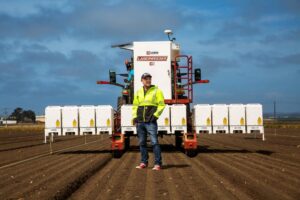
With the cracks in chemical-based crop protection widening, many are now contemplating the role of farm robotics in helping growers reduce reliance on these inputs.
Danny Bernstein, CEO and managing partner of farm robotics incubator Reservoir, says this thinking is top of mind for many of the startups now operating out of the company’s campuses, which are employing everything from zapping weeds via electricity to controlling pests with UV light.
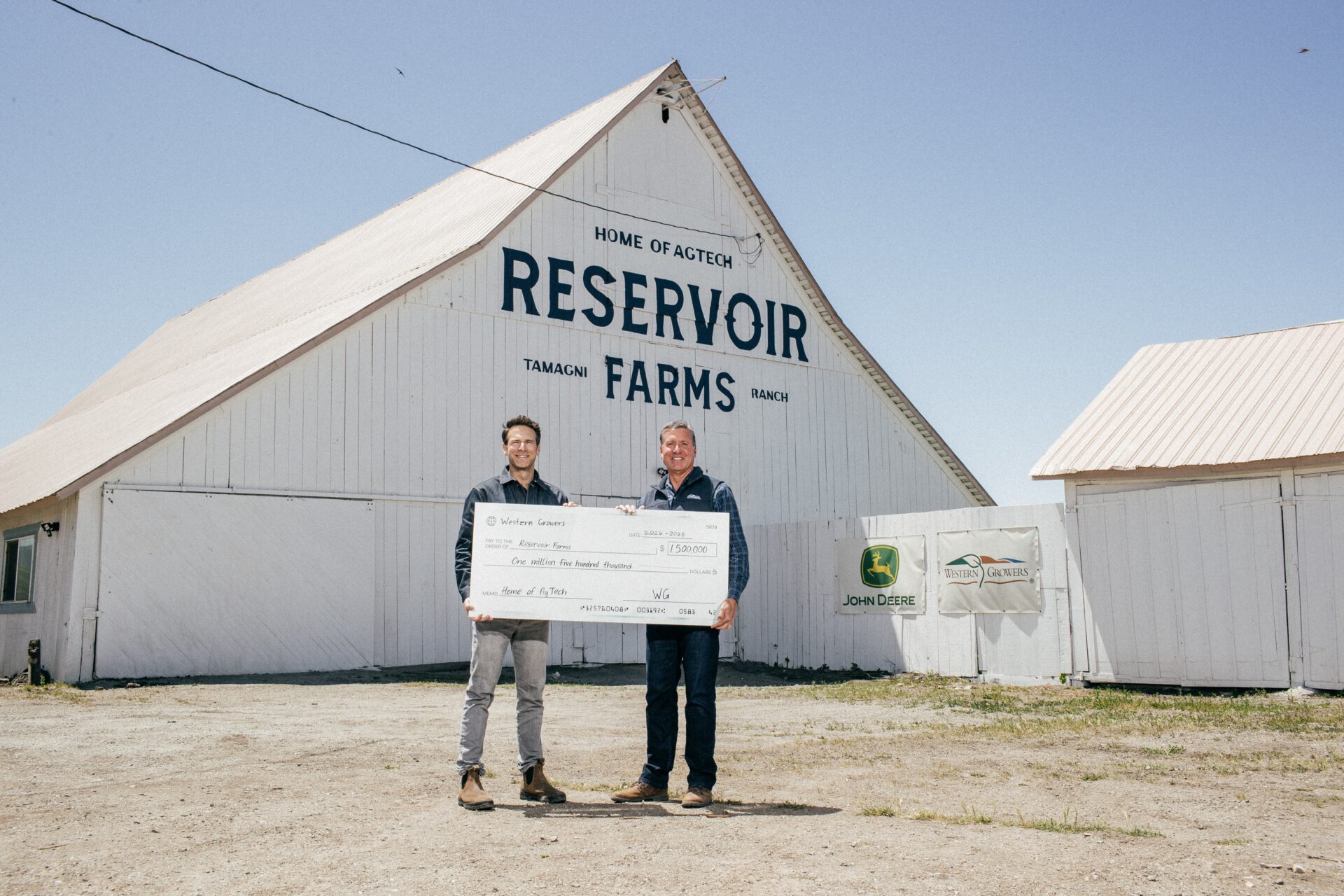
California-based Reservoir itself has now expanded to two campuses—one in the Salinas Valley and one in Sonoma County—and plans to break ground on a third, in Central Valley, later this summer. Last month, the company announced a three-year partnership with Western Growers that includes a $1.5 million investment. The partnership will expand on what Reservoir has already spent the last few years building: a shared R&D place for ag robotics startups to build viable products for less capital, access fields for trials, and receive grower feedback on products.
The company will also host its first conference, Ruggedize, this year, which Bernstein calls “a deeptech robotics conference for agtech and rugged. AI.
Ahead of these happenings, he chatted recently with AgFunderNews about Reservoir’s evolution.
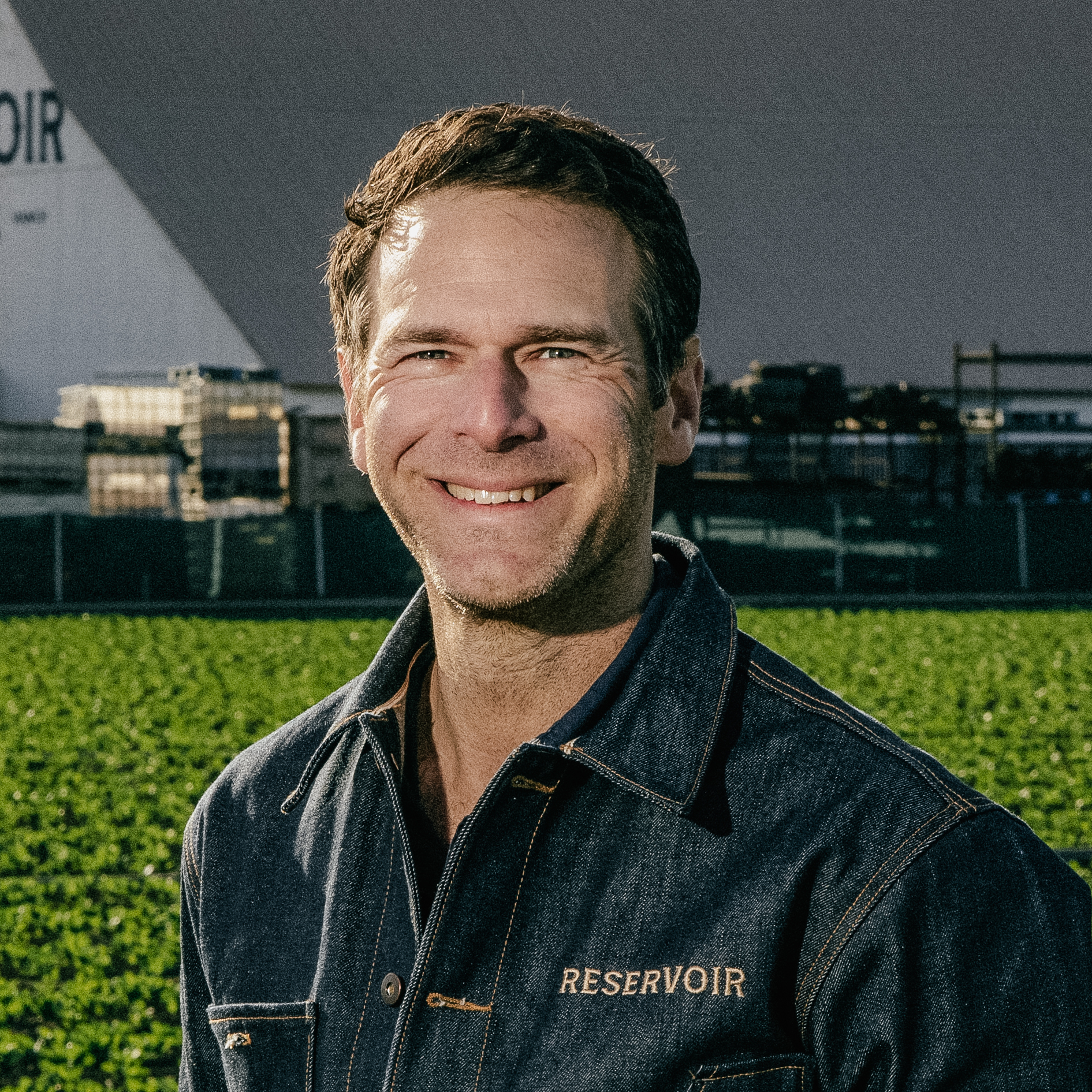
AgFunderNews (AFN): What is Reservoir’s main focus these days?
Danny Bernstein (DB): We want to accelerate technology that improves resilience for specialty crop growers. In particular, our focus is on software-enabled hardware, automation, robotics, precision application, data, decision making, tools, field monitoring.
Reservoir sits across two different companies. Reservoir Farms is a C Corp and operating our incubators. (The deal with Western Growers is for the incubator side of the business.) We also have a management company that runs our fund, and that’s Reservoir VC.
On the incubator side, we have two locations that are live and fully operational, with significant day-to-day activity on the farm and in the shop. Salinas and Sonoma are both open, operational, and busy. Yesterday, for example, we hosted the Japanese Chamber of Commerce and also the CDFA (California Department of Food and Agriculture), and we had folks from the Norinchukin Bank. So Reservoir Farms has gone from concept to fully operational.
AFN: How will the partnership with Western Growers help all of this?
DB: They support our mission instead of trying to alter it. Something to think about when it comes to corporate partnerships with incubators, is, do they make you do unnatural things? And the answer [for the Western Growers partnership] is no.
Essentially, the Western Growers support lets us get more granular and be more solution-oriented around specific crops. To be able to have really clear segment-level prioritization for specialty crops or high-value crops, and have that informed by a broad set of growers, is extraordinarily valuable.
So we basically are able to plug in with Western Growers. They have over 2,000 growers, so we end up getting a really great view into segment-level prioritization for specialty crops.
By having multiple years to do the work, we can now begin to build crop-level prioritization around agtech priorities, which also lets us work alongside individual commissions. We can work with the Strawberry Commission, with the California Almond Board, with the National Grape Research Association.
AFN: What’s new on the VC side of things?
DB: We did a proof of concept fund that was very successful, and we felt like a larger fund should exist, and so we built the team, we built the thesis, and we’re working towards first close of our bigger fund.
AFN: Many question the role of VC in agrifoodtech these days. How do you see it in the context of farm robotics?
DB: I think we’re entering the next golden age of robotics. Even five years ago, robots were one task, one crop, which is really difficult to make a business out of because it’s a very small TAM [total addressable market].
Now, a single machine can work across tasks, across crops. Another key trend line is machines that can work across multiple industries. So if we’re investing in an agtech machine, the source domain might be agriculture, but it can work in mining, which actually is more structured than that agriculture. It can work in forestry. It can work in land management. It can work in coastal maintenance, coastal restoration, these sorts of things.
So now the TAMs are justifying the upfront capital requirements, because you can see exponential TAMs across a variety of dimensions,
Even if you can go from one crop or one task to one crop and multiple tasks, that’s an exponential TAM.
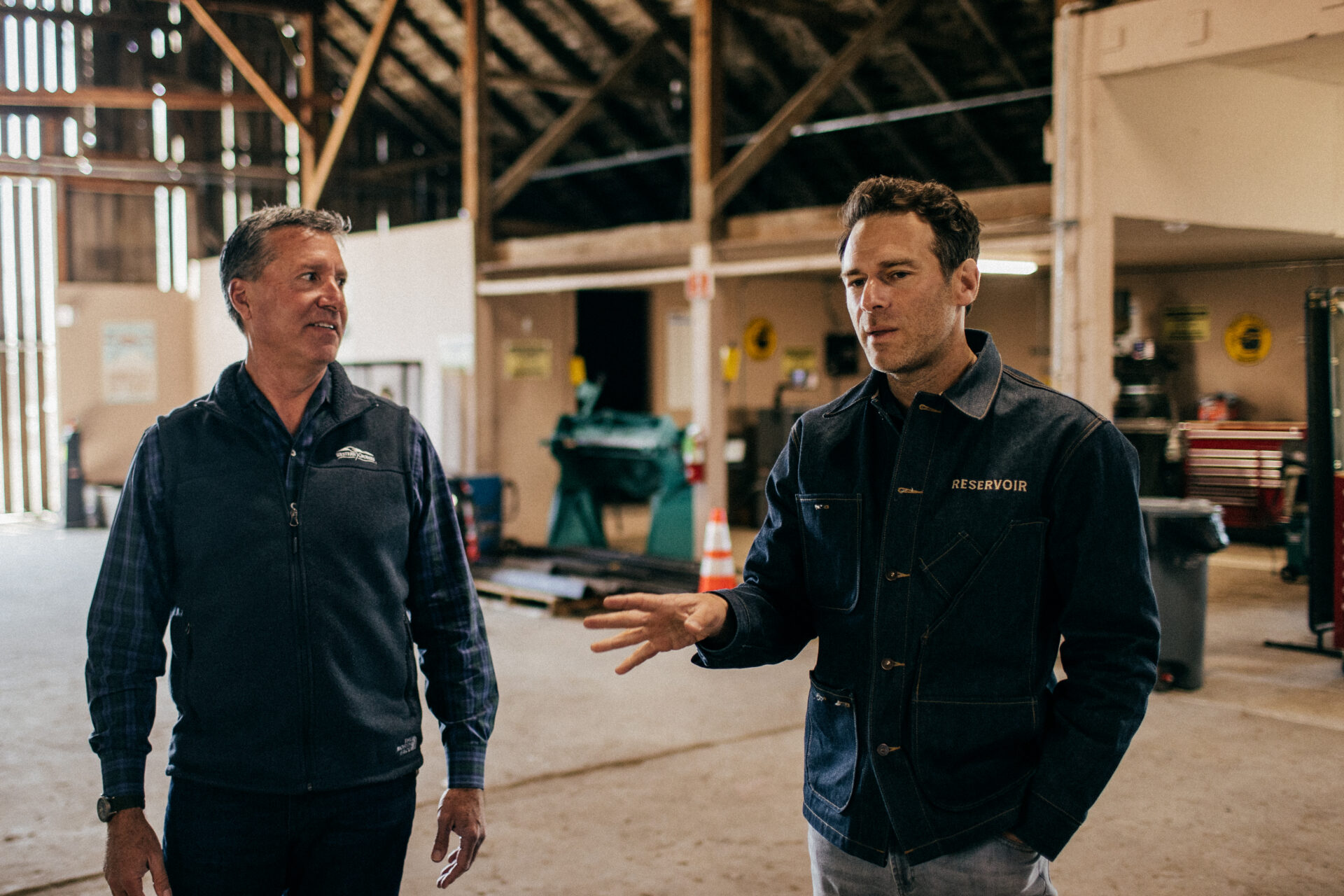
AFN: What are the biggest challenges right now for ag robotics development and adoption?
DB: [Many of the farm robotics systems] are not cheap machines. Some of the capital challenge is being able to take these products downstream.
This is actually an issue in communications. A lot of the advocates for smallholders say, “Agtech is too expensive.” But really, that’s just an R&D problem, not a pricing problem. Think about Tesla: their first model was the most expensive.
As the company began to scale, they released the Model 3, and it made electric [vehicles] accessible at a much more reasonable price point. That happened because they were able to achieve scale and they had a capital base and a shareholder base that allowed them through that kind of R&D.
So it’s inevitable that [farm robotics] machines, I think, become more accessible to smallholders, and then we’re able to bridge these conversations better.
More and more, we’re getting inbound from some of the incumbent retailers about how they can engage here. It’s a classic Innovator’s Dilemma. Ultimately, they will need to really think deeply about how they reinvent their business, and really think about how they can rely on new models.
AFN: How do you see farm robotics helping growers reduce reliance on costly chemical inputs in the future? What must happen for this to become a reality?
DB: We need a closer connection between the worlds of regenerative farming and agtech innovation. These worlds actually need more communication.
Part of how we view Reservoir is that we believe we can be one of the conveners around those topics, whether it’s regulatory impact or supply chain impact.
For companies to operate in this space, they basically need to be doing two things.
They need to be developing a robot, and then they need to be developing a novel approach to pest control and weed management.
There are a few Reservoir companies that are classic examples of this: TRIC Robotics is doing UV light for pest control. High Degree is using steam for fumigation. BHF is using electricity for weed control, as is Azaneo.
There are other examples, but those are ones that come to mind who are the most exciting companies of Reservoir, and those are the kinds of companies we’re really excited to back.
Further reading:
The cracks in chemical farming are getting hard to ignore. These startups are providing alternatives
Monarch Tractor CEO—‘We should have pivoted harder and faster’