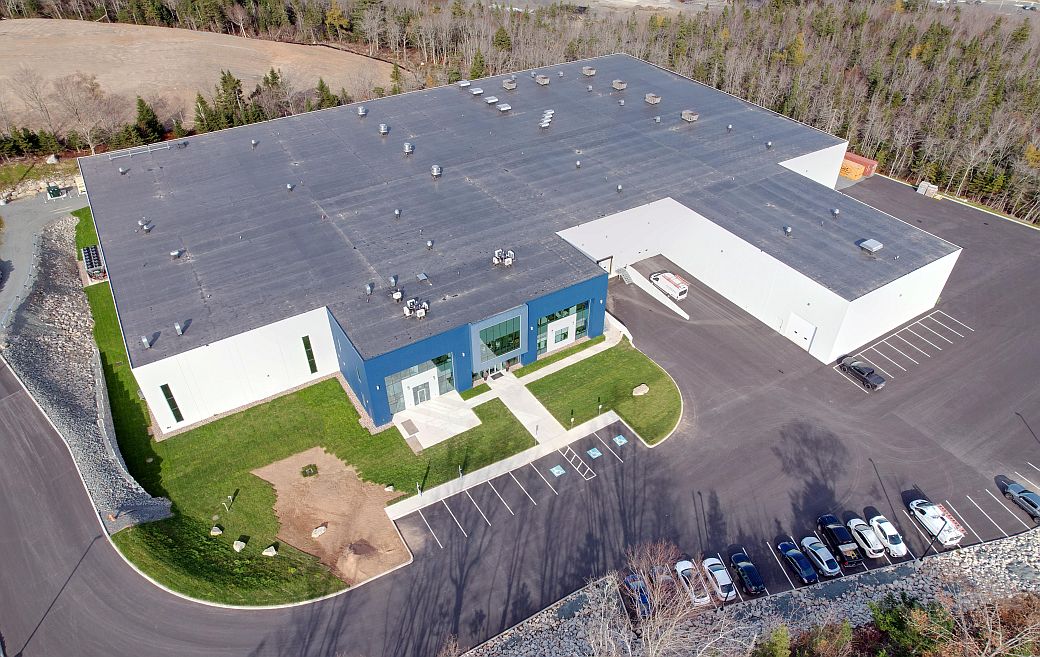
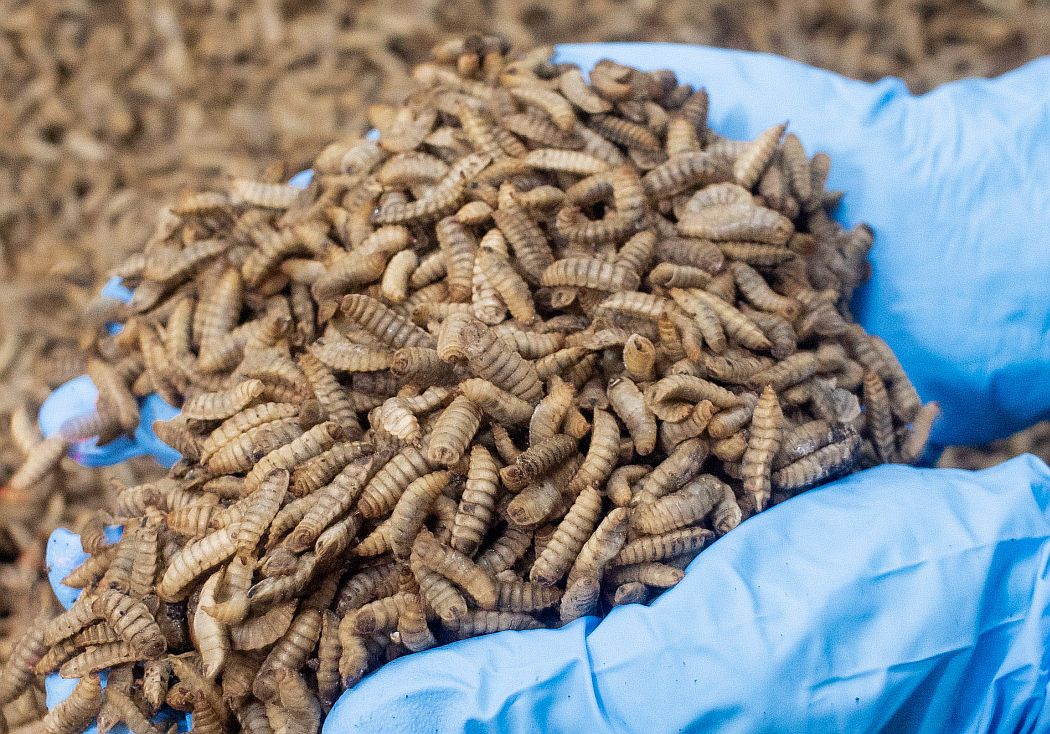
Canadian insect ag startup Oberland Agriscience has started shipping commercial quantities of protein and frass from its facility in Halifax, Nova Scotia, and appointed food industry veteran Jon Getzinger as CEO as it moves into a new phase of development.
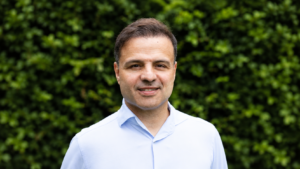
Getzinger, who has held leadership roles at PURIS, Synthetic Genomics, DSM, Cargill, NutraSweet, and FERMWORX, succeeds founder Greg Wanger PhD, who has moved into the CTO role at the firm, which processes black soldier fly larvae into protein and frass.
Wanger told AgFunderNews: “We’ve been running at commercial scale since July, but now I’d say we’re really hitting our stride with truckloads of product going mostly to the US. We expect to hit full capacity in Q1 or early Q2 of next year.”
The economics of insect ag
The costs of insect farming have come down a lot in recent years in part due to automation, said Wanger, who is also using machine learning and predictive analytics to optimize production. But to succeed in the animal feed and petfood markets, firms have to offer added value over existing protein options on health, palatability, or the environment.
“If you’re talking about a direct replacement, it’s very tough to compete against soy,” said Wanger. “But there are anti-inflammatory and anti-microbial benefits to the animals and growth benefits that you get with black soldier flies.
“Once you start to talk to operators of aquaculture facilities, for example, and you ask: What is it worth to you if we can reduce mortality? What if you don’t need to use antibiotics? Then you can see the narrative start to change, because up until now, we didn’t really have the data to back it up.”
He added: “We’re seeing very positive market pull right now for the protein and the frass [insect waste] as soil health becomes more important. For the protein, poultry is the largest growth industry for us right now, but we’re also talking to companies in petfood and aquaculture.
“In petfood, the challenge is volume. There just aren’t enough of us yet out there yet to offer consistency of supply at high volumes. But we have heard from some of the large players that they’re excited and eager, as we’re seeing good palatability as well as health benefits.”
Climate control
As for scaling up, the key to success is ironing out problems at a small scale before you end up spending huge sums on scaling something that won’t work, said Wanger, who feeds his BSFL spent brewers’ grains and fruit & veg waste from large processors.
“One thing we [as an industry] all struggle with is climate control. Black soldier flies like to be at 28⁰C or even hotter, and I can tell you right now it’s not 28 degrees right now in Halifax, so climate control is really important.
“When I started the pilot facility, it was all about energy, so we recapture the heat that we’re generating in one part of the facility and use that to heat the rest of our building. So that works in Halifax, but if we were in Texas or California, where heat is not an issue, you have the reverse problem. I think a lot of people didn’t really understand how much heat or ammonia and other things that these larvae produce.”
He added: “When we do the second plant, there are a lot of lessons we’ve learned here, although I think about 80% of what we do would probably be the same. One thing I’d add would be few more floor drains.”
Funding
Oberland has thus far been funded by angel investors and a family office in Halifax. It is now talking to “some of the larger banks and some large institutional investors that see this more as infrastructure now that we’ve proven it and we’re making and selling product,” said Wanger. “So I do see a really positive future.”
Funding rounds in insect agriculture (US dollars):
2025
- Volare(black soldier fly larvae, Finland): $30 million
- nextProtein(black soldier fly larvae, France/Tunisia): $21 million
- Proteine Resources (lesser mealworms, Poland): $11.1 million
- GreenGrahi (black soldier fly larvae, India): $3.7 million
- Loopworm (silkworms, India): $3.25 million
- InsectBiotech (black soldier fly larvae, Spain): $1.7 million
- Enthos Circular Feed Technologies (black soldier fly larvae, Colombia): Undisclosed
- FlyBox (black soldier fly larvae, UK): $400k
2024
- Entosystem(black soldier fly larvae, Canada): $42 million
- Protix(black soldier fly larvae, Netherlands): $40 million
- Tebrio(mealworms, Spain): $32.6 million
- FreezeM(black soldier fly neonates for breeding, Israel): $14.2 million
- Nasekomo(insect ag franchisor, black soldier fly neonate supplier, Bulgaria): $8.7 million
- Entocycle (enabling tech for insect ag, UK): $2.6 million
Source: Preliminary AgFunder data [disclosure: AgFunder is the parent company of AgFunderNews)
Insect ag: positive signals amid grim news?
The signals coming from the insect ag space have been mixed this year, with some high profile business failures coupled with funding rounds from new players.
Danish insect ag co ENORM was declared bankrupt, South African BSFL startup Inseco ceased operations, and French mealworm farmer Ÿnsect went into judicial liquidation.
In May, receivers were called in to Canada-based cricket farmer Aspire Food Group by lender Farm Credit Canada when it became clear the firm could not meet its financial obligations. The Ontario Superior Court of Justice later approved a deal to sell the assets to Halali Group Holdings.
However, new players are still attracting funding, with nextProtein securing €18 million ($21 million) last month to scale production in Tunisia and Volare bagging €26 million ($30 million) in May to scale production in Finland.
Meanwhile, French insect ag firm Innovafeed insists plans to build a commercial scale BSFL facility at an ADM corn milling site in the US “remain very much alive,” while Full Circle Biotechnology is building a 7,000-ton/year insect protein facility near Bangkok.
Further reading:
Judicial liquidation for Ÿnsect as insect farming sector ‘struggles to become competitive’
South African insect ag co Inseco calls it quits amid power cuts, pivots: ‘We ran out of time’
Exclusive: Aspire Food Group’s Ontario cricket farm sold to new owner as firm collapses under debt

Sign up for our weekly newsletter.