With the notable exception of Monsanto’s billion-dollar acquisition of Climate Corp more than a decade ago, category-defining exits have proved elusive in agtech, which has returned little capital to date. But could 2026 be the year everything changes?
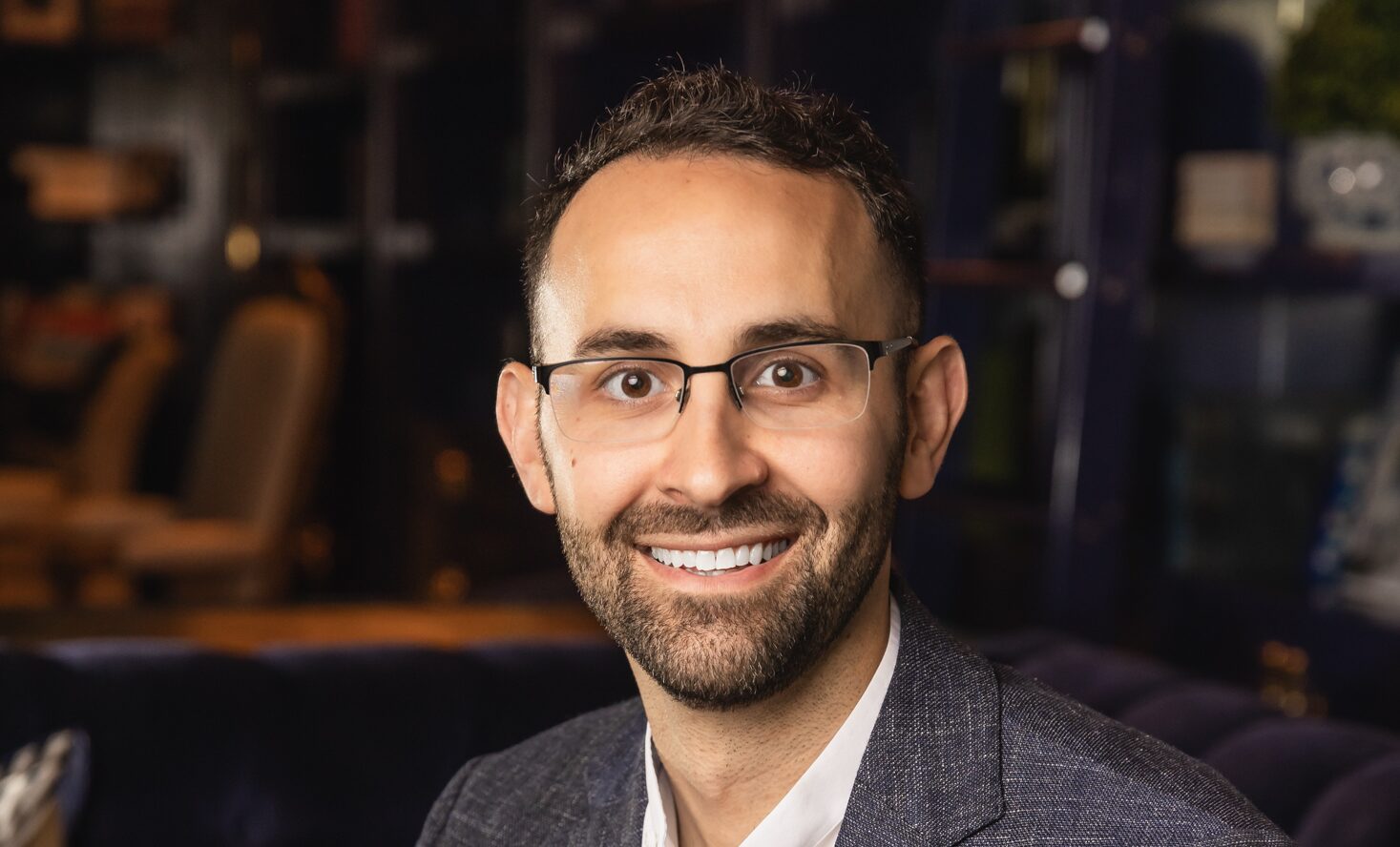
Probably not, says PJ Amini, VP ag investments at Bayer’s corporate venture arm Leaps by Bayer, although he senses a shift from an era of “reckoning” to one of “renaissance.”
As potential acquirers, the big strategics are currently distracted with internal issues or unwilling to pay 2021 valuations, while most agtech fundamentals are not yet attractive enough to bring in public market investors or private equity buyers.
“We have to be honest with where a lot of the strategic players are in 2026,” he observes. “Corteva is going through a split, Syngenta and BASF [the ag solutions business] are looking at being listed on their own public market offerings, and FMC is itself now open to offers. So a lot of the big players are probably a little distracted at this moment to make it seem plausible to believe there’s going to be a lot of acquisitions from these players.”
As for IPOs, he says, “Last year, we were talking with three or four different banks, and we asked them all, what does it take both to IPO right now and stay up in price after you go public? They all said something along the lines of you need an average of three years of consistent growth, and $50 to $100 million of EBITDA.”
Right now, he says, you’ll struggle to find many agtech startups that meet those criteria. “But I think we’re going to see a lot of companies crossing the profitability line in 2026 which then sets them up for success longer term, so I’m optimistic about the future.”
AgFunderNews (AFN) caught up with Amini (PA) to discuss where Leaps is placing its bets, what raises red flags in a pitch, and how the “50% rule” works.
AFN: How did you get into ag investing?
PA: I got my start working with the USDA as a researcher, then joined Monsanto. I ended up sitting on biotech and chemistry leadership teams helping source and develop software and data science tools to help us advance our research and then had the chance to drive digital strategy and innovation up until the Bayer acquisition.
At that point there was an opportunity to join Leaps with my colleague Derek [Norman] to help drive the ag and food investment strategy. Monsanto had Monsanto Growth Ventures that started in 2011 and Bayer had Leaps by Bayer, which started in 2015. However, the majority of investments coming out of Leaps previously were a bit more healthcare-oriented. So this was us putting these two portfolios together.
AFN: Do investments at Leaps by Bayer have to directly relate to Bayer’s core business?
PA: For any potential investment, I have to finish the sentence: “If this investment or company and its technology are successful, Bayer will want to…” And it’s not just acquire, it could be partner, license, go to market together, for example. If a company has successful technology, it should have a big impact on our customers and our ecosystem and we should want to play with it in some way, shape or form. If we can’t imagine doing that, we probably shouldn’t be making the investment.
AFN: Does having internal experts for due diligence offer unique benefits?
PA: It’s a huge differentiator that we can’t even put a value on. We’re tall because we stand on the shoulders of one of the largest ag input companies globally with a huge R&D arm and great go to market capabilities. If you think about the two biggest challenges any startup in the agtech space has, the first is can they develop their product on the right timeline for the right cost and get it to market? The second is, if we get it to market, can we actually sell our product?
AFN: Where do Leaps by Bayer deals typically come from?
PA: About a third were cold, direct reach outs to us on the Leaps team, a third were sourced from the broader Bayer organization because someone knew someone in Bayer but didn’t know us. And a third came from our university relationships or our relationships with the broader venture and accelerator ecosystem, who then kind of passed it on to us.
AFN: How quickly can Leaps by Bayer sign off on an investment?
PA: On average, we tell companies between your first pitch and the time we want to close, we’re talking six to eight weeks. The fastest deal I think we’ve done was a follow on investment within two weeks. But it depends on the company.
AFN: It looks like Leaps’ rate of investment has slowed down in the ag space over the past couple of years?
PA: Like many folks, we’ve been focused on the continued success of our existing portfolio companies so a majority of funds was tied to follow-on investments. However, we do have some new news that will come out shortly that will show continued traction for new investments in agtech as well.
AFN: How would you characterize the current state of play in agtech investing?
PA: Our latest ag playbook [coming out on Thursday] has a section on capital markets by Scott Porter at Westerra Capital. To steal his language, we’re coming out of the reckoning era and entering the renaissance era for agtech.
And a lot of that gets driven by the companies who’ve gone through this hard period really focused on unit economics, on having the right experts around for scale up, where we’re going to see profitable businesses and find potential exits, not just from acquisition, but from IPOs and from other routes to market that traditionally, we haven’t seen as much of in the last seven years, at least in a sustained, successful manner.
AFN: You’ve said before we should pay more heed to zebras, not unicorns, in agtech investing?
PA: If we look at ag and say, OK, let’s count the number of billion-plus exits we’ve seen in the last decade. Well, it’s Monsanto buying Climate Corp. End of story, right?
We know that the tech levels of dumping money into a startup probably don’t sustain for a company that’s going to exit for $200 or $300 million. We want to hire a number of these companies to be successful in the long run.
I do hope we find unicorns. But people still pay to go to the zoo to see a bunch of zebras. They’re fun and unique. We want each of our portfolio companies to be successful, and that success isn’t necessarily defined as a $5 billion exit in five years.
AFN: What areas of agtech are you most excited about?
PA: The first is next gen genetics tools including epigenetics, which are just at their earliest stages, but are getting out to the field. We’ve made investments like Decibel Bio [which develops crop traits by modifying how genes are regulated by using epigenetic tools, without altering the underlying DNA sequence] and continue to look for more novel genetic tools that help advance breeding and make our crops more resilient to dramatically changing weather patterns.
The second is AI for applications in R&D and discovery. So computational breeding platforms or computational targeting tools or genetic identification pathways will rapidly accelerate R&D. But what’s more interesting is the automation needed to complement that, so having rapid assaying capabilities becomes super important. So automation that [complements] AI is an area we’re super-interested in today.
The other area we’re super interested in is the intersection of fintech and agtech. So [portfolio company] Grão Direto is the largest post-harvest commodity marketplace in Brazil right now, where ADM, Cargill, and Louis Dreyfus, who are also investors, buy their grain from over 90,000 farmers on the platform. And really, what’s exciting is not just that it’s a digital marketplace that has an AI engine helping both sides make their trades and purchases. It’s the fact that there’s financial loan tools and other services that get provided to the farmer so they can access capital and work in capital constrained systems.
AFN: AI can speed up discovery, but what about regulatory, testing, and deployment?
PA: We can use AI to accelerate discovery and go from years to months, or even weeks. What is continuously evolving is the regulatory ecosystem globally. And you still need to go out into the field and test. But if we can shave off years at the front end, that’s where AI is having a major impact.
AFN: Can more be done to speed up the early testing phase?
PA: We’re going to get better with simulation technology to better understand how things may work in certain conditions, so that by the time you get to the field testing stage, you’ve hopefully improved your chances. We’re also seeing more public and private field testing networks that allow for people to test in more realistic conditions to really see how a product performs in the field.
AFN: How does Leaps by Bayer assess potential investments in biologicals?
PA: We’re not actively working on early-stage R&D in biologicals ourselves because we believe that there’s great work happening outside of our walls and we want to access that.
When we look at technologies in this area, we want to understand what they’ve looked at as their positive control: are they testing this against nothing, or against the best practice?
We also look closely at unit economics as we’ve seen a couple of companies at the early field-testing stage where you realize that production costs more than you could ever sell the product for. Even at an early stage, that math needs to be done and understood.
AFN: Are you seeing advances in biomanufacturing that can improve the unit economics of biologicals?
PA: The short answer is yes. There’s a couple of great workforce species that seem to be standardized across the industry, and some specialty ones that when it’s the species itself being used in the field, rather than used as a production system. Producing for cents on the liter is more of the mandate now than dollars on the liter.
AFN: The FCC has just banned new foreign-made drone models and components in the US; will that prompt a surge of investment in US players?
PA: To some degree. This created an opportunity as well as strife, when you had 75%+ of the drones in our industry coming from that source [China] no longer able to serve the market [with new models].
That opens up a big opportunity. So we see some excitement and some companies working to fill that gap here today and continue to look at that space because precision application is going to continue to be important in agriculture. We also continue to support [portfolio company] American Autonomy [which spun out from Rantizo last year], which is operating as the software layer to enable those US players to come through.
AFN: Is there much overlap between the healthcare and ag side of Leaps?
PA: [Portfolio company] Numerion Labs [which uses ML for small molecule discovery] started from Monsanto Growth Ventures as an ag investment for AI drug discovery [but can apply the same approach to developing] new herbicides and insecticides.
With [portfolio company] Ukko [working with peanut proteins for allergy immunotherapy], the near term was getting a therapeutic out [using modified peanut proteins in which the allergen-triggering regions have been removed so they don’t bind IgE antibodies and trigger allergic reactions] The long term mentality was can we express this [modified] version of the peanut protein naturally in the plant?
If we can do that, that’s a game changer.
Another example in our portfolio [of a company spanning the health and ag field] is One.bio, which is isolating unique fiber products. We have high protein in everything, but fiber is still a huge problem with the majority of adults not getting enough.
AFN: What raises red flags for you in a pitch?
PA: One: inconsistency. A lot of times we might have seen a company when it was at a pre-seed or seed stage, and now they’re pitching us for a Series A or B, and the new deck has a completely new strategy that fails to address where the company has been and why it has pivoted. All startups have to make changes to adapt, and that’s a source of strength, but if it’s not addressed clearly in the pitch, it is a red flag.
Two: lack of experience. If we see a new company and it’s a university spin out, or we don’t see anyone on the team who has been down this journey before, we’re probably immediately out, or we’re telling them that’s what we want to see on the team or as an advisor before we would consider coming in.
But there have been a lot of changes amongst some of the major agtech players, so we’re seeing a lot of veterans of our industry working their way into startups as leaders and advisors.
AFN: What key learnings have you taken away from your years in agtech investing?
PA: We’ve doubled down on the 50% rule, so whatever a company shows us or projects, we say if the company over the long run is doing 50% of what it hopes to do, are we still interested?
AFN: Any portfolio companies you want to highlight?
PA: I’d say Grão Direto and Decibel Bio, which we discussed earlier, and NuCicer, which is unique in that it has a worldwide sourced, diverse pool of unique germplasm that it crossed to make a higher protein chickpea. It also has a pipeline of different varieties with higher yields, disease resistance and other things. So itt has the computational platform, the physical infrastructure of the greenhouse, the assaying capability, and the AI breeding engine to help accelerate the path to market.
There’s no gene editing, it is just leveraging the computational side on top of the physical side, and then owning that physical side as well as that makes it unique.
High protein, higher fiber chickpea flour can be used in a lot of baking products, and it’s gluten free.
Further reading:
Buckle up, say investors as AI reshapes agrifoodtech: ROI may be “unusually tangible’
India will see IPOs in agritech before America or Europe, says Omnivore’s Mark Kahn
👉 Checkout the latest interviews in our Investor Q&A series.

Sign up for our weekly newsletter.