Two of indoor agriculture’s leading players, vertical farming company 80 Acres Farms and indoor grower Soli Organic, plan to merge to form “one of the world’s largest and most advanced indoor farming networks,” the companies said this week.
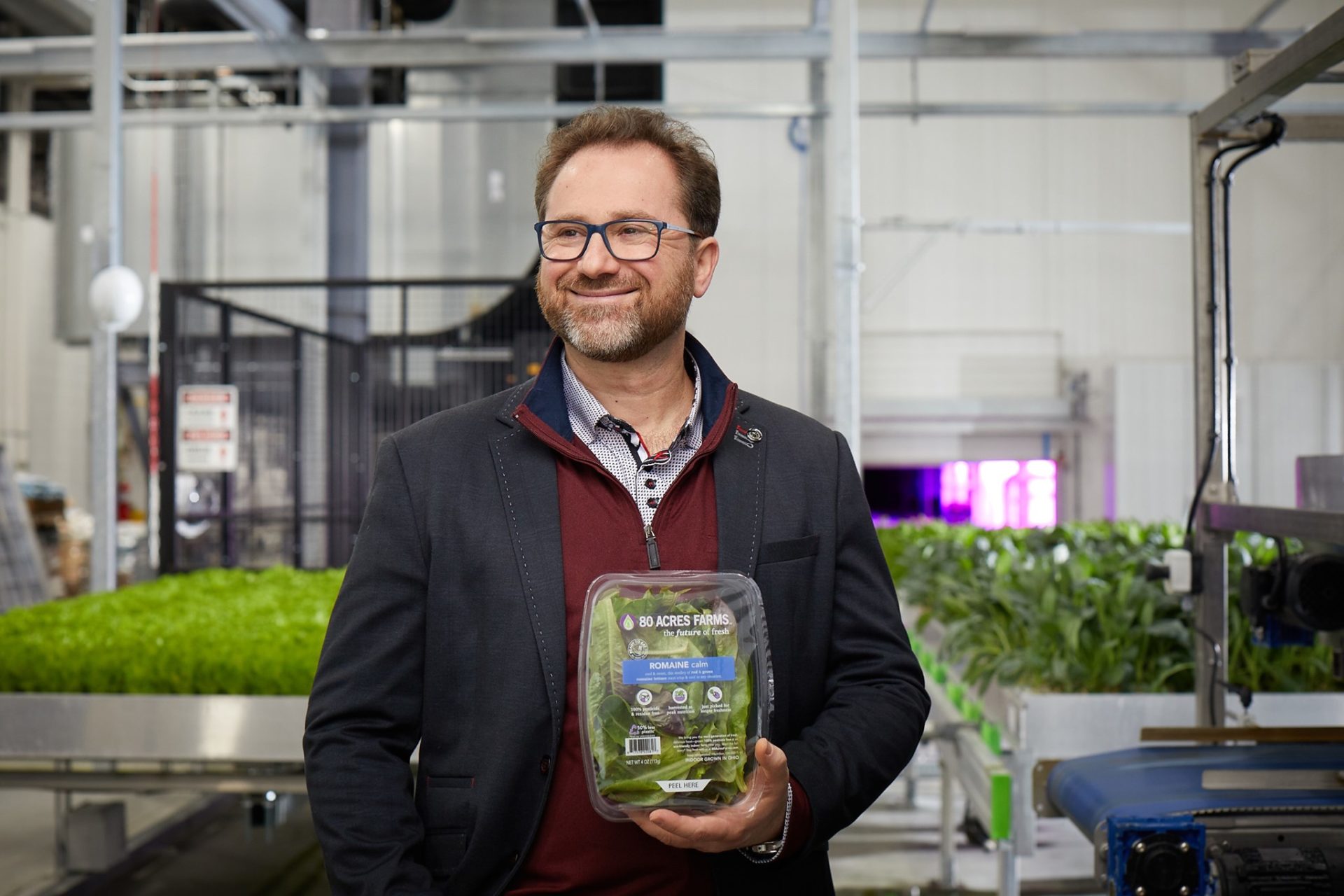
The merger is first and foremost about offering “superior product at scale,” 80 Acres cofounder and CEO Mike Zelkind tells AgFunderNews.
“The biggest problem I’ve had with CEA [controlled environment agriculture] as a whole is that everybody’s so focused on pricing,” he says. “It’s not about producing for something 10 cents less. You have to offer superior product at scale.”
There’s no other industry, he adds, that gets away with the sub-par quality found oftentimes in the produce section—wilting, rotting lettuce being a chief offender here.
Differentiated products made with consistently high quality are what consumers want, and what the newly formed company will be able to offer across the US, he says.
30 million pounds of produce and counting
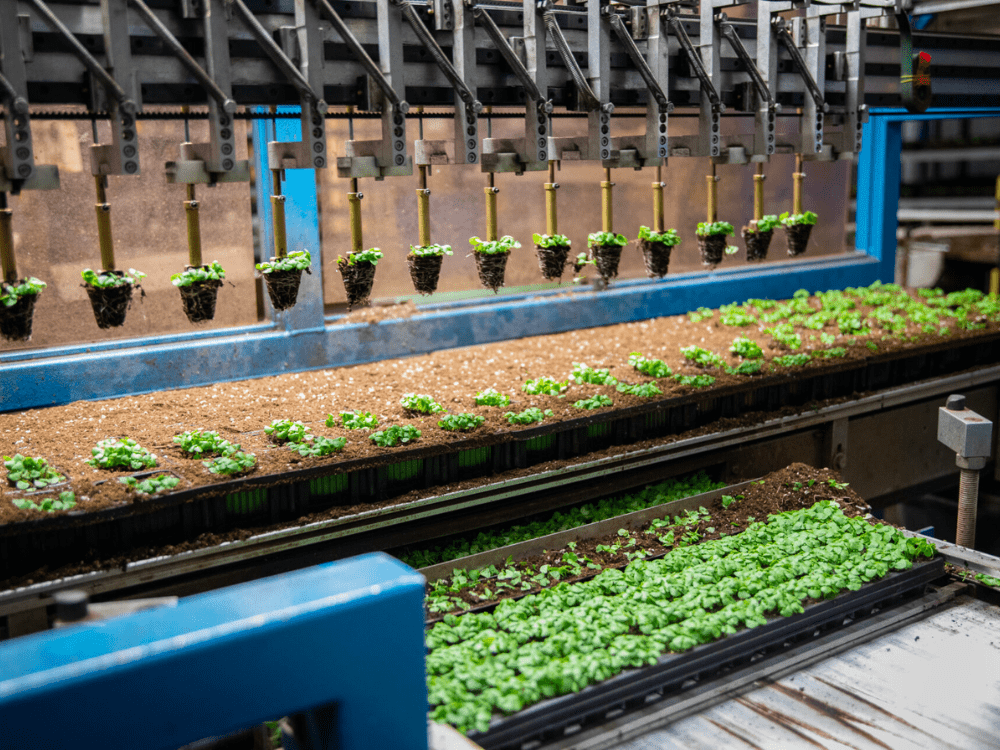
Hamilton, Ohio-based 80 Acres Farms currently operates five fully automated indoor vertical farms powered with renewable energy in the eastern half of the US.
Earlier this year, the company raised $115 million, bumping its total funding to over $350 million, and bought the IP and assets of onetime vertical farming star Kalera. It also acquired Israeli biotechnology company Plantae Biosciences to increase focus on plant genomics.
Harrisonburg, Virginia-based Soli Organic (née Shenandoah Growers) has operated since 1989 and holds well over a quarter of the US market for organic culinary herbs.
In recent years, it has transitioned parts of its outdoor growing footprint to indoor vertical farms, too.
“I spent the first part of my career helping build some of the most advanced greenhouse systems in the world,” notes Ulf Jonsson, a founder of Soli Organic. “But we’ve moved beyond what greenhouses can deliver. I’ve said for years, ‘The sun is free, but it’s not worth the cost.’ Vertical farms offer greater consistency, quality, and yield.”
The combined company will operate seven indoor farms under the 80 Acres Farms name and be headquartered in Hamilton, with Zelkind at the helm as CEO.
It is expected to serve more than 17,000 retail locations around the US that leverage 80 Acres’ growing technology and Soli’s customer base. The company has an expected grow capacity of 15–30 million pounds of produce annually as well as a projected $200 million in first-year revenues.
‘The promise is still there’
Indoor agriculture’s hype train all but halted a couple years ago, and these days the sector gets more press for its bankruptcies, closures, and layoffs than anything else.
However, Zelkind strongly rejects the idea that indoor agriculture—and vertical farming in particular—is finished as an industry.
“The promise is still there and we’re finally delivering on it,” he says, adding that the current market correction for indoor agriculture is “healthy” and a sign of the industry “maturing.”
“We’re strong believers that this industry is necessary. The question is when and who, not when and if will happen. I hope this is the start of a new era.”