

JOYN Foods—a startup with a blended meat solution enabling foodservice companies to save money, improve nutrition, and meet ESG goals—expects to triple revenues this year and become EBITDA-positive in early 2027, says cofounder Shalom Daniel.
The firm, which originated in Israel in 2021 as Mush Foods but is now based in the US, supplies frozen mycelium from edible mushroom strains under the 50CUT brand. This can be blended with meat, and is steadily gaining traction in universities, hotels, and corporate canteens, with revenues growing 13-14% month-over-month.
Speaking to AgFunderNews after securing approval from the South Carolina Purchasing Alliance, enabling school districts across the state to purchase its product, Daniel said 50CUT is winning business in a notoriously price-sensitive market.
“My ingredient costs 25% sometimes even 30% less than the cheapest beef you can find in the US, the lowest commodity beef you can buy. I’m not trying to save cows or the planet. I’m here to solve pain points for the industry.”
While blended meat can help clients meet ESG goals and cut saturated fat and sodium while boosting fiber, the fact that it can also undercut beef on price is what ultimately seals the deal for customers, he said.
“When we started, people said we were the crazy guys but now they are realizing that blended products are probably the primary solution in this market, at least for the time being, because people are not willing to change their habits for the planet or animals.”
Asset-light production sidesteps bioreactors and capex
Unlike Quorn, ENOUGH Food, and The Better Meat Co, which use fungi strains fed on sugary feedstock grown via submerged fermentation in steel bioreactors, JOYN Foods is taking an asset-light b2b approach.
Rather than producing its mycelium in-house, JOYN Foods partners with indoor farmers that grow its edible mushroom strains in trays via a solid-state fermentation process utilizing JOYN Foods’ fungi strains and tailored substrate. The harvested material is then sent to co-manufacturers who roast, grind, and freeze it before sending it to meat or foodservice companies to blend with ground meat, said Daniel.
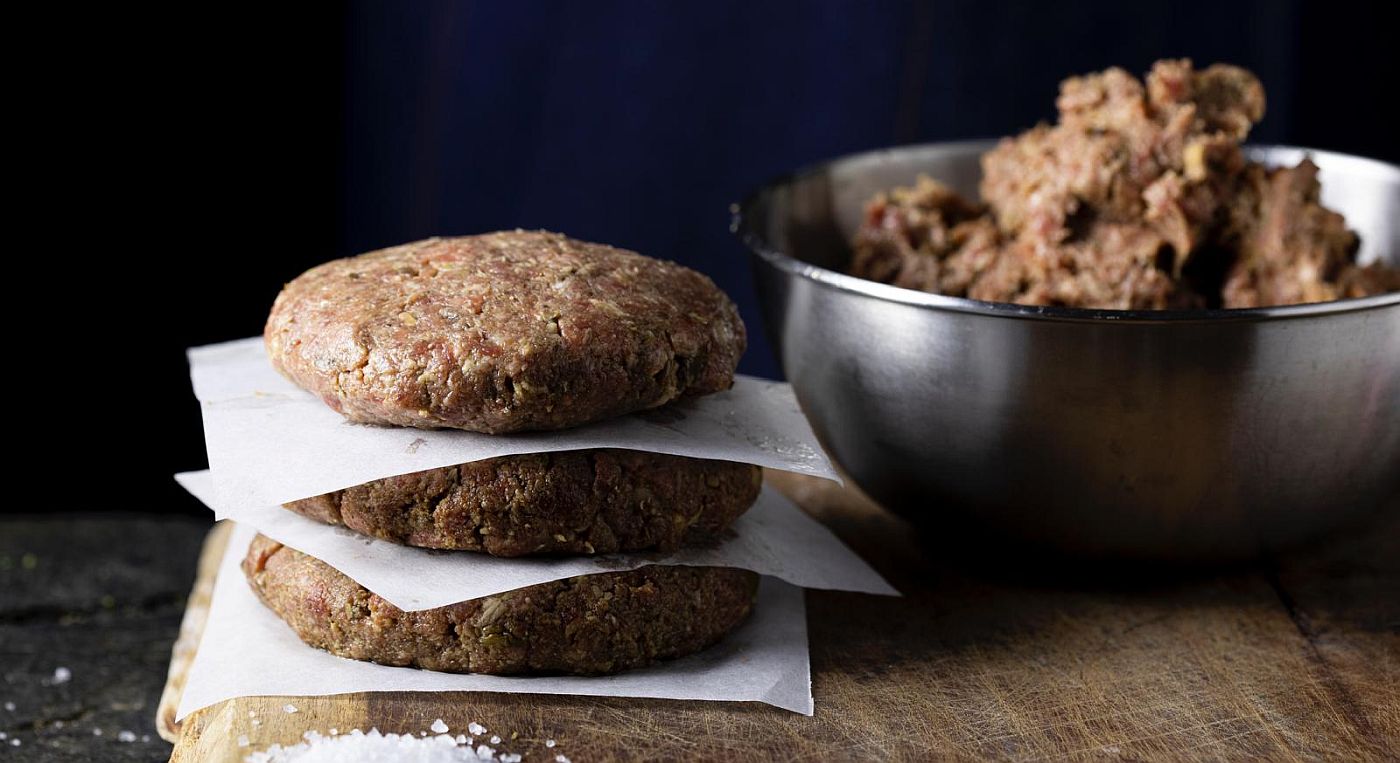
While blended burgers featuring the chopped-up fruiting bodies of mushrooms have been around for years, mushroom mycelium are cheaper and work better in combination with ground meat, acting like a sponge, absorbing water, juiciness, fat, aromatic compounds, he claimed.
Adding mushroom mycelium to meat also has advantages over adding textured soy, pea or wheat protein in that it has a naturally meaty taste that doesn’t need masking, acts as a natural binder, and is allergen-friendly (whereas soy and wheat are major allergens) he added.
“Our product binds to meat without needing binding agents such as eggs, breadcrumbs, or methylcellulose.”
Optimizing fungi for foodservice economics
JOYN Foods has developed bespoke products for blending with chicken, beef, and pork, with different strains and different moisture levels. But its expertise is also in understanding the nutrient requirements of different fungi strains and matching those to a variety of upcycled substrates such as wood chips and beer waste in optimal ratios.
“We’ve optimized for yield and protein levels,” said Daniel, who noted that using edible mushroom strains also makes for simpler consumer messaging as there are no legal issues when using terms such as “mushroom root” [which have caused legal problems for some other firms in the fungi space].
Rapid traction, without breaking the bank
JOYN Foods, which has raised around $10 million to date, is currently raising a small round, but has achieved significant traction with very little capital, said Daniel, a former Unilever executive.
“The exit [for investors], as I see it, would be to one of the strategic companies, ingredient companies, meat companies, foodservice companies or private equity to take it to the next chapter of growth.”
He added: “We’re already at gross margins of over 30% and we have a path to get them higher. I’m always saying to my team that every cent we are saving in cost, let’s keep half for ourselves and half to our clients, because if I can save more money for my clients, we can work with the big guys with higher volumes and be even more competitive.
“In terms of EBITDA, we’re going to be positive early next year, which is amazing, and means we can control the timing of when and how to fundraise… if it’s for higher growth, or maybe we don’t need to fundraise anymore.”
From corporate dining to K-12 cafeterias
According to Daniel:
👉 50Cut is now generating sales of over $250k/month with double-digit growth month-over-month.
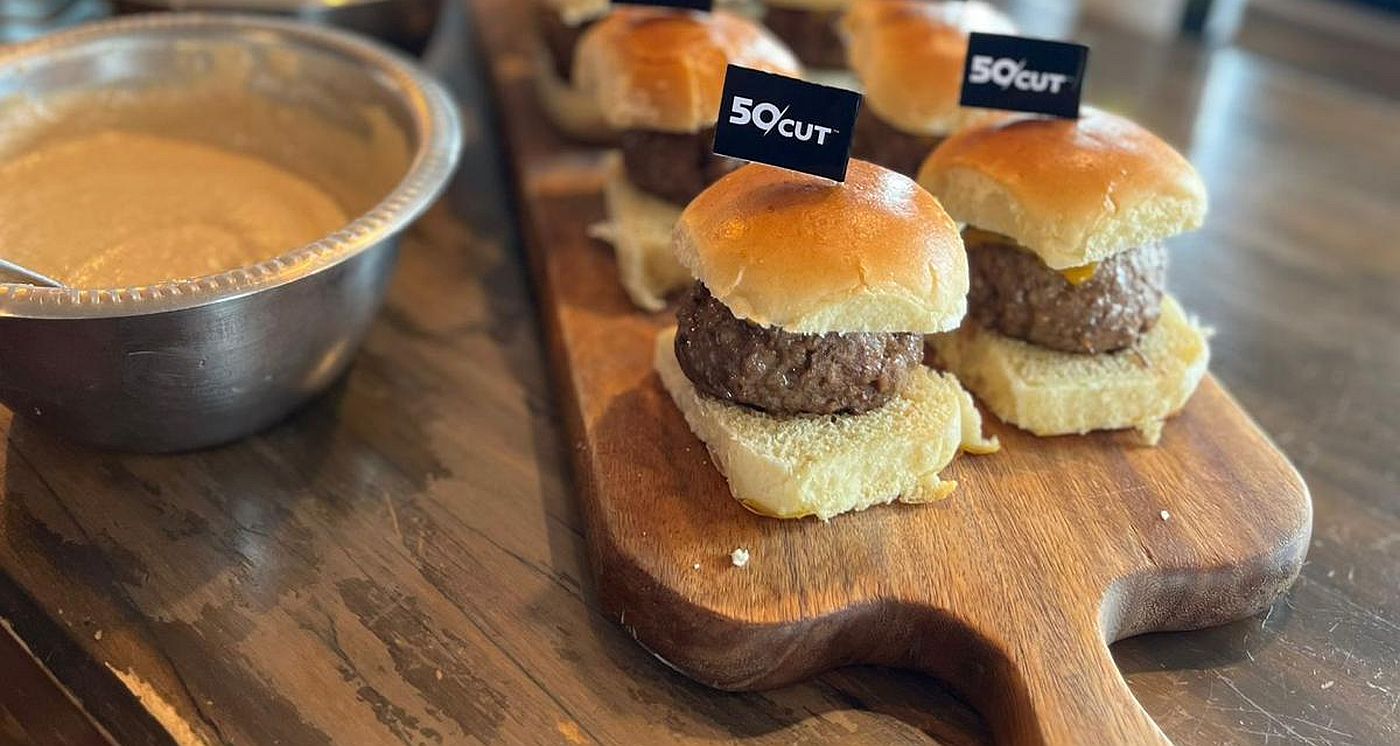
👉 Partners include Sysco, US Foods, and Compass Group, supplying universities; hospitals; cruise ship companies; hotel chains; burger chains; corporate clients including Google, Meta, Amazon, Microsoft, American Express, and Citibank; sports arenas; and attractions from Seattle Zoo to the Monterey Bay Aquarium.
👉 The approval from the South Carolina Purchasing Alliance marks JOYN Foods’ first move into the K-12 market, says Daniel. “Schools collectively represent one of the largest purchasers of ground beef in the country.”
Further reading:
Planetary explores collaboration to unlock low-cost mycoprotein production in India
MyForest Foods’ mycelium bacon sizzles as alt meat market cools