
Sacramento-based startup The Better Meat Co (BMC) has closed a $31 million oversubscribed Series A round enabling it to increase production of its Rhiza mycoprotein to commercial scale and sell “at prices lower than US commodity ground beef within 2026.”
The round was co-led by Future Ventures and Resilience Reserve and joined by Hickman’s Family Farms’ CEO Glenn Hickman, Epic Ventures, and Sigmas Group, among others.
The capital injection will enable BMC—which has “executed five signed LOIs for future orders from some of the biggest meat companies on the planet”—to boost production of its patented tech tenfold from 9,000 liters to 90,000 liters.
“To date, we’ve raised $43.1 million, which is inclusive of everything from equity to convertible notes that are converting in this round,” cofounder and CEO Paul Shapiro told AgFunderNews. “Now that is a lot of money, but it’s very small compared to many of the other biotech startups.”
‘Layoffs, bankruptcies, shutdowns, and cash-free acquisitions…’
In a memo sent to former team members and seen by AgFunderNews, Shapiro said: “If you’ve been following the alternative protein sector and the broader biotech sector, you’ve likely seen the wave of challenges that fermentation, cultivated, and plant-based startups have faced over the past few years. Some days, building a startup in our sector can feel like being a player in Squid Game, with about the same odds of survival.”
Listing a series of alt protein startups that have recently run out of cash, he added: “It’s very clear that the need for protein innovation has never been greater—yet investor appetite for the sector is simply not commensurately great.”
That said, “While layoffs, bankruptcies, shutdowns, and cash-free acquisitions have been rampant in our sector lately, BMC has never conducted layoffs,” said Shapiro, who has secured multiple paid collaborations with industry partners to pay the bills over the past couple of years.
“We’ve always been very frugal… This has been true in the midst of the three-year litigation we endured, the collapse of our bank [Silicon Valley Bank] and subsequent temporary loss of all funds, the painfully wintry investment climate for alt-protein, and other seemingly innumerable challenges.”
The new funding validates the company’s products and strategy, but is not an end in and of itself, he added, “Raising a round is akin to having someone provide the clothes, tents, and food you’ll need to climb Everest, but you still need to actually go climb the mountain.”
Rhiza mycoprotein: A more meat-like experience
BMC is one of a flurry of players in the alt protein space deploying biomass fermentation, whereby microbes fed on sugary feedstocks in large steel bioreactors are the end product. This is in contrast to precision fermentation, where microbes are used as tiny factories to produce high-value ingredients that then need to be extracted.
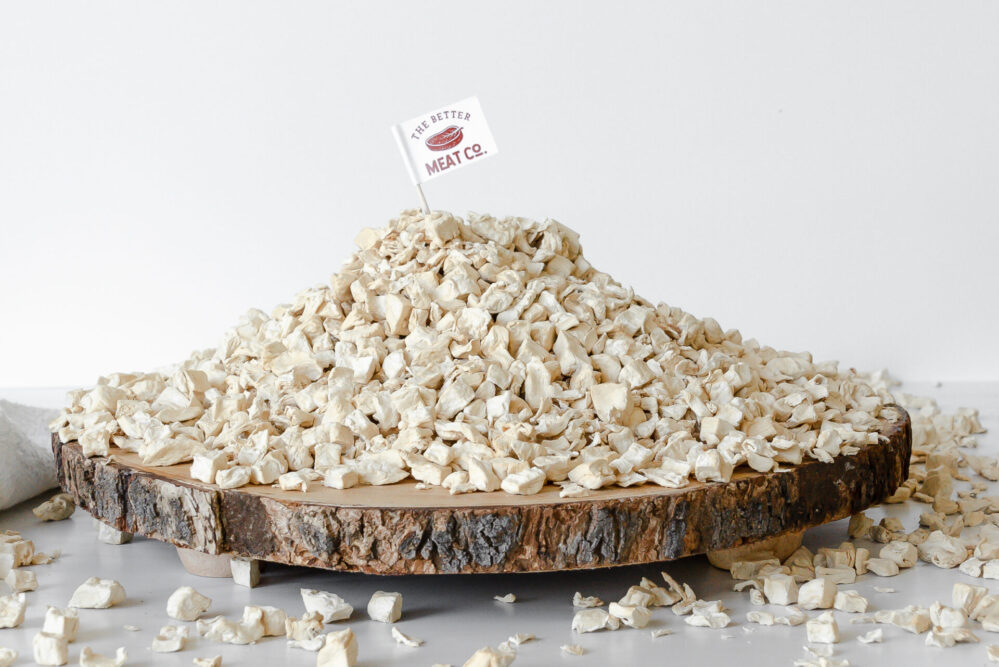
With a fibrous texture that does not require any significant downstream processing or extrusion, BMC’s Rhiza mycoprotein is a non-GMO whole food fermented ingredient made from Neurospora fungi species such as Neurospora Crassa, said Shapiro, who says Rhiza is “much meatier” than Quorn (which uses a strain of Fusarium Venenatum).
By contrast, plant-based meat alternatives are less efficient, relying on a lengthy growing cycle, fractionation to get at the protein, followed by a pricey extrusion process to texturize it, he claimed.
He added: “Plant-based meat suffers from the three P’s: price, performance, and perception. It’s too expensive, it doesn’t taste good enough, and there’s a perception that it’s processed.”
By contrast, he said, “Rhiza is a clean whole food that is not processed at all, and when you consider all the other ingredients you have to add to texturized plant protein isolates, it is also cheaper.”
Meats enhanced with Rhiza have superior yields after cooking, substantially less saturated fat and calories, and more fiber, said Shapiro, who noted that “The price of meat is only going up.”
As a result, he said, “Meat enhancement is the primary use, and our partners in North America, Latin America and Asia want to add it to everything from burgers and nuggets to dumplings and crab cakes. But Rhiza also has potential for addressing some of the key concerns in meat alternatives.
“We’ve also been offering it as a flour that can replace some eggs in baked goods, be used in alternative dairy, or added to wheat flour products to improve the protein and fiber content in a pizza crust or tortilla.”

Image credit: The Better Meat Co
Meats with better yields, less sat fat, added fiber
According to BMC’s GRAS (Generally Recognized as Safe) notice, Rhiza mycoprotein contains 45-50% crude protein by dry weight with a protein digestibility (PDCAAS) score of 0.87-0.96, which is close to animal proteins such as casein and egg.
At harvest, the fermentation cell slurry is dewatered to a moist cake format, then diced and dehydrated to create a product with an 18-month shelf-life that can be shipped at ambient temperatures and rapidly rehydrated at customers’ facilities.
According to Shapiro: “Rhiza doesn’t require the cold chain, which makes it easier to use and cheaper to store and transport.”
BMC’s strains have been successfully tested on multiple feedstocks from brewers’ spent grains to potato peelings, but are not wedded to any of those. Corn dextrose remains the best option for the moment although future facilities could be co-located with alternate sources of feedstock, added Shapiro, who has recently slashed production costs by moving to a continuous fermentation process.
BMC has received regulatory approval in Singapore, secured a no-questions letter from the FDA affirming its GRAS status, and gained approval from USDA for inclusion in animal meat, a first in the mycoprotein space.
Future Ventures: ‘I think we found the winner here’
“Given all of the approaches to alt-protein out there,” Future Ventures cofounder Steve Jurvetson told AgFunderNews, “Which will be the most cost-effective 50 years from now? Regardless of R&D effort expended. I think we found the winner here.
“BMC goes from start to final product in <17 hours! No plant or animal can compete with that. The key: growth from cell expansion instead of cell division, part of the magic of the kingdom of fungi.”
At BMC’s current facility, it already beats beef on cost, and soon chicken, claimed Jurvetson, who is joining the BMC board. “It scales more rapidly and cost-effectively than other approaches can ever achieve. Oh, and it is delicious and tastes like meat. It’s unusual to see an oversubscribed round in agtech these days.”

Sign up for our weekly newsletter.