
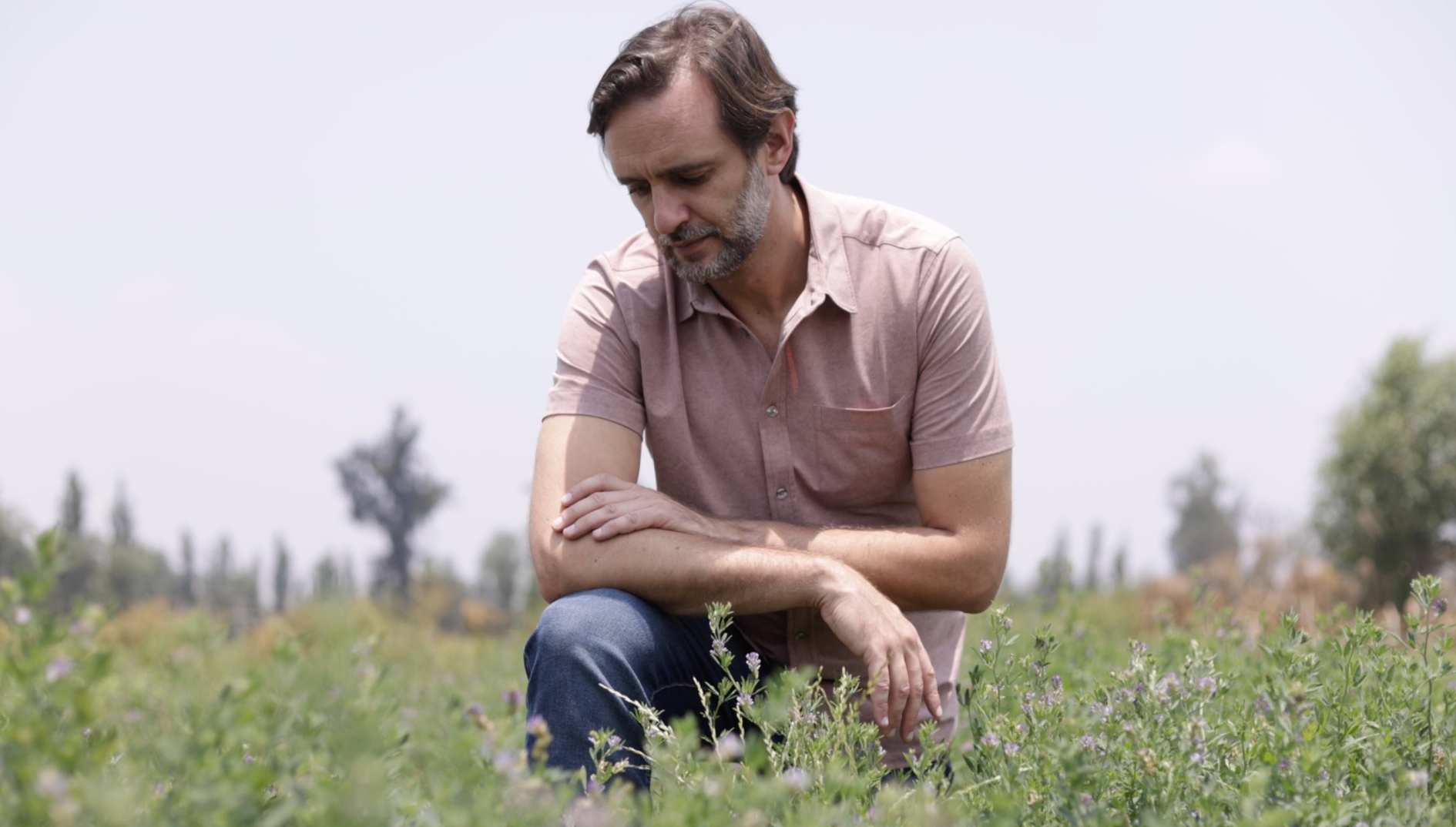
As former head of sustainability and sourcing at Eat Just, Udi Lazimy became intimately acquainted with myriad plant proteins. But they all came with caveats, he says: “Maybe you find one that’s great on sustainability or cost or emulsifying. You rarely find one that covers all the bases… except RuBisCO.”
One of the most abundant proteins on the planet with digestibility and functionality rivaling animal proteins such as egg and whey, RuBisCO is found in every green leaf. Despite its ubiquity, however, it has not—yet—become the plant protein of choice for food formulators.
First, large amounts of biomass must be processed to obtain a small amount of protein, making valorizing the leftover material critical from an economic and environmental perspective.
Once leaves are harvested, meanwhile, there is a narrow processing window to preserve RuBisCO’s functionality, while chlorophyll, polyphenols and other components must be removed without denaturing the protein if processors want to emerge with a sufficiently neutral looking/tasting protein to be of interest to most food formulators.
But if you can get the process and the business model right, the potential is huge, says Lazimy, who is now raising capital to get his RuBisCO protein startup Fudi Protein off the ground. The initial focus will be egg and whey replacement, with the burgeoning protein fortification market a longer-term target.
“RuBisCO protein is the holy grail amongst the proteins and enters the market at a time when consumer interest in protein is skyrocketing.” Peter van Dijken, cofounder, Green Boy Group
Tapping into existing supply chains
From the outset, says Lazimy, “It was a case of how do we plug into existing systems? I knew I wanted to work with RuBisCO, but when I left Eat Just [in late 2021] there wasn’t a supply chain for it.”
While some RuBisCO startups are using crop residues (Day 8) as source material and others are growing duckweed in large raceways (Plantible), Fudi Protein—along with Leaft Foods in New Zealand—is working with alfalfa farmers to develop higher-value markets for their crop.
Lazimy incorporated Fudi Ingredients (dba Fudi Protein) last year and has recently raised money from a variety of players including plant protein specialist Green Boy Group and Upcycled Foods cofounder Daniel Kurzrock via equity crowdfunding platform Wefunder.
While soybeans have a high protein content, alfalfa has multiple crops per year and can produce more protein per acre per year, claims Lazimy, who is working directly with alfalfa farmers in Wisconsin.
“There are tens of millions of acres grown in the US as forage for dairy cows because it’s very rich in fiber. I started reaching out to my farmer networks, and they said: If you can give us a high quality, high fiber, consistent material, we’ll give you the protein for free.”
A modular, decentralized process
Rather than building large centralized processing facilities, his initial plan is to use smaller-scale mobile processing units on-farm and modular processing facilities. “So on site at one of the largest alfalfa and dairy producers in Wisconsin, we are working with farmers that produce over 25 million pounds a year of alfalfa and want to give us free access to a digester barn they’re not using.”
The business model is still to be determined, says Lazimy, who says the biomass co-product (what’s left following protein extraction) has value “which gives us a tremendous opportunity. That’s a huge part of our business. It doesn’t need a lot of work to be of high value as a feed.”
As for the workflow, he says: “Alfalfa is harvested, it’s left out in the field to dry, and then baled and fed in bulk, basically, or as haylage. We take it off their hands and then give it back to them [minus the RuBisCO protein] in the exact condition that they’re looking for. The pricing will be based on the amount of protein that we take out of it, the quality of the fiber, and the moisture content of the material.”
Colorless, flavorless, odorless, complete protein
As the firm is filing IP, Lazimy can’t go into detail on the process, but notes the company is still at an early stage. “We’re at lab scale today. The priority is identifying the unit operations and the process engineering that is going to make the most sense, optimizing our process, and beginning to make samples. But our model is as low cost as it gets because we plug into an existing supply chain.”
The aim is to “do everything from extraction all the way through to purification, either 90% of the way or all the way on site,” he says. “Whether we need to do the final step on-site, or if that’s something that we work with a partner to do, is something we’re still working through. But the final product is a colorless, flavorless, odorless, complete protein, with at least 84-85% protein.”
It’s too early to talk about ingredient distribution and sales, but it would make sense to partner with players with established contacts and networks in this space, he says. “We could have a very bright future with Green Boy Group as a partner to bring our protein to market but we don’t have an agreement [on sales or distribution]. At this stage there’s just an understanding that they’d like to be involved in what we’re doing and support what we’re doing.
“We’re leveraging a community of investors as we prepare to raise a larger institutional round.”
Who’s who in the RuBisCO field?
Over the years, several players have attempted to commercialize RuBisCO for human food applications, with mixed results. Florida-based Lemnature AquaFarms filed for bankruptcy in late 2023, while San Diego based Plantible has been more successful, building a large-scale lemna (duckweed) farming operation in Texas that is now fully operational and entering a new phase of expansion.
Another key player in the space is New Zealand-based Leaft Foods, which is rapidly scaling up production.
Other players include ProLeafEra, Day 8, Brevel, Alfa-Ruby, Rubisco Foods, Lemnapro, and Leaf Protein Company. Aspyre Foods and Kyomei, meanwhile, are building platforms they claim can turn plants into biofactories for producing casein and RuBisCO.
While RuBisCO is not new, advances in processing to get to a neutral but functional protein coupled with rising prices and volatility in egg and whey markets and ongoing demand for protein in the age of GLP-1s and evolving dietary guidelines have focused minds, he says. And this is good news for all players in the space: “The more the merrier. A rising tide lifts all boats.”
Further reading:
Leaft Foods takes RuBisCO protein to Japan with new partnership
Day 8 emerges from stealth with plans to extract ‘holy grail of proteins’ from ag waste
Aspyre Foods taps duckweed for casein and RuBisCO: ‘We’re maximizing the biomass value’

Sign up for our weekly newsletter.