
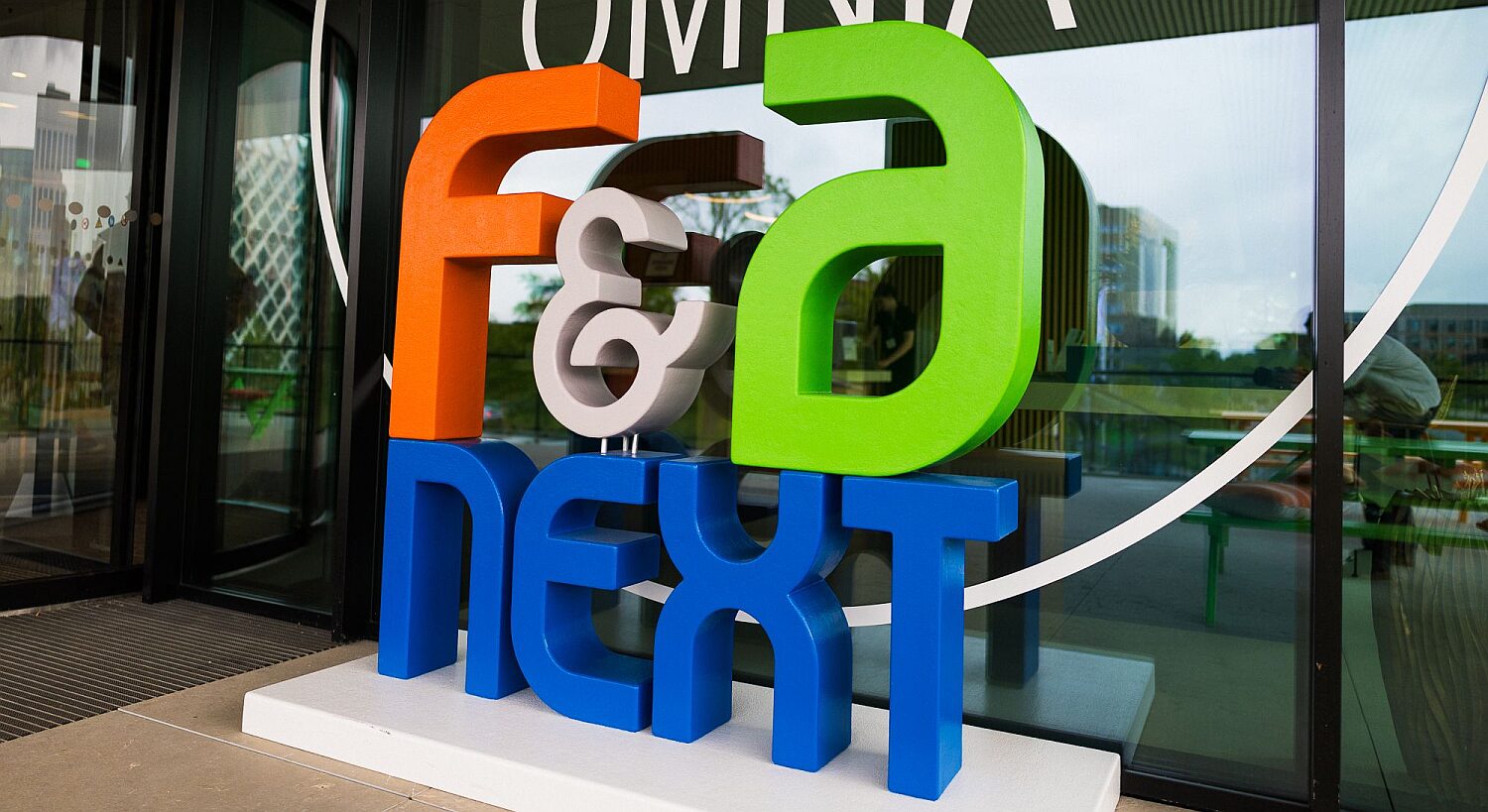
Leaders in food-system applications of artificial intelligence say the past year has brought whiplash-inducing transformations across the value chain, with plenty still to come. They just disagree somewhat about the pace.
“The change is coming so fast, and organizations are moving faster than I’ve ever seen,” said Alon Chen, CEO of the food-and-beverage market intelligence provider Tastewise. Chen, speaking on a panel at the F&A Next Summit in Wageningen, the Netherlands, on Wednesday, said he started the company “four years too early.”
Tastewise began as a consumer data platform to help solve the problem of widespread product-launch failures and improve F&B firms’ understanding of their customers. The New York-based company grew into an insights solution before embracing generative AI in 2023, said Chen, a former Google CMO. Over the past year it has focused on deploying customized AI agents to help clients make more informed strategic decisions.
Chen said his company’s value proposition as an agentic AI partner has been strengthened just within the last quarter. “There are very concrete and immediate opportunities to deliver returns,” he said. “This was really not a viable business model four months ago.”
Adoption is patchy
Others said AI’s role elsewhere in the food value chain still needs some time to develop further.
Yelco Gonzalez said he co-founded AuditQ, a Belgian food industry compliance platform, around a year ago as an AI-first company, and the six-person team is already “doing what maybe before would take a team of 15 people.” But it could take another year or two for AI to reach its full potential in food safety audits and compliance, he said. “We are sitting on a bunch of data that could be potentially useful.”
Miriam Ueberall, the Europe strategy head for California-based Turing Labs, added, “We are very far from seeing a high adoption” of AI in food research and development, and companies’ embrace of the technology “is quite patchy.”
R&D teams are under intense pressure, Ueberall said, and she sees a “huge case for AI” to make them more efficient. Right now, though, “we’re far from an AI solution that does it all by themselves.”
Humans in the loop
It helps that the talent pipeline is evolving, Ueberall added. Many R&D teams haven’t been trained to think like data scientists, although that’s beginning to change—and just in time, as AI ripples through the field and expands what’s possible. But rather than automating away the need for specialists, Ueberall said she expects professionals with domain knowledge to remain critical.
“Human expertise still takes the ultimate call, and that is absolutely essential.”
Gonzalez agreed, adding that the pace of technological change is a key reason to keep a “human in the loop.” For AuditQ, he said, doing so represents an “added value” of “deep knowledge” supplementing the company’s AI capabilities.
The panelists agreed the only sure thing is that the landscape will look very different 12 months from now. “Defensibility is changing all the time, and agility and speed are what really matter,” Chen said.