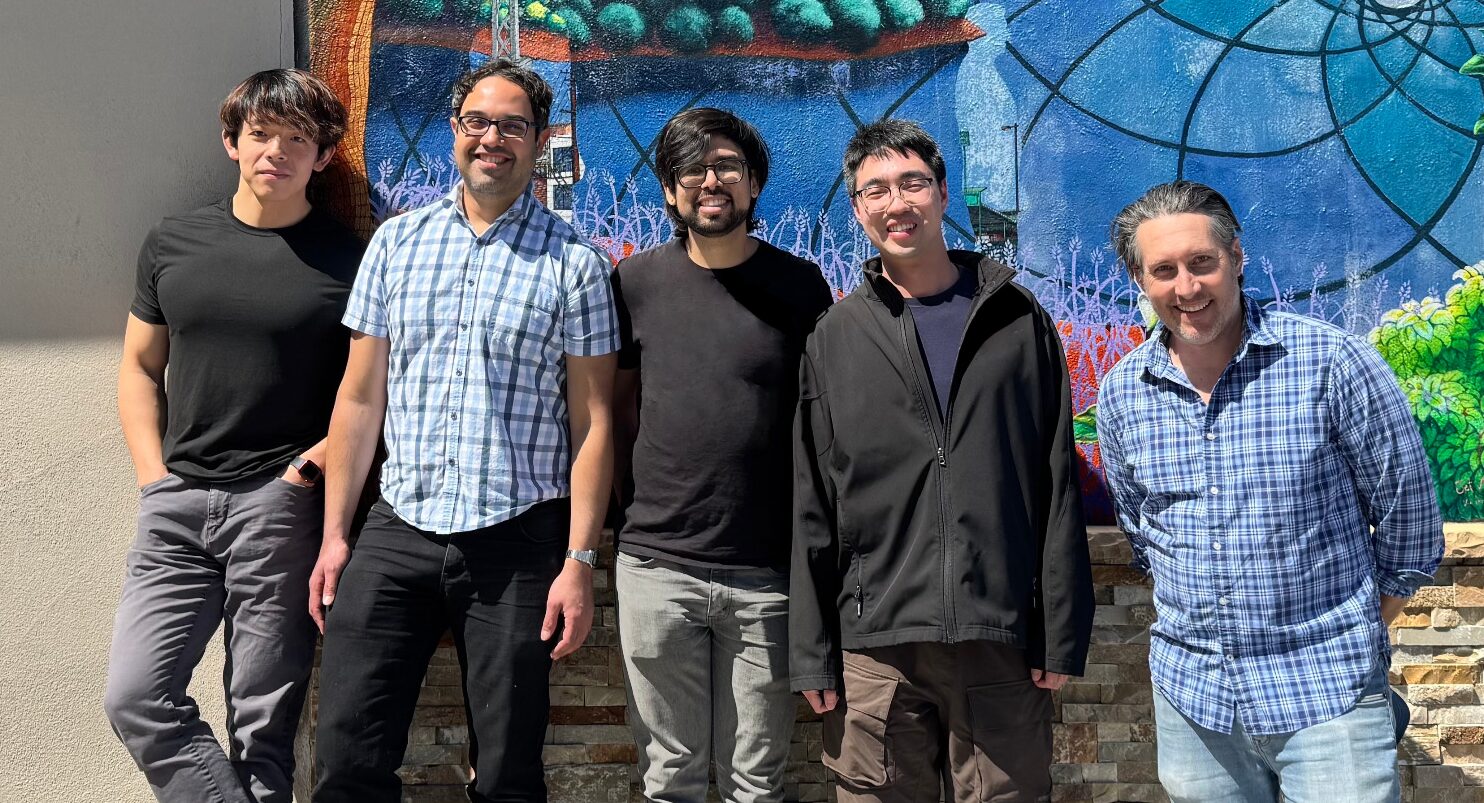
Fermeate—a California-based startup using light to turbocharge cell productivity in biomanufacturing—has closed a $2 million seed round led by Newfund Capital.
The round—which was also backed by SOSV, Ajinomoto Group Ventures, Ki Tua Fund, Heuristic Capital Partners, Momentum Capital, Plug and Play, Tesserakt Ventures, and Ag Startup Engine—will help the firm scale its tech, which can plug and play into existing industrial fermentation systems.
“Until now, the fermentation industry has largely relied on building more capacity to reduce costs,” said CEO Kevin Xu PhD, who cofounded Fermeate in 2024 with Saurabh Malani, PhD after working on optogenetics at the Avalos Lab at Princeton University.
“With minimal capital investment and a typical payback period of under 11 months based on third-party technoeconomic analyses, we enable companies to improve margins without expanding their footprint.”
Today, Fermeate has partnerships with four global food and ingredient companies, where it has achieved up to a 200% increase in protein production in less than six months, with potential for up to 10x improvement.
Tangible benefits range from enabling production with cheaper alternative feedstocks (such as switching from dextrose to a dairy side stream); non-toxic induction for higher protein yields (by using light instead of chemical inducers such as methanol); moving from a fed-batch to a more efficient semi-continuous process; and preventing genetic drift, Xu told AgFunderNews.
“The use cases depend on the problem customers are trying to solve. But ultimately, it’s all about making fermentation more productive. It’s very expensive to build new capacity, and we can help them make existing capacity two times, three times more productive.”
“Every major industrial transformation is built on a foundational infrastructure layer, and the bio- economy will be no exception. What makes Fermeate stand out is that their optogenetic platform upgrades the world’s existing fermentation capacity rather than replacing it — precisely the kind of horizontal, enabling technology Newfund has consistently backed.” Henri Deshays, partner, Newfund Capital
Making cells more productive, for longer
Over the years, claimed Xu, the biomanufacturing industry has made advances in strain engineering, media optimization, and process design. “Yet even highly optimized microbes can lose up to 50% of their productivity over the course of a typical production run. We can not only increase productivity, but we can maintain that high productivity for much longer.”
By controlling gene expression with light during fermentation, Fermeate can exert precise control, in real time, “in any cell, and for any gene,” improving cell productivity and boosting fermentation output by 60-300% based on results from recent collaborations, he said.
This effectively enables firms to increase output with the same capex, claimed Xu, who said Fermeate has validated its tech on “most of the widely used industrial hosts, including conventional and non-conventional yeast and bacteria species.”
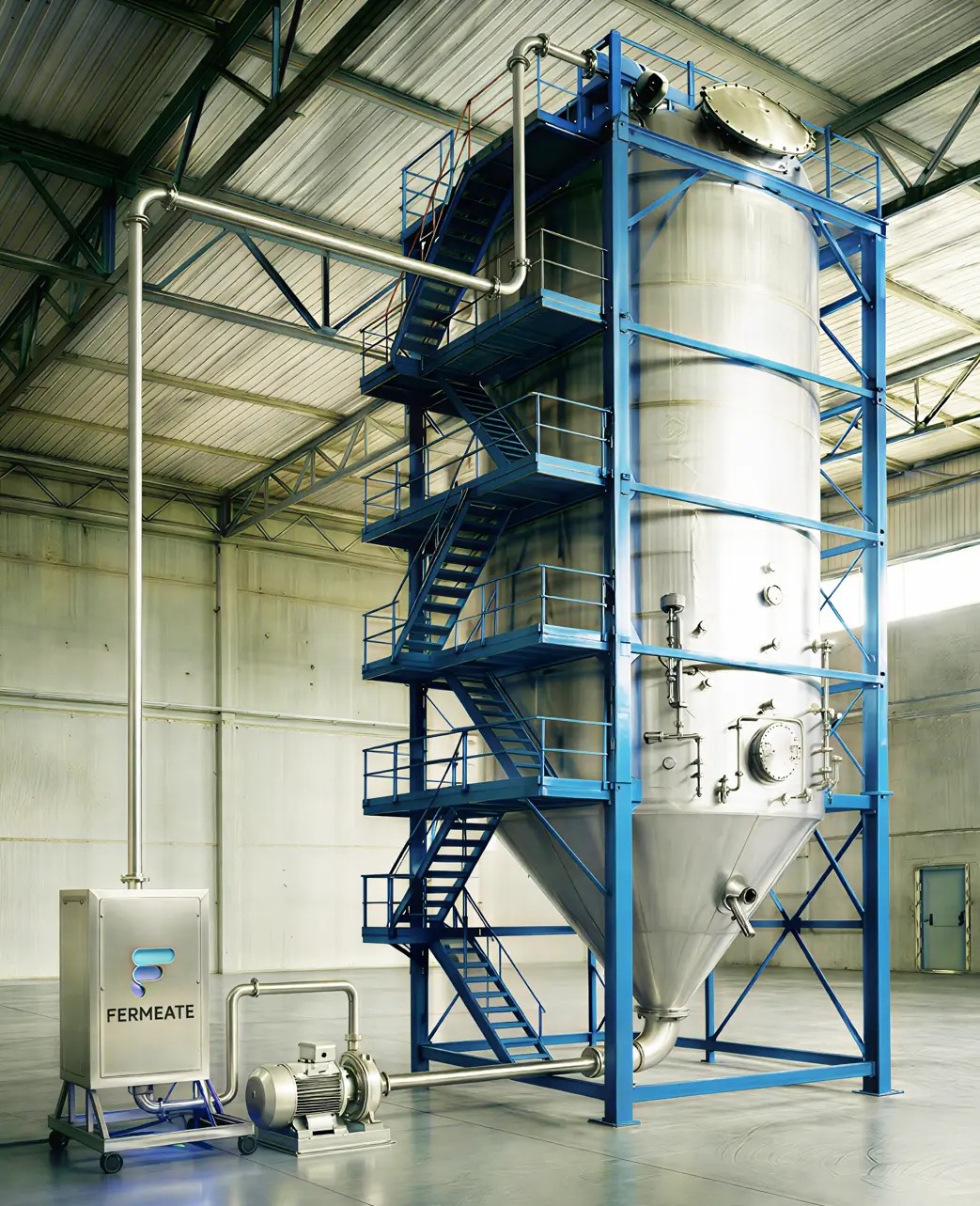
Critically, Fermeate can convert existing stainless-steel fermenters at a fraction of the cost of installing a new bioreactor, says the firm, which uses pipes to continuously recirculate between the fermentation tank and an external device where light inputs are delivered.
How does it work?
Light sensitive proteins—which are found naturally in animals, plants and microbes—absorb light and trigger a biological response. Fermeate’s expertise is around understanding this interplay and using it to turbocharge cell productivity in microbial fermentation.
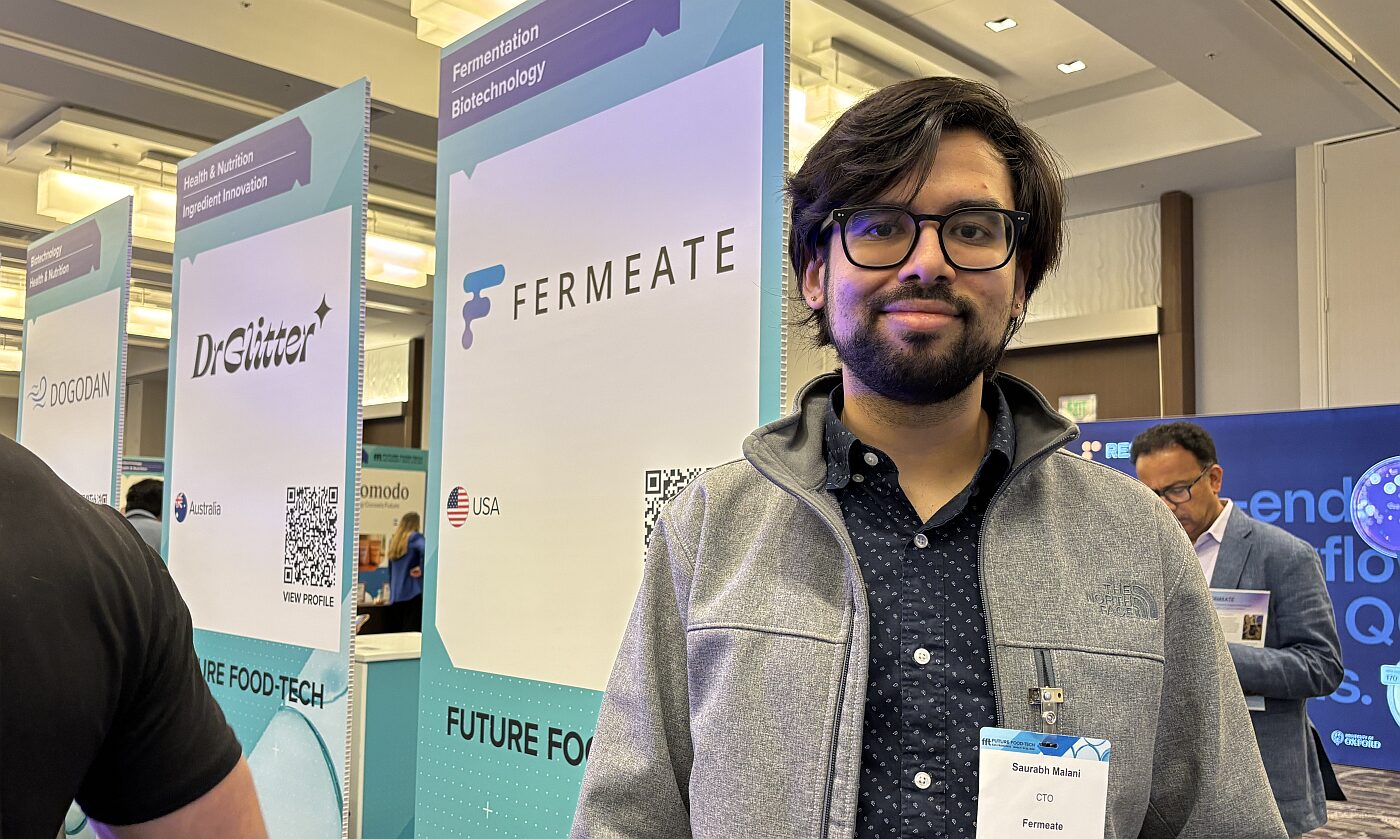
“It’s a two-step process,” explained Malani. “First you put in a light sensitive protein, which makes any strain light-controllable, and then you put in a promoter, which lets us target exactly which enzyme or protein we want to be controlled.”
By exposing cells containing the light sensitive proteins to light at specific wavelengths, you can activate or deactivate certain genes, delivering precise and dynamic control of cellular behavior, says Fermeate, which uses AI and machine learning to identify what light pattern to apply when, in order to achieve the desired impact.
For example, if the goal is to get a microbe to produce more of a target protein, you can use light dynamically throughout the fermentation process to optimize production, said Xu. “Making protein is an assembly line process, you make the RNA, make the protein, decorate the protein, fold the protein and transport the protein. At some points on the assembly line, you may run into a bottleneck. The ability to dynamically optimize this assembly line so you don’t get bottlenecks means we are able to keep the cells productive.”
IP issues
Asked how Fermeate addresses IP issues—given that production strains must be tweaked to add specific light sensitive proteins—Xu said: “We can engineer their strain for them or we can guide customers on how to engineer their own strain. But we don’t have to work with their commercial strain.
“A lot of companies have an R&D strain they are happy for us to use to evaluate the technology. Based on the learnings we have from the R&D strain, we can then give our partners the tools and the knowledge for them to engineer their commercial strain.”
From biomanufacturing… to manufacturing
The company is exploring different business models and in the meantime has several paid projects that are generating revenue, said Xu.
“We both come from a chemical engineering background, so the way we look at bio manufacturing is that it’s just another form of manufacturing. And all manufacturing requires capital efficiency.
“The challenge with biomanufacturing is that you’re dealing with living organisms, making it very difficult to control. And right now, there’s a gap in the tools that people can employ to control these organisms. If we can get this control layer right, we can make biomanufacturing just as efficient as any other type of manufacturing.”
👉 Read more here about fellow optogenetics startup Prolific Machines, which is focusing on animal cells.
Further reading:
Vivici sees 30% boost in titers, yield, via cell productivity tech from Enduro Genetics
Funding dip for alt protein fermentation signals shift from promise to proof
🎥 21st Bio on strains, scale, and the valley of death: Fixing precision fermentation’s weak links
🎥 Future Food-Tech: Big ideas, hard truths, and the path to scale
🎥 Driverless bioreactors? The future of biomanufacturing is lit, says Prolific Machines