Cultivated meat startup Believer Meats—which is in the unique position of having both a large-scale production facility and regulatory approval to sell its wares in the US—has ceased operations, its HR director has confirmed.
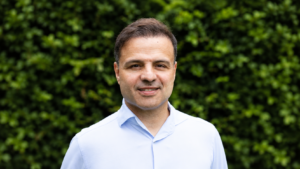
In a LinkedIn post penned two days after AgFunderNews revealed that the company is being sued by a vendor for more than $34 million in unpaid bills, global HR & talent leader Anne Schubert explained: “After two years of building something truly bold and special, Believer Meats made the difficult decision last week to cease operations.
“While the outcome is not what any of us hoped for, I am incredibly proud of what we accomplished together.”
Schubert did not explain what went wrong and the company has not responded to requests for comment in recent days. However, one source told us that staff had become aware of money issues at the firm in recent months as it became hard to get hold of supplies needed to complete tasks at the plant.
At a town hall meeting in November employees were told that the company was attempting to secure 11th hour funding, which presumably did not materialize, as mass layoffs followed on December 1.
AgFunderNews understands that the plan had been to validate the firm’s bioprocess such that it could start sending out samples in Q1 and commence production in Q2. However ongoing issues with the vessels at the site had disrupted this timeline.
‘It’s terrible news for them and the entire cultivated meat sector’
Believer Meats (formerly Future Meat Technologies) has operations in Israel and the US and is the fifth cultivated meat startup to secure an FDA “no questions” letter confirming the safety of its products.
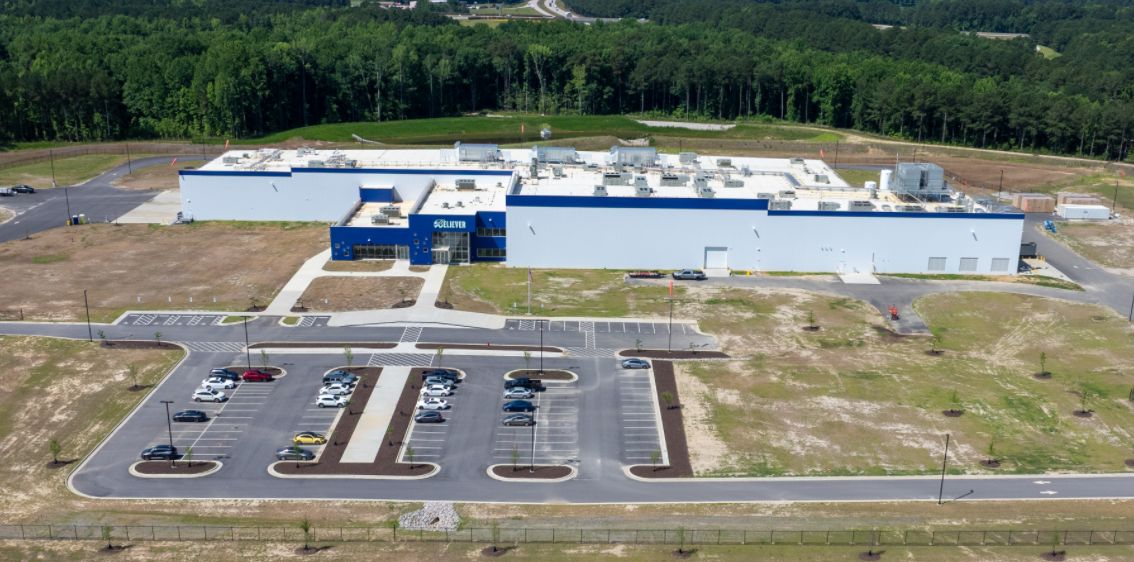
It has also secured a grant of inspection and label sign-off from USDA. This gave it the green light to launch products in the US from the North Carolina plant, which bioprocess partner GEA said in late 2024 has the “capacity to produce at least 12,000 metric tons (26m lbs) of cultivated chicken annually.”
One of the top-funded players in the industry after raising a $347 million Series B round in 2021, Believer Meats’ backers include ADM Ventures, the Menora Mivtachim pension and insurance fund, S2G Investments, Tyson Ventures, Rich Products Ventures, Manta Ray Ventures, Emerald Technology Ventures, Cibus Capital, and Bits x Bites.
As the only cultivated-meat company with a large-scale plant, many in the sector were looking to Believer as the bellwether that might prove the tech can work at scale, reigniting investor interest, one industry source told AgFunderNews.
“It’s such a shame as they have the trifecta: FDA approval, USDA approval, and a full-size plant, so it’s terrible news for them and the entire cultivated meat sector.”
AMPS: ‘Temporary setbacks, while unfortunate, do not represent the whole’
However, it would be a mistake to say this means the segment is doomed, insisted Suzi Gerber, executive director at the Association for Meat Poultry and Seafood Innovation (AMPS), which represents key players in the nascent space.
“It is important to view this news within the broader context of an industry that has made remarkable progress in a short period of time. 2025 was a banner year for the cultivated meat industry.
“Over the past year, we’ve seen new regulatory approvals across multiple regions including many in the US. Like many new industries and emerging technologies, cultivated meat is evolving in a landscape that demands significant capital, long-term R&D, and policy environments that support innovation. Early-stage companies in other transformative sectors—such as renewable energy, biotech, and electric vehicles—faced similar challenges early on before reaching maturity.
“Temporary setbacks, while unfortunate, do not represent the whole and thus should not overshadow the momentum, resilience, and collaboration that continue to characterize our industry.”
Aleph Farms, Mosa Meat: Prioritize fundamentals over speed
Didier Toubia, CEO at Israel-based cultivated meat startup Aleph Farms added: “Aleph Farms also planned to invest massively in a US plant following its $105 million B-round in 2021, but decided a year later to pause CAPEX investment and to pivot towards an asset-light approach, and also decided to pivot from a US-first focus to a focus on shorter path to profitability starting outside the US and then moving to the US in a second stage, following reaching its short-term EBIDTA targets.”
Mark Post, PhD, cofounder and CSO at Mosa Meat in the Netherlands, added: “It is always difficult to see a fellow pioneer face challenges, as we all share the goal of transforming the food system. However, a ‘shake-out’ in the cultivated meat industry is a natural phase of maturation, given the rapid influx of startups in recent years. Developing this technology requires patience, scientific rigor, and a long-term horizon.
MVP…
David Ziskind, managing partner at Mach Global Advisors, which helps companies plan for and execute capital projects, told AgFunderNews that he couldn’t comment on Believer’s specific issues or financial circumstances but said that, “I do like the bold step of building commercial scale facility, as ultimately this is needed to prove out the technology at scale and supply the market.
“But in this infrastructure heavy space, first movers will likely bear the brunt of it, even as their steps ultimately advance the industry.”
He added: “It is unfortunate that this news comes on the heels of such positive momentum for Believer, and they are so close, having just finished construction of their flagship facility.
“I’m always thinking ‘MVF’…minimum viable facility…food safe, functional, right sized, with room for expansion. Given the facility and equipment, I have to imagine the right capital partner will come along, and hopefully it can be put to good use. This reiterates the importance of strategic facility planning, having the right capital project team experience, and careful selection of an EPC [engineering, procurement, and construction] partner.”
Where next for the sector?
On paper, cultivated meat looks like a no-brainer. Unlike plant- or fungi-based options, it has the allure of “real” meat without the ethical and environmental baggage, coupled with the promise of food security, which is moving up the agenda in many countries due to supply chain disruptions.
In practice, however, there’s no playbook for biomanufacturing meat at scale, funding has begun to dry up, and the political environment has become increasingly hostile in key markets such as the US and parts of Europe.
AgFunder data show that funding peaked at $989 million in 2021, dipped to $807 million in 2022, $177 million in 2023, $55 million in 2024 (excluding an undisclosed sum raised by Hoxton Farms), and $65 million in 2025.
Against this backdrop, firms have been slashing headcount, consolidating, and in some cases, calling it quits (click here and here).
GOOD Meat, the first company to commercialize cultivated meat, has not yet landed on a model for profitable production at large scale, while UPSIDE Foods has paused plans to build a large-scale facility in Glenview, Illinois, in favor of expanding its smaller “EPIC” site in Emeryville, California and acknowledged its structured meat products are not yet scalable.
That said, from a purely technical perspective, significant progress has been made in recent years, claimed Lever VC in a recent white paper, although it acknowledged that it will be “many years if not decades before we’ll have a sense of how the sector as a whole will ultimately fare.”
There have been some positive announcements over the past year, meanwhile, with Sydney-based Vow securing regulatory approvals in Australia and New Zealand and proving its tech at 20,000-liter scale with positive margins.
UK-based Meatly, which focuses on the petfood market, meanwhile, has developed a patent-pending low-cost bioreactor in-house and brought media costs down to 22p/liter, a number CEO Owen Ensor claims could get down to just 2p/L with economies of scale.
‘Rome wasn’t built in a day’
Tim Olsen, PhD, who ran the cultivated meat program at Merck for five years and is now the cofounder and CEO at Merck spinout EdiMembre, said a second wave of companies would benefit from “lean, milestone focused, CAPEX-light enabling tech providers” that are in turn de-risked by building platform tech that can have applications beyond the cultivated meat industry.
“This is exactly what we are building at EdiMembre. Our edible hollow fiber bioreactors truly unlock the ability to create structured whole cut cultivated meat, a differentiator to the early unstructured products using cells as ingredients that have hit the market so far.
“Additionally, the bioprocess template for our edible hollow fiber bioreactors significantly reduces the CAPEX burden with a scaled out approach that can be built out based on demand and traction, rather than all at once like what we have recently seen with full facility builds. We also have the ability to produce market leading 80%+ protein by weight pasta and drug delivery plans in our playbook to capitalize on today.
“A few other companies are adopting similar platform approaches and I see this as the way forward during this turbulent phase for cultivated meat.”
He added: “While a large manufacturing plant certainly represents a milestone, it was perhaps built before it was truly needed. As an industry, we still have plenty of work to do, but that is okay, as Rome wasn’t built in a day.”
Clever Carnivore: Don’t put the cart before the horse
At US-based Clever Carnivore, which recently claimed it could produce cell culture media for just 7 cents a liter at pilot scale, told us that Believer “had great science, great people, and plenty of funding, but fell into a common bind.”
Cofounder Paul Burridge, PhD., told AgFunderNews: “With an unlimited budget, you can rush to hit certain milestones—like building a full-scale production facility—but you risk putting the cart before the horse and ending up with an expensive factory built around a process and product that aren’t fully proven out.
“R&D teams often face pressure to shortcut scientific development by starting with expensive media, hiring expensive development contractors, and getting equipment up and running without regard to cost. But doing so gambles on being able to bring in additional VC money as quickly as you spend it. And ultimately, food production is a low margin business. Process development for cultivated meat has to proceed with food industry realities in mind: you can’t build an expensive biopharma-grade system to manufacture a commodity product.”
Clever Carnivore, he claimed, “has taken the uphill road of focusing on minimizing costs from the start and developing in a linear manner: optimizing each part of the production process before moving on to the next stage.”
Cofounder Virginia Rangos added: “There’s a great deal of disillusionment around cultivated meat at the moment… but in the current climate, it takes a particularly savvy group of investors to sort the signal from the noise, recognize which metrics are truly important, and resist the temptation to prioritize crafting a strong fundraising narrative over sensible corporate governance.”
Further reading:
Exclusive: Cultivated meat co Believer Meats sued by design build firm for $34m in unpaid bills