Speeding up R&D and lowering costs are two things the ag biotech sector greatly needs right now.
One way to do that is through contract development and manufacturing organizations (CDMOs), a concept well known in pharma and now making its way into ag biotech.
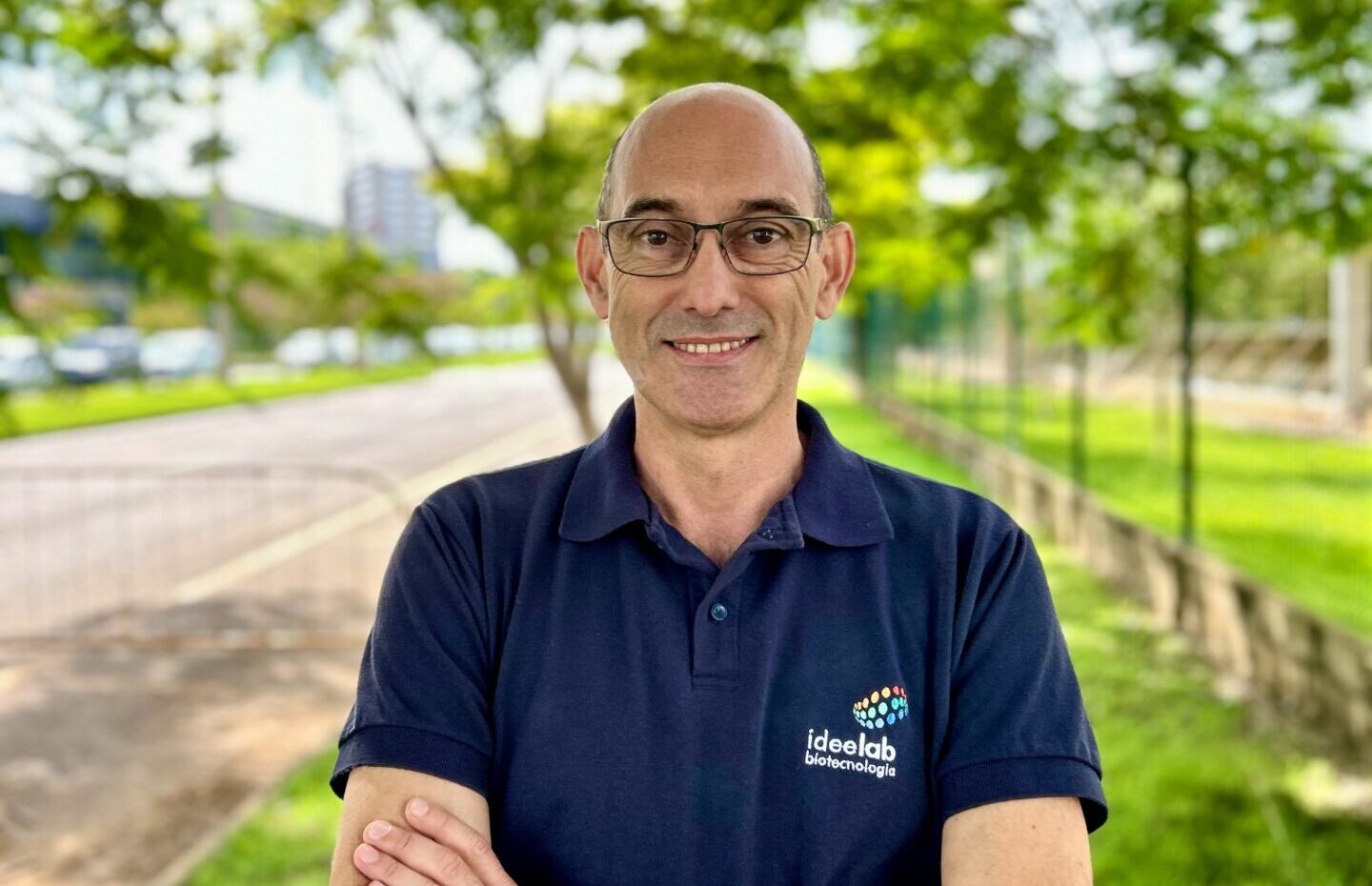
But when it comes to creating new crop protection products, speed and time are just two factors to address. Of equal importance is what Gilson Manfio, PhD, head of R&D and innovation at IdeeLab, calls “the biogeographical context.”
Crop protection products may all start in a lab, but making them work across different climates and regions requires both field tests and on-the-ground support in those places.
“Many companies bring technologies from abroad and launch them in the country, and they don’t perform as well as they did in the original country,” says Manfio.
This is where IdeeLab excels, he adds—providing companies with not just infrastructure and expertise of regulatory markets, but also local partnerships and regional knowledge.
Right now, IdeeLab helps companies develop products for the Latin American market; its model could eventually be replicated anywhere in the world. Manfio tells AgFunderNews how it works.
AgFunderNews (AFN): Give us a little more background on what IdeeLab wants to achieve as a CDMO.
Gilson Manfio (GM): Our purpose is to develop sustainable biological technologies for clients in the ag input market.
Our major R&D projects are related to the development of metabolite-based and protein-peptide-based biologicals. These represent the next generation of biological products for the ag market, as they may offer some benefits in relation to live cell-based products, including higher tank mix compatibility, longer shelf-life, a wider range of formulation types that can be developed, and hybrid products based on the benefits of the different technologies (e.g., metabolites providing an immediate shock effect, and live cell colonizing the plant and providing the benefit in the long term).
AFN: In the context of ag biologicals and Brazil, where IdeeLab works, how do CDMOs help companies accelerate R&D and make it more cost effective?
GM: The major gains encompass a more effective product scope and overall agility in the process.
Large traditional ag input developers are rapidly incorporating biologicals in their portfolio, but developments in this area require a different biogeographical context compared to chemicals.
Products developed for a temperate agriculture environment such as in Europe and the US, may not work in the same way when deployed in a tropical agriculture scenario (Brazil, most of Latam). Thus, development can be much more efficient if carried out in the region/context where the product will be used.
CDMOs can be particularly helpful in his aspect, working in close interaction with the client R&D teams, some of them located abroad. This brings agility and the possibility of running specific tests with diseases and pests that would not be possible at the client R&D laboratory if that facility is located in the US, Europe or another location abroad that would not allow the pathogens/pests to be imported into their country.
AFN: How do companies’ needs from a CDMO differ based on what they want to develop? Biopesticides versus bioinsecticides, for example?
GM: The initial lab setup, expertise and R&D processes are roughly the same, independent of developing a biostimulants or a crop protection product. The assays at the start of a project are predominantly based on isolation and screening of microorganisms (or metabolites) for the target benefit using in-vitro tests.
As the project advances, validation assays are conducted using model plant species (e.g., fast growing) or the crop culture itself (these later need to be performed during the crop season), in order to assess plant growth promotion, a nutritional benefit, or simulating the target disease/pest conditions like fungal/bacterial infection, nematodes, insects. These in planta assays are carried out under greenhouse conditions, and here there is need to run physiology and nutritional assays in a separate setup from disease testing protocols (independent greenhouses).
AFN: What changes with regulatory requirements?
GM: Crop protection products require a prior testing license from the Brazilian regulatory agency (MAPA) if the technology is new to the market, while physiology and nutritional [products] may not need it. Validation under field conditions is usually carried out with third-party service providers, as these assays need to be carried out at three different geo-climatic locations to support product use in diverse conditions.
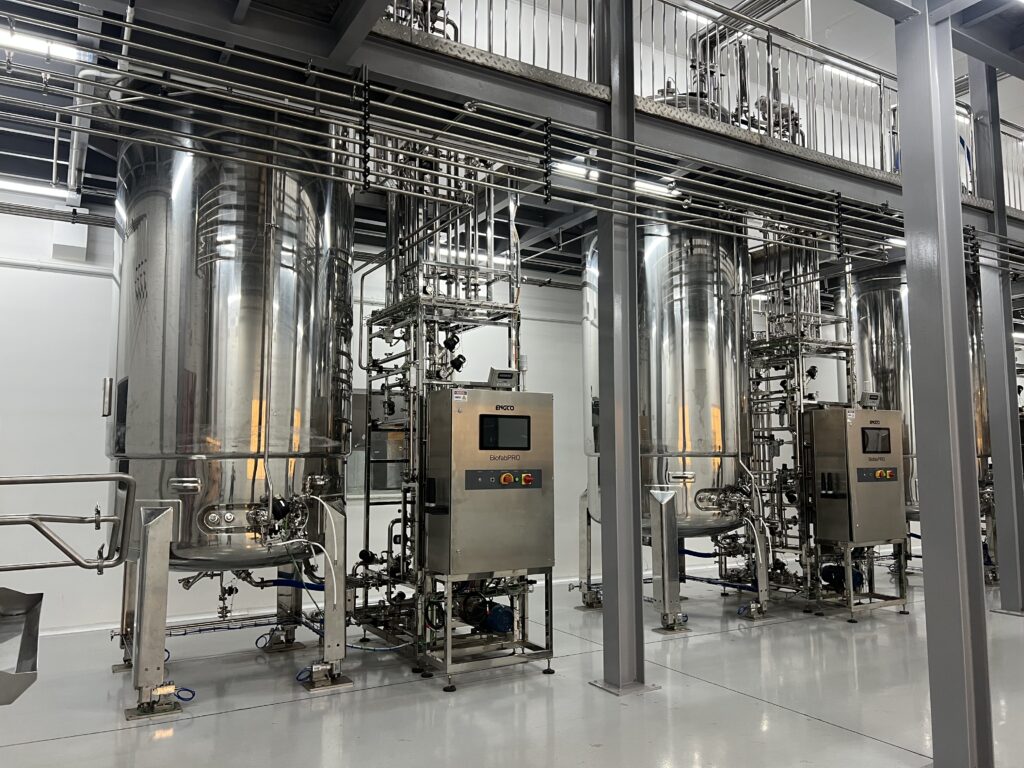
Regulatory also plays a role in the industrial scale up. For current Brazilian regulations, crop protection products require production to be carried out in a dedicated bioprocess line, similar to products commercialized as inoculants. This impacts the factory setup, which needs to have duplicate/separate production lines for these categories of products.
AFN: What’s next for IdeeLab?
GM: We have already established ourselves as the partner-of-choice for several ag input companies in Brazil, including some large multinational enterprises, that want to enter the bio ag input market in Brazil/LatAm, and foster regenerative agricultural practices.
We are able to provide solutions from live cell products (live microorganisms or mixture of different organisms in a product), to next-generation products based on microbial metabolites and effector proteins/peptides, the latter triggering physiological responses in the plant itself, such as defense response and stress response modulation.
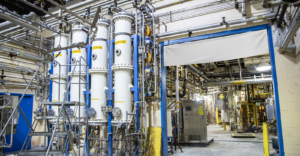
In the second half of 2025, we will inaugurate our biofactory. It will expand our market potential, as we are now able to manufacture cell-based and metabolite/protein/peptide-based technologies for our clients.
Our next cycle will focus on three business aspects: We will be expanding product manufacture in the biofactory. We are attracting new clients/projects for advanced technology products (CRO), internally referred to as the next generation of bio ag input technologies (metabolites/proteins/peptides). And we are expanding our R&D capabilities to new product categories, such as bioinsecticides and bioherbicides, a relevant market gap in biologicals.
International expansion is also in our pipeline, highly integrated into our business model of licensed-out technologies commercialized by clients in different geographies.
Further reading:
🌾 IdeeLab achieves CDMO status with new industrial-scale facility for ag biological production
🌾 How AI, automated labs and CDMOs are replacing agrifood’s 100-year-old R&D playbook
🌾 Guest article: Making the business case for sustainable agriculture through ag biologicals

Sign up for our weekly newsletter.