
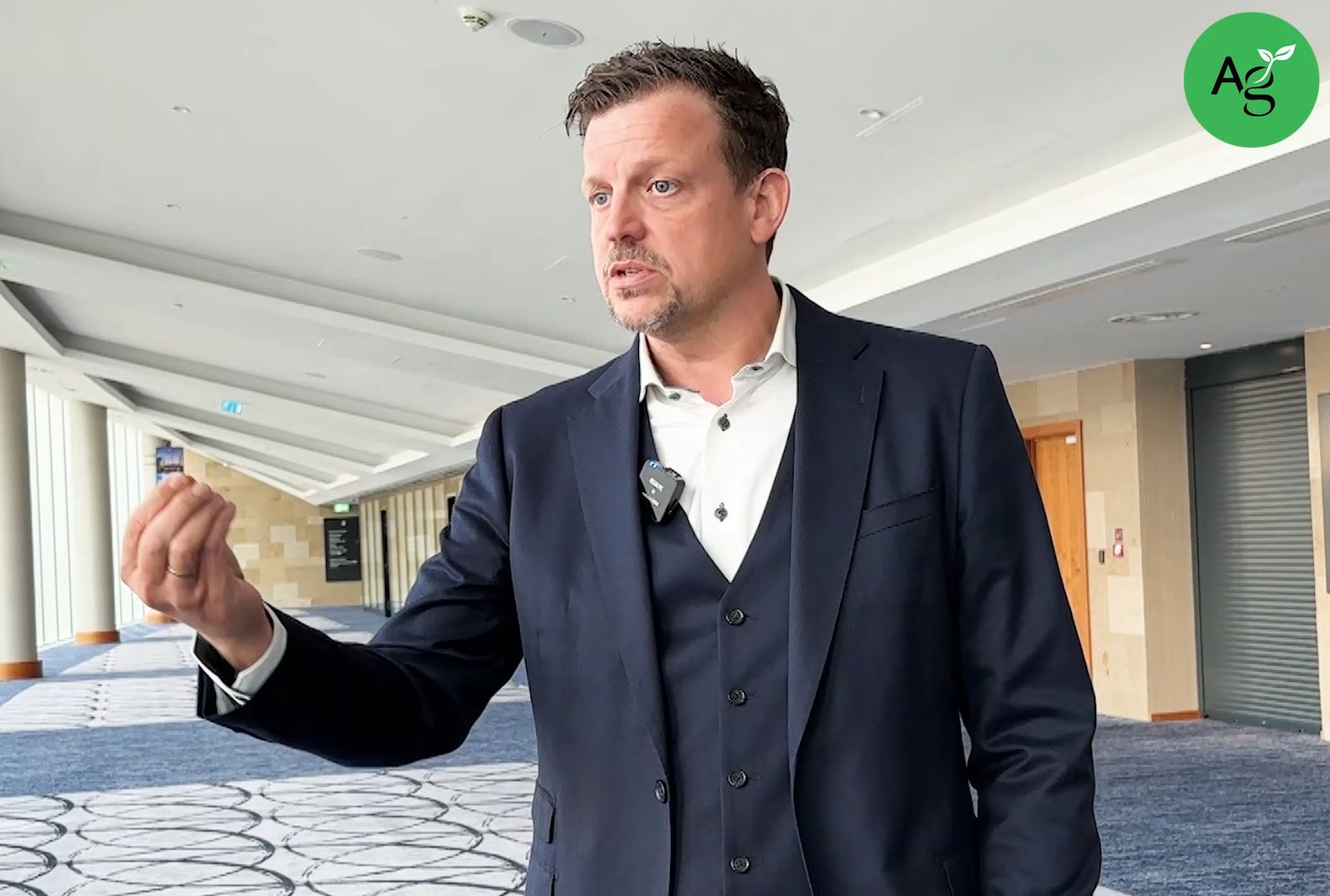
Belgium-based startup FlyBlast, which genetically engineers black soldier flies to produce insulin and other high-value proteins, has filed for bankruptcy.
Led by Johan Jacobs, who had an insect farming company for 10 years (Millibeter, which was sold to the now-defunct AgriProtein in 2019), FlyBlast ultimately failed because its initial strategy of targeting the nascent—and cash-strapped—cultivated meat industry was too risky, and it was not able to pivot to other markets before running out of money.
Jacobs noted that the Flyblast technical development team led by Paul Mozdziak had “made amazing technical progress, developing three transgenic BSF-lines in just over a year including one that expresses human insulin.”
He added: “Although we haven’t been able for many reasons to find the funding to get to the next stage, I can only finish with a few positive conclusions: the black soldier fly can be genetically modified very fast and at relatively low cost and there will be groundbreaking applications from transgenic BSF in many sectors.”
‘A no-no-no scream’
Jacobs, who caught up with AgFunderNews at the Future Food-Tech event in London last fall, told us at the time that by mass-producing molecules used in cell culture media for cultivated meat such as insulin, transferrin, IGF1, FGF2, and EGF, FlyBlast could potentially slash the cost of goods for startups in the space.
However, he “came away from that event with the clear feeling that the focus on cultivated meat was going to kill us.”
He added: “Some companies had solved their cell culture medium price problem, others were lying to their VCs about the medium price problem or were in clear denial, and others would love our solution if it were ready and market-approved, which it wasn’t. So none of the customers wanted or could pay any of the development work.
“In the meantime, VCs just saw a layer of innovation risks (ours) on top of another layer of innovation risks (cultivated meat), on top of overall geopolitical and macro-financial risks, which translated in a “no-no-no”-scream as they scrambled for the door.”
Strategic pivot options
According to Jacobs, the biggest advantage of black soldier flies over genetically engineered microbes as production vehicles for high-value recombinant proteins is that “you can farm the black soldier fly at a very large scale and very cheaply [to make proteins and lipids]. We’re just adding a level of technology and profitability, because these molecules are very high value.”
It’s also “a lot easier to produce animal molecules in animals than in yeast or in bacteria,” he noted.
“We started out in our feasibility study looking at whether insects, for example, have insulin-like pathways? And they do. They have molecules that look very much like human or chicken insulin, so asking them to produce human insulin, for an insect, it’s a lot easier than for bacteria or even plants, which do not naturally have that pathway.”
He added: “We had an educated look at a pivot towards biopharma, which had great potential, but not for our team and definitely not on our shoestring budget. We started getting some traction in animal health and performance, but customers are cost-conscious and slow in that market. The sales cycle with our first customer for a custom strain development would have amounted to 16 months, from first interest to the start of the project.
“I am sure we could have made a real impact in that market if we had been better funded and started out in that direction to begin with, but as a last-ditch pivot, it wasn’t going to be.”
“In short,” he said, “In the current climate, you need to get everything right to stand a chance, and we absolutely did not get everything right.”
Further reading:
Arkeon CEO delivers postmortem on ‘protein from air’ startup: ‘We just simply ran out of time’