
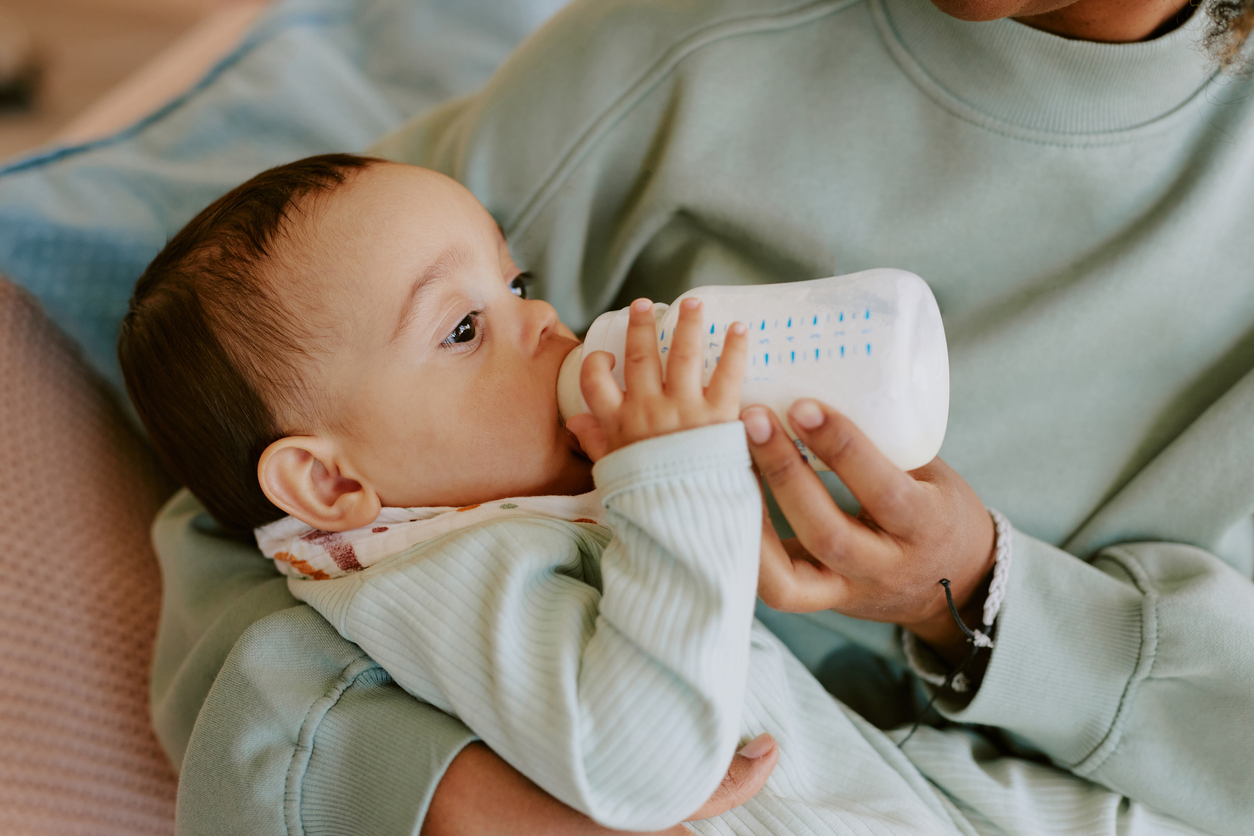
A global infant formula recall sparked by a bacterial toxin that found its way into products made by industry giants from Nestlé to Lactalis has put the spotlight on testing protocols at some of the world’s biggest CPG companies. But what happened further upstream is rather murkier.
So how could this have happened? And is it an isolated failure at one supplier, evidence of structural vulnerabilities specific to precision fermentation, or just a reminder to anyone making food to implement robust HACCP (hazard analysis critical control points) plans?
Tracing the upstream risk
According to Nestlé, the source of the contamination was an oil blend from an unnamed “global industry supplier” of arachidonic acid (ARA), an omega-6 fatty acid in breast milk that is produced commercially via precision fermentation using the fungus Mortierella alpina.
This was found to contain cereulide, a toxin produced by certain strains of Bacillus cereus bacteria that can cause vomiting, nausea, and diarrhea.
Unlike the bacteria that produce it, cereulide can’t be destroyed by heat and is too small to filter out during downstream processing. Once detected, the only remedy is to destroy affected batches and sterilize affected equipment and facilities.
While this incident originated with a fermentation-derived ingredient, cereulide-producing B. cereus is a well-known risk in conventional food processing, particularly in grain- and starch-based products. What makes this episode more newsworthy is not the toxin itself, but its presence in a globally distributed, fermentation-derived ingredient used for a vulnerable population: babies.
Precision fermentation startups we spoke to in recent days say the episode is especially frustrating because it may create the impression that there is something inherently risky about fermentation technology.
Indeed, one CEO in the field said the incident had “outraged” him: “If you have a bacterial infection, you clean, sterilize, fix the root cause, and start again; you don’t work around it and then send product out the door, which is what I suspect went on here.
“You can’t just cross your fingers and hope for the best because you’re meeting specs by filtering out contaminants. Honestly, I have had sleepless nights about this, because this to me is an outrage. This is something we should all be talking about.
“As an industry, we’re trying to build trust with consumers and do the right thing. Everyone is focusing on Nestlé and Danone et al. And they should. But we need to peel back the layer and look further upstream.”
Early vs late-stage risk
There are several ways B.cereus, which is found in soil, might enter a precision fermentation facility, and several points at which it might—or should—be picked up, said industry experts, who agreed to speak to AgFunderNews on condition of anonymity due to the sensitivity of the issue and the prospect of litigation throughout the supply chain in its wake.
If bacterial contamination occurs early and at high levels in a fermentation, said one CEO specializing in fungal fermentation, “You would typically see changes in dissolved oxygen, pH drift, altered substrate consumption, reduced product yield, or abnormal biomass trends” making it obvious to anyone monitoring the process that something was amiss.
If contamination occurs late in the run or at low levels, however, the primary culture may already dominate the system, he said. “In that case, you wouldn’t see major parameter deviation, and routine controls are based on those parameters and not targeted microbial testing. Fermentation control systems detect process performance changes, not necessarily who [which microbe] is in the tank.”
The typical industry practice for early-stage contamination is to terminate the batch, clean, and restart the vessel, he said. However, for late-stage or low-level contamination the batch may be allowed to finish if all process parameters look normal.
While this may sound risky, not all bacterial contaminants are dangerous, said the CEO. In fact most B. cereus strains do not produce cereulide. “From a purely microbiological standpoint, the presence of a non-toxin-producing bacterium is often manageable if purification is robust.”
The complication arises when the contaminant produces heat-stable or chemically persistent toxins such as cereulide, he says. “Once a small molecule toxin is present in the broth, standard processes fail to remove them, and it is not easily identified unless specifically tested, which is not routinely done.”
Compounding the issue, contamination may be unevenly distributed, meaning sampling can miss it.
Process signals—and blind spots
Another possibility is that Bacillus cereus spores germinate during the downstream process, he said, although they would need a food source to keep multiplying. Spores themselves — the dormant survival form of the bacteria — do not contain cereulide, he noted, but once they germinate and grow under the right conditions (the right temperature etc), toxin production can begin.
“Ultimately, industrial fermentation relies on representative sampling, performance indicators, and risk-based assumptions rather than continuous, exhaustive observation of everything present in a tank. If a contaminant is introduced at low levels, unevenly distributed, during the fermentation or downstream, and does not materially affect any measured parameter, it can remain below detection thresholds while the process appears fully in control.
“The vulnerability emerges when that low-level presence produces a stable, biologically active molecule that the downstream process was not specifically designed to remove.
“In that sense, these incidents tend to arise not from a single failure, but from the intersection of statistical sampling limits, biological variability, and the practical reality that even though tightly regulated fermentation systems manage risk, they don’t eliminate it entirely.”
False negatives
A cofounder of another startup specializing in precision fermentation for proteins said detecting a bacterial contaminant such as B. cereus in a fungal fermentation is “relatively easy by plating cells on agar plates, and should be on the higher sensitivity side of the spectrum.”
In principle, he said, any contamination is a sterility failure. But if the contaminant is present at low levels and deemed harmless, the batch may still be used.
“Toxin-expressing B. cereus, however, is on the problematic side of the spectrum. Best practice would be to discard the batch. There is a test for the toxin that is on paper highly sensitive (1 ppb), although sample heterogeneity can lead to false negatives.”
Is B. cereus a dealbreaker?
Asked if simply detecting Bacillus cereus in ARA production would be an immediate dealbreaker, one CEO at a startup familiar with this process told us: “There are innocuous B. cereus strains but you’re running a pretty big risk if you allow routine contamination because it’s hard to tell strains apart by routine PCR. You can relatively easily filter the bacteria themselves but not the lipophilic cereulide molecules.”
Asked whether a contamination could begin in the downstream process, it’s “unlikely,” he said. “Oil extraction DSP is brutal on cells because the first step is to thoroughly bust them open. The most likely place [for cereulide-producing bacteria to propagate] would be during the gentler growth stage [in the fermentation tank] and then the fat soluble cereulide is just co-extracted along with the triglyceride.”
HACCP in focus
According to another expert we spoke to: “I would look more intensely at the downstream process. Fermentation is commonly and routinely run fully sterile… but I’m not aware of anyone who can actually run sterile DSPs.”
For example, while there are certain fermentation inputs such as rice flour or plant protein concentrates that could introduce B.cereus contamination into a facility as the bacteria are commonly found in soil, weak protocols downstream are often to blame, he said.
Contract manufacturing facilities for example “commonly process multiple materials that may be completely unrelated to fermentation” and introduce contamination. “Buffer tanks, CIP skids, MF units, centrifuges and process hoses may be processing rice syrups at permissive temperatures prior to switching production over to a fermentation product. I’ve seen aqua ammonia tanks at 8 molar concentration (which is pretty darn high) that have visible amounts of bacteria spore that would reliably contaminate cultures.”
He added: “Fermentation is often overly blamed when DSP is the issue. And if DSP is causing your issue, you aren’t throwing away a fermentation batch, you are throwing away a DSP campaign, and you better do a root cause analysis of how the infection expanded.
“Infection in DSP is unavoidable—I’ll argue that to anyone—but containing it is manageable via a well thought out HACCP plan.”
Oxygen and risk
The devil is also in the detail, he said, noting that B. cereus does not produce cereulide in anaerobic conditions, for example.
“Even if you identify a highly toxigenic strain, your fermentation conditions may prevent cereulide expression. But this doesn’t mean you’re out of the woods. B. cereus is a great spore former, which can survive drying and sit dormant in your finished product. However, it is standard practice to do a microbial growth screen for B. cereus in final products, so this contamination should be identified before it gets into a finished CPG product.”
In the case of cereulide, he said, “You would need to get a reasonable expansion of the B. cereus infection under aerobic or sufficiently aerobic conditions to generate enough cereulide to induce an emetic response [vomiting] in consumers.
“It is not hard to develop a comprehensive HACCP plan that monitors, avoids and assures that the final product has minimal to no cereulide.
“But until recently, cereulide has been difficult to measure; there are few companies that measure and few tools to measure a range of bacterial toxins, some of which are not harmful if you ingest them but can be highly toxic when taken intravenously. But some consumers can be very sensitive to them and thus have an emetic response [vomiting].”
Root cause assessments
He added: “I have worked with global leading analytical labs and it amazed me how limited companies are in doing root cause assessments. The easy solution is developing an appropriate, adhered to, and documented HACCP. There is also a simple, routine analysis that should be done on all finished fermentation products that companies simply don’t do and few are even aware of.
“It’s an analysis that every pharma product batch goes through, but for some reason it hasn’t been adopted in food except for a few companies that are making infant formula ingredients through fermentation such as Chr Hansen [now part of Novonesis].”
Fermentation systems are tightly controlled, highly regulated and statistically robust, and this incident may yet prove to be an isolated lapse. But they are not infallible, he says.
“I think there needs to be a lot more exploration. The challenge is that these bacteria don’t show up in the end product microbial analysis, because you’ve killed them. But they have done their dirty work [produced a toxin] during the period of contamination, and that concept, I’ve found, is not robustly understood.
“A lot of products from fermentation go through a kill step, but while it kills the biology, it may not remove the toxin.”
Infant formula recall timeline
👉 Nestlé says routine checks at its Dutch factory detected low levels of cereulide in late November, prompting a voluntary recall and notifications to regulators. By December, the company traced the contamination to an ARA oil blend “from a global industry supplier.” After informing the supplier on Dec. 29 and halting purchases, Nestlé says it alerted the wider industry and began testing oil blends from its other suppliers.
👉 Nestlé, Danone, Lactalis, and other key players have issued precautionary recalls of selected infant formula products to multiple countries, although France’s health ministry says no causal link has yet been established between recalled formula and three infant deaths in the country.
👉 Danone says that while “routine controls and additional targeted analyses… confirm Danone’s products are safe and fully compliant with all applicable safety regulations,” it has withdrawn a “very limited number of specific batches.”
👉 The Paris public prosecutor has opened investigations into baby milk brands distributed by Nestlé, Lactalis, Babybio, and La Marque en moins.
👉 The European Food Safety Authority (EFSA) has now set an acute reference dose for cereulide for infants.
👉 Every consignment of arachidonic acid oil from in China entering the EU must now be accompanied by lab tests that “show the absence of cereulide toxin,” says the European Commission.
👉 China’s CABIO Biotech saw its share price plunge last month after being mentioned in several media reports as a leading supplier of AA to formula makers. However, it has not been named by brands or regulators as the source of the contamination and has not responded to requests for comment from AgFunderNews or other news outlets.
👉 DSM-Firmenich, which pioneered the commercial production of ARA in fermentation tanks (via Martek, which it acquired in 2011) told AgFunderNews that, “We are aware of this issue, however, none of our products are affected by this matter.”