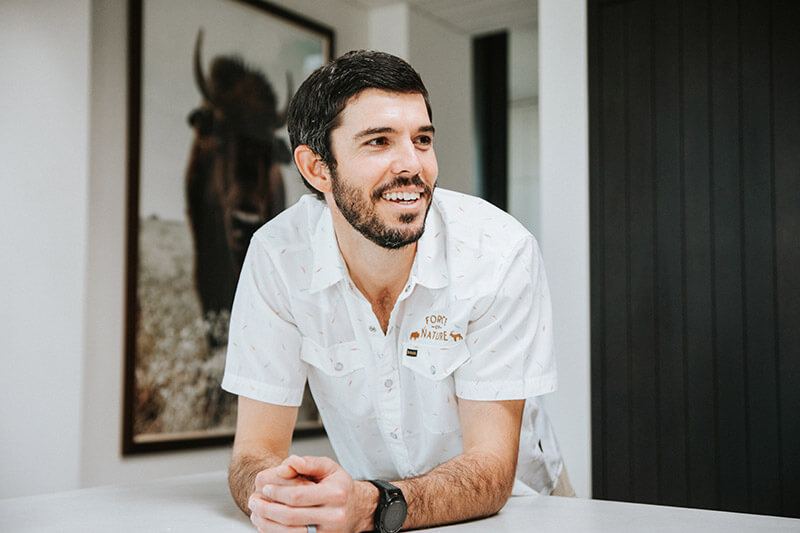
Certifications like “regenerative” and “organic” have their place in the food system, but they don’t tell the whole truth behind a product, says Robby Sansom of US-based meat producer Force of Nature.
“We live in a society where we want to take something complex and reduce it to a couple of rudimentary components and then feel good about it,” he said in a recent conversation with AgFunderNews.
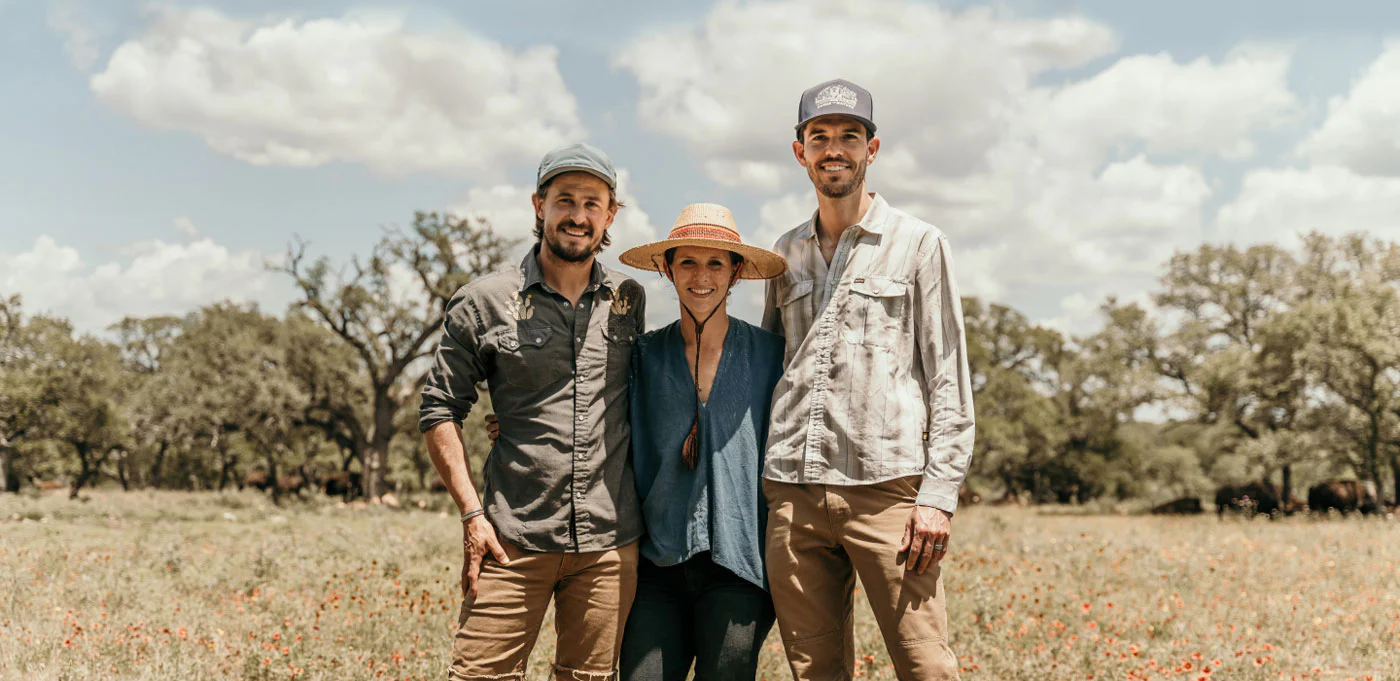
Force of Nature originated from a meat snacks company called EPIC Provisions, which Katie Forrest and Taylor Collins founded and eventually sold to General Mills in 2016. Sansom was one of the first hires at EPIC, serving as CFO and COO, and remained involved with the founders after the acquisition.
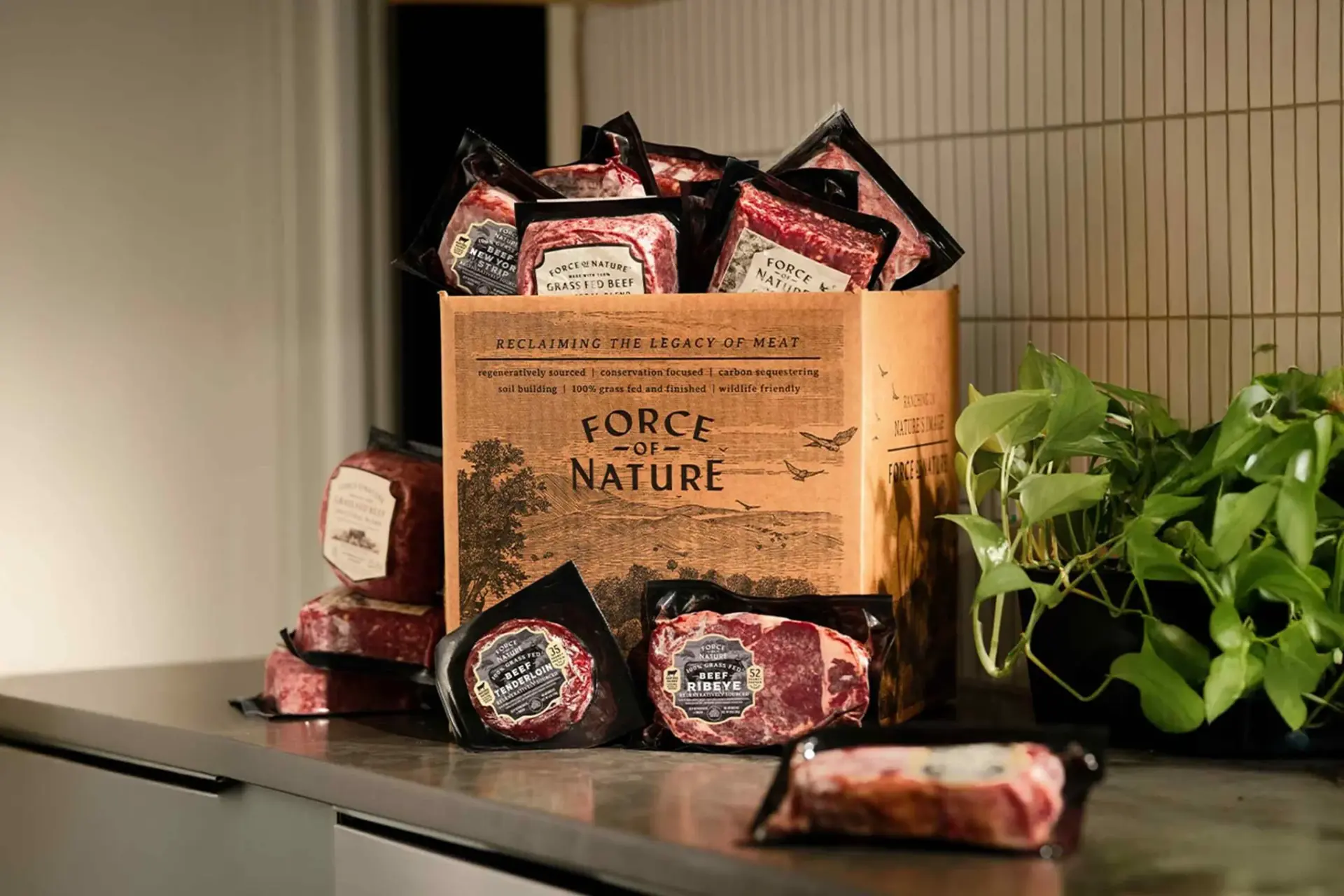
Today, he leads Force of Nature as the CEO and aims to do for fresh meat what EPIC did for snacks—source high-quality meat from regenerative operations and educate consumers on the role properly managed livestock herds play in revitalizing the planet.
This can’t be done simply through certification, according to Sansom.
There are brands out there pursing “certification that gives them maximum credit for minimal effort,” he says.
Then there are smaller brands and producers running operations that are regenerative in all but name, but “can’t compete with certifications that have an inflated sense of value in the in the eyes of the consumer.”
“My hope is that we can course-correct, because we’re off track.”
Sansom elaborated on this, and he also shared Force of Nature’s own regenerative journey and unpacked how brand storytelling can wield far more power with consumers than a stamp on a package label.
AgFunderNews (AFN): How did you go from EPIC Provisions to Force of Nature
Robby Sansom (RS): We started on this path back in 2012. We were co-creators and primary funders for Savory’s Land to Market program. We funded research on life-cycle assessments on animal agriculture, cradle to grave, and carbon impacts.
We sold to [EPIC] to General Mills, so we have some experience with building a brand and selling it to a scaled organization that happened to be the first Fortune 500 company to make a regenerative commitment.
Regenerative went from something nobody had heard of to something that was underground, kind of a whisper, to where it sits today, where it’s thematically impactful.
AFN: How does Force of Nature approach and define the term “regenerative?”
RS: At the highest level we think of regenerative agriculture as farming and ranching in the image of nature and celebrating nature’s blueprint for creating a thriving ecosystem, which is the foundation for food.
What sub-components make that up? That includes those core principles of regenerative agriculture: limit chemical and mechanical disturbance, armor the soil, diversity, green growing plants year-round, animal impact.
Another perspective is that there are fundamental cycles in nature that must function in order for ecosystems to thrive. You have the energy cycle, the carbon cycle, the water cycle, the nutrient cycle. Practicing regenerative [farming] is practicing those principles, and doing so in a way that you are improving the function of those cycles of nature.
The good news is that there is momentum around this idea that our food system needs to improve. [People] are at least looking at some of the core tenants of regenerative—soil health, tillage, [limiting] chemical applications, cover cropping. None of those things, individually or even collectively, are necessarily fundamentally regenerative, but they are key parts of what could be ultimately a regenerative system.
But I do think that we need to continue to drive accountability to combat the inevitable green washing that’s already well underway.
AFN: Some advocate for more certification around “regenerative” or “regenerative-organic” products. What is your take?
RS: We live in a society where we want to take something complex and reduce it to a couple of rudimentary components and then feel good about it.
Particularly in our food system, as consumers we delegate agency to the USDA, the FDA or third-party certifiers, and we over-index to what we’re actually getting in return. We as a consumer group assume what they are certifying dramatically exceeds what the actual result is. And consumers don’t know what they don’t know. They can’t be experts.
This idea that third-party objectivity is critical is valid, but in execution is challenging.
Regenerative is one of those things where you have three or four primary certifiers, and they have different perspectives. One says tilling is okay, one says tilling is terrible. The other says chemicals are bad, but the other says they’re okay.
The first principle [of regenerative agriculture] is to limit chemical and mechanical disturbance. I don’t think that we should be focusing on or accepting limiting beliefs that we have to have one or the other.
AFN: What should we be doing instead?
RS: We should be looking at the path where we aren’t destroying the rhizosphere and we aren’t poisoning our food.
We at Force of Nature take the most idealistic approach. And there’s not really a very easy path to get credit for that. It’s not simply “pasture raised,” “grass fed,” “organic” or “regenerative.” There’s so much more to it. In some ways, we are deviating from the system and creating really robust internal sourcing protocols.
AFN: Such as?
RS: Most meat companies are aggregators, and they typically have a protocol. Those could be as simple as “Just send me something that says ‘grass fed’ and make it as cheap as possible.” Or they could be much more robust and involved.
Ours [those at Force of Nature] lay out diet, feed, medical treatment, raising conditions [for the animals], and transportation, logistics, processing.
We’ve taken the organic standard and laid it against our protocol, embedded it in. We’ve taken the definition of grass fed and embedded it, and then we are trying to do a better job of educating consumers and making that transparent through our website.
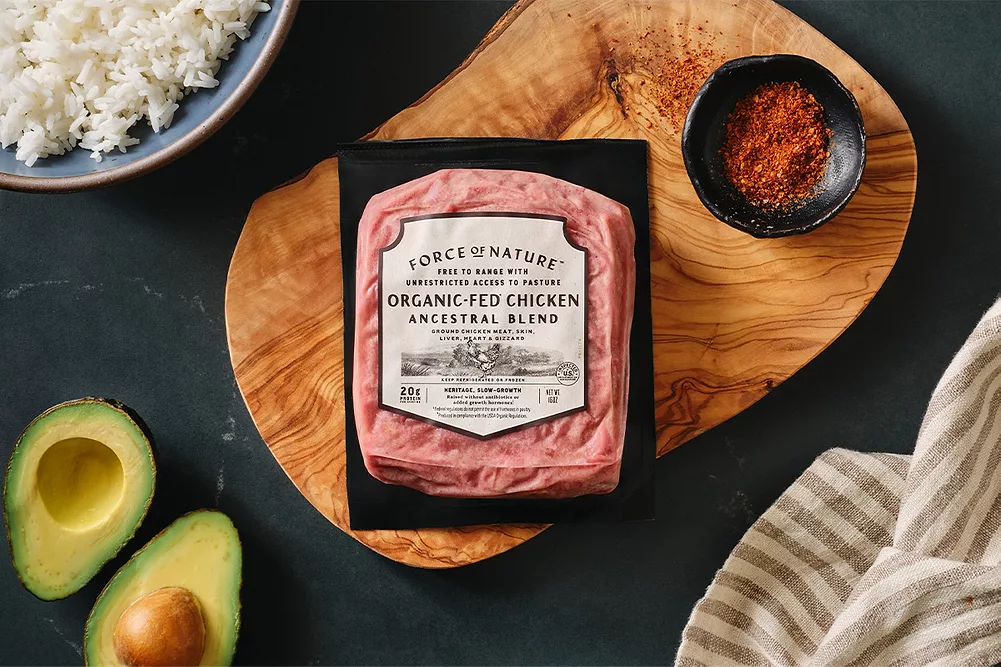
[For example], we’ve relaunched chicken products. We’re working with a variety of producers across the country. We measure our chicken against the organic standard, against all the best grass fed standards. We measure it against all of the leading certifications, all the way down to the breed, and how long the animals live. We want a healthier bird that’s having a more positive impact on its on its direct land base, that’s living a healthier life, that’s developing more naturally, that’s more consistent with the evolutionary desires, behaviors, biology of a chicken that makes it tastier, more nutritionally dense product.
There has to be some path for nuance in this discussion with consumers, and the most nuanced thing out there is is regenerative.
So we’re taking a really involved approach and trying to connect all these dots in support of consumers and make sure that consumers actually are getting what they want, and are trying to really engage them in the conversation.
In short, I think regenerative is misunderstood, it’s misrepresented by some of the leading players. And it’s if it hitches itself to the historical claims wagon that has led this industry, it will perpetuate a path that is falling short of the ideal that consumers are looking for.
My hope is that we can course-correct, because we’re off track.
AFN: What’s an example of this historical claims wagon driving down the wrong path?
RS: The example I often give is organic. My pantry is full of organic—I’m not disparaging it. But the consumer thinks it’s the end-all, be-all silver bullet that checks all the boxes. The reality is that [the term organic] basically implies [the food is] non-GMO and less likely to be adulterated with the most harmful chemicals.
In animal agriculture, it’s really expensive to achieve that, particularly with beef, which is the reason why it’s only 1% of beef is labeled organic.
If you look at the biggest suppliers of organic beef, it’s one of the big four: JBS or National Beef packers, for example. Then you look at a lot of small, regional producers that would qualify as organic, and they can’t afford to be in the program [because] it’s cost prohibitive. It would add dollars per pound to their final product.
AFN: Are Force of Nature products labeled “organic”?
RS: They aren’t organic, but we’re testing them to confirm that the end product has the absence of chemicals. [We] test [that products are] grass fed, looking for mega ratios and phytochemicals. You don’t need to test for antibiotics, but the USDA says 30% of products labeled “antibiotic-free” test positive for antibiotic residue. So we test for antibiotics.
We’re trying to think of different ways to better deliver on consumer expectations than anybody else, across a wide spectrum of things, some of which there are certifications for, and some of which there aren’t.
Simultaneously, how do we make it accessible? Because the certifications tend to not only fall short of what I think the consumer already desires and expects, but they add costs.
AFN: How then do you build trust with consumers without a certification?
RS: There are brands that exist to identify a minimum bar, find a certification that gives them maximum credit for minimal effort, warranted or not, and leverage that to the optimum degree.
And then there are a lot of brands or producers out there that are doing the right thing and don’t have a certification to bolster them, and in fact can’t compete with certifications that have an inflated sense of value in the in the eyes of the consumer.
A lot of those brands that have great certifications don’t engage with consumers. They’re not storytelling, they’re not on social media screaming from the rooftops. They don’t exist as an actual entity or organization of people that [consumers] can form a relationship with. That is where trust should come from. We shouldn’t be delegating to third-party agencies or trusting with a blindfold that they represent [consumers’] best interests.
The alternative is to form relationships and and to build trust the old fashioned way.
It’s a different age. Our food system is historically built on believing literally anything and everything that was told on a package, and with very little oversight. Now we live in the age where it’s difficult to pull the wool over consumers’ eyes, and information is more widely available. More opportunity for connection and communication and relationships exists. The future is being able to invest in that.
Further reading:
🌾 Why the ‘regenerative organic’ certification exists—and why the food system needs it