UK-based plant biotech company Tropic has raised a $105 million Series C round to support the rollout of non-browning bananas and bananas with extended shelf-life—innovations it says are opening up the cut fruit market, cutting food waste, unlocking new export markets, and reducing shipping costs.
Separately, it has advanced plans to establish a mother plantation to support commercial deployment of Cavendish bananas resistant to the devastating fusarium wilt fungal disease (TR4) from 2027.
Tropic will use the capital to expand large‑scale plant production capabilities, support commercial partnerships, and accelerate its pipeline of banana varieties resistant to TR4 and Black Sigatoka, expand its rice portfolio, and apply its tech to other high-impact crops, says CEO Gilad Gershon.
“2025 proved that our technology delivers, not in the distant future, but right now.”
Alex Wilson at IQ Capital adds: “Tropic’s gene-editing platform addresses crops that have been essentially unimprovable through conventional breeding, and the results speak for themselves. With TR4 posing an existential threat to a $25bn industry, the urgency behind Tropic’s pipeline is only growing.”
Non-browning bananas
Founded in 2016 by Gilad Gershon and Eyal Maori, Tropic is best-known for its proprietary Gene Editing Induced Gene Silencing (GEiGS) technology, which activates gene silencing machinery (RNAi) naturally found in plants to combat threats such as fungi and viruses.
However, the first two innovations—non-browning bananas and extended shelf-life bananas—have been developed using more traditional CRISPR gene editing techniques.
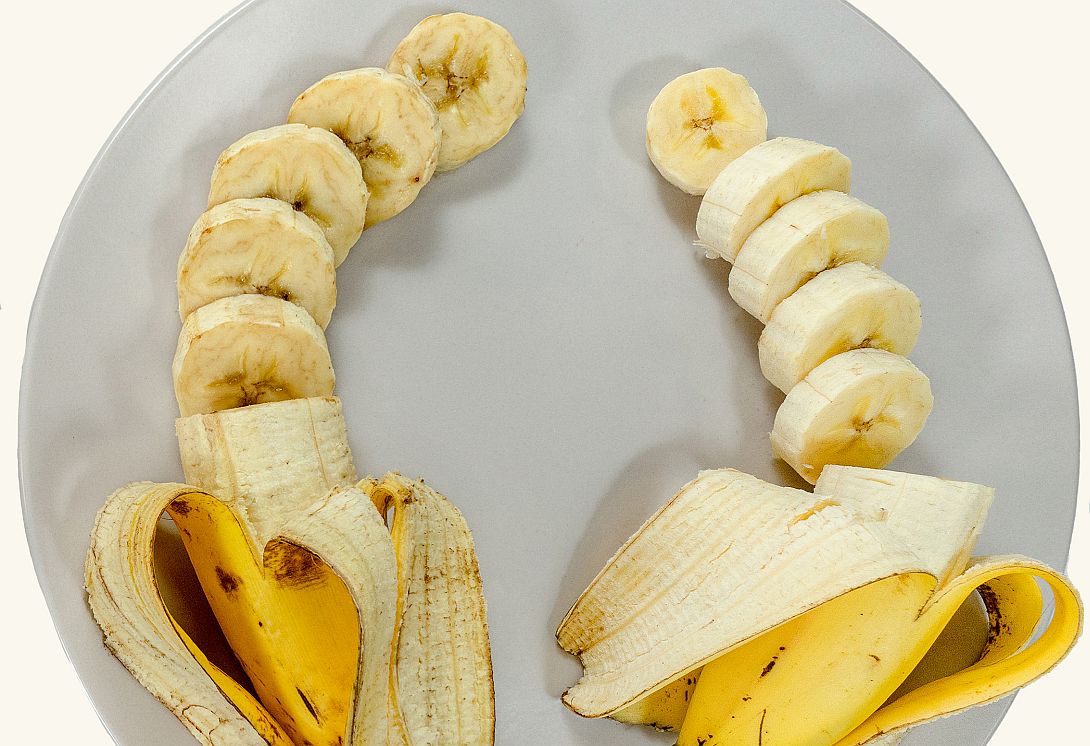
The non-browning bananas have the same taste, smell and sweetness profile, but don’t go brown as quickly, as Tropic has disabled the gene encoding an enzyme (polyphenol oxidase) that catalyzes the oxidation of phenolic compounds in the banana, which causes the brown color.
This means firms can add bananas—which are both affordable and popular—to fruit salads and cut fruit products, opening up a huge new market, says the firm.
To date, Tropic has secured regulatory approvals for the bananas in the Philippines, Colombia, Honduras, the USA, and Canada, with more territories likely coming on line later this year.
Bananas with extended shelf life
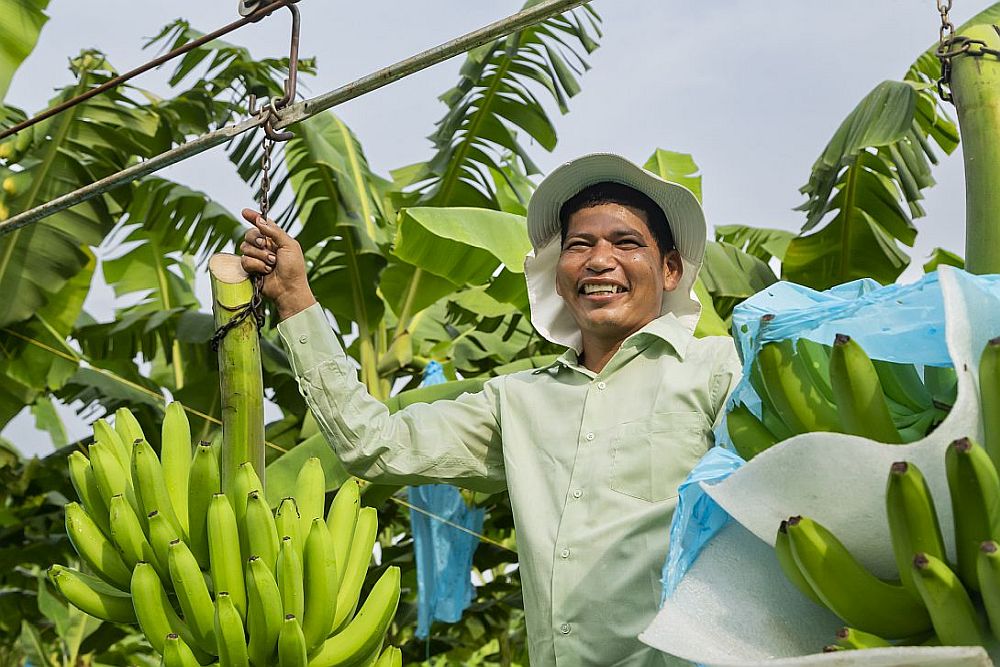
For bananas with an extended shelf-life, Tropic disables the genes responsible for the production of ethylene, a plant hormone which activates enzymes that break down starch into sugar, softens the fruit by breaking down cell walls, and changes the peel color from green to yellow by breaking down chlorophyll.
If bananas can stay greener for longer, you can harvest them later, ship them for longer, and reduce packaging and chilled transportation costs, claims the firm.
Tropic isn’t preventing ripening altogether, but “buying companies at least 10 extra days, which is huge for the banana industry,” says CEO Gilad Gershon. “Demand already exceeds supply.”
Bananas resistant to fusarium wilt
But perhaps Tropic’s most disruptive innovation is bananas resistant to the fungal disease fusarium wilt, or TR4, that has been devastating Cavendish crops around the world.
TR4—which was first detected in bananas in Southeast Asia—has gradually spread through Asia Pacific, Africa, and South America, hitting growers in Colombia, Peru, and Venezuela, and Ecuadaor, one of the world’s largest banana producers, said Fresh Del Monte CEO Mohammad Abu-Ghazaleh on a recent earnings call.
“People really don’t understand how serious this issue is. There will come a time that people realize that there are not enough bananas… and prices will shoot up in a way that will be a shock to the market.”
Patented GEiGS tech
To tackle the threat, Tropic is deploying its patented Gene Editing Induced Gene Silencing (GEiGS) technology, which effectively triggers the banana plant’s own RNAi [RNA interference] capabilities to target the genes in fungi that are attacking the plant.
According to Gershon: “For gene knockouts, usually the approach is to disable coding genes [which contain instructions to make proteins that perform functions in the cell]. But this has limitations. Say you want to make a banana resistant to a fungal disease. You might have to go through more than 30,000 genes to identify the one that, if you stop it from working, will help the banana fight off the disease. And then you might also find you’ve caused other problems.”
GEiGS, by contrast, takes a more nuanced approach: “We use traditional gene editing tools like CRISPR, but instead of editing coding genes, we edit non-coding genes, the ones that produce natural RNAi for example, which are used to regulate other genes.
“In the case of TR4, we’re redirecting a banana non-coding RNA to attack a gene within the fusarium strain causing the disease. Instead of regulating a gene in the banana, this unique GEiGS RNA attacks a gene in the fungus.”
A more nuanced approach to gene editing
Stepping back, he says, Tropic’s GEiGS tech enables a more nuanced approach to tackling threats to plants such as bananas. “With a gene knockout approach, you are basically switching a gene on or off. With GEiGS, you can say, I want that gene to be reduced by 50%.”
The approach also allows for greater tissue specificity, he claims. “With gene knockouts, in every single cell of the plant, that gene will not function. But with GEiGS, we can say we only want to change the root, the stem, or the fruit, for example.”
He adds: “If you over-silence some genes and stop them from working altogether, there can be a deleterious effect on the plant. One of the main benefits of this RNAi approach is that first of all, it’s inherent in the plants, and second, it’s not GMO, which makes things far easier from a regulatory perspective.”
Given the broad potential of its patented GEiGS technology, Tropic has also licensed it to other players such as Corteva (to develop disease resistance traits in corn and soybean), British Sugar (disease resistant sugar beet), and Genus (to address critical livestock diseases).
The Series C funding round was led by Forbion Bioeconomy Fund and Corteva and supported by IQ Capital, Just Climate, ABN Amro, Invest International, Temasek, Five Seasons Ventures, Aliment Capital, Sucden Ventures, Genoa Ventures, and Polaris Partners.
Further reading:
Fresh Del Monte ramps up defenses as disease threatens world banana crops