
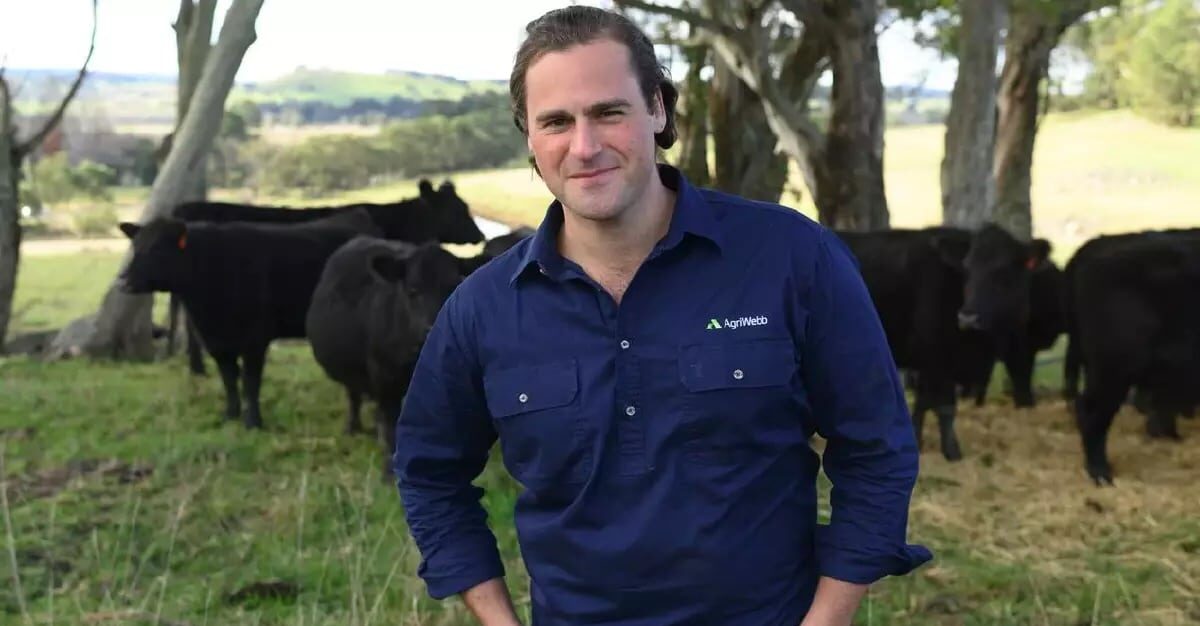
“I have always believed meaningful innovation should be appropriately hard,” says AgriWebb cofounder Justin Webb. “If the problem is genuinely important, the journey should demand resilience, agency, and a very close connection to the customer reality.”
It’s safe to say the last half-decade in agtech has been “appropriately hard” for most startups in the space, given the lack of both funding and exits that have followed the heady days of cheap money and high valuations.
Livestock management platform AgriWebb has proven itself an exception to the rule, having weathered the ups and downs of agrifoodtech for more than a decade. And this week, the Australian company announced it will be acquired by URUS, one of the world’s largest bovine genetics companies.
URUS runs nine different brands around the world, providing everything from dairy and beef genetics and reproductive services to advanced dairy management software and data insights.
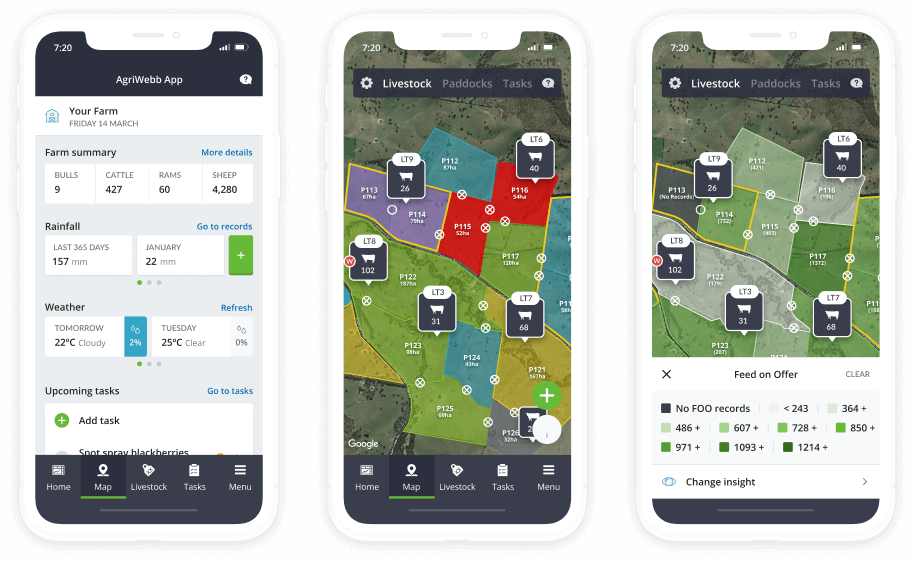
The AgriWebb platform collects data from fields and cowsheds to provide livestock operations with farm mapping, grazing management, and inventory tracking. More than 10,000 farms use the platform to manage over 23 million heads of livestock on over 150 million acres in 26 countries, according to Webb. The company is also “the cornerstone data infrastructure for supply chain resiliency” for corporates including McDonald’s, Nestle Purina, Wendy’s, Ahold Delhaize and Sainsbury’s.
With URUS, it will support 25 million animals across the two companies’ platforms, connecting previously disparate areas like farm management, genetics, breeding, sustainability, and animal productivity.
URUS has already established strong connections between these things in the dairy sector; the acquisition of AgriWebb will bring such capabilities to the beef industry.
‘A much more integrated system’
“One of the reasons URUS was strategically compelling to us was that they already sit at an enormous scale within global bovine genetics and reproductive systems,” explains Webb. “Combining that with operational and supply chain data creates a much more integrated system than either could independently achieve.”
Webb, who comes from a farming family in Western Victoria, Australia, reckons the deal is part of a greater overall shift in livestock and agriculture, which is seeing “the emergence of operational data infrastructure across global food systems,” he tells AgFunderNews.
“In livestock production specifically, the combination of genetics, operational management data, animal health, environmental data, and downstream supply chain information creates very powerful feedback loops over time.”
“By bringing AgriWebb into the URUS family, we further strengthen our data and genetics flywheel, creating even better connectivity with producers and retailers and enabling more informed, outcome-driven genetic and management decisions across the entire breadth of dairy and beef production,” URUS CEO Paul Hunt said in a statement.
Agtech’s ‘larger structural shift’
AgriWebb will continue to operate under its existing brand, with its existing management team for now.
Webb sees agrifoodtech in the midst of a transition, from the more traditional “farm management” offerings to “a period where global food systems increasingly resemble other critical infrastructure systems: data intensive, interconnected, operationally optimized, and AI assisted.”
Agtech has historically been a fragmented landscape where tools work by themselves rather than being part of a system.
Today, says Webb, “The larger structural shift now appears to be toward integrated systems connecting genetics, biological performance, operational management, sustainability, financing, and supply chain traceability.”
These “connected agricultural platforms” are seeing significant investment of late, too. Last year, investment firms KKR and Highland Europe acquired a majority stake in livestock health tech company SmaXtec. New Zealand virtual fencing startup Halter raised notably high rounds in 2025 ($100 million) and 2026 ($220 million), while Norway’s NoFence raised $35 million in Series B funding.
As for what it takes to endure the ups and downs of agrifoodtech, Webb says enduring businesses are “almost always built by solving very real customer problems patiently over long periods of time, usually through market conditions that are materially harder than expected at the outset.”