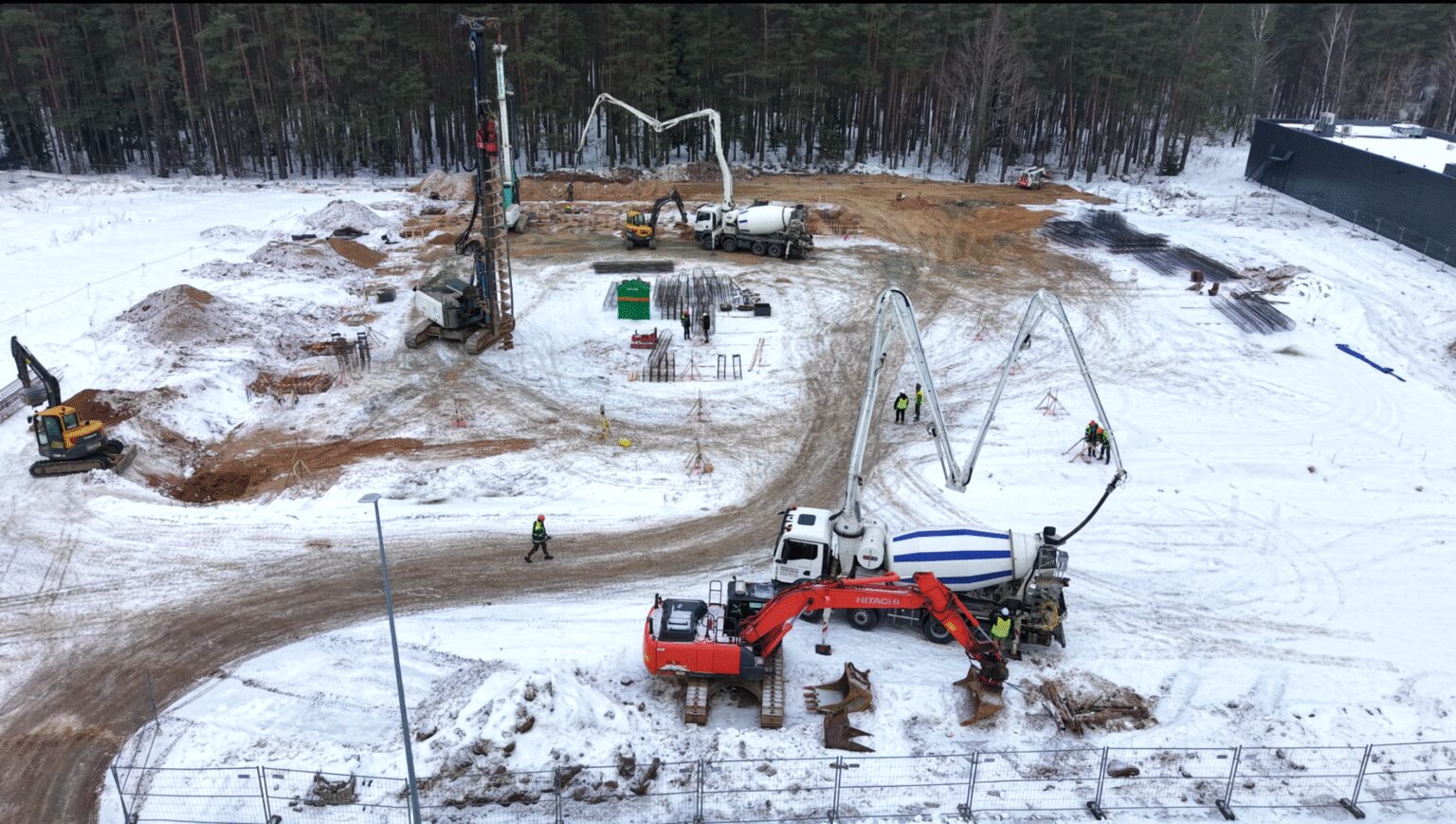
Lithuanian startup Pentasweet has started building a facility in Vilnius that will produce commercial quantities of brazzein, a sweet protein 1,500x sweeter than sugar.
The move is notable given the relative lack of options in the natural high intensity sweeteners space, which is currently dominated by stevia and monk fruit, although new entrants to this space are emerging such as MycoTechnology’s precision-fermented honey truffle sweetener.
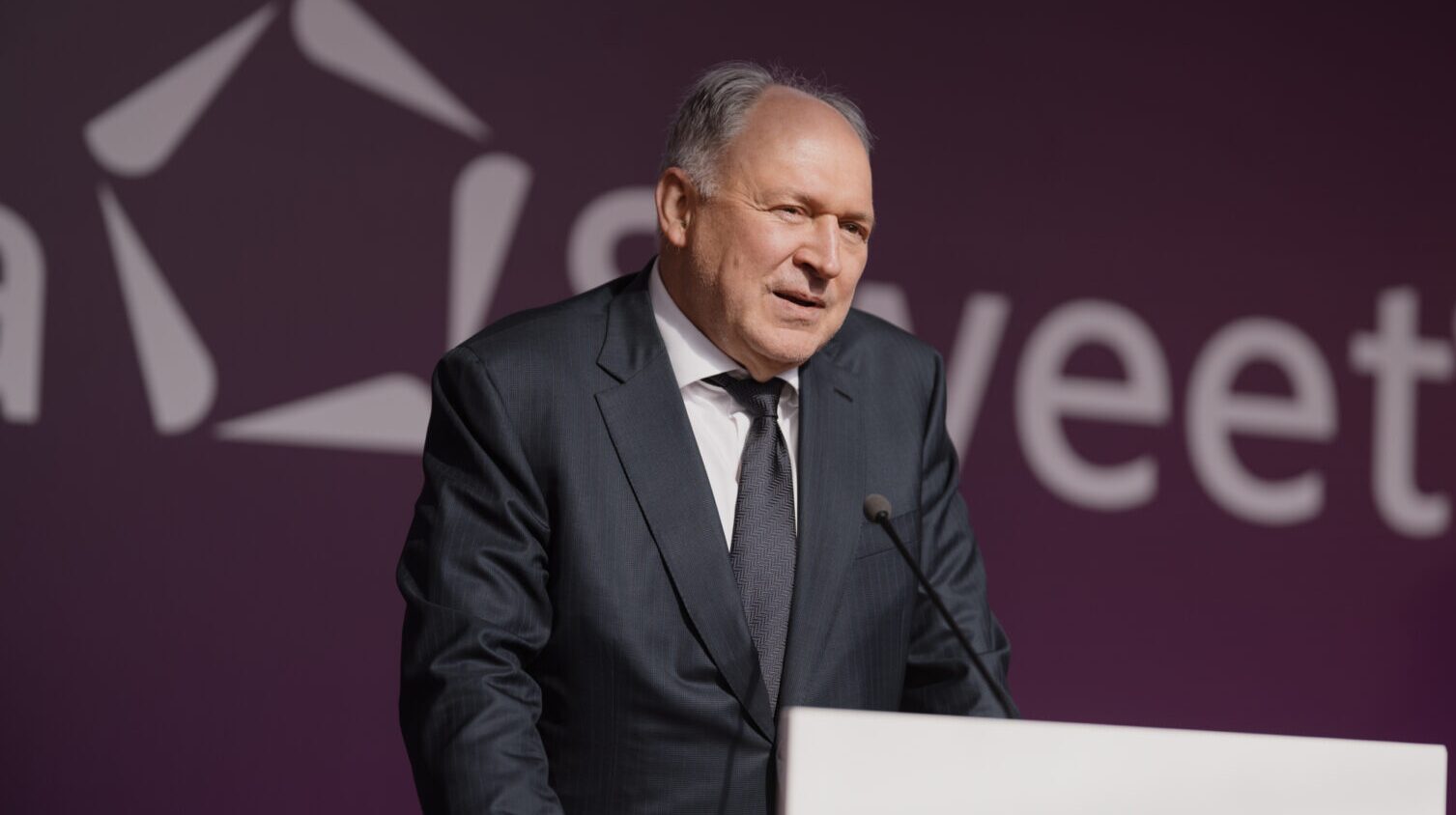
The project will be implemented in two stages, cofounder Danas Tvarijonavicius, PhD, told AgFunderNews. “Phase I will establish the core production infrastructure and initial manufacturing capacity, with completion planned for early 2027. Following Phase II, which will further expand production capacity, total investment is expected to reach €65 million ($76 million).”
The factory will become the first European production center for brazzein, an ultra-sweet protein found in tiny quantities in fruit from a climbing shrub called oubli that is prohibitively expensive to extract.
As a result, a handful of companies including Pentasweet, Oobli, Nanjing Bestzyme, Microfarmtory, Perfect Day, and Sweegen (via its partner Conagen) has developed tech to produce it more efficiently via precision fermentation. Most are using genetically engineered yeast strains as production hosts, while Bestzyme uses a strain of the filamentous fungus Aspergillus Oryzae.
To access the US market, Bestzyme, Oobli, and Perfect Day have secured FDA GRAS “no questions” letters, while applications from Sweegen and Microfarmtory are pending.
Pentasweet, meanwhile, is initially focusing on the European market, and plans to submit a food additive application to the European Food Safety Authority (EFSA) this year, said Tvarijonavicius, who noted that the final product has no trace of the genetically engineered production host.
“The US is certainly in the plans, but at later stages. We have a very efficient process for a very high quality/high-purity product.”
Heat- and pH-stable, with clean taste profile
While other non-caloric natural sweeteners such as monk fruit have gained traction in recent years, extracts remain expensive and supply-constrained.
Stevia sweeteners, in turn, have improved significantly in recent years as formulators have homed in on the more sugary-tasting steviol glycosides such as Reb M.
However, sweet proteins such as brazzein add an exciting new dimension to the sugar-reduction toolbox, claimed Tvarijonavicius, a biochemist, who has spent more than two decades in industrial biotech and food processing—including senior roles at Roquette Amilina—overseeing large-scale manufacturing projects.
“Brazzein works very well for multiple dairy, confectionery, and bakery products. It could act both as sugar-replacer or sugar-reducer. As a sugar-reducer, it allows protein- or fiber-fortifications nicely. In some applications, it works as a standalone sweetener, while in others, blends or pre-formulations work better. This is [especially the case] for high-acidity drinks due to the intrinsic slow onset properties of sweet proteins, so high-acidity drinks are most challenging application so far.”
One key advantage of brazzein is that it is both heat- and pH-stable and stays intact in solution for a long time, he said. “This is due to its amino acid sequence, which includes multiple disulfide (S–S) bonds that stabilize the structure via covalent links. Its clean taste profile is another advantage.”
While brazzein can have some lingering sweetness, he said, “This is well-known topic common for many HIS [high intensity sweeteners], and there are good solutions to mitigate this.”
As brazzein is a protein, it does not negatively affect the gut microbiota or cause blood glucose spikes, he claimed.
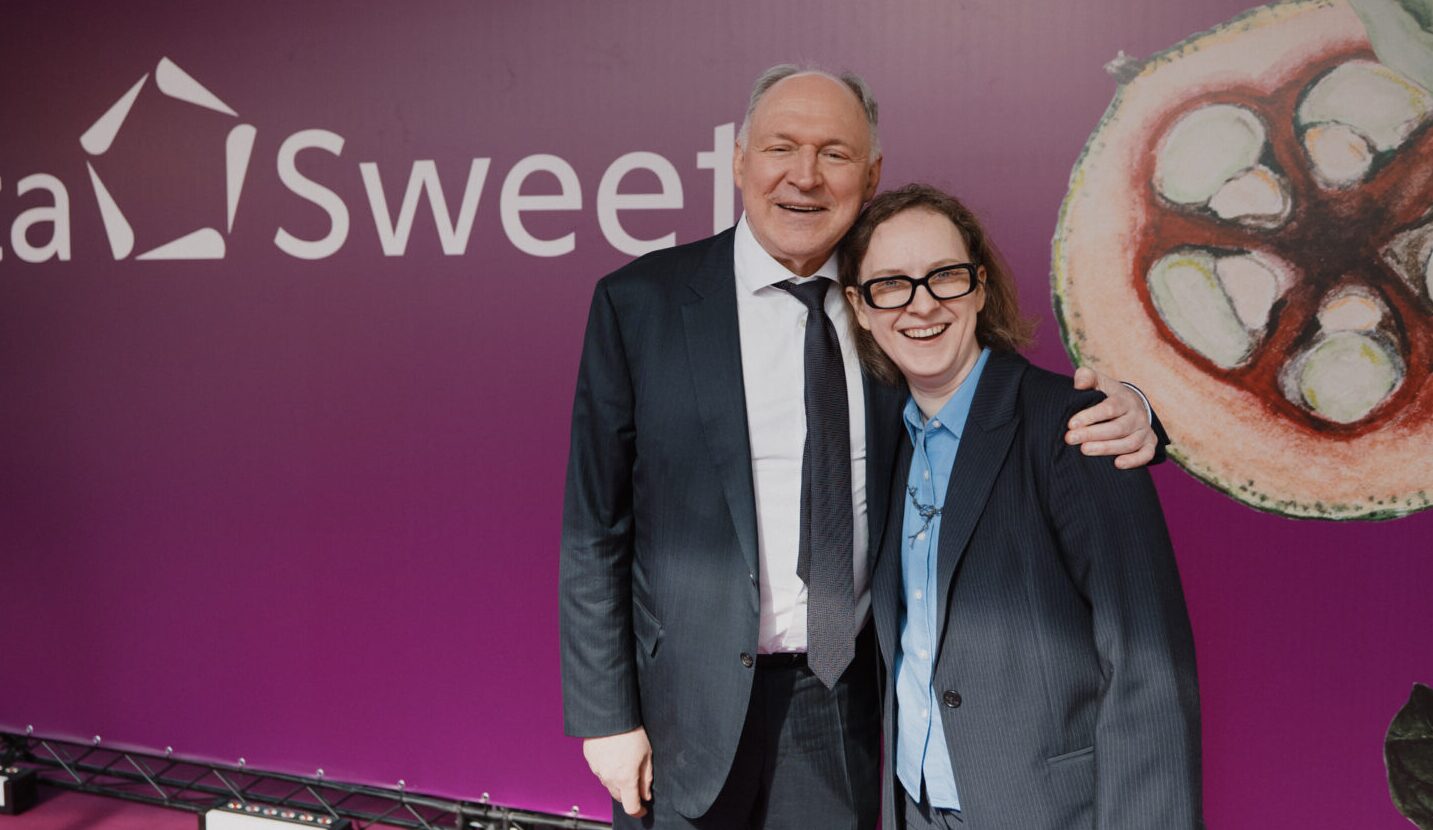
Head of marketing Elza Kreišmonaitė added: “Brazzein’s primary role is as a high-intensity sweet protein, but it may also have potential as a taste modulation tool in certain applications. Because of its clean sweetness profile, it can help improve overall taste balance, reduce perceived off-notes, and support better sensory performance in sugar-reduced products. This is something we continue to evaluate application by application.”

Funding
To date, Pentasweet has been founder-funded, said Tvarijonavicius. “For the industrial facility under construction, we have a loan from the Lithuanian National Development Bank ILTE. It covers both demo stage and industrial expansion (up to the equivalent of 50,000 tons of sugar at full capacity); if we see that the immediate market demand is stronger than that, we shall see what the options are.”
The factory is expected to begin operations in the first half of 2027, said the firm, which was founded in 2022 by Tvarijonavicius and Saulė Sūdžiuvienė (CSO). “The precision fermentation process also allows for more efficient use of raw materials; resulting side streams are planned to be directed towards further energy generation such as biofuel production.”
Most of the players in the brazzein from fermentation arena have not publicly shared production capacity.
However, Oobli CEO Ali Wing told us that the firm now produces at scale with CMOs in 200,000 liter tanks. She added: “We have tech-transferred with several, but we do most of our production in Mexico today. And we look forward to adding Magdalena’s future facility in Guatemala to our CMO partners.”
MicroFarmtory CEO James Wu told us: “We are leading the scale up of brazzein and have invested in capacity that can make 30 metric tons a year of pure brazzein. The capacity is growing to 200 metric tons in two years. This is why we can offer as low a cost in use as sugar.”
Further reading:
Beyond stevia: 2nd Nature mines ag side streams for next-gen sweeteners with AI
Latam sugar giant Magdalena plans 650,000-L precision fermentation facility in Guatemala
Shiru and Ajinomoto team up on AI-powered sweet protein discovery journey