Editor’s Note: Beatriz Ponce de León is partner and CFO at GLOCAL, the Latin American agrifoodtech accelerator and investor, with a background in technology, investment and banking. Florencia Solari is the firm’s dealflow and GLOCAL Game Changers leader.
The views expressed in this article are the author’s own and do not necessarily represent those of AgFunderNews.
Global agrifoodtech investment reached $5.1 billion in the first half of 2025, marking a 37% year-over-year drop and the lowest first-half showing since 2017. Yet this pullback is beginning to reveal where real opportunities lie: upstream innovation now represents over half of all funding, driven by structural megatrends like climate adaptation, food security, and efficiency gains.
In Latin America, the transformation is accelerating. Longstanding structural challenges, such as restricted access to finance, climate variability, labor shortages, and soil degradation, are now intersecting with global innovation trends and growing investor appetite.
In the first half of 2025, the region has already attracted nearly $200 million in disclosed agrifoodtech deals, led by upstream technologies in agrifintech, biological inputs, and AI-powered platforms. The message is clear: Latin America is not only catching up, it’s starting to lead.

Agrifintech: From underserved to digitally empowered
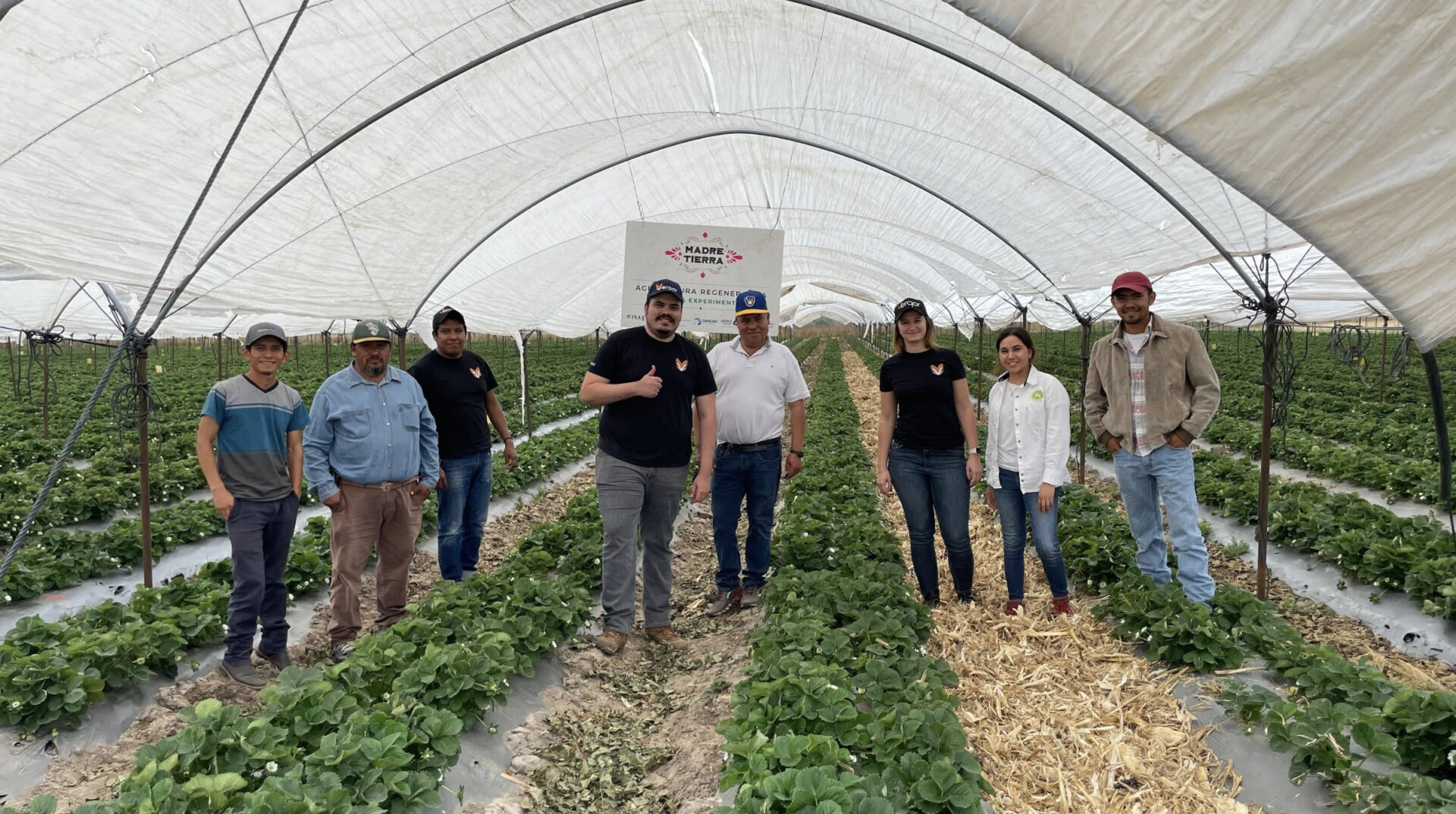
With fewer than 5% of rural households in LATAM accessing formal credit, agrifintech startups are stepping in with digital-first solutions tailored to agricultural realities. In Mexico, Verqor continues to scale its embedded finance model, integrating crop-linked repayment, weather insurance, and AI-driven scoring to approve loans in under 72 hours.
Blooms, another standout in the region and a GLOCAL Game Changers winner, is addressing a $3.2 billion financing gap for exporters by offering working capital and FX hedging via an SPV-backed structure, allowing off-balance sheet scalability.
In Brazil, the integration of Agroforte with RúmiCash and Agrolend’s BRL 100 million ($18.4 million) partnership with UPL is embedding financial tools directly into supply chains, mitigating credit risk and unlocking scale.
Other players like Culttivo and Tarken are radically compressing credit evaluation timelines—Culttivo has reduced scoring time to just 3 minutes—further democratizing access to capital. From Colombia, WEÏA helps food and beverage companies in LATAM stabilize and reduce the cost of their agricultural raw materials through forward smart contracts, offering a Farm Now, Pay Later financing solution to their farmers and suppliers.
Insurtech: closing the climate protection gap
As extreme weather intensifies, agricultural insurtech is becoming vital. With under 3% of GDP covered by climate insurance in developing countries, startups are innovating at a rapid pace. Trag, Natu, and Suyana are deploying weather-indexed, parametric models that automate claim settlements and minimize base risk. Suyana’s hybrid parametric model, fusing automated triggers with traditional validation, offers a compelling middle ground, especially for smallholders in vulnerable geographies.
Together, these fintech and insurtech solutions are rebalancing agriculture’s risk-reward equation: making capital more accessible, protection more inclusive, and decisions more data-driven.
Agbiotech and biologicals: science meets soil
Biological innovation is one of Latin America’s most dynamic upstream frontiers. AgBiotech and bioinput startups have been attracting growing attention from both venture and corporate investors.
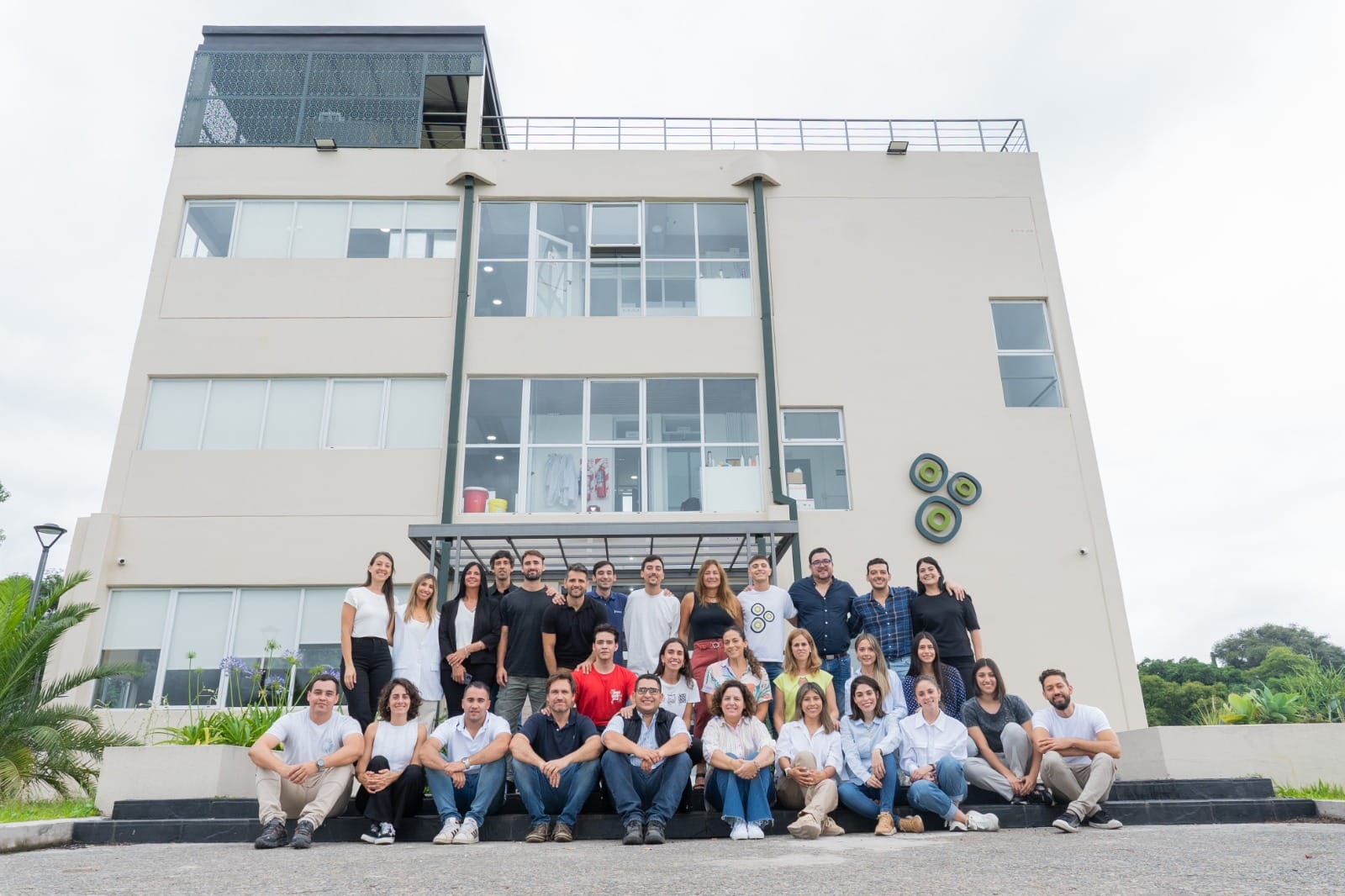
A prime example is Puna Bio, a GLOCAL portfolio company using extremophile microorganisms from the Andes to regenerate soils and boost yields by up to 15%. Following its Series A round—led by Corteva Catalyst and joined by At One Ventures and the Bill & Melinda Gates Foundation—Puna now covers 20,000 acres of soybeans across the region and is accelerating its expansion across LATAM.
Corteva has emerged as a dominant force, backing nine agbiotech startups to date, including a recent lead in Brazil-based Symbiomics, which leverages AI to accelerate biological inputs development.
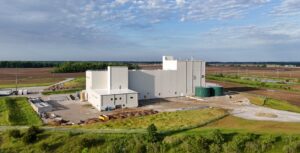
At the grassroots level, cooperatives like Argentina’s AFA are scaling local solutions—its new $6 million bioinput plant serves over 1.5 million hectares—while Aapresid’s Regenerative Systems Certification (CSR) is pioneering traceable, outcome-based farm validation.
The convergence of VC, corporate capital, and cooperative innovation underscores a new reality: biologicals and regenerative agriculture are becoming core pillars of regional competitiveness.
AI and automation: The new agronomic intelligence
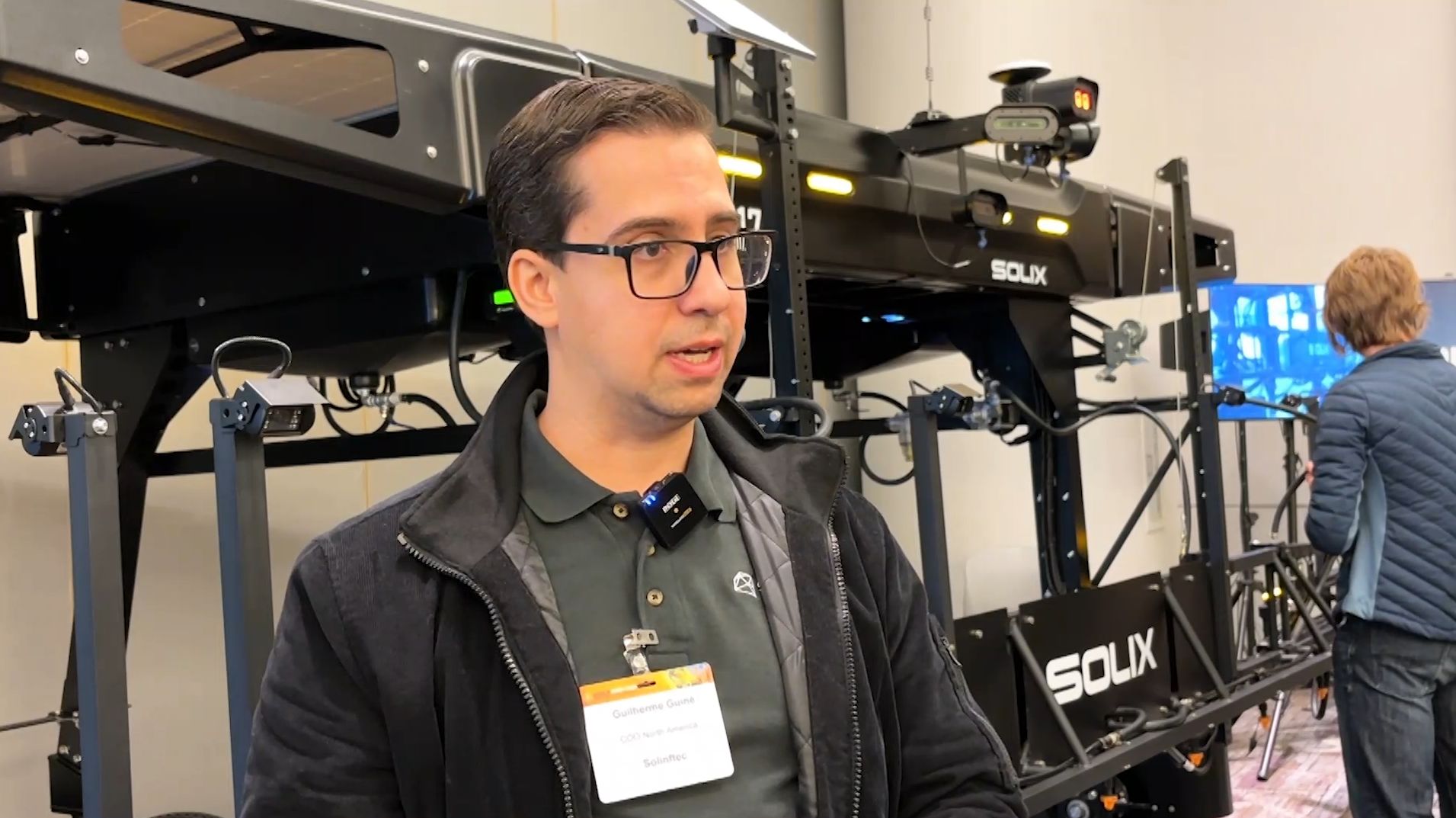
AI adoption is also accelerating. In Argentina, Kilimo is using machine learning to optimize irrigation, reducing water use while issuing “volumetric water benefits.” In Brazil, the company is scaling this model with local farmers and already works with global clients, including Microsoft, Unilever, and Coca-Cola, to help them achieve water neutrality. Solinftec, having raised $60 million in its Series D, is rolling out its autonomous Solix robots, which reduce herbicide use by 85% and boost yields through targeted weed control. [Disclosure: AgFunderNews parent company AgFunder is an investor in Solinftec.]
In Brazil, where over 480 million hectares receive pesticide applications yearly, Precision Ag uses AI and spectral imaging to deliver zone-specific spraying via drones—cutting chemical waste, reducing costs, and lowering environmental impact. Meanwhile, Nunatak leverages AI-driven R&D to design stackable microbial consortia like YAMANA, a biofertilizer that enhances crop resilience and yield even under saline stress. Together, these innovations showcase how AI can transform both input development and application, enabling smarter, more sustainable farming.
From the logistics side, Carryt, often described as the “Uber of cargo” for consumer brands in LATAM, applies AI to optimize last-mile logistics and generate predictive dashboards, while offering inventory loans to small merchants, who represent 70% of a $500 billion market, bridging commerce growth with smarter agri-supply chains.
Together, these innovations showcase how AI can transform input development, application, and distribution, enabling smarter and more sustainable farming.

Platformization: All-in-one SaaS for a fragmented sector
With so many point solutions, interoperability has become a bottleneck. Startups like Auravant and Sensix (via its FieldScan platform) are building integrated SaaS ecosystems that centralize data across devices, suppliers, and operations. Recent synergy between Bem Agro and Syngenta Digital further underscores this trend: Bem Agro’s AI‐powered agronomic mapping is now being integrated into Syngenta’s Cropwise ecosystem in Brazil to drive field-level efficiency through unified data, predictive analytics, and decision support across the farm cycle.
These platforms act as operating systems for the agrifood chain, simplifying decision-making and boosting adoption among farmers, advisors, and corporate partners.
This “platformization” trend is a natural next step in precision agriculture—shifting the focus from isolated tools to interconnected, user-friendly systems that unlock scale and usability.
Looking ahead: 2025 and beyond
The first half of 2025 confirms that Latin America is leaning into upstream innovation—not just in response to global capital trends, but to solve its high-stakes challenges. At GLOCAL, these shifts validate the archetypes we outlined in our Clean AgriFoodTech Playbook, which anchors our upstream-focused investment thesis.
- The Embedded Financier is making agricultural credit faster and smarter.
- The Biological Disruptor is regenerating soil and rebuilding sustainability.
- The AI-First Optimizer is turning farm-level data into system-wide efficiency.
From fintech and biotech to automation and integration, Latin America’s agrifoodtech and climate tech ecosystems are not just adapting to global shifts, they’re shaping the future of sustainable food and farming.