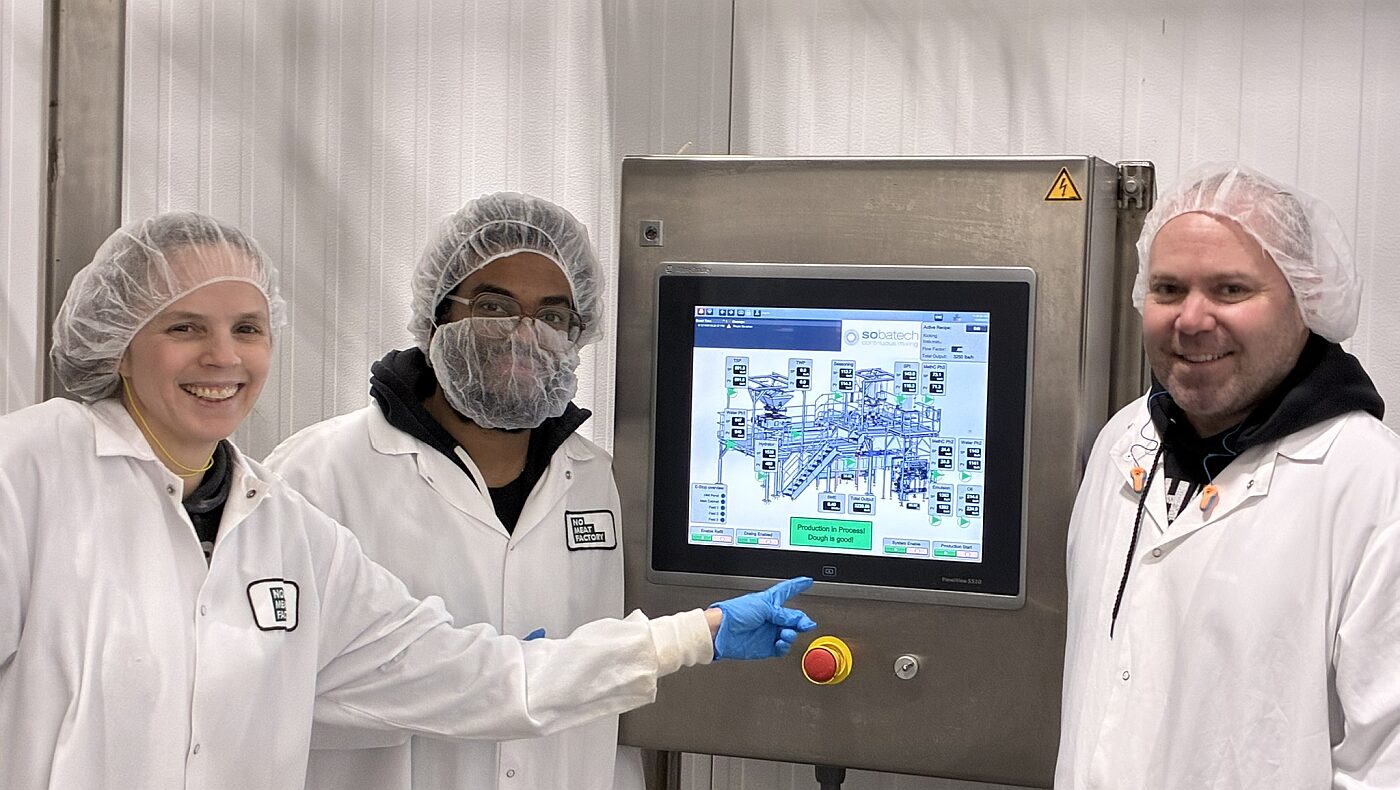
Christie Lagally is the founder and CEO of Rebellyous Foods, a fast-growing startup that has developed a continuous processing system it claims can slash production costs for plant-based meat, enabling meat alternatives to reach cost parity with their animal-based counterparts.
The views expressed in this article are the author’s own and do not necessarily represent those of AgFunderNews.
Despite years of shock in the alt-meat industry, 2025 reshaped the landscape. The sale and plant closure at Meati, the $100 million loan and debt restructuring at Beyond Meat, the acquisition of Kellanova by Mars, and the sudden departure of Impossible Foods’ CEO all point to excessive turbulence in an industry once beloved by venture capitalists.
Yet these industry pivot points provide little perspective on our collective future, so I offer an insider’s view.
State of the businesses
The only questions stakeholders ask of alt-meat companies today relate to the path and timeline to profitability. And rightfully so, since the industry’s impact and longevity are defined by these metrics.
Yet the stop-gap measures being used to save bellwether companies don’t seem to be driving profitability–at least from the outside. Likewise, the roll-up acquisitions of small but previously well-funded companies point to a lack of commitment to the profitability ethos. So why is this fundamental business metric so easily ignored in the alt-meat sector?
For the better part of two decades, profitability has been seen as the achievement for “once we scale,” which translates more honestly to “if we scale”. Few companies had ways to make alt-meat profitable at the unit economics level. With few achievable ideas, or even just executed ideas, about fixing the unit economics of alt-meat, the scaling vs. profitability problem is a chicken-or-egg circular logic that will never go away.
Profitability and scale must be designed into product level unit economics from the outset. If margin is only coming from massive scale, success is tenuous. Our industry has been iterating ideas for a long time to meet and beat the price, function and quality of meat, but we aren’t going to beat meat in the market by challenging its greatest asset, scale, from the outset.
Instead, alt-meat’s unit economics must first challenge meat’s greatest weakness: inefficient small-scale production.
State of the market and products
Beyond Meat’s and Impossible Foods’ recent forays into products outside of their respective wheelhouses set off alarm bells for me. Impossible’s new high protein pasta and Beyond’s new protein drinks look like attempts to grasp at magical company-saving products that abandon faith in their core missions.
I’m reminded of Jim Collins’ book How the Mighty Fall, which outlines the “five stages of decline,” including “grasping for salvation” [a dramatic bid to salvage things with a bold new move rather than going back to fundamentals].
Consumers of alt-meat have told us what they need: price parity and quality: the two hardest things to achieve. And market demand is shown to be expanding globally, even in the face of high profile company declines, so the speed at which consumer demands are met is a choice by industry leaders. We collectively need to make a solidified decision to actually be the change we need in the protein industry.
It’s tempting to give cultivated meat a pass when it comes to expecting near-term profitability, but I believe the path to its profitability has already been written within the 100+ year history of the conventional meat industry itself. And unlike the consumer acceptance issues of plant-based meat, cultivated meat is meat. Cultivated meat’s playbook is already written. The technology is what’s missing.
State of the technology
Alt-meat production currently languishes in the 1960s era of food production capabilities, a time when animal meat production had just been industrialized. Today, even the most “unprocessed” foods require advanced processing equipment to feed a massively larger population vs. post World War II.
But much like the profitability chicken-or-egg paradox, investments in food production innovation are often seen as too risky when ROI is not guaranteed. We’ve yet to reach a critical mass of demand in alt-meat, at current consumer prices, to easily see the ROI of technology investment, and yet the key to reaching critical mass is lowering the price of production via technology development.
Production technology innovation is imperative to the future of alt-meat. On a meat production technology timeline of 1940 to 2025 (from on-farm animal processing to today’s robotically operated slaughterhouses), the vast majority of plant-based meat production technology is still
stuck in circa 1965 when plant protein extrusion was developed!
Cultivated meat production technology is still hovering in its own technology bubble circa 1920s. The product volumes needed to make an impact will require a commitment in engineering development, automation, and simplified process design methodologies to accelerate the sophistication of production capability and capacity.
I know from first-hand experience that the ROI on this type of work is extraordinary and short term, often as little as 6 months to 2 years. We need to commit more funds to these efforts, not less. And it’s a far less-risky investment than adding debt load or introducing out-of-market products.
State of the future
In spite of revenue declines of some products, market watchers expect the alt-meat industry to grow at a healthy pace. Yet to a greater degree, global meat production is also growing, and alt-meat is losing market share when we should be delivering greater access to combat climate
change and address health disparities.
2026 is the moment at which we need to accelerate our efforts on all fronts–from focusing on the products consumers want at the right price to
advancing technologies with the highest ROI, and ultimately driving long-term profitability and impact as core values. As the City of Amsterdam bans meat advertisements like the tobacco advertising bans seen a generation before, consumer sentiment for meat alternatives is quickly
growing.
However, unlike tobacco, our alt-meat industry is challenged with the exceptional opportunity to make a positive profitable impact to replace meat en masse and near-term.
Further reading:
🎥 Taste, price, or bust: Bruce Friedrich’s roadmap for alt meat