Multiple farmers and ag spray drone specialists have urged the FCC to reverse its bombshell Dec 22, 2025 ruling to block new foreign-made drones and critical components in public comments on a petition for reconsideration filed by Chinese drone giant DJI.
According to DJI, the Dec 22 ruling—which has upended a sector dominated by overseas vendors—could cost it $1.5 billion in lost business in the US this year.
In over 3,000 public comments filed since the petition was lodged on Jan 29, farmers, fire departments, search-and-rescue teams, and small businesses have urged the FCC to reconsider, with several noting that they support American-made options but want a “practical transition strategy that protects both national interests and American small businesses.”
AgFunderNews has pulled together some comments that highlight the broad range of tasks for which DJI drones are being deployed on farmland in the US:
👉 Tony Zenari: “We use drones to check on crops, weed control, flooding issues in our fields, and many more tasks. It has become nearly impossible to get parts, repairs, or purchase new drones to help our small family farm. It will force us to use tractors that costs thousands to operate weekly and burn hundreds of gallons of diesel a week just to do what a drone can in several hours. It must be reconsidered.”
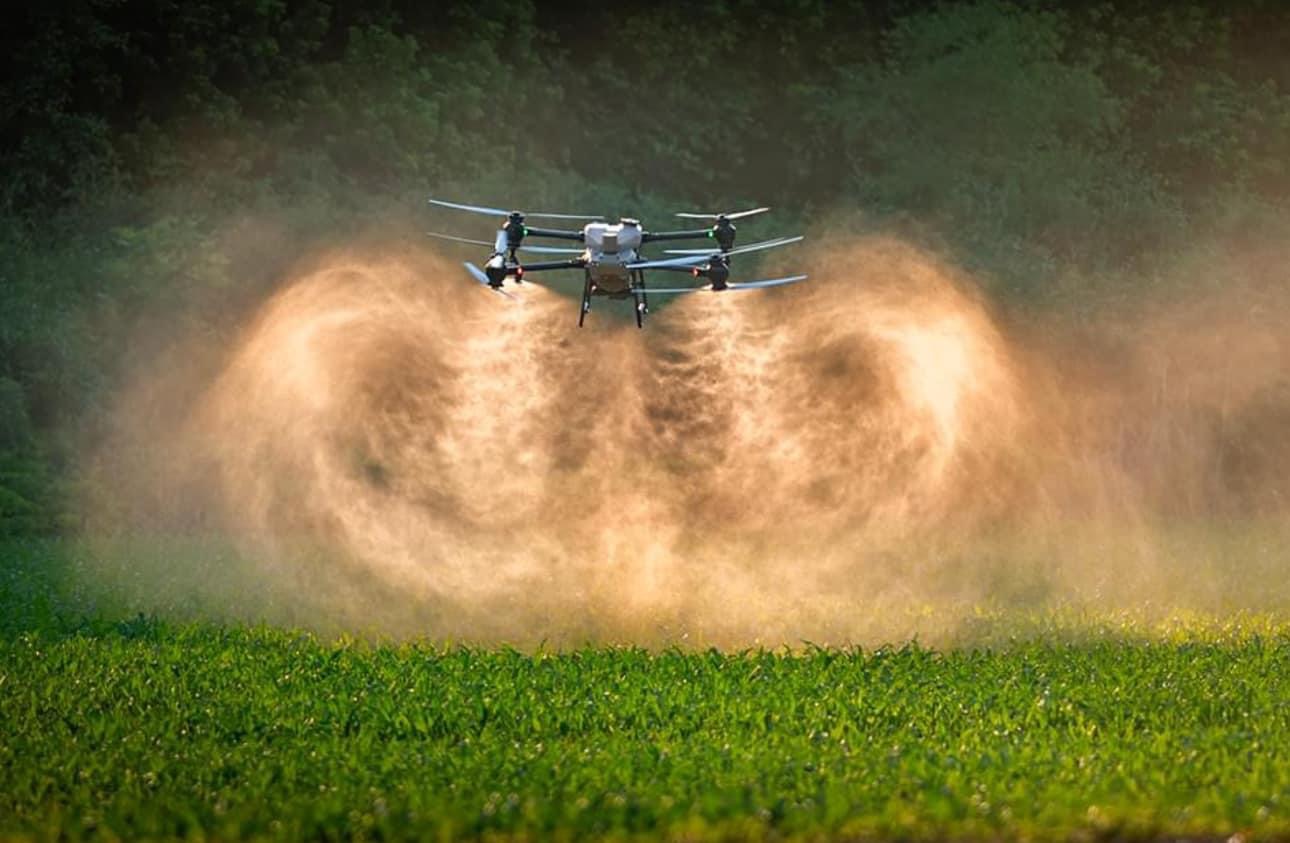
👉Aaron Wright, Whiskey Mike Drone Solutions: “I have used DJI spray drones to spray thousands of acres worth of crops for numerous farmers over the last few years. That would not have been possible without my DJI Agras T-40 drones and now my EAVision J150.
“If there were truly American made drones that could come close or rival the hardware and software of DJI, I wouldn’t hesitate to buy one and add it to my fleet. That just isn’t the case yet. American made drones are getting better, but they are still years behind DJI. Please don’t force small businesses to choose between what works best for them and an inferior product. Capitalism is all about free choice in the marketplace. Give DJI a chance to prove if they are indeed a threat to our national security or not.”
👉Matthew Pickar: “Please remove DJI from the covered list. I own an agricultural drone business and we heavily rely on DJI’s ag drones to spray crops and trees. Currently, the USA does not have a platform that can compete with DJI. Until there is a US platform on the market that is competitive, do not handcuff farmers, applicators, and foresters.”
👉 Catherine Brock: “We all want American made drones but honestly the technology is not there yet. It would take years and likely a lot of government support to bring the quality and required quantity of drones up to a reasonable level. Meanwhile established businesses like ours will suffer if access to adequate tools is taken away.”
👉 Kirk Dickinson, Dickinson Cattle Co: “We operate a family cattle farm in Ohio raising Texas Longhorn cattle, and DJI drones have become an essential tool in our daily operations. These drones are not recreational devices for us; they are practical agricultural equipment that save time, reduce costs, and improve the safety and efficiency of our farm. We regularly use a small affordable DJI drone to locate missing calves, inspect fencing across large pasture areas, monitor cattle movement, and survey property conditions after storms or severe weather.
“At present, there are no American-manufactured drones that offer comparable reliability, capability, and ease of use at a price point that is realistic for small agricultural operations. A ban on DJI products would effectively remove access to the only practical aerial technology solution currently available to many family farms, ranchers, and small rural businesses.”
👉 William B. Blaylock II: “As a property owner and agricultural user, drones have become an important tool that improves safety, efficiency, and productivity on my land. I personally use my drone for several legitimate and beneficial purposes, including inspecting farm buildings, roofs, and infrastructure on my property… and searching for lost or injured cattle across large areas of land in a timely and efficient manner.
“I fully support reasonable security standards and appropriate safeguards regarding technology used in the United States. However, broad restrictions or bans on foreign-built drones would create significant hardship for many responsible users, farmers, ranchers, small businesses, photographers, and landowners who rely on these tools every day.
“For many Americans, currently available foreign-manufactured drones provide the best combination of affordability, reliability, camera quality, flight safety features, and ease of use. Eliminating access to these systems without practical and affordable alternatives would negatively impact lawful civilian, agricultural, and creative operations across the country.”
👉 Nick Grott, Indiana Spray Drone Association: “The overwhelming feedback from our members is that a phased, realistic transition is necessary. Operators want American-made options, but they also need equipment that is reliable, affordable, and commercially viable. I respectfully ask the FCC and policymakers to reconsider any immediate or aggressive cutoff timelines and instead work collaboratively with manufacturers, operators, and industry organizations to create a practical transition strategy that protects both national interests and American small businesses.
“Some components, particularly batteries and rare-earth mineral dependent systems, may remain difficult or extremely expensive to fully manufacture domestically in the near future. That reality must be acknowledged when considering policy decisions that affect thousands of working Americans.”
👉 Hayden Harshbarger: “My company and I are a dealership for DJI agriculture drones. We believe these are still the best option for spray drones and are by far easier to use, work on, and safer due to this as well. Attempting to ban the use of these devices is not only hurting an entire industry, it is not helping the American alternatives either. This decision would force the industry to spend more on inferior equipment. Until there is proof of any wrongdoing by the manufacturer, these products should still be allowed to be imported, sold, and used in this country. Please reverse this decision.”
👉 Andrew Adams, Aerial Acres AG: “I am concerned that American agricultural businesses—among many other drone-dependent industries—are being placed at a competitive disadvantage. While other countries continue advancing in a global marketplace, American farmers risk being left behind. Agricultural drones are rapidly becoming an essential tool, delivering precision, efficiency, and cost savings at a time when margins are tight and input costs are rising. These systems enable growers to apply crop protection products and nutrients with pinpoint accuracy, reducing waste, minimizing environmental impact, and improving yields. For small and mid-sized operations in particular, this technology helps level the playing field by providing access to advanced capabilities without the need for large, expensive equipment.”
👉 Hunter Hinde, Lanehaven Farms: “Both DJI camera and spraying drones as well as Autel products have been used here for our operation. We operate a row crop farm consisting of corn, soybeans, organic corn, organic soybeans and organic oats. We also use our drones occasionally for our hog operation.
“DJI has always had the best products at the best prices, and even if they didn’t have the best price, they always are one step ahead of the other manufacturers. We can no longer get a new spray drone, which benefits our operation, as we now have to outsource drone spraying. We are also unable to purchase DJI’s newest camera drones, which puts a halt to our field mapping and data collection since we have had issues with our current DJI drone. A lift for them would be huge for us and help us benefit from the ability that their drones have which other companies are slow to adopt.”
👉 Volitant Technologies: “The business we created in Nebraska is primarily based on the sale and use of agricultural spray drones. Even though we are a small company as compared to some, we do have a consistent $6 million in annual gross revenue.
“DJI produces the only truly reliable product that is finished by the time it goes to market, that is rich with safety for both the pilot and the persons it flies in proximity to, and that is delivered at a price that makes sense for the clients we serve.”
DJI: Ruling has ‘staggering real world consequences’
DJI, which dominates the US ag spray drone market, recently filed a petition for review with the Ninth Circuit Court of Appeals challenging the FCC ruling as “procedurally and substantively flawed.”
The national security assessment cited by the FCC to justify its ruling did not specifically analyze DJI’s products, raising questions about whether it followed the statutory process set out in the National Defense Authorization Act (NDAA), which required a government agency to determine if DJI and Autel presented a threat to US national security, claims DJI.
“Accepting the FCC’s view that it can ban entire categories of products from the United States without any judicial review of that decision would defy common sense and raise serious constitutional concerns.”
DJI now “faces a potential loss [in its US business] of $1.5 billion in 2026,” claims DJI, which supplies drones for agriculture, police and fire departments, energy and utility companies, and hobbyists. “The FCC’s arguments have staggering real-world consequences.”
Independent security assessment found ‘no backdoors’
DJI recently commissioned an independent security assessment from OnDefend, a US firm staffed by former military and government security professionals, which it told AgFunderNews “found no backdoors, no data leaving the US, and no viable pathways for hijacking or misuse.”
A spokesperson added: “These findings directly challenge the security rationale behind the FCC’s covered list designation, which risks disrupting public safety operations, critical industries, and thousands of small businesses.”
FCC shock ruling triggers market upheaval
👉 On Dec 22, the FCC sent shockwaves through the US drone market, adding all new foreign made drones and critical components to the covered list of communications equipment and services “deemed to pose an unacceptable risk” to national security.
👉 In an instant, this cut off FCC authorization for any new drone models—or essential components such as motors, flight controllers, navigation systems, and batteries—manufactured outside the US.
The move is already reshaping the market, as domestic manufacturers scale up and overseas firms explore partnership models—licensing designs or software to US companies that can assemble and manufacture drones domestically.
Some key players navigating the new landscape include:
- Exedy Drones: A unit of EXEDY Globalparts (owned by Japanese firm Exedy Corp), Exedy Drones is repurposing Globalparts’ automotive engineering and Michigan manufacturing base to build US-made agricultural spray drones.
- Revolution Drones: Founded by North Carolina farmer Russell Hedrick to create domestically assembled spray drones tailored for American farming.
- Hylio: Texas-based drone maker accelerating “Made in America” spray drone production.
- Agri Spray Drones: Missouri dealer turned manufacturer planning US production of spray drones originally designed by Chinese partner EA Vision under license.
- Ceres Air: Vermont-based company beginning US manufacturing of Black Betty spray drones, redesigning a proven platform from Chinese firm Vector AGR to meet American farming needs with larger payloads, proprietary software, and radar/LiDAR.
- American Autonomy: Software developer launched to build US-centric drone operating systems that keep flight and agronomic data onshore and integrate with farm systems; its first partner is Exedy Drones.