
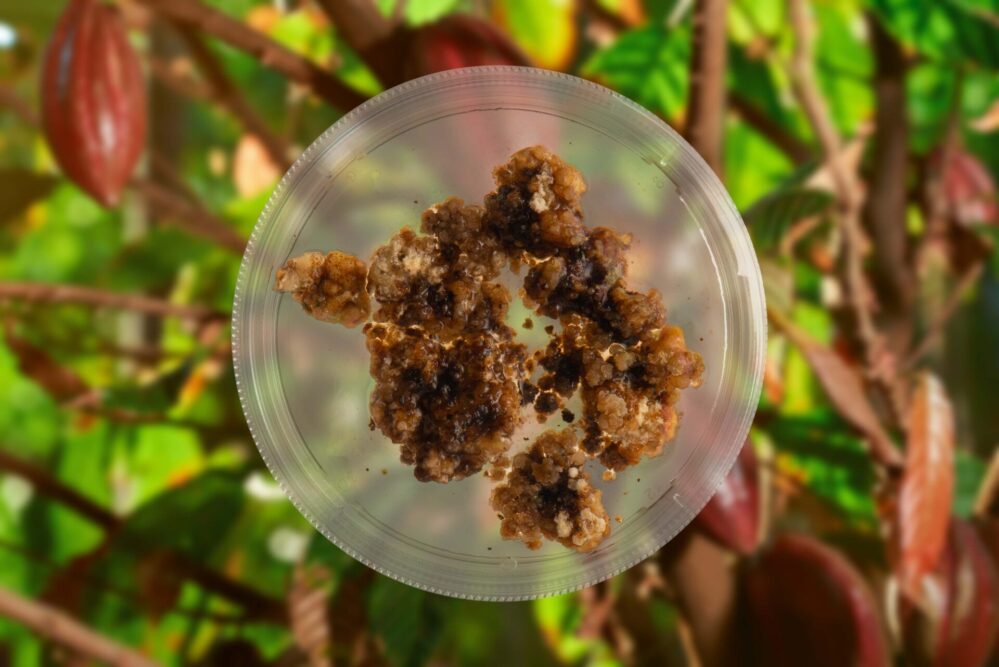
As weather shocks and geopolitical instability threaten botanical supply chains, growing high-value plant ingredients indoors in bioreactors has obvious appeal. But does plant cell culture—which is used to make some well-known drugs—make commercial sense for food ingredients?
“When we talk to potential clients [sourcing botanicals], some of them are distraught,” observes Derek Scholin at plant cell culture startup Rheaplant. “They say things like: One year we didn’t have a product.”
For crops with highly concentrated supply chains, the risks are self-evident: a cyclone in Madagascar can send tremors through the global vanilla market while disruption in Iran could wreak havoc for saffron. Ashwagandha poses a different challenge, with rising demand, fragmented supply and adulteration concerns making standardized ingredients harder to secure.
Many nutraceutical botanicals are also too complex for microbes to make via precision fermentation, Scholin adds, leaving plant cell culture as one of the few alternatives. Bioreactor production can also reduce exposure to heavy metals from soil while enabling more consistent, controlled production of key bioactives.
But it’s not for the faint-hearted, observes Chris Meaney at Green Bioactives, a UK-based plant cell culture startup that was forced to throw in the towel last fall after running out of cash: “We had not quite reached an inflection point of having a product market ready. Another six months and this would have been achieved.
“It is a shame as there was great commercial interest, but the funding climate was and still is exceptionally tough, which meant we could not raise the required funds.”
That said, the cell lines were purchased out of liquidation and are now being developed by another company, he reveals. “One of the team is looking to raise funds for a similar type of company addressing a certain stage of development.”
Beyond pharmaceuticals
One of the biggest challenges facing all players in the space is getting capex and operating costs down to a level that makes commercial sense for food, supplements and personal care versus pharmaceuticals.
Plant cell culture firms need cell lines that grow quickly, produce target compounds at commercially meaningful levels, and perform reliably over many cycles. But just as critical is the hardware question: what does a commercially viable set up look like?
Some players are betting on stainless-steel tanks with 50,000–100,000-liter capacity as a minimum entry point for meaningful commercial scale. Others say modular systems with vessels as small as 2,000 liters made of cheaper materials such as reusable plastics can reduce capex, simplify operations, and de-risk scale-up.
From a regulatory perspective, meanwhile, the “gap between the actual safety profile of the products and the complexity of the approval process,” is wide and glaring, says Itay Dana at Israel plant cell culture startup Novella, which is attempting to popularize the term “precision botanicals.”
Plant cell culture companies are producing their wares in fully controlled, sterile environments, without pesticides, heavy metals, environmental contaminants, or in many cases, genetic engineering, he says. In many ways, therefore, they offer a cleaner and more controlled alternative to traditional agricultural ingredients.
“Yet despite this high level of safety, regulatory pathways remain long, expensive, and not fully adapted to plant cell technologies. The current frameworks were built for older production models and often do not reflect the advantages of precision-grown ingredients.”
AgFunderNews caught up with a handful of key players to get their take on target ingredients, scale-up strategies, regulatory hurdles, and whether plant cell culture can break out of its pharma niche.
👉 Stephen Ball, VP business development, Phyton Biotech

Phyton Biotech operates the world’s largest plant cell fermentation facility, with 200,000+ liters of capacity. The firm, which produces the cancer drugs paclitaxel (Taxol) and docetaxel (Taxotere) via plant cell culture, also serves as a CDMO (contract development and manufacturing organization). It has several partners in the food ingredient space although it cannot disclose the products or clients.
Given the lower margins in food vs pharma, lower-cost bioreactors will be key to unlocking the potential of the tech for a wider range of products, says VP business development, Stephen Ball.
That said, what makes plant cell culture different is that it takes longer for cells to grow than yeast or E. coli, so maintaining sterility is “absolutely critical,” he says. “That has made scale-up challenging when systems are not designed for longer fermentation times, but companies like Food Brewer [a plant cell culture startup] and Steinecker [a bioprocessing equipment company that’s working with Food Brewer] are helping bridge that gap.”
Growth rate, input costs, semi-continuous of batch process
Several key factors determine whether the economics of plant cell culture make sense for foods and nutraceuticals, including the growth rate of the culture, which can vary a fair bit depending on the species, says Ball. However, startups are now using AI-driven approaches to “identify fast-growing cells within callus tissue, isolate them, and repeat the process to optimize growth.”
Another important factor is raw material costs, he says. “As the process scales, media and other input costs become a major driver, so it is critical to use the simplest possible media formulation that still supports growth.”
A third consideration is whether the process is semi-continuous or batch, he notes. “Some companies focus on the plant cell itself as the product, which makes growth rate and media costs especially important. If the target is a metabolite, the question becomes whether the culture can produce enough during the growth phase to support semi-continuous operation.”
If elicitation (using stress-triggering compounds to stimulate metabolite production) is required to drive production, as in Phyton’s paclitaxel process, then batch production may be necessary, he adds. “In the end, the key tradeoff is whether the yield in milligrams per liter is high enough to make the process economically viable.”
Cocoa, coffee, tomatoes, potatoes…
As to whether the tech only makes commercial sense for a narrow set of very high-value ingredients, he says, “Not necessarily. There has been a lot of innovation over the past five years that is shifting the cost dynamics. If the plant cell itself is the product, as with ingredients like chocolate or coffee, the opportunity can be broader because growth rate is a key driver of viability. We’ve also seen promising fast-growing tomato and potato cultures.”
For metabolites produced from plant cell cultures, the opportunity is often narrower because the culture has to outperform the plant source by a much larger margin, he says. “That said, value is highly client-specific, and in some cases products currently supported by wild harvesting are facing increasing supply constraints, which could change the economics over time.”
👉 Jacob Lang, founder and CEO, Krokos Bio

For California-based Krokos Bio, “Saffron remains a strong first target because it is extremely valuable, difficult to produce consistently through traditional agriculture, and geographically concentrated [a majority of supplies come from Iran],” says founder and CEO Jacob Lang. “That concentration makes the market especially vulnerable to geopolitical instability, climate pressure, and supply-chain disruption.”
Because saffron is so valuable, meanwhile, “The economics can work without needing massive scale from day one, and buyers are already looking for more reliable, consistent sources of supply,” he claims. “That combination makes saffron a practical first product and a strong proof point for the broader potential of plant cell culture.”
The firm, which was founded in 2024, has produced saffron biomass and extracts with promising color performance compared with conventional saffron and is now sharing samples with prospective customers for evaluation, says Lang.
“On the manufacturing/scale-up side, we are optimizing our bioprocesses using in-house benchtop bioreactor systems while also evaluating partners for pilot production and scale-up.”
The firm, which was recently awarded a $305,000 NSF SBIR Phase I grant and a $75,000 grant from the California Office of the Small Business Advocate, has also received support through BEAM Circular and gener8tor, and recently obtained a commitment from a VC for further funding, he claims.
Focus on tech that is ‘practical and scalable today’
The optimal bioreactor design for plant cell culture is “still an open question, and there probably won’t be a single answer that works for every product,” says Lang. “It depends on the cell line, the target ingredient, and what you’re trying to optimize for. A system that works well for producing biomass may not be the same system you’d choose if the goal is to maximize a specific secondary metabolite.”
As saffron is such a high-value product, Lang’s near-term focus is on “what is practical and scalable today,” he says. “We don’t need to solve every cost challenge immediately or design a completely novel reactor from scratch. Instead, we’re focused on using systems that are already commercially available, scalable, and reliable enough to help us get to market quickly.
“We are currently planning early commercial production around the 5,000-L scale, while continuing to evaluate the best reactor configurations as we generate more process data and learn from customer requirements.”
Tech can enable ‘entirely new classes of botanical ingredients’
For the wider plant cell culture space, one of the biggest technical challenges is developing cell lines that reliably produce the right compounds at the right levels, he says. “For a product to be useful to customers, it has to deliver what they value in the traditional ingredient, whether that is color, aroma, potency or bioactive profile.”
In the near term, reckons Lang, the clearest opportunity is using plant cell culture to stabilize supply chains for existing high-value botanical ingredients, making them more reliable, consistent, and resilient.
Longer term, he says, “We believe plant cell culture can also enable entirely new classes of botanical ingredients that are difficult, uneconomical, or impossible to produce through conventional agriculture.”
👉 Frank Jaksch, CEO, Ayana Bio

A spinoff from synthetic biology specialist Ginkgo Bioworks, Ayana Bio was formed in 2021 with $30 million in seed funding from Viking Global Investors and Cascade Investment, and has since developed over 100 plant cell lines.
It is focusing development and commercial scale up efforts on sage for rosmarinic acid, saffron for crocins and marigold for zeaxanthin and lutein, says CEO Frank Jaksch. “With the recent MAHA activity including the notice to ban synthetic preservatives such as BHA, we have received significant commercial traction for rosmarinic acid as a natural preservative alternative.”
When it comes to bioreactor design, he says, “From the very beginning, our model has assumed that we need to be able to scale-up and manufacture our plant cell lines using the existing equipment configurations at CMOs. We have an experienced leadership team that has done this before and our view is if we need to design special equipment and then build manufacturing capacity to be successful, we have failed.
“We have done extensive technoeconomic modeling and to achieve volume and price objectives we believe 50-100kL tank size capacity will be a minimum entry point to achieve ~500,000-L total fermentation capacity to achieve entry level commercial scale for plant cell derived ingredients.”
For higher volume and lower cost commodity ingredients, the scale would need to be significantly larger than that, he adds. “Plant cell ingredients would need to be scaled up to tens of thousands or even hundreds of thousands of metric tons to be relevant as a useful alternative to incumbent commodity materials.”
Hitting key scale-up milestones
Ayana is on track to achieve commercial scale for sage/rosmarinic acid this year and is currently finalizing a GRAS dossier for submission to the FDA, adds Jaksch, who is also exploring the potential of “illuminated fermentation” with Israeli startup Brevel to see if it can turbocharge plant cell growth.
For the sector overall, the “biggest challenge is proving commercial scale, and by that, I mean scaling to commercially relevant volumes with competitive pricing,” he says. “Unfortunately, there is no cheat code or garage lab way of achieving commercial scale, it requires a significant amount of time, resources and cash to get there. In a capital constrained environment that can make things tricky.”
That said, Ayana’s “model for developing plant cell lines is working and we have been hitting our key scale-up milestones which gives us the confidence and conviction to keep going,” he says.
👉 Itay Dana, cofounder, Novella
Israeli startup Novella is currently prioritizing bioactives from strawberry plant cells, says cofounder Itay Dana. “Despite its high wellness value and strong consumer interest, the integration of strawberry ingredients into supplements remains challenging. The poor stability of strawberry bioactives makes it difficult to guarantee consistent and standardized dosing, while common industrial processing methods lead to significant nutrient loss.”
Instead of isolating a single compound, the firm’s first ingredient “Strawberry∞” preserves the broader natural composition of the plant cell matrix, while its process “allows the cells to naturally produce higher levels of important bioactive compounds, creating a richer and more functional profile compared to standard strawberry-derived ingredients,” claims Dana.
“Our in-vitro studies showed strong results. Digestibility assays demonstrated good preservation of active compounds throughout the digestive process, while ROS [reactive oxygen species] inhibition studies on human skin cells showed a significant reduction in oxidative stress, supporting antioxidant and cellular protective activity.”
Since the soft launch of the ingredient, Novella has seen growing interest from ingredient companies and supplement brands, claims Dana.
Fitting into existing fermentation infrastructure
“The past 18 months have been a major growth period,” says Dana. “We reached several important milestones and moved much closer to commercial launch. Together with our strategic manufacturing partner, Chemo Biosynthesis in Italy, we successfully scaled our technology using standard industrial bioreactors.”
Echoing Jaksch at Ayana Bio, Dana says that from the outset, Novella’s goal was to develop a platform that fits existing fermentation infrastructure, without the need for specialized equipment, which he says helped the firm scale “efficiently, quickly, and with relatively low capital investment.”
The long-term target is reaching 75-cubic-meter bioreactors.
“We are already operating at dozens-of-liters scale and running consistent production batches. At the same time, we are collaborating with leading UK-based CDMOs, including CPI and Extracellular, to further optimize production and expand the range of product characteristics we can offer to different markets and applications.”
On the regulatory side, Novella is working with a consultancy to advance approvals in the US and Europe: “Our target is to begin first commercial sales in North America by the end of this year.”
‘Precision botanicals’
The future of plant cell culture will be shaped by collaboration around a new category called “precision botanicals,” predicts Dana. “As this field continues to emerge, building trust, awareness, and clear industry standards is just as important as developing the technology itself.
“That is why we are working closely with other companies in the plant cell culture space to help advance global understanding and regulatory acceptance of precision botanicals, ingredients produced from plant cells in fully controlled environments, with high consistency, purity, and sustainability.
“As one of the early companies helping define this category, we see an opportunity to support broader adoption across food, supplements, and wellness markets, while helping establish precision botanicals as a meaningful new segment within the ingredient industry.”
👉 Mathilde Dupin, chief financial officer, Food Brewer
Zurich-based Food Brewer is focused on cocoa, although it is also exploring cell-cultured coffee and our other cell lines including nuts, says CFO Mathilde Dupin. The firm recently submitted a GRAS dossier to the FDA.
Total production capacity in its pilot facility in Horgen has now scaled to 6,000-L, yielding a couple of tons per year of cell-based product. The firm has also “validated kilogram-scale technical feasibility at an industrial chocolate pilot facility.”
According to Dupin, Food Brewer is attracting interest from leading chocolate and snacking players, despite the recent fall in cocoa prices, given the desire for a more reliable source of cocoa.
From a technical and commercial perspective, increasing dry weight productivity remains an important focus area across the industry, says Dupin. As for bioreactors, she says, “Food industry required scale is ideally reached with large stainless-steel systems from a durability, process sterility and scalability perspective.
“This is the reason we work closely with Steinecker, which leverages its proven food and beverage expertise and technology to deliver cost-efficient bioreactors suitable for a large range of food grade bioprocessing.”
As with any novel food technology, the regulatory process and timetable can be opaque, says Dupin, which is building a complementary portfolio of plant-based cocoa-free ingredients that it says enable it to “engage with customers and generate impact today while advancing our longer-term technology: cell-cultured cocoa.”
👉 Tal Govrin, cofounder and CEO, Kokomodo (Pluri)
Israeli startup Kokomodo, which also makes cocoa in plant cell culture, has made significant progress across multiple fronts in recent months, says cofounder Tal Govrin. “We have advanced our plant cell culture platform toward scalable, food-grade production, with a strong focus on optimizing growth media and bioprocess parameters to enhance yield and cost efficiency.”
A key part of its approach has been establishing collaborations with key industry stakeholders including Cargill, CSM Ingredients, and Coop-Halba, with a focus on “scaling production, validating industrial processes, and enabling real-world application within existing manufacturing systems – accelerating both technical development and market readiness,” she says.
Inconsistent global standards
The primary bottleneck for food biotech, and plant cell-derived ingredients in particular, is the lack of regulatory clarity, she says. “The landscape is fragmented with inconsistent global standards, varying safety assessment frameworks, lengthy approval timelines, and region-specific requirements across markets such as the EU and the US.
“Greater harmonization and the development of streamlined or fast-track pathways will be critical to unlocking commercialization at scale.”
In parallel, the industry also faces a shortage of contract manufacturing organizations (CMOs) with expertise in plant cell culture, she observes. “Most existing CMOs specialize in microbial or mammalian systems, which differ fundamentally in growth behavior, media requirements, and scale-up dynamics.
“Plant cell bioprocessing requires tailored bioreactor design, distinct scale-up strategies, and tightly controlled environments—capabilities that remain limited across the current manufacturing ecosystem. This gap makes it difficult for startups to transition from proof of concept to consistent, GMP-ready production, ultimately slowing commercialization and increasing costs across the sector.”
👉 Derek Scholin (CTO) and Sowmya Purushothaman (CEO), Rheaplant

Founded by Derek Scholin and Sowmya Purushothaman, PhD in January 2025, Rheaplant secured a small check from 2045 Ventures last summer and has just secured some fresh funding from Big Idea Ventures.
It has 13 cell lines in culture, with ashwagandha, rhodiola, and American ginseng among the more advanced. It is also exploring colorants/anthocyanins, alternative sweeteners, and other ingredients.
But it won’t work unless firms can ditch the pharma-grade kit and build something that makes sense for nutraceuticals, which can command higher price points than commodity food ingredients but do not have pharma-like margins, says the firm.
Rather than using giant steel tanks, Rheaplant is betting on a distributed, modular bioreactor approach, with modeling pointing to 2,000–5,000-liter reactors as a commercially viable range, with a scale-out rather than scale-up approach, says Purushothaman.
“Our goal is to build at least 50,000-L+ of total capacity within the next six or so years, with each individual module in the 2,000 – 5,000-L range. This total capacity will ensure commercial viability for a wide range of ingredients.”
The logic is partly operational—daily harvesting and human-scale workflows—and partly technical: oxygen transfer becomes harder as tanks get bigger, especially because plant cells are larger than microbial cells and tend to aggregate.
Semi-continuous processing is “the way to reach cost parity,” adds Scholin, noting that Rheaplant is seeing stability in flask cultures transferred weekly for more than a year, although the company still needs to work out how many batches or cycles can be run reliably at scale.
It is also “playing around with some proprietary technology [for sterilization] that is not steam-based,” in order to cut costs and simplify the setup, he says.
“The pharmaceutical grade approach is robust but it’s not going to work for the food sector,” adds Purushothaman.
A capital intensive money pit?
As to why there has been a flurry of activity in the plant cell culture arena in the past five years, there are probably three reasons, says Scholin: “First, environmental stresses for botanicals are increasing. Second, the science has advanced and the methodology has become easier. Third, the equipment has become more standard. While we used to borrow from biopharma, we’re starting to get our own equipment, which is a sea change.”
However, raising money in this space isn’t easy, acknowledges Scholin, who notes that biomanufacturing has developed a reputation among some jaundiced agrifoodtech investors as a capital-intensive “money pit.”
But the good news is that media costs are relatively low, he says. And while plant cells grow more slowly that microbial cells, they can make things that yeast and bacterial cells can’t: “With some [potential] clients, there’s a sort of a fascination with it when you tell them we can grow plants without making roots or leaves or stems, so 100% of what we grow is product.”
👉 Steve Stearns, head of strategy and business development, California Cultured
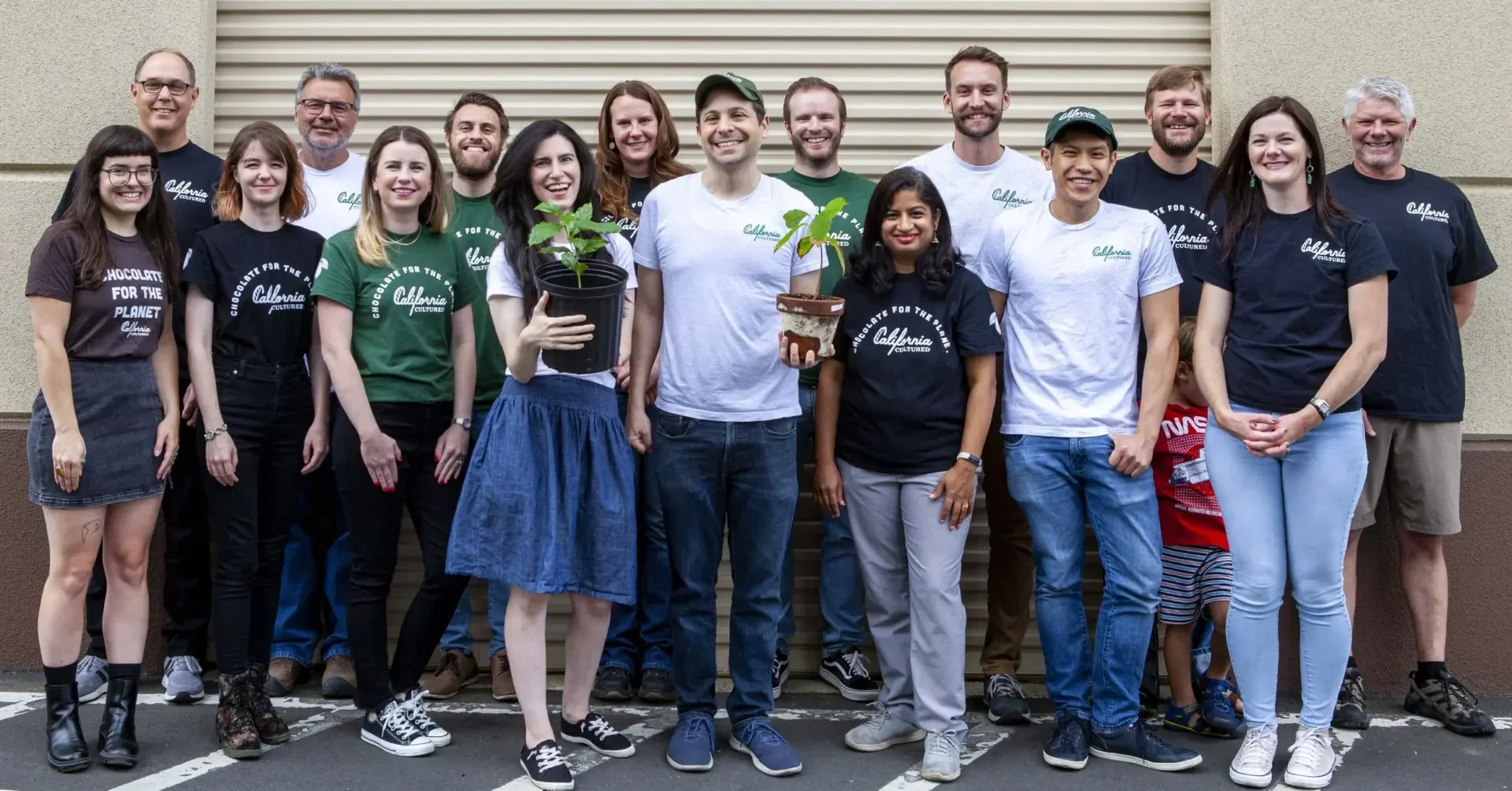
A California-based startup growing flavanol-rich cocoa via plant cell culture, California Cultured recently completed its first successful production run in a re-usable 2,000-L custom-built plastic bioreactor that it claims could transform the economics of the approach by slashing capital and operating costs.
“When people see the production costs and the product quality later this year it will shift the conversation about what plant cell culture can realistically achieve,” says Steve Stearns, head of strategy and business development.
“Once products begin appearing on the market later this year people will start to see how efficient plant cell culture can be for ingredients like cocoa. The industry has spent years focused on proteins. Cocoa and similar high demand plant compounds may turn out to be an even better fit for this type of production.”
Typically, firms growing plant cells in culture have used stainless steel fermentation tanks—which come with a hefty price tag and high operating costs—or single-use plastic bags, which are unsuitable for large-scale production, said Stearns.
California Cultured instead deploys proprietary rigid plastic bioreactors that can be re-used thousands of times before needing to be replaced. “The systems are designed for continuous operation with a proprietary steam sterilization approach that keeps cleaning straightforward and significantly reduces labor inputs, which is one of the big cost advantages in our system.”
“These units cost us about $3k to build. For comparison, a new 2,000-liter stainless steel bioreactor can cost between $0.5-1 million for one reactor. Because our systems are inexpensive and modular, they can be deployed in relatively simple food-grade spaces. Even retrofitted office or light industrial space works well.”
The successful run at 2,000-L is a key milestone “because it represents a true production scale system, not a lab demonstration,” said Stearns, who says bakery ingredients and chocolate giant Puratos will launch b2b products featuring its flavanol-rich cocoa later this year.
California Cultured has also struck an offtake deal with Japan’s largest chocolate company Meiji and says the two are “exploring a range of chocolate and chocolate-like products” incorporating California Cultured ingredients.
California Cultured’s products are self-affirmed GRAS in the US, says the firm, which has just submitted a GRAS notice to the FDA.
Other players to watch:
- Bioharvest (Canada, Israel): Fragrances, nutraceuticals (the firm also works with Tate & Lyle/Ingredion on sweeteners)
- Ergo (Argentina, US, Canada): Plant metabolites, recombinant proteins
- Reagenics (Israel): Potato proteins
- Celleste Bio (Israel): Cocoa butter and powder
- Aethera Biotech (Italy): personal care, nutrition, pharma
- Asterix Foods (Israel): Recombinant proteins
- GALY (US): Cotton, cocoa
- Spicy Cells (Czech Republic): Saffron
- Alternative Plants (Latvia): Cosmetic ingredients
- IRB/Croda (Italy): Cosmetic ingredients
- Another Food (Singapore): Coffee
- Chi Botanic (US): aloe vera, vanilla, citrus
What is plant cell culture?
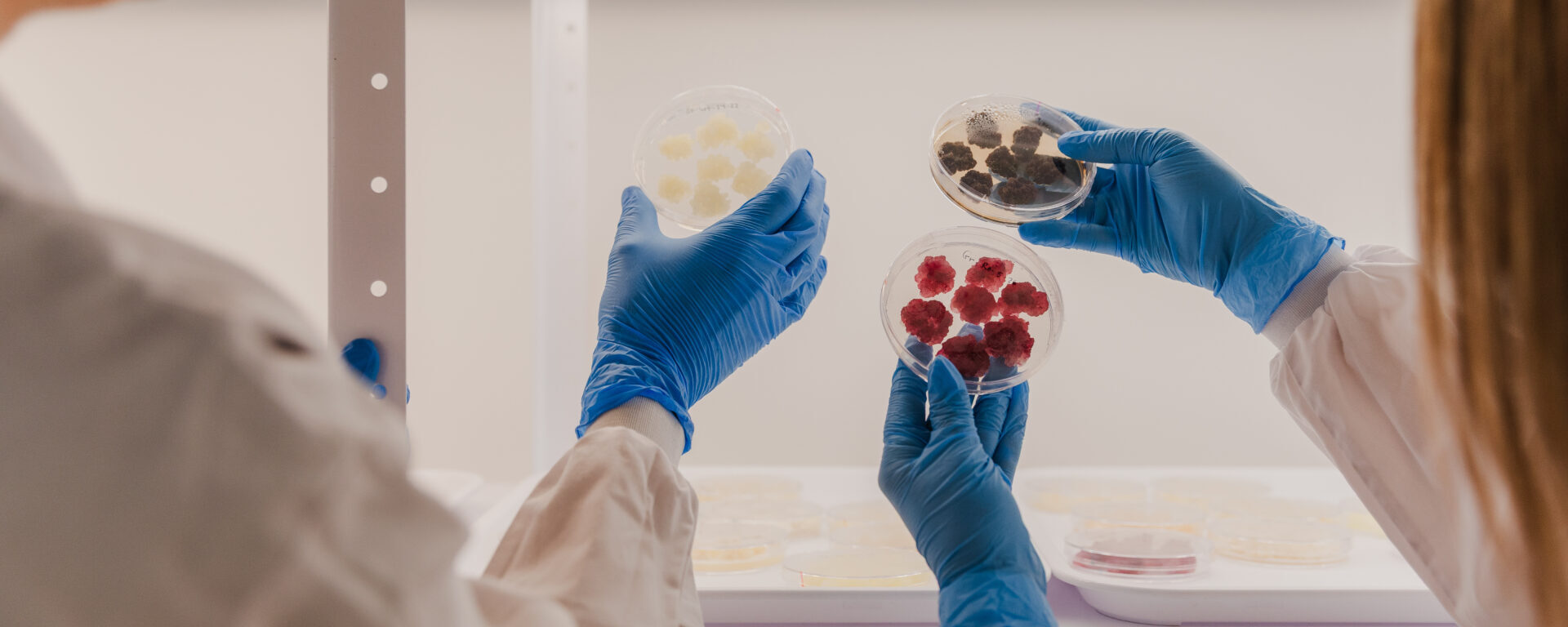
Rather than using sunlight, water, and soil to nurture fully-grown plants, plant cell culture companies grow plant cells in bioreactors in conditions optimized for the rapid production of high-value compounds and secondary metabolites.
Typically, firms start with plant stem cells or coax ordinary plant tissue into a proliferating, stem-cell-like callus, before growing the cells in liquid suspension.
Advocates say the approach offers some key advantages over conventional agriculture:
👉 First, they say, plant cell culture can ensure a consistent supply of botanicals with supply chains increasingly threatened by climate change and unpredictable weather, political instability, adulteration, disease, and heavy metals and pesticides from soil.
👉 Second, they claim, it offers the promise of rapid, consistent, and controlled production of plant compounds regardless of season or location in a sterile environment, with no pesticides.
👉 Third, there’s a sustainability argument: Why use all that agricultural land, water and energy to nurture fully-grown plants when you’re only interested in one small part of the plant?
👉 Finally, they argue, it can also deliver higher yields. For example, by understanding the metabolic pathways in plants that produce certain polyphenols and the precise conditions that drive plants to generate more of them, skilled players in plant cell culture can achieve concentrations of bioactives that far exceed those produced by plants grown in the wild or via traditional agriculture.