Ayana Bio, a US startup using plant cell culture to grow high-value botanicals, and Brevel, an Israeli startup specializing in “illuminated fermentation” have bagged a $1.25m grant* from Israel’s BIRD Foundation to explore whether the latter’s tech can turbocharge plant cell culture.
A spinoff from synthetic biology specialist Ginkgo Bioworks formed in 2021, Ayana Bio is one of a new wave of startups making high-value ingredients from plant cell lines in bioreactors, an approach it claims can provide a consistent supply of botanicals without the supply chain headaches associated with traditional agriculture.
Brevel, which was founded by Yonatan (CEO), Ido (CTO), and Matan (COO) Golan in 2016, pioneered an approach to grow chlorella biomass, proteins, and lipids using sugar-based “dark” fermentation and LED lighting in a single process, an approach it claims can significantly increase yields. It has since expanded into offering its illuminated fermentation platform as a service and has formed joint ventures with partners in India and a leading industrial Israeli partner to expand production capacity.
Yonatan Golan told AgFunderNews: “We have had very nice successes already with cocoa and coffee [in plant cell culture], and beside the work with Ayana Bio we have additional partners we are now signing with. We are operating as an enabling partner for plant cell culture companies who have their own cell lines but want to both enhance quality and yields by using light as an elicitor of secondary metabolites, as well as scale-up production to commercial scales.”
Testing light as lever
Ayana Bio CEO Frank Jaksch added: “The BIRD grant will allow us to do the research on our plant cell lines to find out if using light is a variable that will improve plant cell production.”
He added: “There are many variables we can control in those tanks to make the plant cell do what we want. We have avoided using light as one of the variables because there were no good options at scale to do that.
“Now that Brevel has been working on scalable lighting options for large tanks we would like to explore the use of light as an additional variable to improve plant cell growth and bioactive production. In a way the idea is to find out if light can be used to turbocharge the process, now that there are scalable light tanks on the horizon.”
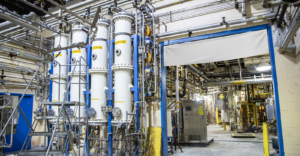
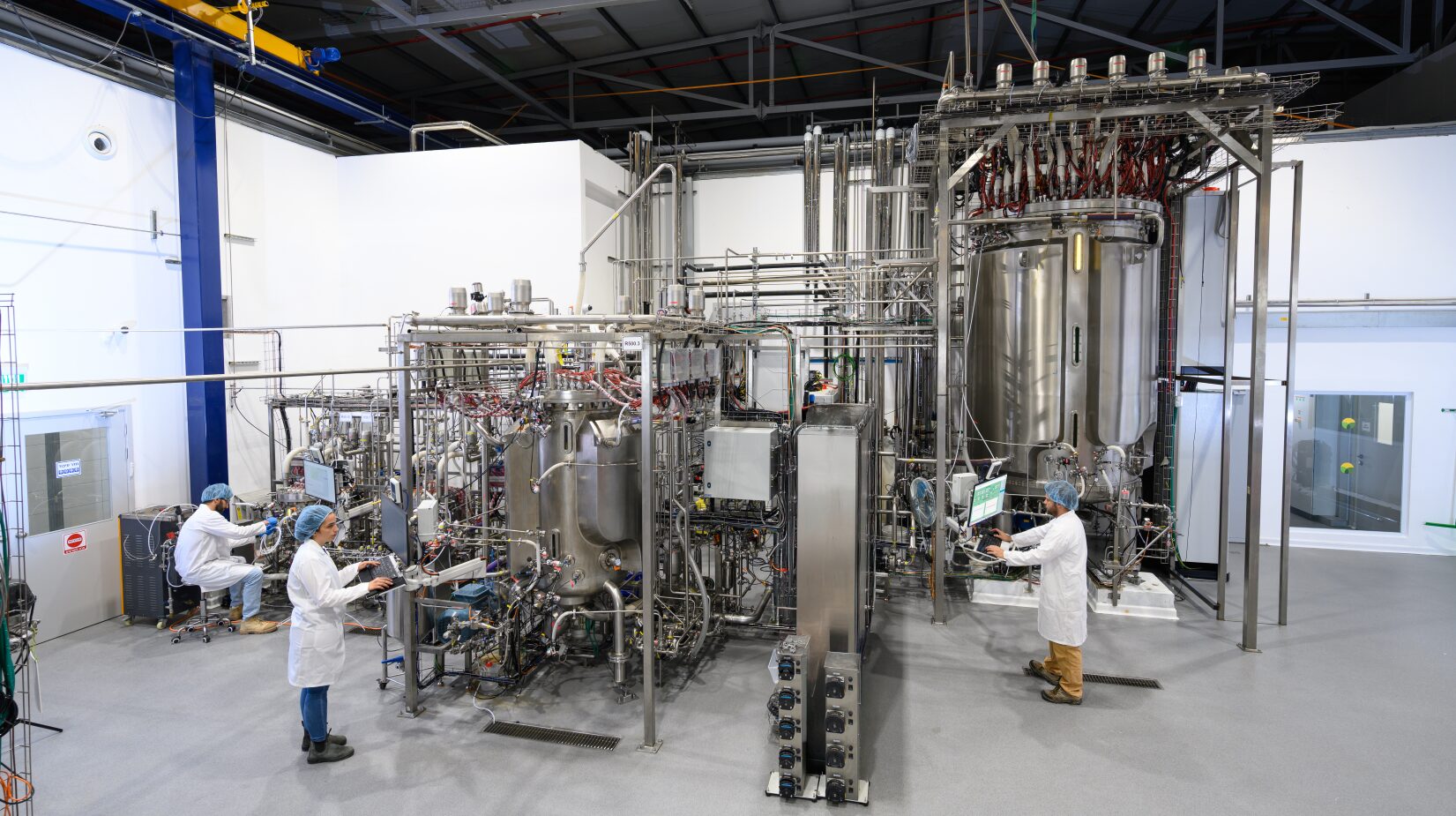
Brevel’s lighting technology is designed to be used in standard dark fermentation tanks, noted Jaksch. “They can install their lighting into new tanks or retrofit existing tanks. They are building their own lighted tanks to do contract manufacturing for companies like us. They are also collaborating with other CMOs around the world to integrate their lighting tech to expand lighted tank capacity.”
High-value botanicals, bioactives
Over the past four years Ayana Bio has developed over 100 plant cell lines but is focusing development and commercial scale up efforts on sage for rosmarinic acid, saffron for crocins and marigold for zeaxanthin and lutein, Jaksch revealed.
“With the recent MAHA activity including the notice [to reassess the safety of] synthetic preservatives such as BHA, we have received significant commercial traction for sage (rosmarinic acid) as a natural preservative alternative. We are on track to achieve commercial scale [for this product] in 2026. We are currently finalizing our first dossier for submission to the FDA for GRAS.”
According to Jaksch, technoeconomic modeling suggests that to achieve volume and price objectives, a 50-100kL tank size capacity will be a minimum entry point to achieve ~500kL total fermentation capacity to achieve entry level commercial scale for plant cell derived ingredients.
“If you start looking at higher volume and lower cost commodity ingredients the scale would need to be significantly larger than that,” he says. “If you think about it, some of these ingredient markets are hundreds of thousands of metric tons, some are millions of metric tons, so plant cell ingredients would need to be scaled up to tens of thousands or even hundreds of thousands of metric tons to be relevant as a useful alternative to incumbent commodity materials.”
The scale-up hurdle
The biggest challenge for Ayana Bio and the entire plant cell culture space is proving commercial scale, he said. “And by that, I mean scaling to commercially relevant volumes with competitive pricing.
“Unfortunately, there is no cheat code or garage lab way of achieving commercial scale, it requires a significant amount of time, resources and cash to get there. In a capital constrained environment that can make things tricky.
“The good news is that we are seeing companies in the plant cell community getting funded and we should hopefully see many examples of commercial scale becoming real over the next few years.”
What is plant cell culture?
Rather than using sunlight, water, and soil to nurture fully-grown plants, plant cell culture companies grow plant cells in bioreactors in conditions optimized for the rapid production of high-value compounds and secondary metabolites.
Plant cell culture technology is already used on a commercial scale to produce a handful of drugs, notably breast cancer drug Taxol, but has recently attracted interest in the nutraceuticals space as botanical supply chains become increasingly threatened.
Advocates say it offers some key advantages over conventional agriculture:
👉 First, they say, plant cell culture can ensure a consistent supply of botanicals with supply chains increasingly threatened by climate change and unpredictable weather, political instability, adulteration, disease, and heavy metals and pesticides from soil.
👉 Second, they claim, it offers the promise of rapid, consistent, and controlled production of plant compounds regardless of season or location in a sterile environment, with no pesticides.
👉 Third, there’s a sustainability argument: Why use all that agricultural land, water and energy to nurture fully-grown plants when you’re only interested in one small part of the plant?
👉 Finally, they argue, it can also deliver higher yields. For example, by understanding the metabolic pathways in plants that produce certain polyphenols and the precise conditions that drive plants to generate more of them, skilled players in plant cell culture can achieve concentrations of bioactives that far exceed those produced by plants grown in the wild or via traditional agriculture.
*BIRD funding is repaid through royalties from sales of commercialized products developed with BIRD support. However, BIRD does not require repayment if a project does not reach commercialization.
Further reading:
Can plant cell culture escape the biopharma cost trap? Rheaplant nets new funds
Could plant cell culture pave the way for the next generation of antioxidants and antimicrobials?

Sign up for our weekly newsletter.