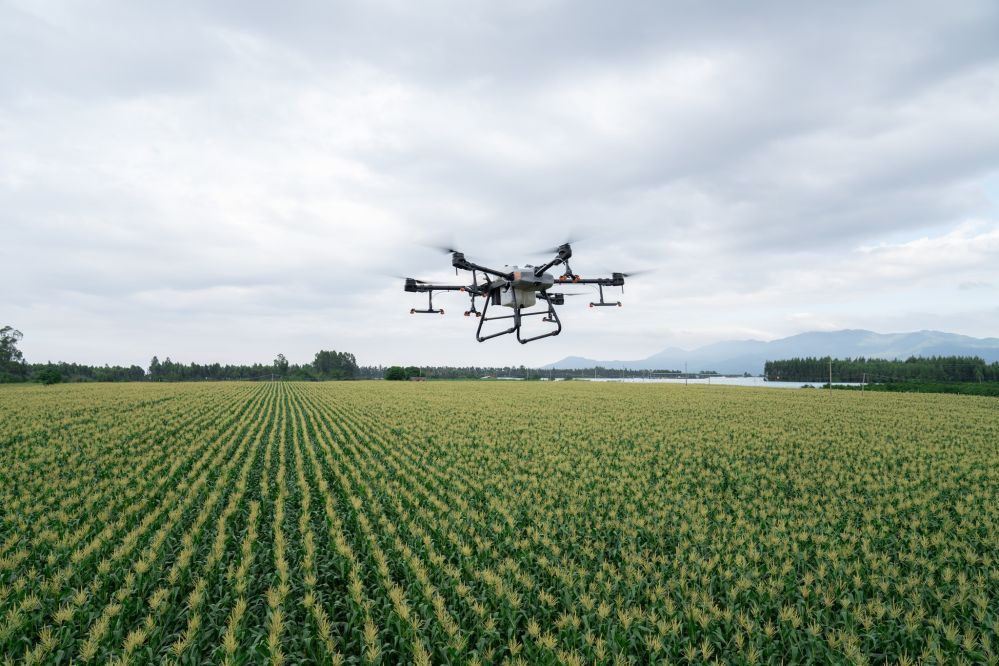
New proposals from the US Federal Communications Commission (FCC) cracking down on foreign-made “military grade” drones could “amount to a ban on future sales of certified and currently available products” widely used to spray crops, claims ag spray drone market leader DJI.
The Chinese firm is already wrestling with the FCC’s bombshell Dec 22, 2025 ruling to block the sale of new foreign-made models and critical components, which has upended a sector dominated by overseas vendors.
However, a July 21 public notice seeks comment on proposals to ban sales of current models of foreign-made “military-grade” UAS products on the FCC’s covered list of comms equipment and services “deemed to pose an unacceptable risk” to national security.
This means that selected products “already cleared for the US market could no longer be imported or sold, while covered replacement components could also become harder, or impossible, to obtain,” claims DJI.
“People could continue using DJI products they already own, but the same models in use today might no longer be available to purchase in the future. This is a total reversal from the FCC’s previous position, and it is US operators that would bear the cost.”
‘Economic poison’
The proposal—up for public comment until September 2—is framed as targeting “military-grade” drones. However, the FCC’s definition includes previously-authorized foreign-made drones with thermal imaging, LiDAR sensing, swarming drones, drone docking stations, drones weighing 55lbs+ on takeoff, and aerosol drones capable of dispensing “economic poison.”
The latter is defined as “any substance intended for preventing, destroying, repelling, or mitigating pests (insects, rodents, nematodes, fungi, weeds), viruses, or intended for use as a plant defoliant, or drying agent.”
This, claims DJI, “is a roundabout way of describing every agricultural drone that can spray pesticides or spread seeds. American farmers would be crippled if they can no longer treat their crops with technology that’s proven to save water, increase yields, and lower operational costs.”
It adds: “This could affect DJI FlyCart and agricultural drones, enterprise platforms, and dock stations – even though these are civilian and commercial tools, not military-grade equipment. Restricting products already cleared for sale would increase costs, limit choice, and put essential technology further out of reach for the Americans who rely on it.”
A ‘retroactive ban’ on some previously authorized drones
While DJI does not design or manufacture military-grade equipment, the FCC’s proposed definition is “broad enough to capture many of the civilian drones Americans rely on every day,” claims DJI.
According to DJI, “The way the FCC has set up the proposal directly targets—and would retroactively ban—drones that are widely used by American farmers and public safety agencies.”
According to the Drone Advocacy Alliance, a group sponsored by DJI, “This is a total reversal from the FCC who previously stated that approved devices would continue to be marketed and sold and that firmware and software updates could continue normally.
“Meanwhile, other countries across the globe—including our neighbors Canada and Mexico—will continue to have access to these products alongside the latest and greatest technology, putting us at a disadvantage.”
Exemptions
Since blocking new authorizations for foreign-made drones in December, the FCC has granted a series of exemptions, including to several non-Chinese drone makers following national-security reviews by the Department of War.
According to the FCC’s July 21 document, the proposed ban on foreign-made military drones would not apply to foreign-made drones and critical components that are exempt from the FCC’s covered list. These include products on the Defense Contract Management Agency’s Blue UAS Cleared List, products that qualify as “domestic end products” under the Buy American Standard, and products granted conditional approval by the Department of War or Department of Homeland Security.
Finally, the proposed ban would not apply to products for federal government use or imports for commercial testing and product development. Existing owners can also continue operating previously purchased affected drones.
Further reading:
USA Drone Motors emerges from stealth to target gap in domestic drone supply chain
‘Please reverse this decision!’ DJI users urge FCC to rethink foreign drone ban
Revolution Drones and Exedy Drones target US ag spray drone market as FCC rewrites the rules
Made in America: FCC decision sparks scramble to localize ag spray drone production