Natural astaxanthin—a potent antioxidant that sells for thousands of dollars per kilo—has historically been produced by photosynthetic microalgae in open ponds or photobioreactors. But could a fermented version give it a run for its money?
Armed with fresh funds, Hawaii-based Kuehnle AgroSystems (KAS) is relocating to the Bay Area as it edges closer to commercialization. The company is developing astaxanthin oleoresin using non-GMO algae it has coaxed to grow at scale via dark fermentation, with acetic acid rather than sugar as the substrate—an industry first.
KAS has just closed a Series B round led by Ichthus Venture Capital with backing from S2G Investments, Hatch Blue and, Dest EOOD. It is also working closely on process development, regulatory development and commercialization strategies with Corbion, which has built significant expertise in algae following its acquisition of San Francisco-based Terravia.
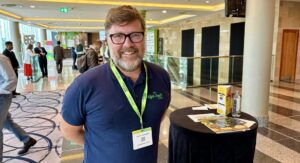
To date, KAS has demonstrated its tech in 6,000-liter bioreactors operated in France by partner Biorea and is now exploring options for commercial-scale production, likely in the 50,000-liter+ range, CEO Claude Kaplan, PhD, told AgFunderNews.
“We hope to have a market-ready product towards the back end of next year. We believe this technology will fundamentally reshape the natural astaxanthin market.”
Why it matters
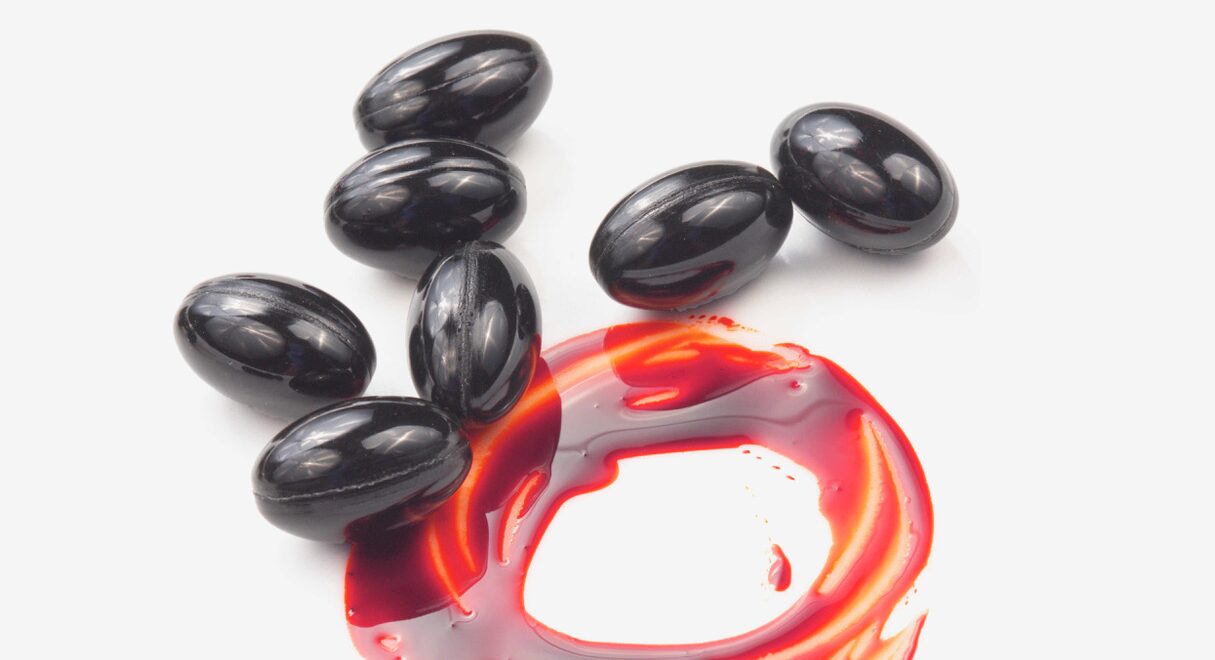
A crimson-colored antioxidant used in dietary supplements, cosmetics and animal feed, astaxanthin occurs naturally in microalgae, giving marine creatures such as shrimp and salmon their distinctive pink hue.
However, demand for natural astaxanthin exceeds supply, said Kaplan, who says the market is growing in double digits.
Commercially, most astaxanthin is produced from petrochemicals and sold into aquaculture. Higher-value products marketed as “natural”—reflecting their different stereochemical profile—are aimed at nutraceutical and cosmetics markets and select aquaculture customers.
These are typically made by cultivating Haematococcus pluvialis—a photosynthetic microalgae grown in open ponds (Cyanotech, Parry, AstaReal) or photobioreactors (Algatech).
Some players have produced astaxanthin in fermentation tanks using yeast strains, which produces a different, non-esterified, form of the ingredient, although the key player in this space— Israel-based Nextferm—suspended activities in spring 2025.
However, French startup baCta recently raised funds to develop its AI-driven approach to rapidly engineer astaxanthin-producing yeast strains, suggesting the tech still holds promise for some investors.
“KAS has developed one of the most exciting biotechnology platforms we have encountered in sustainable aquaculture.” Frode Sandmark, representing IVC, and non-exec board member at KAS
How different production methods compare
While cultivating Haematococcus algae in bioreactors might seem more capex- and opex-intensive than growing it in ponds, the strain KAS is using grows far more quickly at much higher densities than algae grown in ponds or photobioreactors (tubular systems exposed to light), claimed Kaplan.
Compared with open ponds, bioreactors also have fewer contamination risks, smaller space requirements, slightly simpler downstream processing, and a controlled process, he said. “It’s just much more efficient.”
While others have attempted to grow Haematococcus via fermentation, only KAS has succeeded at scale after years spent evolving its non-GMO organism and optimizing its bioprocess, said Kaplan, who took the helm in late 2020.
“All the major companies who produce astaxanthin have tried fermentation but could not get it to work. Either the cells stopped growing or the astaxanthin concentration was too low, or they just didn’t get high enough density. We ran a selection program and over many years we got it to work. But if you take a normal light growing Haematococcus strain and try and grow it in our process, it will fail. Equally, if you take our strains and try to use them in a light growing process, they probably won’t work very well.”
Scaling up the ‘little princess’
The biggest challenge has been scaling up, which does not always work in a rational or predictable fashion, he said. “We’ve been working with Biorea in France for five years as Hematococcus is very temperamental; they call it the ‘little princess.’
“When you grow Hematococcus pluvialis with light, the cells form a hard cell walled cyst. Our cells don’t do that, which has some advantages. But the downside is that they’re more fragile. So every time we went to a bigger scale, we had to do more strain selection. But we have now successfully produced product in 6,000-liter reactors.”
When it comes to scaling up further, Corbion can provide significant expertise, he claimed. “It’s another one of the reasons we’re relocating to San Francisco because Corbion’s [algae-focused] R&D is also there, so the teams can work together.”
Regulation and go to market
According to Kaplan: “The natural astaxanthin market is growing really strongly at the moment. One of the problems is lack of production; there isn’t actually that much production capacity at the moment, so prices have been going up.”
From a regulatory perspective, the astaxanthin molecule that KAS produces from Haematococcus pluvialis is the same as that produced by companies growing the microalgae in open ponds or photobioreactors, and therefore should not present significant new challenges, claimed Kaplan. However, regulators may still require KAS to demonstrate that the composition and safety profile of its dark-fermentation-derived ingredient are comparable with conventionally produced products.
In some Asian markets, Kaplan claimed, KAS could begin selling into the nutraceutical sector once its production facility had secured the relevant approvals, although requirements vary by country.
In the US, the appropriate pathway would depend on the application. GRAS may be relevant for use in conventional foods, while a new dietary ingredient notification could be required for dietary supplements.
In Europe, astaxanthin-rich oleoresin from H. pluvialis is already authorized for use in food supplements, subject to specified conditions, he said. “But we probably have to make a case to say [the] fermentation [derived product] is equivalent.”
Kaplan said KAS may also be able to market its microalgal biomass in Europe as a feed material. But if it were marketed or used specifically as a colorant in aquaculture feed, it would likely require authorization as a feed additive.
He added: “Aquaculture has the [higher] volume, but the price point is significantly less than in nutraceuticals, so for us, the strategy is first off, going into nutraceuticals. This is a growing market constrained by manufacturing supply and price. We will go to market with a product of equivalent quality, at a more affordable price.”