– baCta—a French startup developing a strain engineering and bioproduction platform for industrial ingredients— has raised a €7 million ($8.3 million) seed round to scale its first ingredient: astaxanthin.
– The investment was led by LocalGlobe and Daphni, with participation from OVNI Capital and business angels including the founders of Phagos, Genomines and MistralAI.
– The funds will help validate its process at larger scale and extend its capabilities to other high-value ingredients.
“baCta represents the convergence of deep biological data and Generative AI. Mathieu and his team have built an engine that doesn’t just promise scientific breakthroughs but delivers industrial viability.” Remus Brett, general partner, LocalGlobe
“baCta’s platform approach offers a scalable, economically viable path to replace dirty supply chains with biological factories.” Pierre-Yves Meerschman, managing partner, Daphni
Astaxanthin’s ‘collagen moment’
A crimson-colored antioxidant used in dietary supplements, cosmetics and animal feed, astaxanthin occurs naturally in microalgae, giving marine creatures such as shrimp and salmon their distinctive pink hue.
Commercially, most astaxanthin is produced from petrochemicals and sold into aquaculture. Higher-value products marketed as “natural”—reflecting their different stereochemical profile—are aimed at nutraceutical and cosmetics markets. These are typically made by cultivating Haematococcus pluvialis microalgae in open ponds (Cyanotech, Parry, AstaReal) or photobioreactors (AlgaTech).
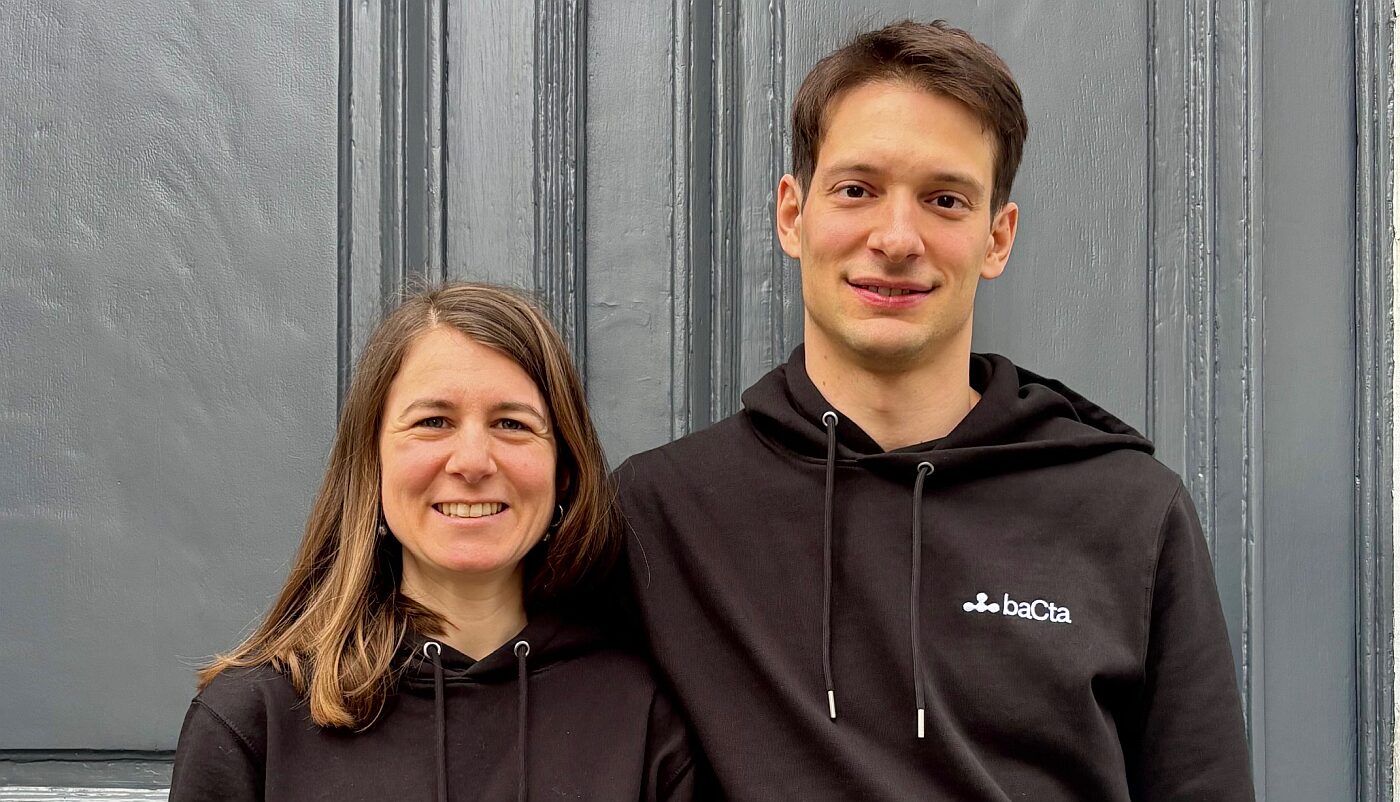
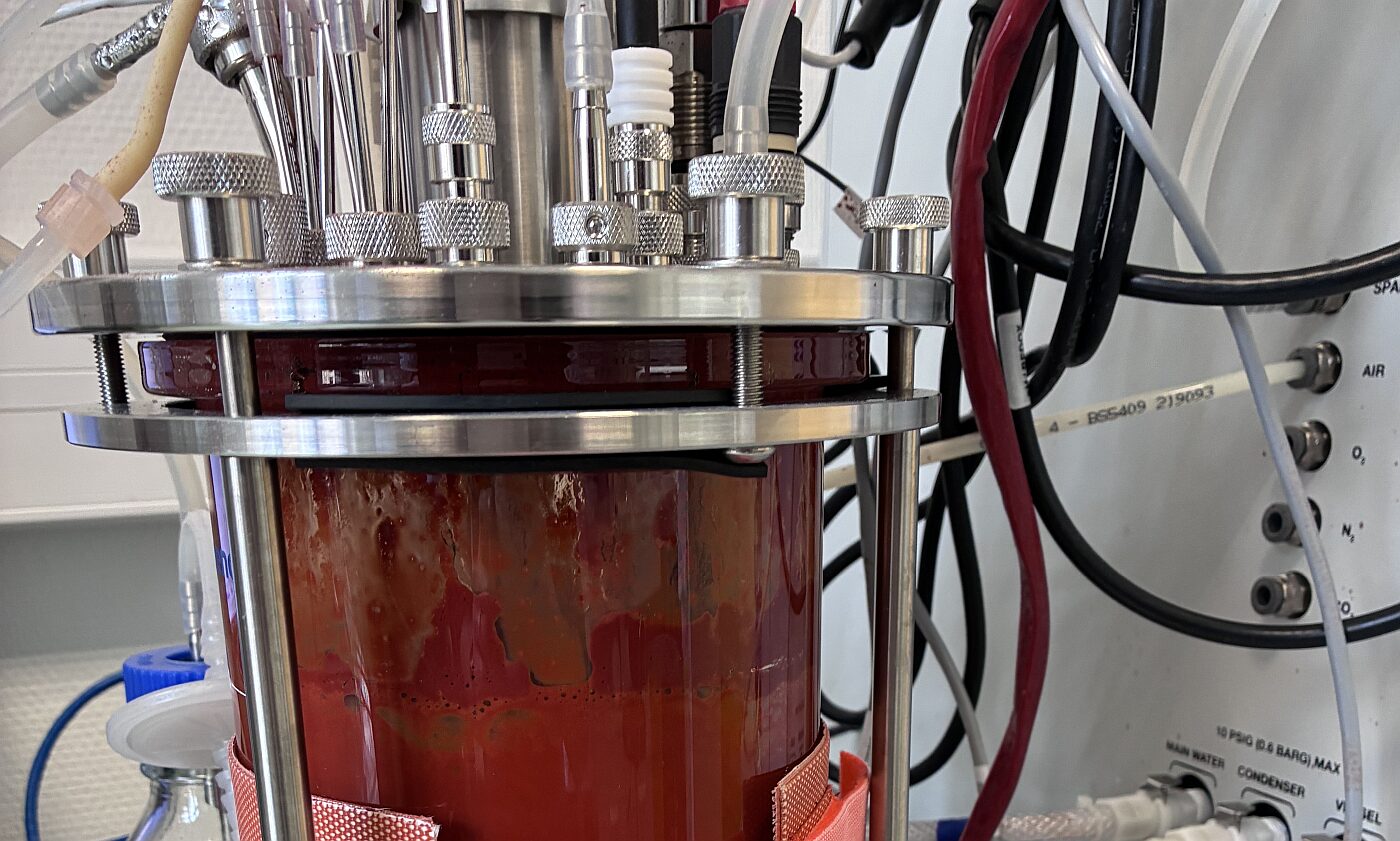
baCta—founded in Paris in 2024 by Mathieu Nohet and Marie Rouquette, PhD—is taking a different path, producing astaxanthin in fermentation tanks using yeast strains optimized at “unprecedented speed” with robotics and generative AI.
The company is targeting cosmetics and nutraceuticals, Nohet tells AgFunderNews. “Astaxanthin is an amazing ingredient, with vast longevity benefits, but it hasn’t had its ‘collagen moment’ yet. We want to make it more accessible and abundant.”
Yeast fermentation vs microalgae production
While producing astaxanthin in bioreactors might seem more capex- and opex-intensive than growing microalgae in ponds, yeast grows much faster than algae and can reach a higher density in a bioreactor, says Nohet.
“For perspective, algae biomass is usually below 5g/L in photobioreactors, whereas yeast can reach more than 100g/L. This means lower costs, even at equivalent productivity per cell.”
Compared with open ponds, bioreactors also have fewer contamination risks and smaller space requirements, he claims. “We have a downstream process (DSP) that is way cheaper than algae-based astaxanthin and does not use supercritical CO2 [an energy-intensive process used by the algal astaxanthin suppliers]. Our product has a pleasant, neutral smell and taste, and we already have a strain competitive with algae-based astaxanthin.
“We are aiming for costs comparable with synthetic and chemistry-based processes based on high efficiency of the strain and a proprietary DSP that enables us to decrease costs. We will use existing fermentation capacity to ensure we stay CapEx-light until we have demonstrated profitability.”
While a couple of other companies now use yeast to produce astaxanthin, baCta reckons it can do so more efficiently: “We’re aware of the AstaFerm product from NextFerm Technologies in Israel and LCY in China. We produce a very similar product; differentiation will depend on cost, our ability to secure the best possible production strain, and our proprietary DSP.”
As for its stereochemical profile, “Yeast-derived astaxanthin is free, unlike the esterified algae form [where astaxanthin is bound to fatty acids],” says Nohet. “Apart from that, they are the same isomer (3S,3′S) and offer similar benefits. This makes our astaxanthin more bio-available than algae-derived astaxanthin, increasing its potential benefits.”
Regulatory and scale up
Details of strain and process are confidential, said Nohet, who says baCta plans to go through the GRAS process in the US and the novel food process in the EU to secure regulatory clearance. “But the final product will be non-GMO according to US and EU regulations.”
So far, baCta has demonstrated its tech at benchtop scale and is routinely running liter-scale fermentations to optimize the growth conditions and processes, he says. “We are in advanced discussions with an industrial partner in France that has fermentation expertise to use their scale-up and production facility; we’ll announce it officially in the next few weeks.”
Design, build, test, learn
baCta is using an AI-driven design-build-test-learn “biofoundry” approach to rapidly engineer yeast strains, continuously optimizing genetic pathways to boost astaxanthin yields, productivity, and process efficiency.
👉 Design: An AI model trained on genetic data proposes gene and pathway edits to boost astaxanthin yield and speed.
👉 Build: Liquid-handling robots insert the AI-designed DNA into yeast, generating hundreds or thousands of variants in micro-bioreactors.
👉 Test: Sensors and analytics measure which strains produce the most astaxanthin.
👉 Learn: Performance data feeds back into the model to refine the next round of designs.