Editor’s note: Missouri Partnership is an economic development organization that connects food and beverage companies with expansion opportunities across the state.
Missouri is widely known for the Gateway Arch, the Ozark mountains, and numerous historical landmarks. Increasingly, it’s also the place food and beverage companies approach when evaluating new locations for their production sites.
American Foods Group, Swift Prepared Foods, and Niagara Bottling are a few among many that have set up shop there, citing its lower costs and business-friendly environment.
But those aren’t the only reasons these companies are moving to the “Show-Me State” to do business.
When it comes to food and agriculture, Missouri is “far more diverse” than some of its neighboring states, says Ashley McCarty, executive director of Missouri Farmers Care, an organization that advocates for farmers and ranchers in the state.
This diversity is critical for rural prosperity and food security, as it provides additional sources of income for farmers and surrounding communities.
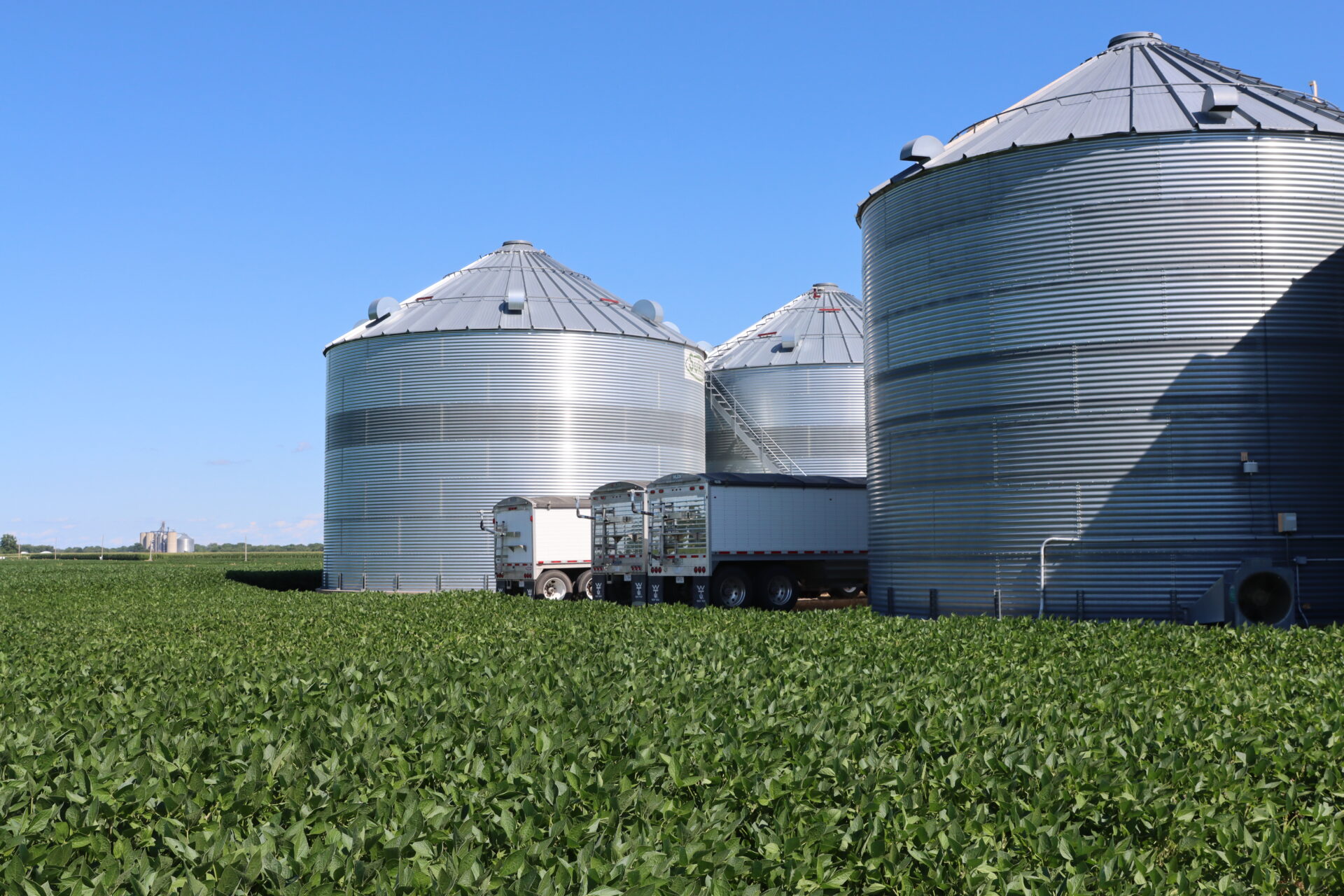
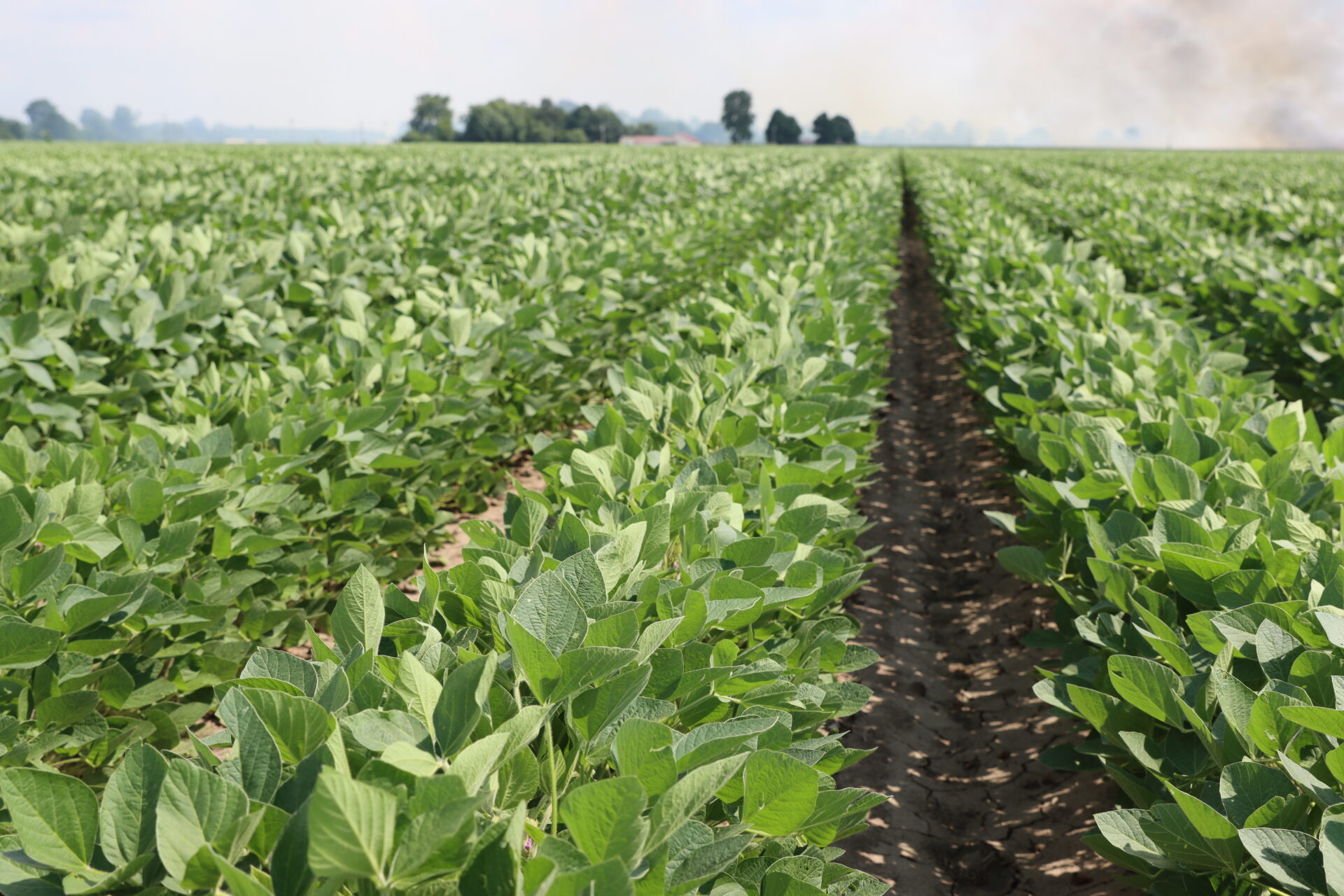
It also means food and beverage companies in the state are close to the raw materials they need, from corn and soybeans in the north to cattle in the southwest and peanuts in the state’s “Bootheel” region.
According to McCarty, Missouri ranks among the top US states for numerous commodities including corn and soybeans as well as cattle, wheat, and poultry.
“We have a really diverse industry in Missouri as well as strong forestry, so that provides a lot of different opportunities across the state,” says McCarty. “We’re not a one-size-fits-all state.”
From legal patchwork to regulatory freedom
Regulations for food manufacturing, processing, and packaging vary from state to state in the US; often, they vary from county to county.
This “patchwork of regulations,” as McCarty calls it, is a deterrent for companies seeking standardization and stability in financing and production.
Missouri unified and standardized its laws across the state in 2019. Today, it can provide the “regulatory certainty that companies need to thrive,” she says.
“A lot of ag companies, particularly food and beverage companies, have a pretty big footprint, not only from where they are individually sited but from the pyramid of producers. We want to make sure that they have regulatory certainty and freedom to operate.”
One effort that has helped this, she adds, is the Agri-Ready County Designation program run by Missouri Farmers Care.
In a nutshell, it’s a county-by-county collaboration where county commissioners and local leaders work together to promote favorable agricultural environments. This means there are no additional burdens, barriers, or regulations on the books that would prohibit agricultural business.
“It’s a figurative open for business sign for the county,” says McCarty. “Our goals with those relationships are to make sure that local leaders understand the potential before them.”
By way of example, she cites Audrain County in central Missouri, which aims to attract more dairy operations.
Economic pressures have led to a decline in dairy farms over the last few decades, and according to McCarty, Missouri no longer produces enough milk within its borders to meet its own population’s needs.
Audrain County has countered this by hosting out-of-state dairies hoping to relocate to a lower-cost region.
“They travel to other states and countries, meeting with dairies to make sure those dairies know they would be welcome, and that there are abundant water and resources and crops that those businesses would need to relocate to Audrain County.”
Untapped potential
As McCarty highlights, proximity to production and consumers is top of mind for food and beverage companies as they build out new facilities. This is especially relevant in 2026, where rising fuel costs are always a concern and the US continues to grapple with a shortage of qualified truck drivers.
Missouri, thanks to its very central location, is increasingly considered prime real estate for food processing.
Beef-processing plant American Foods Group, for example, located its packing facility in Warren County, which is 50 miles west of St. Louis and near the center of the US population.
Its presence there, adds McCarty, is having a positive, Midwest-wide impact.
“They draw cattle from 500 miles. That’s the entirety of Missouri and several surrounding states that will be touched by their market pull. We have such a potential of production and untapped processing, and therefore untapped jobs, land base, and tax base.”
‘A ripple effect’ of economic development
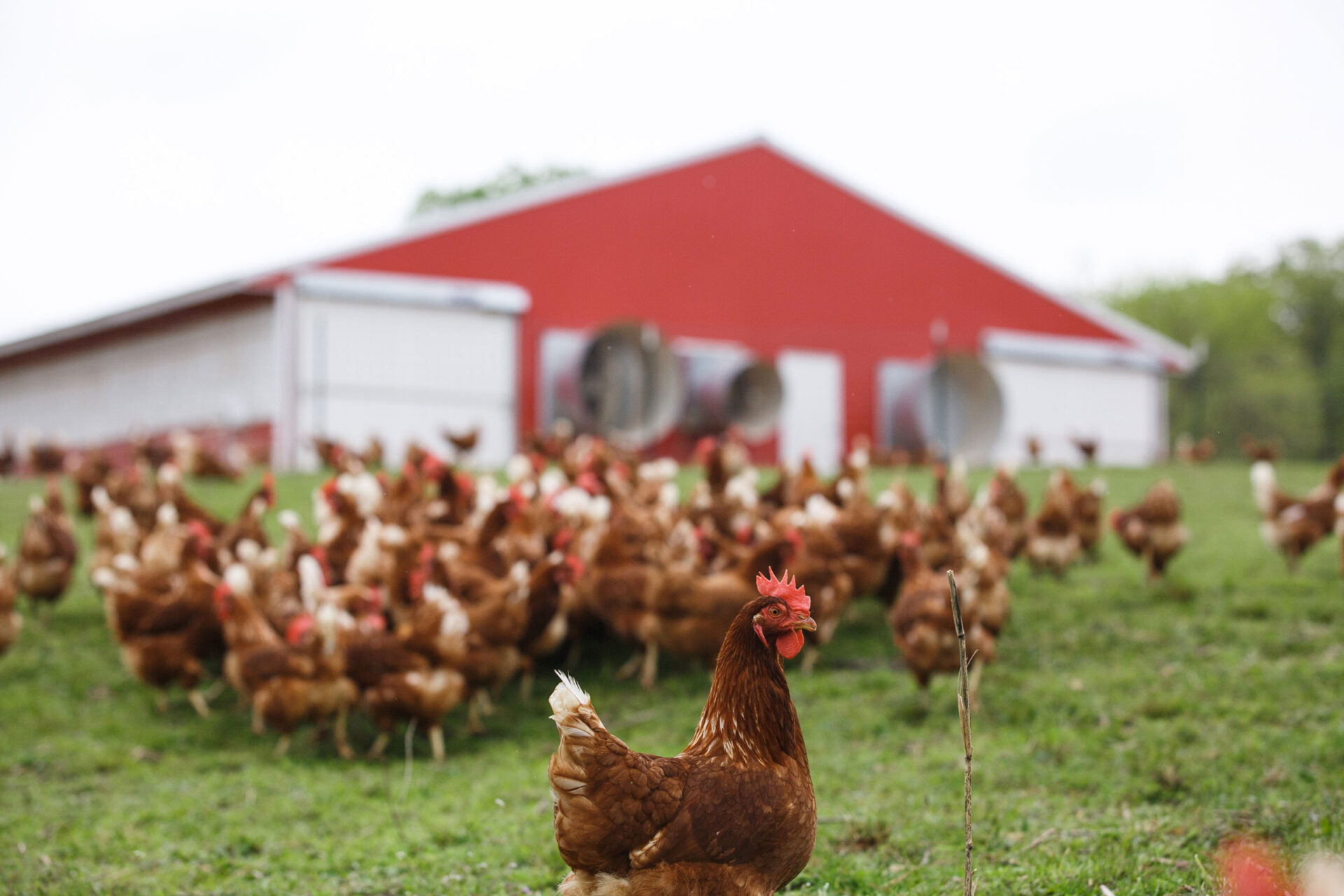
Vital Farms, a pasture-raised egg producer that originated in Texas, has also benefited from Missouri’s central location. In 2017, the company chose Springfield as the site of its egg washing and packing facility, dubbed the Egg Central Station (ECS).
The company works with just under 600 small farms in what it calls “The Pasture Belt,” an area favorable for year-round pasture-raised egg production. Currently that includes Missouri, Arkansas, Illinois, Indiana, Kansas, Kentucky, Ohio, Oklahoma, and Tennessee.
According to Mike O’Brien, director of plant operations at the ECS, more than half of these farms are less than one day’s drive from the Missouri facility, which has enormous benefits for the company’s supply chain operations.
Geography, however, was just one of many considerations for Vital Farms.
“We chose Springfield as the home for the ECS for several reasons, including the area’s logistical advantages, strong infrastructural systems, pro-business ecosystem, and outstanding workforce,” says O’Brien.
He adds that another key benefit has been “the ability to hire local, talented crew members who are committed to our mission of bringing ethical food to the table.”
The benefits work both ways. In growing its presence across different communities in the state, Vital Farms is able to create jobs and foster “a ripple effect of economic development.”
“The unwavering warmth and generosity of local officials and organizations like the Chamber were instrumental in choosing the region to help scale our national consumer food brand,” he adds.
Moving Missouri ag up the value chain
Of course working against this backdrop are the farmers themselves. And McCarty, who is also a farmer, is quick to point out this is a group that’s hungry for new opportunities.
“We have really innovative farmers. They are always interested in new uses and new markets, and invest their time and resources to build those. And so I think that we’re being led by their hunger to see new opportunities for the products that they’re producing.”
When, for example, ethanol plants were few and far between in the state, farmers built them. Today, most of Missouri’s 300 million annual gallons of ethanol are produced at six majority farmer-owned plants.
“They know they can move Missouri agriculture as a whole up the value chain if we can attract more processing, more ag investment to the state,” says McCarty. “So they’re playing a pretty significant role in making sure people hear about Missouri’s potential.”