– Bindbridge—a startup using targeted protein degradation to create more effective herbicides and other crop protection products—has raised $3.8 million from Nucleus Capital and Speedinvest.
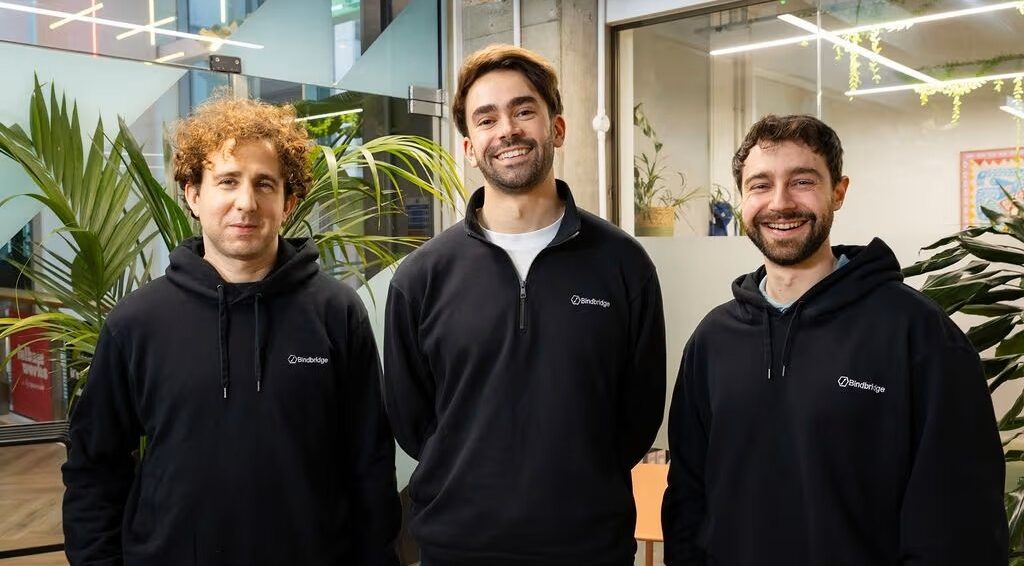
– The funding will help UK-based Bindbridge—founded in March 2025 by George Crane, PhD, Simeon Spasov, PhD, and Alex Campbell, PhD— partner with ag chem giants on co-development projects and start lab testing its first products.
Teaching weeds to self-destruct
The raise comes at a time when the crop protection industry faces mounting resistance to widely used herbicides, creating urgent demand for novel approaches.
While that pressure is fueling interest in biologicals, computational platforms can also help develop chemically synthesized small molecules that unlock previously “untargetable” biology, claims the firm, which is building on technology first developed for drug discovery.
👉 What is protein degradation? Cells have an inbuilt waste disposal/recycling system whereby damaged or unwanted proteins are tagged with a small molecule called ubiquitin, which instructs other proteins to break them down.
👉 What is targeted protein degradation? This hijacks the recycling system described above and tricks the internal machinery of cells in weeds or other pests to destroy proteins that are essential to their survival.
This is not an entirely new concept in crop protection. Some established herbicides such as dicamba and 2,4-D for example, indirectly activate a natural hormone pathway that uses protein degradation, although this was discovered serendipitously rather than by rational design, claims Bindbridge.
Oerth Bio, a now-defunct joint venture between Leaps by Bayer and biotech firm Arvinas, meanwhile, worked on products that triggered targeted protein degradation, but used PROTACs (Proteolysis-Targeting Chimeras) to bind the two sets of proteins. These are large, complex molecules that are hard to optimize for stability and field delivery, and expensive to produce, cofounder George Crane told AgFunderNews.
Bindbridge’s “molecular glues” by contrast, are single chemically synthesized small molecules that are easier to optimize for spray stability and cell permeability in weeds or other pests and potentially cheaper to manufacture, he claimed.
“These are low molecular weight compounds that are structurally similar in scale to conventional herbicides or insecticides.”
However, molecular glues are harder to discover because they don’t have two obvious binding “handles” like PROTACs and must reshape the surface of one protein so it can interact with another in a way nature didn’t originally intend, said Crane.
This kind of induced protein–protein interaction is far less predictable, which is why Bindbridge is turning to BRIDGE, a computational platform using AI to discover and design molecular glues, he explained. This uses AI-driven structural modeling to predict and design small molecules that can bring a target protein and an E3 ligase together in a way that triggers targeted protein degradation while meeting practical agronomic constraints.
This could slash the cost and time to market while opening up new possibilities for more effective herbicides, insecticides, fungicides, and sprayable plant traits for nutrient use efficiency, heat tolerance, or carbon sequestration, added Crane.
“There’s no affordable, rational, or systematic way to discover molecular glues products… we’re changing that.”
‘Drugging the undruggable’
Crane added: “I was working at Yara Growth Ventures, investing in agtech, biotech and deep tech startups, and there were several startups licensing tech from the pharmaceutical industry and this idea of AI drug discovery, targeted protein degradation, particularly via molecular glues, was receiving a lot of attention.
“We are now, for the first time in agriculture, rationally designing these targeted molecular glues in a similar way to how the pharmaceutical industry is designing them for novel oncology targets.”
What’s exciting, he said, is that “We can use this approach to go after existing targets, but also unlock new targets. On the pharmaceutical side, for example, these molecular glues are often coined as ‘drugging the undruggable.’ And for us, we can go after protein targets which have previously not been targetable.”
He added: So a customer could come to us and say we’ve been working for 20 years on target x, but we’ve never been able to inhibit it, can you degrade it?”
From broad-spectrum herbicides to drought tolerance
To begin with, Bindbridge is working on a “broad spectrum herbicide that could serve as a glyphosate replacement,” said Crane. “But we also have the option to go into insecticides and fungicides or to look at biotic and abiotic stress pathways in plants that are regulated at the protein level by protein degraders. So we can look at things like nutrient use or drought tolerance, for example.”
In many stress-response pathways, helpful proteins are already present in plant cells but are kept “switched off” by negative regulatory proteins that act as a brake, said Crane. By using targeted protein degradation to selectively destroy those negative regulators, you can effectively remove the brake, allowing the plant’s built-in stress-response machinery to activate more strongly or more quickly.
Products that make sense in the field, not just the lab
The beauty of Bindbridge’s BRIDGE platform is that it can not only design small molecules that can get two proteins to interact but can also be constrained to only generate molecules likely to work in the field, said Crane.
“We’ve built a filter to generate chemistry based on desirable agronomic characteristics such as size or charge or hydrophobicity. Not only do we expect this molecular glue to stick proteins together, but it should translate well into the field. It’s really important for us to predict what will make good products, not just what’s good science.”
Most herbicides work by inhibiting key proteins, whereas targeted protein degradation destroys them, which could offer advantages against certain resistance mechanisms, claimed Crane.
Although not immune to resistance, degradation-based approaches may offer an alternative strategy where traditional inhibitors have failed, he added.
The business model
Bindbridge has a two-pronged business model, said Crane. “In the first instance, we will be engaging in joint development projects. The other distinct business model is licensing our own IP.”
To validate its tech, Bindbridge first tests whether its molecules bring two proteins together in lab assays. If successful, it then moves into plant cell tests to confirm degradation and finally into greenhouse trials to evaluate effects in whole plants.
Further reading:
Landmark glyphosate paper retracted in random reckoning for a scientific relic
Icafolin-methyl ‘a completion of glyphosate,’ not a replacement: in conversation with Bayer