US retail sales of plant-based meat and dairy continued their precipitous decline in 2025, while foodservice presented more of a mixed bag, according to a new report from nonprofit The Good Food Institute (GFI).
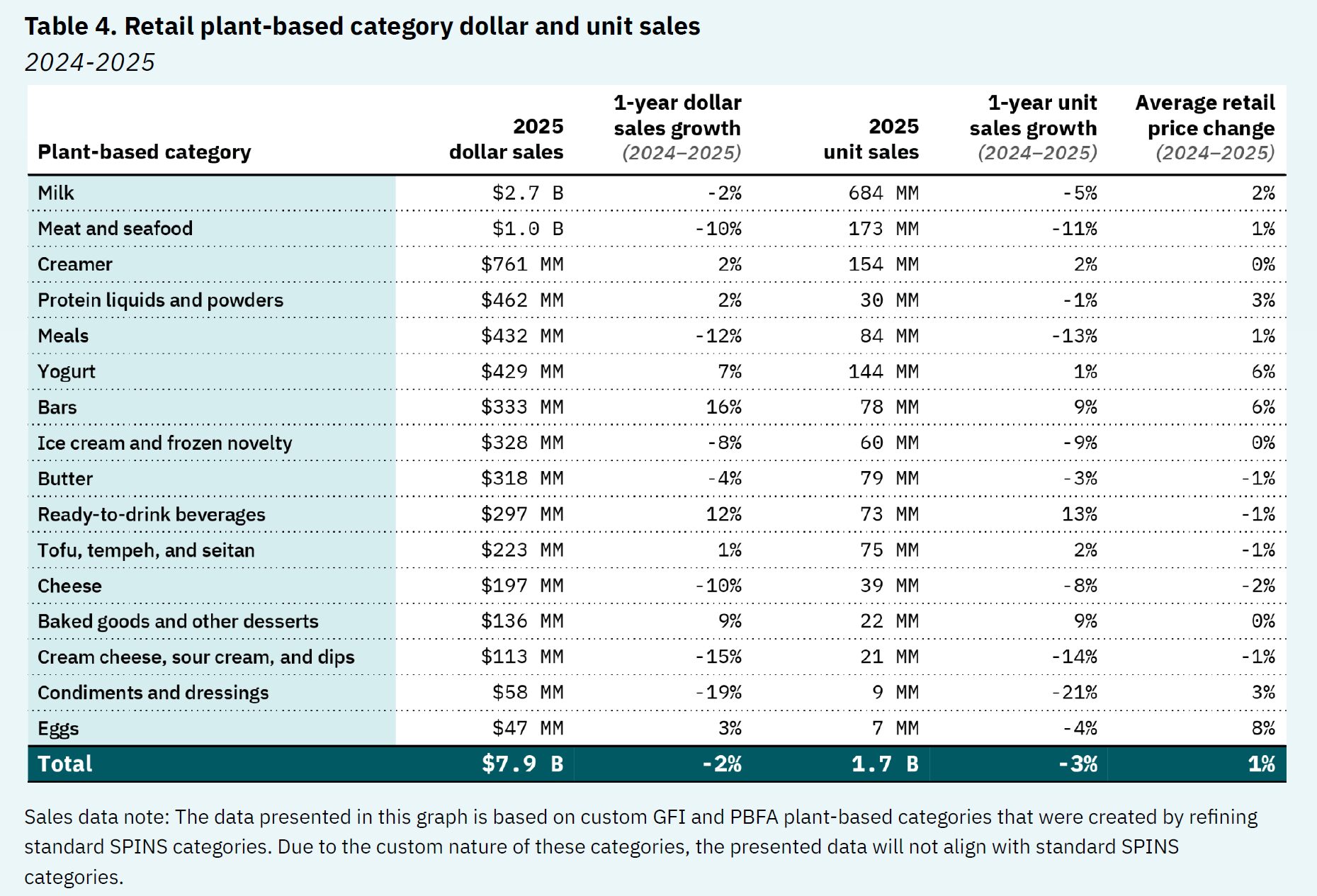
Retail sales of plant-based meat and seafood fell 10% to $1 billion in 2025 with units down 11%, while sales of plant-based milk fell a more modest 2% to $2.7 billion with unit sales down 5%, according to data from SPINS crunched by the GFI.
While dollar sales of most plant-based categories declined in 2025 with the exception of tofu/seitan/tempeh (+1%), there were some bright spots, however. Plant-based ready to drink beverage sales were up 12%, yogurt was up 7%, protein liquids and powders up 2%, and creamers up 2%.
US foodservice: plant-based meat down, plant-based milk up
In the US foodservice channel, the declines were slightly less pronounced, with plant-based proteins (meat analogs, tofu, tempeh, grain/nut/veggie items such as bean burgers) experiencing a 7% decline in dollar sales to $291 million and a 5% decline in volumes from broadline distributors to operators in 2025.
However, there were bright spots in pork analogs, chicken nuggets, meatballs, chicken patties, hot dog links, and chicken filets, and growth in some non-commercial operators such as education and healthcare segments.
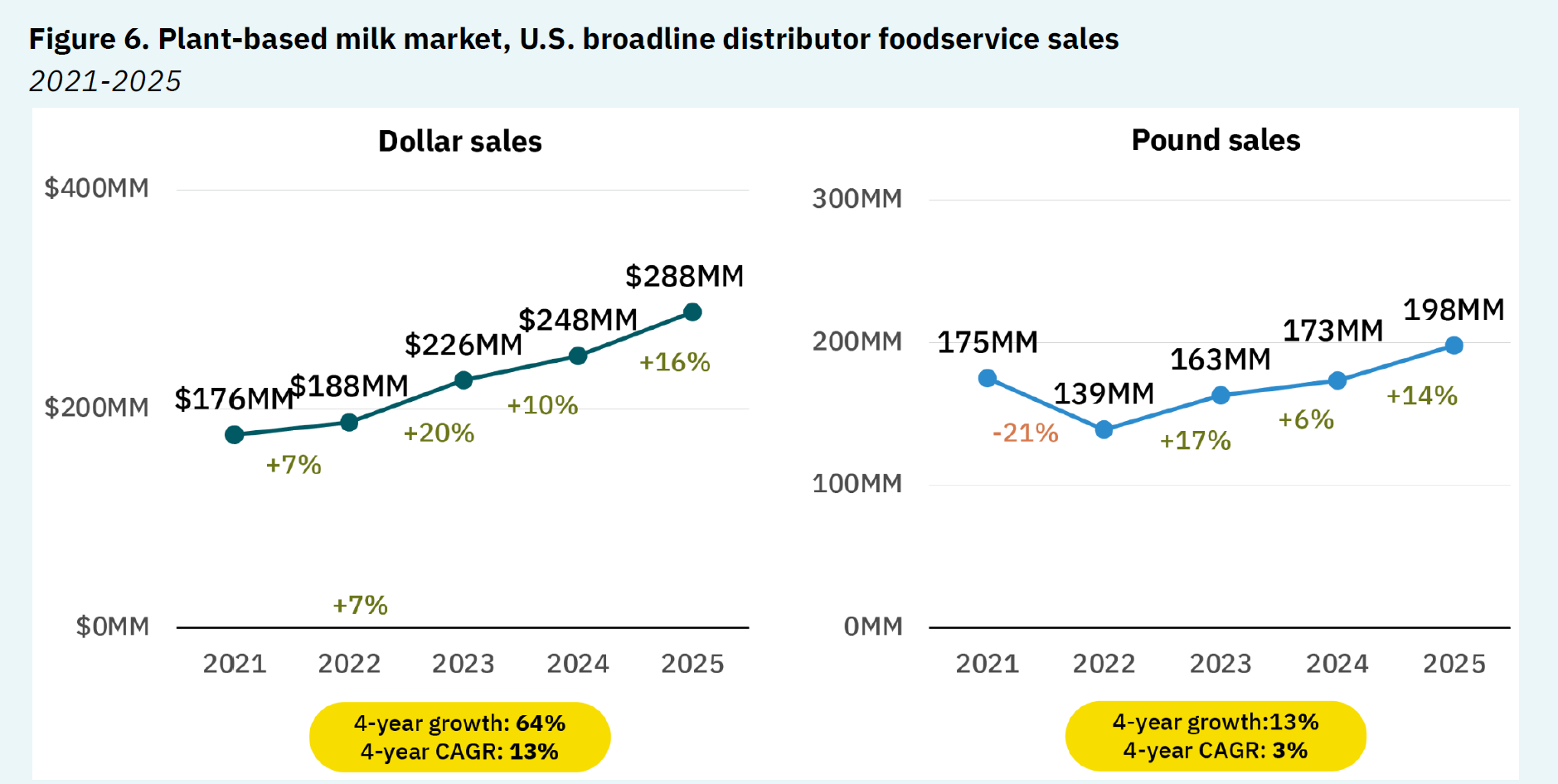
Plant-based milk, in contrast, enjoyed strong growth, with sales in foodservice surging 16% to $288m to capture a 13% pound share of the total milk market in broadline distributor sales in 2025. Volumes rose 14%.
Sales of plant-based creamers were also up 4% to $189 million with volume sales up 3%, in part due to major foodservice operators removing surcharges on plant-based dairy options starting in late 2024.
The investment landscape
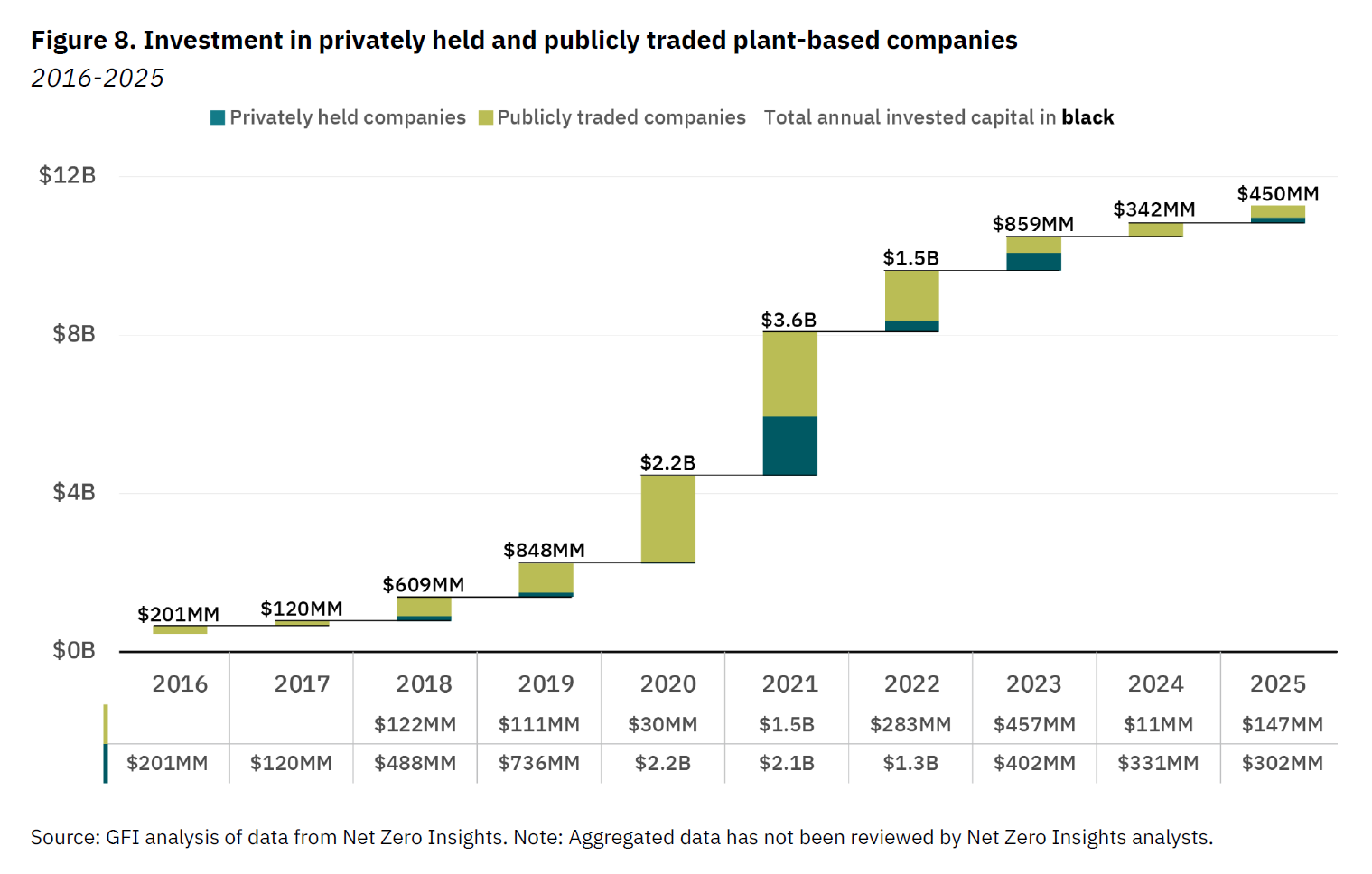
Global investment in privately held and publicly traded plant-based companies rose from $342 million in 2024 to $450 million in 2025, a notable increase, but well down on the huge sums the category attracted in 2020 ($2.2 billion), 2021 ($3.6 billion) and 2022 ($1.5billion).
For the fourth year running, firms based in Europe attracted more capital ($216 million) than those in North America ($181 million), in part because of large sums pumped into the sector by the European Investment Bank (EIB) coupled with funds from individual governments, says the GFI.
“The combination of well-executing startups, committed corporates, and supportive governments points to a plant-based ecosystem increasingly centered in Europe.”
Public investment was down across the board in the US in 2025, while the Trump administration cut the number of new grants awarded by the National Science Foundation by 25%. The US is also expected to lose its position as the world’s largest R&D funder to China in 2026, predicts the GFI.
“After consistently rising from 2021 to 2024, federal investments in plant-based R&D declined in 2025. In so doing, the United States bucks the global trend of investing competitively in new protein sources, including those made from local agricultural products and side streams.”
Consolidation and pivots
With multiple companies running out of funds, consolidation continued apace in 2025 with “at least 19 plant-based companies bought out or acquired, reflecting a consolidation of product portfolios, technology stacks, and brand equity,” says the GFI.
“Notable transactions included v2food’s acquisition of Daring Foods and Vivera’s (JBS) acquisition of The Vegetarian Butcher from Unilever. At the same time, multiple plant-based companies paused or ceased operations after struggling to secure follow-on financing. As capital coalesces around scalable platforms and differentiated brands, companies struggling to improve unit economics or demonstrate durable demand are increasingly driven to sell assets or IP, or close their operations.”
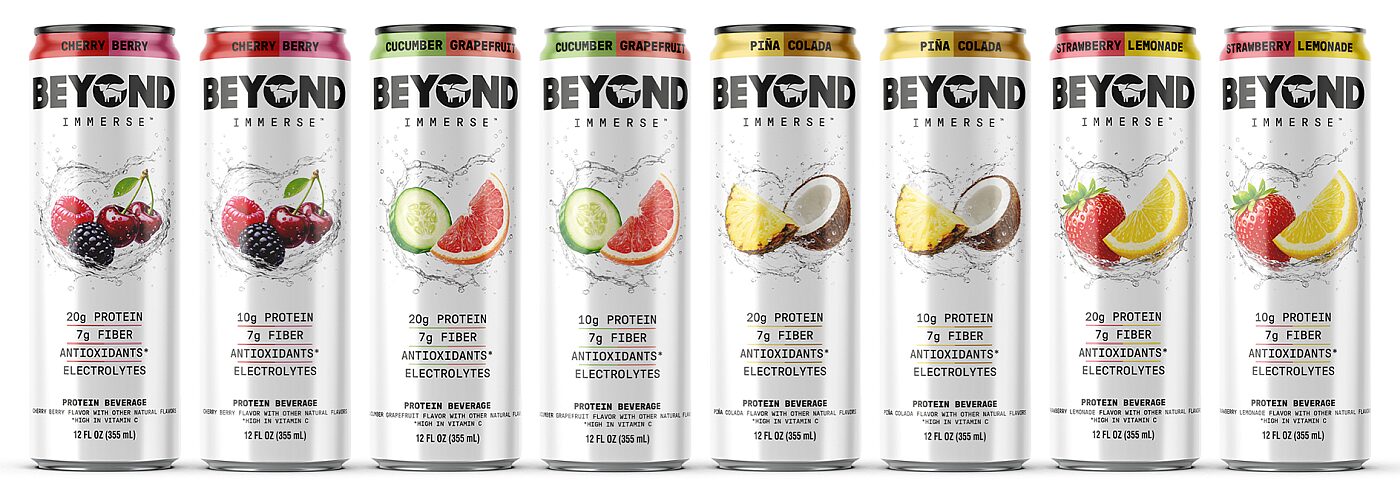
Against this backdrop, several brands diversified or pivoted beyond alt-meat and alt-dairy, with Beyond Meat entering the protein drinks category, Lasso deploying its spinning tech in the snacks aisle, and Impossible Foods partnering with Equii, a maker of high-protein pastas and breads.
Plant-based protein gaining traction in beverages
While the plant-based meat market has cooled off in the US, demand for plant-based protein remains strong, says Nicole Atchison at plant-protein specialist PURIS.
Speaking to AgFunderNews at the recent Future Food-Tech conference in San Francisco, Atchison said growing demand for protein coupled with surging prices for whey had boosted interest in pea protein, with firms particularly interested in cleaner-tasting, soluble options that can be dropped into beverages without negative sensory effects.
She added: “There’s a lot of price escalation in the whey protein category, which is making plant proteins an attractive solution, but only if they can deliver on taste and functionality.”
“Before a lot of investment into the technology, commodity pea protein wasn’t very soluble, it was gritty, and didn’t have a great taste. We’ve really focused on improving the solubility and we’ve seen big traction in that, specifically in beverage, because of the improved mouthfeel.
“Our ClearP hydrolyzed pea protein is 98% soluble, and it can go in acidic beverages and sparkling beverages without drying effects, so it’s unlocking entirely new categories now where plant protein hasn’t been before.”
The global picture
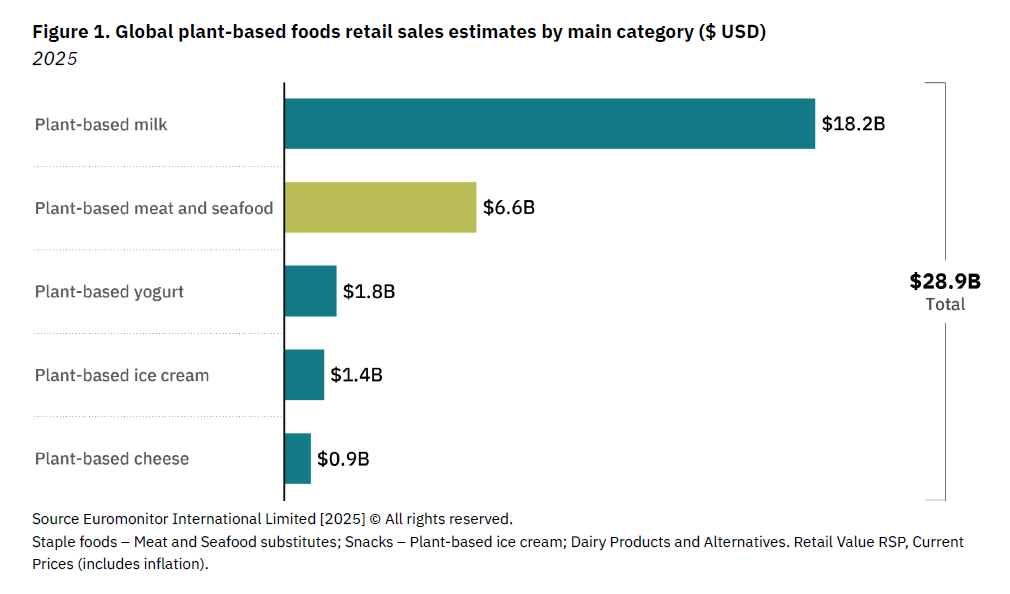
Global retail sales of plant-based meat and dairy were up 3% to an estimated $28.9 billion in 2025, according to Euromonitor data, with sales of plant-based meat and seafood up 8% to $6.6 billion and plant-based milk, cheese, yogurt and ice cream up 2% to $22.3 billion.
“Despite near-term turbulence, most forecasts still project significant long-term growth for the sector,” claims the GFI. “The underlying case for plant-based meat remains: rising protein demand, climate and land use pressures, and the need to diversify protein supply chains.”
👉 Read the GFI’s state of the industry reports on plant-based, fermentation, cultivated meat, and public policy.
Further reading:
🎥 Taste, price, or bust: Bruce Friedrich’s roadmap for alt meat
Armed with $47m, MATR Foods to scale next generation of alt meat via solid-state fermentation
Heura bags $22.2m from EIB to expand plant-based tech platform, aims for profitability in Q4
Plant-based brands collaborate in ‘mature era’ of alt meat, says Revo Foods of ‘Juicy Marbles & Friends’ launch ‘mature era’ of alt meat, says Revo Foods of ‘Juicy Marbles & Friends’ launch