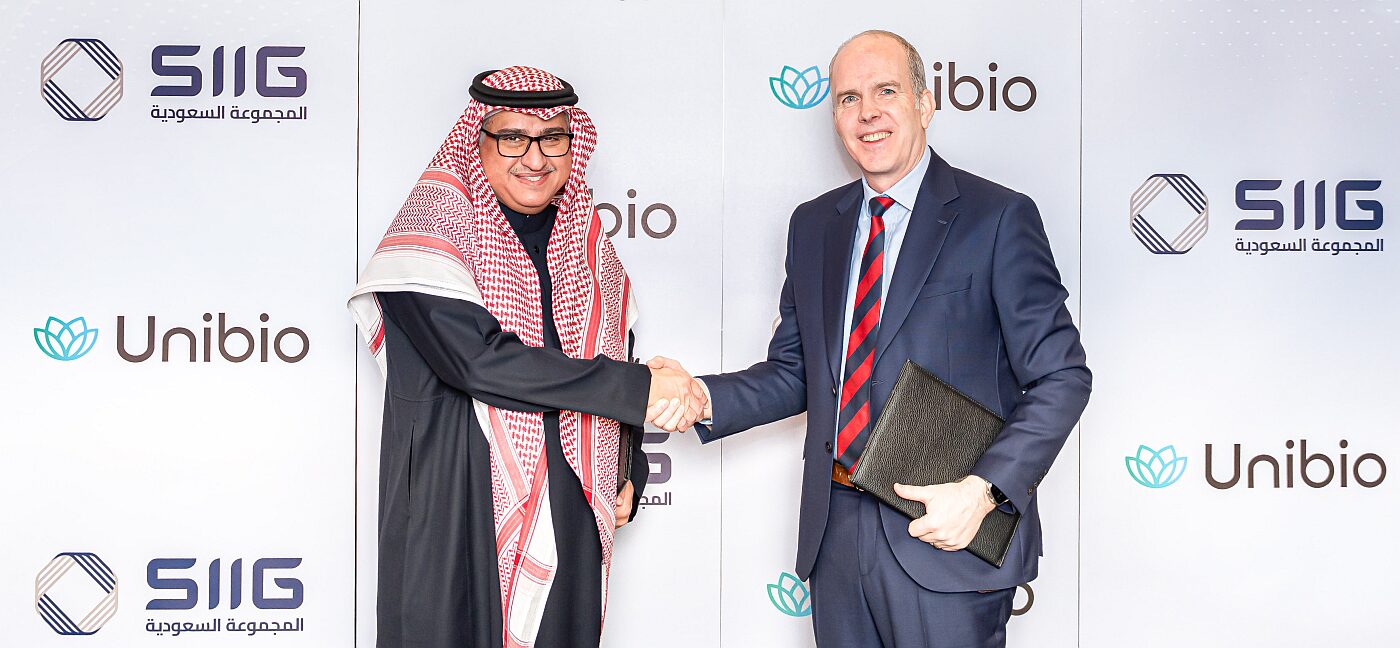
Danish gas fermentation firm Unibio is building what it claims will be the “world’s largest single-cell protein plant” in partnership with petrochemical giant Saudi Industrial Development Group (SIIG) in Saudi Arabia.
The plant—which will use the region’s abundant supply of natural gas as feedstock—will produce an initial 50,000 tons of protein annually with plans to increase capacity to over 300,000 tons in the coming years, reducing Saudi Arabia’s dependency on animal feed imports as food security moves up the Kingdom’s agenda.
The protein—brand name: Uniprotein—is approved for aquaculture in Saudi Arabia and for feed in the EU, and has additional registrations globally, with construction expected to start in the second half of 2026 and commercialization in 2028.
A gas allocation for the plant has been secured from the Saudi Ministry of Energy, adds Unibio, which first started working with SIIG in 2023 after securing a $70 million investment.
“SIIG will provide 80% of the equity and Unibio 20% of the equity,” Unibio CEO David Henstrom told AgFunderNews. “Bank financing will also be used to fund the project. A joint venture team has already been appointed to lead the final engineering, procurement, construction and startup of the facility with the work well underway.”
Once commercial operations begin, Unibio and the joint venture company will jointly market and sell Uniprotein from the facility, he said.
“Using Unibio’s technology, we aim to make Saudi Arabia the leader in single-cell protein production and improve food security for both Saudi Arabia and the world’s growing population.” Abdulrahman Alismail, CEO, Saudi Industrial Development Group
Food security is moving up the agenda
Unibio is one of a small but high-profile group of startups attempting to decouple food and feed production from agricultural land via gas fermentation, using gases instead of purified sugars to feed microbes that produce protein.
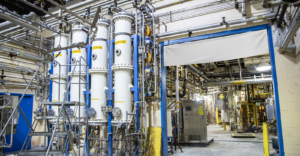
The company has developed a patented vertical “U-Loop” bioreactor designed to maximize gas/liquid transfer in a continuous biomass fermentation process.
The tech has already been proven at an industrial scale at a plant in Russia developed by licensee Protelux and was just getting started as Russia invaded Ukraine in 2022, prompting Unibio to focus efforts on the Middle East, where growing interest in food security is driving demand for novel solutions.
“We’re looking all around the world at where there is cost effective gas, oxygen, and ammonia, and the infrastructure to put up facilities to produce protein that is also proximate to the demand that we’re going after,” said Henstrom, a former Cargill executive who joined Unibio as CEO in 2021.
The Middle East is especially interesting on this front, he said. “Saudi Arabia is almost 100% feed insecure; it imports most of its ingredients to feed animals. The benefit of having these gas fermentation plants is that you can put them in deserts, in frigid locations, basically in places where crops won’t necessarily grow.”
Asked how the current conflict in the Middle East may impact the firm’s plans, he said, “It has only reconfirmed how critical it is to the region to have local production of feed and food to enhance food security and only accelerated the committed timetable to complete.”
According to Henstrom, Unibio has conducted a number of studies that show Uniprotein compares favorably vs fishmeal on feed conversion rates: “It’s a highly concentrated protein with high digestibility.”
Key customers are partnering with Unibio to offtake the product, he added: “Our initial target is the MENA aquafeed market, especially shrimp and carnivorous fish due to the size and growth of this production. Additionally, Asia is an attractive export market due to competitive freight rates to and demand in that sector of the world. We do have approval to sell into the pet food market in Europe. Our facility will be able to provide a cost-competitive and reliable source of supply to offset the strain on the supply of fishmeal.”
Protein from air
As to why gas fermentation is potentially more efficient or sustainable than using sugary feedstocks, he said, “Coming from Cargill, I was trained in sugar-based fermentation. With gas fermentation, we’re converting a non-edible abundant source of carbon into protein, and we’re not using any land [to grow corn or other sources of sugars for fermentation].
“If you just look at the cost of carbon per ton of protein that you produce, it’s three times the cost to use glucose or dextrose vs methane. And then there isn’t the same risk of contamination [from unwanted microbes that feed on sugar]. This means you can run longer campaigns and run a continuous fermentation, which has its own set of benefits.”
But if gas fermentation is a no brainer, why isn’t everyone doing it? And why have companies in this space struggled? (Click here to read about the recent demise of Arkeon and Novonutrients.)
“There are barriers to entry, plus you have to deal with the capital costs of building new facilities, which can be substantial,” noted Henstrom.
“We were fortunate to have one of the largest raises in the alternate protein sector in 2023 [$70 million from SIIG] in March 2023, which was a very dead time in terms of raising money. I’d say sovereign wealth funds certainly are interested in this technology, plus large family offices. It’s late-stage growth equity.”
How does Unibio’s tech work?
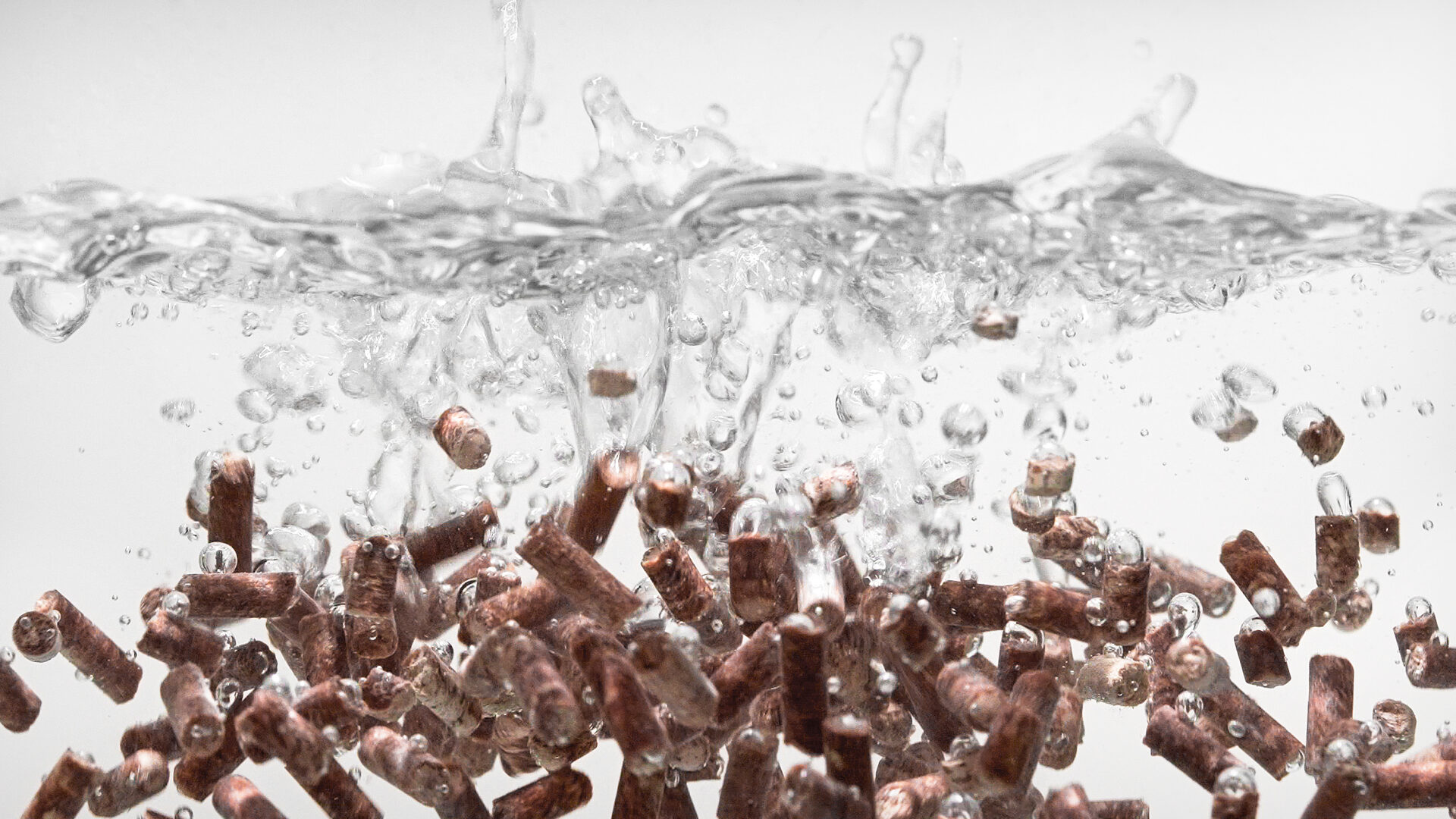
👉 Unibio is growing a non-GMO bacterium, a methanotroph (microorganism that metabolizes methane as its primary source of carbon and energy) that naturally produces a lot of protein. It grows it, harvests the whole biomass, centrifuges it, and dries it.
👉 For inputs it needs methane, oxygen, nitrogen from an ammonia source, and some salts.
👉 For the bioreactor, says Henstrom, “You need to have the right design to get optimal gas liquid transfer, which is why I think it has taken this technology some time to evolve to where it is today. Figuring out how best to do that requires real ingenuity. We inject the gases into the water stream with the bacteria and they produce protein as they go around that loop and then we harvest it.”
👉In U-Loop, he says, “We think we have the most efficient reactor design for gas fermentation. One of the benefits of the design is that you can take advantage of the mass transfer [the movement of gases from the gas phase into the liquid phase], with the pressure that’s in a vertical system versus a horizontal system. That helps the bubbles stay in solution rather than accumulate, for example, at the top of a horizontal system. We expect to hit 8 kg/m3/hr in 2026 in terms of productivity of our microorganism.”
Further reading:
Gas fermentation: the future of sustainable protein, or hot air? In conversation with Aerbio

Sign up for our weekly newsletter.