California-based ‘protein from air’ company Calysta has closed down its R&D labs and pilot plants in the US and the UK as it no longer needs them, says cofounder and CEO Alan Shaw PhD.
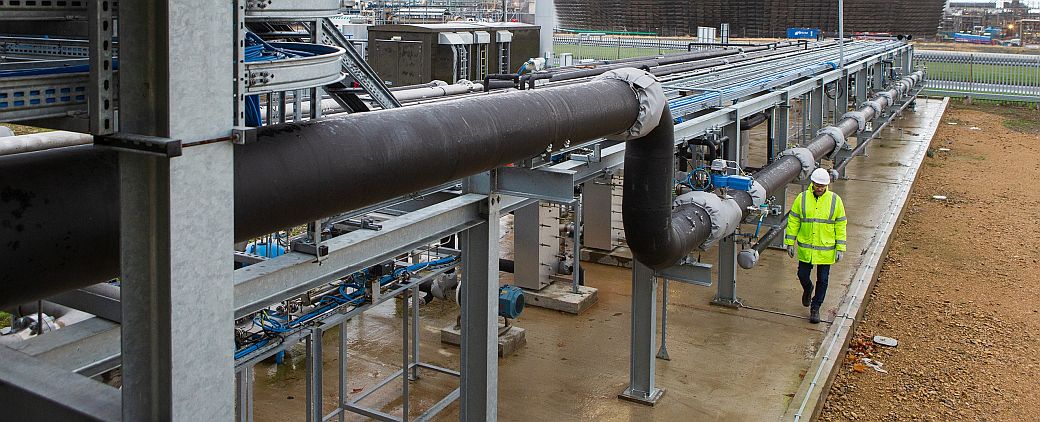
Speaking to AgFunderNews as equipment from the firm’s pilot plant and R&D lab in Redcar, Teeside, in the UK, was being auctioned off by BPI Asset Advisory, Shaw said that the facilities had served their purpose now that the firm has nailed down its process at commercial scale in China.
Calysta is one of a small, but high-profile group of startups attempting to decouple food and feed production from agricultural land via gas fermentation, using gases instead of purified sugars to feed microbes that produce protein.
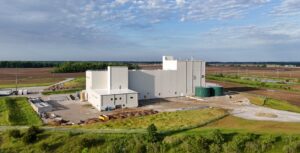
The firm has an industrial-scale 20,000t/year facility up and running in Chongqing, China, created via a joint venture with animal nutrition co Adisseo to produce microbial protein under the FeedKind brand.
According to Shaw: “We’ve completely exited the UK site and we’re exiting the US lab in San Mateo, California, as well because we don’t need them anymore. We’re concentrating our activities on manufacturing and selling.”
The teams “were there to support the commissioning of the plants,” he said. “That work is now complete. We launched FeedKind two years ago from the plant in China and we simply don’t need these laboratories and development capabilities now. Plus Northern California is not the cheapest place in the world. We’re not a startup anymore; we’ve evolved into a manufacturing company.”
Asked if the firm needed to keep its R&D function to develop new products and processes, he said: “I expect FeedKind is going to keep us busy for the next 10 years.”
He added: “Our resources are now focused very much on leveraging the production plant in China, but we are also exploring potential plants in the Middle East—we’ve been very active in Saudi Arabia and the United Arab Emirates—and we haven’t ruled out building a plant in North America.”
The big opportunity is in petfood
While the plant in China was originally targeting the Chinese aquaculture market, he said, it has now become clear that the “big opportunity is in pet food. So for a 20,000 ton per annum nameplate capacity plant, we’re forecasting that 70% of the capacity will actually be directed into pet food.
“The product has resonated extremely well in that market. It’s non animal, non vegetable. It’s vegan. It has all the essential nutrients, and adoption has been actually pretty impressive. We launched in Europe two years ago and adoption rates are excellent.
“Aquaculture was always going to be the low hanging fruit,” he claimed. “Fishmeal prices have been very competitive, which is what drove us to look for higher value markets [such as pet food], but we didn’t anticipate the [strong] reception that we received in the pet food markets.”
As for pricing, he said, “You’re not going to get better than $2,000 a ton for our product in that [aquaculture] market, but in pet food, the price is almost double that, and the product is slightly different in terms of how it’s finished, it’s higher quality and more effort goes into the performance of the product, but the benefits the dogs are showing are very clear. We also anticipate getting approval to sell to dogs in the US next year.”
Calysta’s focus now is on “leveraging the plant in China to deliver its full potential, and using that as a blueprint to build plants in other parts of the world,” said Shaw. “No one else is doing anything like this on this scale.”
He added: “Our partner there [Adisseo] is majority owned by a state owned enterprise in China called Sinochem, and we’re very lucky as food security is a major issue in China and they’re super keen to get this project to the next level.”
Teeside auction: ‘A rare opportunity’
The equipment at the Teeside facility was designed for the “production of sustainable, food- and feed-grade protein and represents a rare opportunity for businesses, researchers and laboratories operating in the fields of fermentation and cellular agriculture,” says BPI.
The auction is live and will close on Thursday November 20, says BPI, which invites interested parties to contact Luke Hartshorn at [email protected].
“This sale is anticipated to generate strong interest from research institutions, universities, and organizations involved in biotechnology, protein innovation, and fermentation development. It is also expected to appeal to laboratory operators, R&D facilities, and second-user equipment dealers seeking high-quality scientific instrumentation.”
Gas fermentation further reading:
Can gas fermentation deliver on its green promise for food and feed? In conversation with Calysta
Unibio CEO: ‘We have the most efficient reactor design for gas fermentation’
Gas fermentation: the future of sustainable protein, or hot air? In conversation with Aerbio