
Several firms now use microbes to produce high value human milk oligosaccharides for infant formula. But could plants be a better production vehicle?
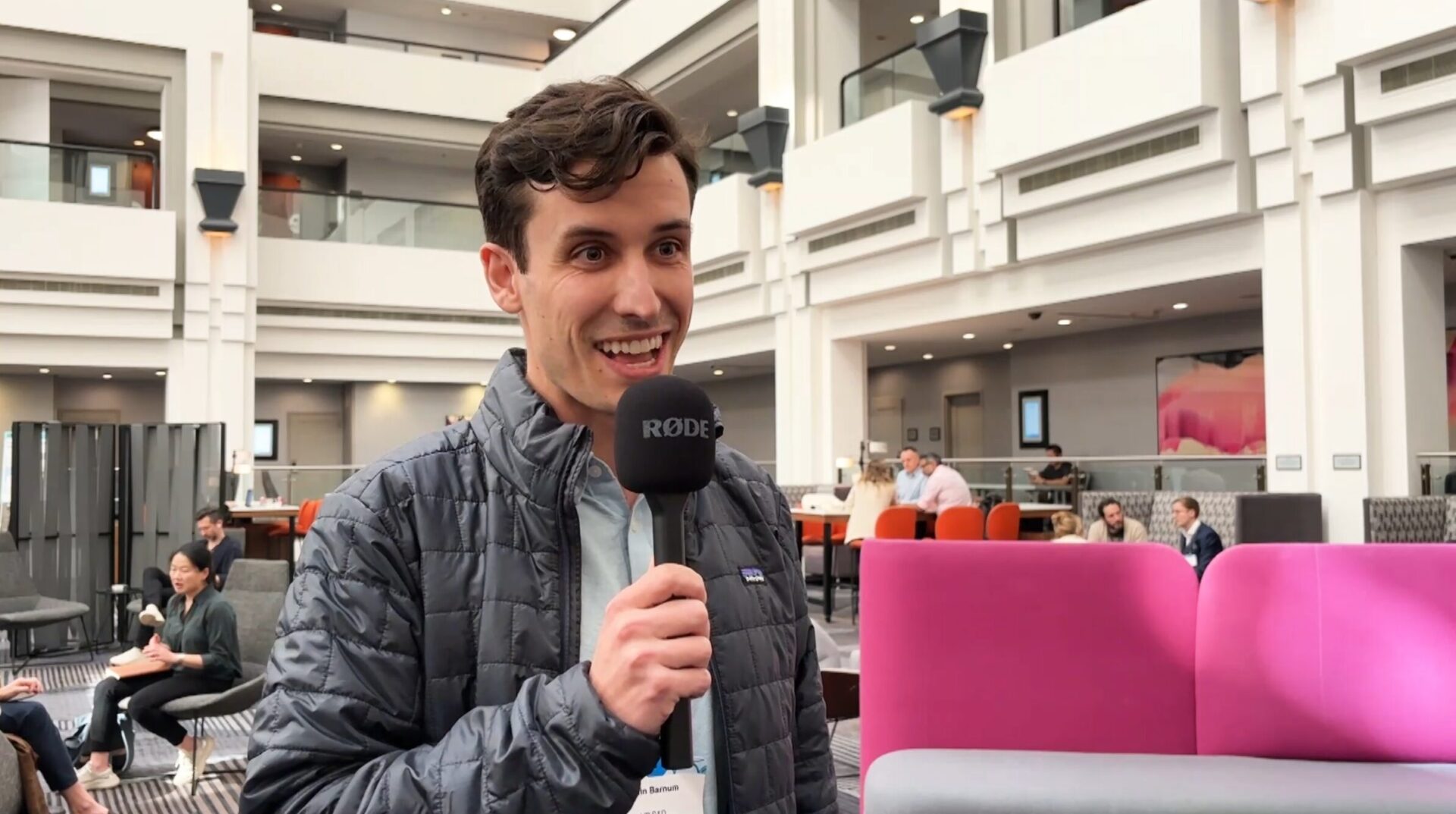
AgFunderNews (AFN) caught up with Totality Biosciences cofounder and CEO Leila Strickland, PhD (LS), and VP R&D Collin Barnum, PhD (CB) at Future Food-Tech in San Francisco to discuss the limitations of microbial HMO production, the potential of plants as a scalable alternative, and how its approach could expand the range and affordability of HMOs.
AFN: What are HMOs and why are infant formula companies adding them to formulations?
LS: Human milk oligosaccharides (HMOs) are this specialized fraction of complex carbohydrates that are present in breast milk. There’s a unique collection of these molecules in human milk that aren’t found anywhere else in nature.
They’re very important for programming the immune system early in life, they interact directly with the cells in the gut to reinforce that barrier, reduce inflammation, adjust, and then calibrate allergic responses. So they are very important biomolecules for early life development, which, of course, is why they’re so sought after in infant formula.
It’s one of the aspects of breast milk that is very difficult for bovine-based infant formula products to replicate. So of course, parents want as close to breast milk as they can for their baby if breastfeeding is not available. So it’s an important class of molecules for that category.
AFN: Is there a market for HMOs outside of infant formula?
LS: What we have learned is that [big food and health companies] are actually looking to expand HMOs into other age categories. They’ve done well with HMOs in premium infant formulas, but a lot of these companies have also funded clinical trials in other populations across the lifespan.
So they want to see them in pediatric children’s nutrition as well as in food and beverage products for all ages; they’re really thinking about HMOs as part of their health and wellness specialized nutrition portfolios.
They’re also really frustrated with the high cost of HMO ingredients and have had a hard time justifying extending the molecules into those applications. So we’re getting a lot of positive response to the possibility of a more affordable and accessible cost for those buyers.
AFN: So currently, a handful of HMOs are being made through microbial fermentation?
LS: Yes, there’s a handful of them today that are made in genetically engineered E coli. So they program the machinery for linking these sugars together into E coli, and they can grow them in bioreactors, which results in a pretty high cost of manufacturing and a pretty limited repertoire of molecules that are available.
Human milk contains hundreds of unique oligosaccharides, and only about five are available at scale today via biomanufacturing.
AFN: Why might plants be a superior production platform for HMOs vs microbes or animal cells?
CB: When we were trying to come up with the chassis to make HMOs, we saw plants as that natural chassis to make them because they are already so good at making sugars.
Additionally, there is a huge ability to scale plants that other systems can’t match. You can grow plants at hectare scale, and arguably, we do agriculture at the largest scale than any other technology in the world.
So when you need to make a product at this huge scale… we really see plants as the best platform for that to scale it, lower the cost, and also expand the repertoire of HMOs that can be made with their mastery of sugar metabolism.
AFN: What plants are you using as expression systems and why?
CB: We have two different strategies. The first is our lab scale platform, where we can test genes really rapidly. So one of the issues with plants is that it takes a long time to test things, typically, but we have a system where we can test out different biosynthetic pathways in the lab in three to five days, which is great for that initial discovery and proof of concept work.
As we go into real large-scale production, we’re looking at plants that have already validated streams for making a variety of products. So our initial target is soybean because there’s already existing infrastructure, and we think that it’s going to provide a great amount of yield as well as a good diversity of structures.
AFN: So in the lab, are you using a transient expression system like tobacco plants?
CB: That’s exactly right.
AFN: But that wouldn’t be something you could scale for commercial production?
CB: It depends. We can see pathways for using it as an R&D platform, or for some specific molecules, we could use it as a scalable platform to produce them at smaller amounts for specific use cases.
We’ve been doing this work for one year with essentially no funding, and we’re already able to make so much progress compared to the 30 years that people have been doing microbial fermentation of HMOs.
AFN: Can you monetize the other parts of the GE soybean? Will you have to set up expensive identity-preserved supply chains?
LS: We need to design our business around the systems that exist now and the ones that are starting to come online using some of the more advanced solutions for identity tracing. But the goal is to be able to monetize that entire bean with the high-value carbohydrate fraction at the end of the line.
So we want to be able to sell the oil and we want to be able to sell a protein concentrate, whether that be for a human nutrition applications or some other applications [in addition to the HMOs].
AFN: What’s the key value proposition?
LS: We’ll be able to make the same HMO ingredients that are available today but at lower cost.
AFN: Do we know which HMOs are important?
LS: It was really a surprise to me as I got into this field, to understand the complexity of human milk, and to realize that so much about the structure and function relationships of the molecules within milk have not been mapped.
The R&D libraries of HMOs today maybe cover about 25% of the structures in human milk. So there’s potentially 150 or more structures that we just have simply never been able to map.
AFN: What HMOs will you make first and why?
LS: We’re focusing on 2’ FL, which is one of the simplest HMOs and the easiest one to make. But we also believe we’ll be able to make more complex structures.
It’s really important that we go after one in particular called DSLNT (Disialyllacto-N-tetraose) that is out of reach for current technology but has some really nice preclinical evidence behind it that it will be a lifesaving solution for babies who are born too soon. So in the NICU, there’s a large unmet need for this particular HMO, which has been shown to have a protective effect in that population.
Further reading:
Infant formula cereulide recall: an isolated supplier lapse or a structural vulnerability?
All G assembles human casein micelles to bring infant formula ‘dramatically closer’ to breast milk
🎥 Checkerspot teams up with Huvepharma to produce human milk fat analog at scale
Better Dairy targets high-margin nutrition market with precision-fermented osteopontin