Hawaii-based Symbrosia is moving closer to commercialization with its SeaGraze red seaweed-based feed supplements for livestock methane reduction after raising $5.8 million in Series A-1 funding.
The cash injection comes from new strategic investors Idemitsu and One Small Planet and existing backers, and will help Symbrosia expand production to supply 2,500 head of cattle to 6,000, with a further expansion to 22,000 head by April 2026 as additional infrastructure comes online.
The firm is now planning a larger 15-acre facility on the same site in Kona, Hawaii, that will ultimately be able to cater for 1.4 million head of cattle, founder Alexia Akbay told AgFunderNews.
The regulatory pathway
Symbrosia, which was founded in 2018, hopes to get the green light to sell SeaGraze in the US by mid-2026.
As there is not yet a mechanism in the US for regulating feed additives “that have a technical effect beyond nutrition” through impacting animals’ gastrointestinal tracts, they are classified as new animal drugs.
However, Symbrosia is working with the FDA to go through the same process as Bovaer [a feed supplement developed by DSM-Firmenich and commercialized in the US by Elanco], which the FDA’s Center for Veterinary Medicine chose not to enforce as a traditional drug, said Akbay. “That pathway has helped establish precedent for methane-reducing feed additives.”
She added: “In Brazil, we have products in early-stage in vivo trials, working with local partners to generate data aligned with Brazilian regulatory and commercial requirements. In Japan, we have just initiated the regulatory process.”
In the EU, SeaGraze oil is “already approved and is being sold white-labeled,” she says. “That approval allows us to support customers in the EU market today. Dry biomass can also be sold as a feed material without claims.”
Who will foot the bill for livestock methane reduction?
A potent greenhouse gas, methane is generated on farms both from manure and burping ruminants such as cows and sheep in a stomach compartment called the rumen. Here, microbes break down complex carbs to produce carbon dioxide and hydrogen, which are then converted into methane by another set of microbes and belched out.
Approaches to tackling the problem vary, with startups and academics exploring everything from vaccines to breeding animals that produce less methane, to boluses that slowly release bromoform over several months.
While some of these approaches may take years to hit the market, several feed supplements are already commercially available, although questions remain over who will ultimately foot the bill: farmers, processors, or consumers?
Symbrosia is one of several startups including SeaStock, Sea Forest, and CH4 Global [an AgFunder portfolio co] to secure a license from Australian firm FutureFeed to grow Asparagopsis for livestock methane reduction. However, they are not all using the same protocols or systems, and their end products vary in format, protein levels, and levels of active ingredient bromoform.
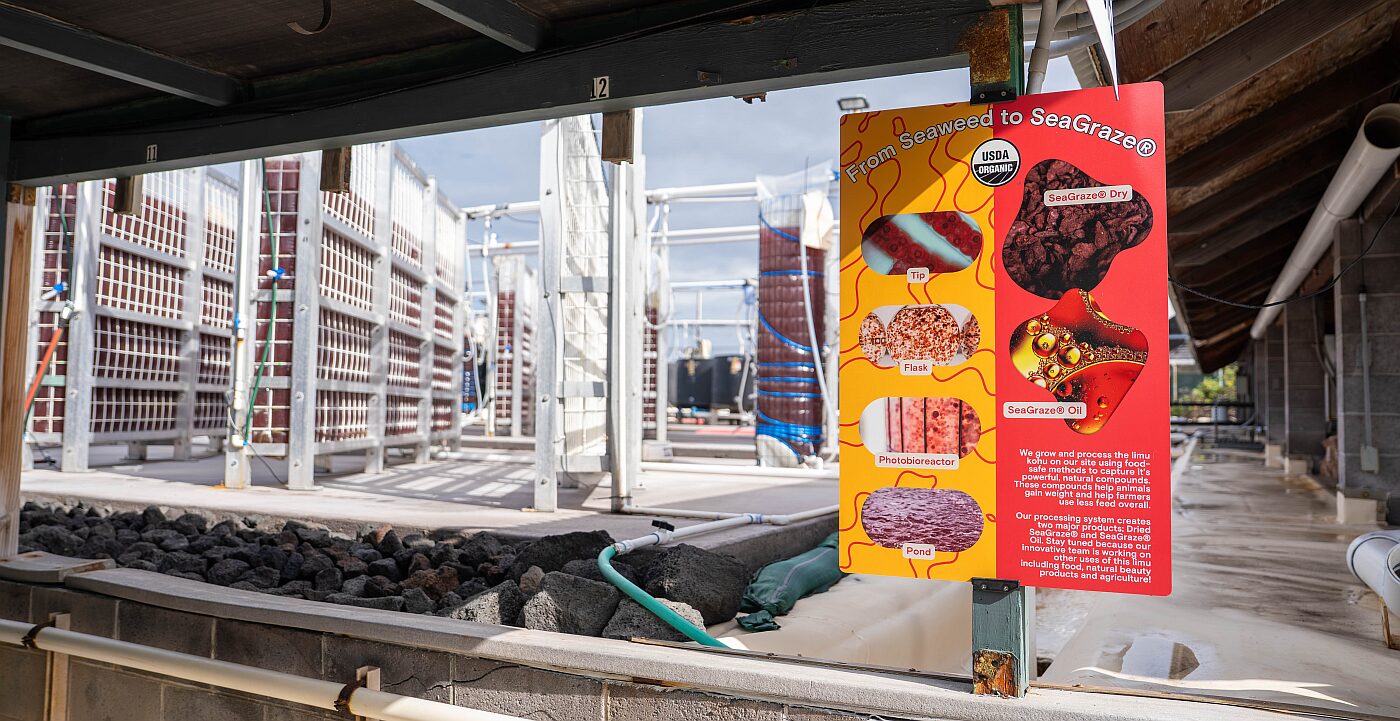
Symbrosia—which makes an oil-based supplement and a dried product using a low-energy drying technique—has a two-phase process for growing Asparagopsis red seaweed, starting with photobioreactors and ending in large open ponds.
According to Carsten Krome, managing partner at Symbrosia investor Hatch Blue, “Symbrosia´s proprietary production method is more cost-efficient than its competitors and we are therefore confident that they will emerge as the winner in what has become a competitive race.”
Kei Honda, head of corporate venturing at new investor Idemitsu Americas, added: “Symbrosia’s approach demonstrates the most cost-effective seaweed cultivation method and carbon reduction technology on the market.”
Where do carbon credits fit in?
As for the ROI for farmers, it will vary, predicted Akbay. A beef producer that goes directly to market with a product should be able to recoup the cost through greater productivity, and then potentially make a profit on top of that through charging a price premium or/and generating carbon credits.
But she added: “There is a clear market today for SeaGraze independent of carbon credit participation. We have customers purchasing the product now who are not participating in carbon offset programs, largely because they do not want the ongoing data collection and liability requirements associated with those markets. That demand demonstrates that producers see value in the product itself, even without carbon monetization.”
But wouldn’t a bolus that can administer small doses of bromoform (the key component in red seaweed that interferes with methanogens in the cattle rumen) over several months be more cost effective than daily seaweed supplementation?
According to Akbay: “From a safety perspective, we do not believe it is prudent to introduce such a high concentration of active compound into an animal at one time, particularly when there are no additional nutritional benefits associated with the delivery system. [Editor’s note: Ruminant BioTech, which is developing such a bolus, says multiple animal studies make it “very comfortable in the safety of the product based on its design” which has a “safety layer between the bolus itself and the formulation on the inside.”]
“We also question the economic viability of bolus-based solutions given the current state of carbon markets. Without consistent, reliable carbon revenues, it is unclear how farmers will pay for products that rely on a single functional mechanism.
“Additionally, synthetic approaches continue to show lower methane reduction performance in side-by-side studies, including work underway at Cornell. This appears to be driven by lower product stability and a less robust bioactive profile compared to whole-biomass systems like SeaGraze.”
Further reading:
ArkeaBio raises $7m, hires Vence cofounder to accelerate vaccine for livestock methane reduction
Provectus Algae nets fresh funds to scale methane reduction seaweed tech platform

Sign up for our weekly newsletter.