
[Disclosure: AgFunderNews’ parent company AgFunder is an investor in Offbeast.]
Baltimore-based Offbeast has developed a manufacturing process designed to integrate into existing meat-processing lines enabling firms to create whole cuts of meat containing a 50:50 blend of beef and plant-based ingredients with a “continuous, muscle-like fiber structure.”
Blended meat is not in itself new. TVP (textured vegetable protein) is commonly used as an extender in processed meats such as burgers and sausages to save money and improve yield at low inclusion rates, while several startups now offer mycoprotein or plant-based solutions to create a new wave of 50:50 “hybrid” meats.
However, Offbeast believes it is the first to create hybrid whole cuts, says cofounder and CEO Insa Mohr.
“The product is enabled by a new manufacturing process designed to integrate into existing meat-processing lines. The technology can increase typical beef margins by two to four times while enabling a lower consumer price.
“I can’t tell you exactly how the process works because we’re filing a patent on it, but the basic rule for our process is that it has to fully work on off-the-shelf equipment; it’s basically the same technology we use for our plant-based stakes, which is already validated. Any company that has a meat sausage or burger line, or a plant-based meat sausage or burger line, can produce this product without any additional equipment.”
‘Whole cut engineering’
Offbeast’s “whole cut engineering” tech—originally developed for plant-based steaks—”transforms unstructured meat such as ground beef or beef fat, into aligned, muscle-like fibers,” explains the firm.
“A plant-based binder connects these fibers while simultaneously acting as an extender, reducing the amount of meat required while maintaining an authentic meat texture.”
According to Mohr, 16 out of 20 testers in a recent taste test rated the blended beef tips as “indistinguishable from conventional meat,” with texture receiving particularly strong feedback.
The tech has already been tested at production scale with capacity of up to three metric tons per shift at Offbeast’s pilot facility in Baltimore, says Mohr, who is now seeking partnerships with meat producers to bring blended whole-cut products to market.
“We are having confidential conversations, but the aim is to implement this with a large partner who already has distribution.”
The process can be used across a range of whole-cut formats, from beef strips and chunks to steaks, and can also be adapted to other types of meat, including pork, with no change to protein content, she claims.
‘A compelling economic incentive’
While partners may be able to make a nutrition and sustainability argument for hybrid whole cuts, the primary drivers are economic, says Mohr: “Whole cut engineering is designed to create a compelling economic incentive for meat producers.
“We saw the focus of the meat industry moving a bit away from sustainability, so we are offering what we like to call ‘backdoor sustainability’ in that there is a strong financial incentive for companies [to do something that] is also sustainable.”
With a blended burger, “inexpensive meat and inexpensive plant ingredients are combined to create another relatively inexpensive product,” she adds. “Our technology is different because it can turn those same low-cost inputs into a significantly higher-value whole-cut product.
“It’s like surimi, which has been around since the ’70s, where they use fish paste blended with some other ingredients [to make imitation crab sticks], and that is a multibillion billion market today. So basically, we’re trying to do with beef what surimi did in the seafood market.”
According to Offbeast’s calculations, the resulting economics can increase margins while still allowing for a lower consumer price.
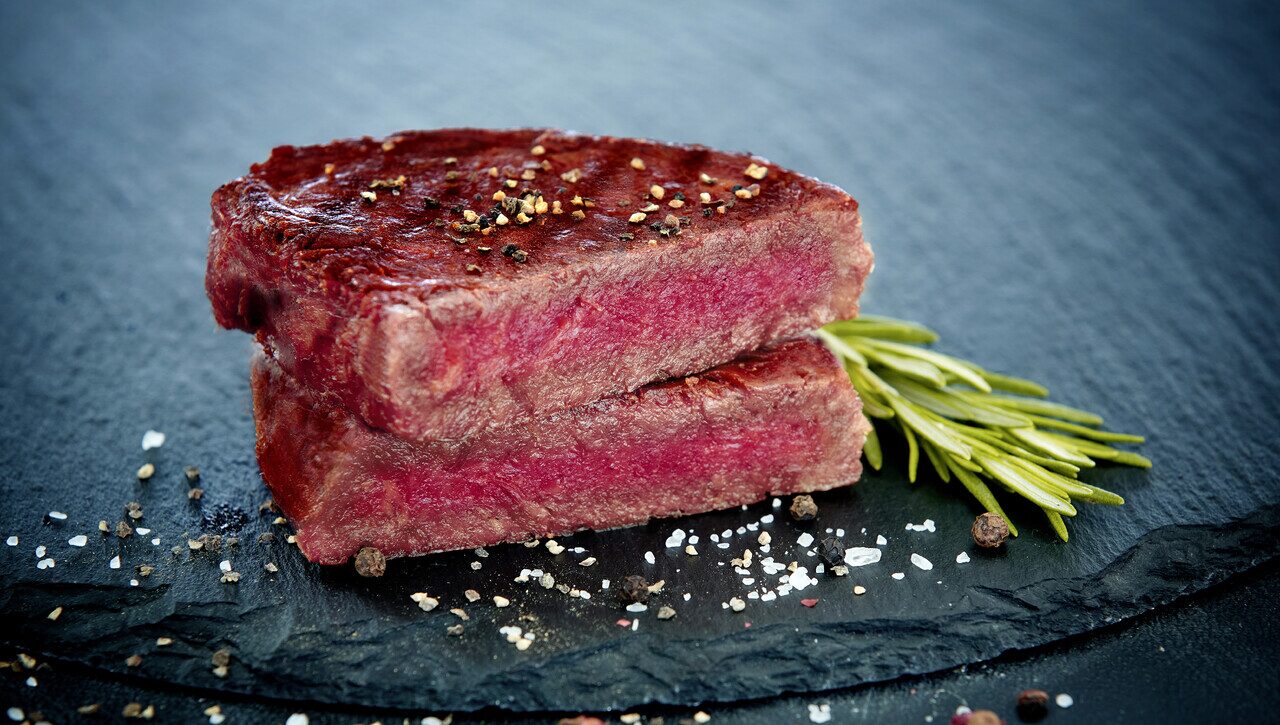
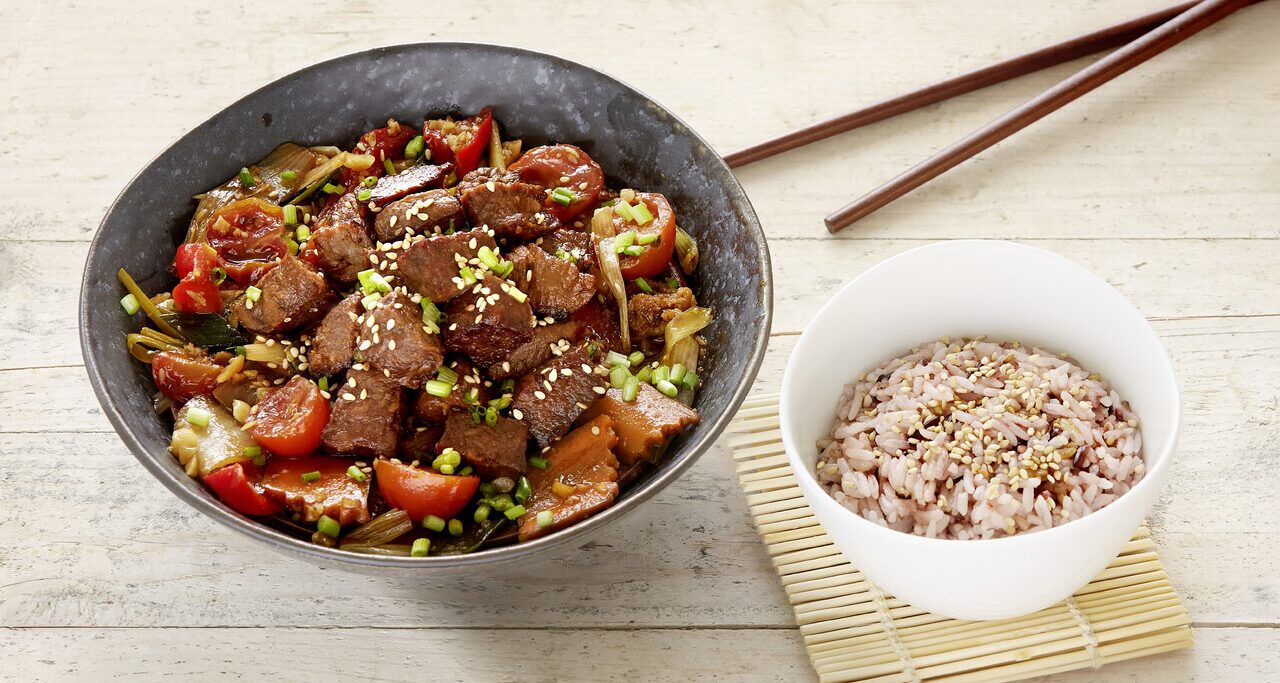
While Offbeast’s tech can produce steaks such as the one pictured above, the commercial focus will be on beef tips, rather than steaks sold in fine dining, says Mohr. “Beef tips are the lowest hanging fruit; it’s a cost sensitive use case. We’re taking unstructured meats and making them into structured meat, thereby kind of upscaling them.”
‘Cross-Fiber Assembly’
Founded by Insa Mohr and Jochen Mueller as Mooji Meats, the firm emerged from Y Combinator in 2022 pitching a high-throughput 3D-printing platform capable of turning plant proteins or cultivated meat cells into structured whole cuts.
It subsequently modified its approach to a proprietary “Cross-Fiber Assembly platform” and relaunched as Offbeast in January 2025. It is currently supplying plant-based steaks to foodservice clients and direct to consumer.
Based on a patent filing, its process starts with TVP, which is hydrated and broken down into small fibrous particles. These are incorporated into a protein dough, typically containing vital wheat gluten, that is formed into larger strands. The strands are then semi-aligned, layered with fat and juice, and compacted into a roast-like structure that can be sliced into steaks.
The idea is to create texture at multiple length scales: smaller fibers contribute chewiness, while the larger, imperfectly aligned strands mimic muscle bundles and give the finished product a more steak-like grain and directional bite.
Hybrid meat
Hybrid meats are gaining traction in several markets, with major supermarket chains in Europe including Lidl, Colruyt and Albert Heijn now experimenting with the products.
JOYN Foods has a blended meat solution (’50Cut’) featuring mycelium from edible mushroom strains, while Black Sheep Foods has developed a next-gen TVP from wheat and fava beans promising a superior bite, fat binding, and flavor carry that can be added at high inclusion levels in hybrid and plant-based systems.
While blended meat can help clients meet ESG goals and cut saturated fat and sodium while boosting fiber, the fact that it can also undercut beef on price is what ultimately seals the deal for customers, say the firms.
“It’s interesting because meat companies have been mixing extenders into sausages since the 70s, but suddenly we started calling it ‘hybrid’ meat,” says Mohr.
The current hybrid trend is arguably a little different as firms are blending meat with a wider range of ingredients at higher inclusion levels.
However, some of the change is also about how to frame the concept both to the industry and to end consumers, she says, noting that a “shiitake-infused” burger sounds more appealing than adding “meat fillers” to sausages.
Further reading:
Black Sheep Foods bets on ‘TVP 2.0’ as hybrid meat gains traction
Rival Foods raises $11.6m Series B to scale shear cell tech for plant-based whole cuts

Sign up for our weekly newsletter.