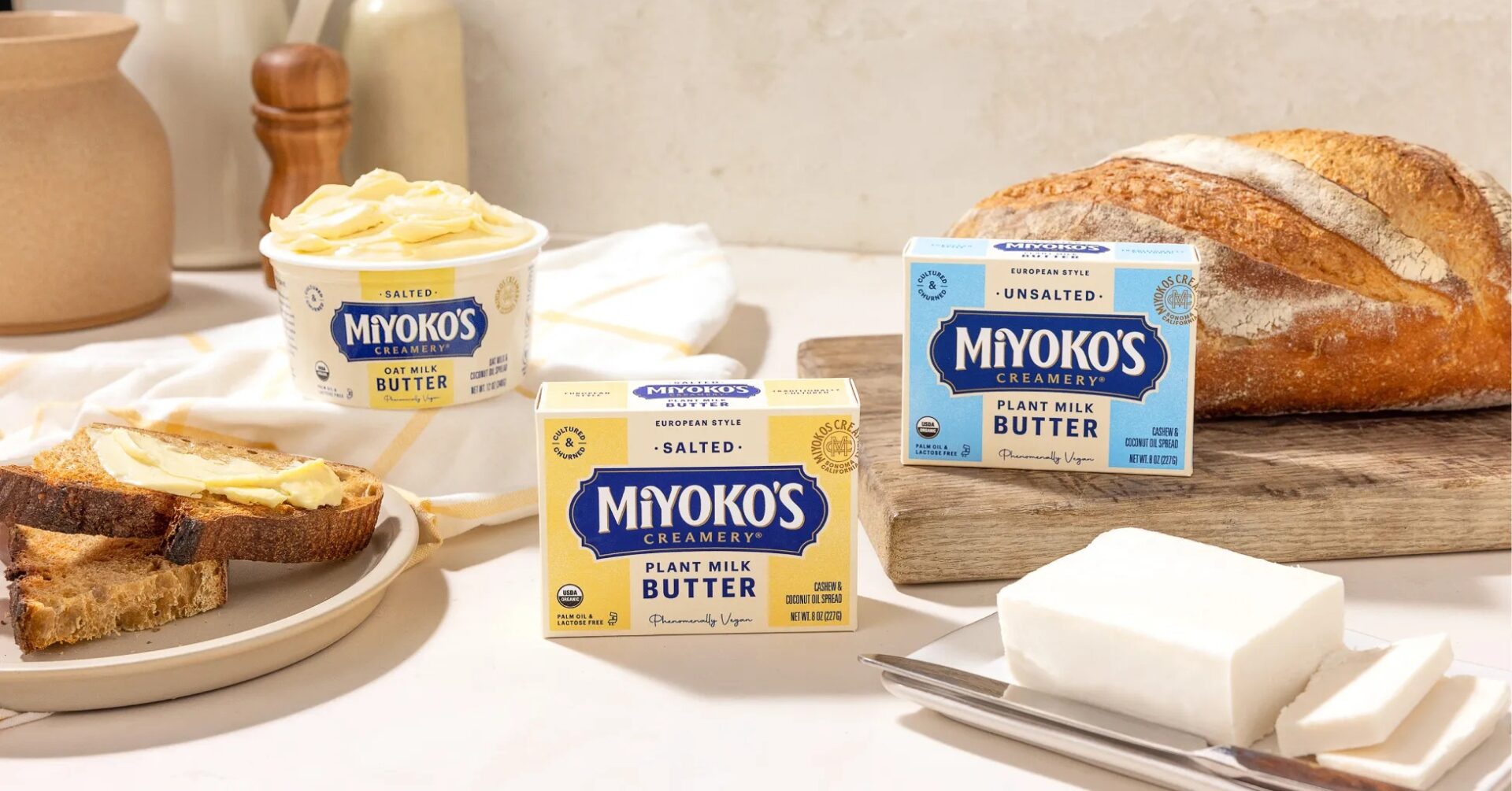
Miyoko’s core products will be back on shelf in select US retailers in May, says new owner Prosperity Organic Foods, which acquired the plant-based dairy brand last November after Miyoko’s entered the Assignment for the Benefit of Creditors (ABC) process.
Retailers have been enthusiastic about re-listing the products, which were outperforming the market, but started disappearing from shelves late last year as Miyoko’s ran into financial difficulties, Prosperity CEO Scott Fischer told AgFunderNews.
“We are very satisfied with the number of our retail partners that are bringing the Miyoko’s products back. We’ve had no accounts that have said no. The discussion is more in terms of timing, especially within major accounts, but we have seen overwhelming support.”
Fischer is also hoping to introduce the Miyoko’s brand to new accounts that Prosperity already has relationships with via its Melt Organic brand, he said. “With Melt Organic we have been very successful in Ahold brands such as Giant and Stop & Shop on the East Coast. The Melt Organic brand is also incredibly successful in the Canadian market, so we are excited about bringing the Miyoko’s brand to Canada, where some of our products are also made.”
New manufacturing set up
Prosperity, which now owns the Miyoko’s brand, recipes and formulations, and a small amount of equipment, has been transferring production of its butters and cream cheeses to new facilities, some of which Prosperity already works with to produce plant-based butters under its Melt Organic brand.
“The supply chain partnerships are now in place, and we’re now preparing to bring back distribution over the next few weeks,” said Fischer. “We’ve done that as rapidly as we can while making sure that we protect the quality and taste that customers expect.”
Miyoko’s slices, shreds, and mozzarella may follow over time, he said, but the immediate focus has been on getting the core butters and spreads back onto the market with the recipes, taste, and packaging that Miyoko’s consumers recognize, supported by a campaign of online and instore support.
Distinct audiences for Miyoko’s and Melt Organic
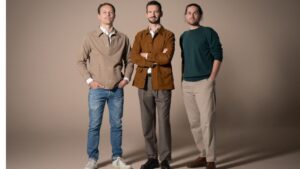
According to Fischer, Prosperity has had productive conversations with Miyoko’s former CEO Stuart Kronauge and has been working with several former Miyoko’s employees with expertise in fermentation to ensure that the products are manufactured with the “same plant-based craftsmanship and fermentation techniques that made the brand iconic.”
He added: “We intend to continue to build on the brand, with strong operational support behind it. We’re working with supply chain partners that we’ve done a lot of work with in the past and that we’ve had a lot of success with in bringing efficiencies while maintaining product quality. We have every confidence that we are going to get efficiencies out of the supply chain and manufacturing.”
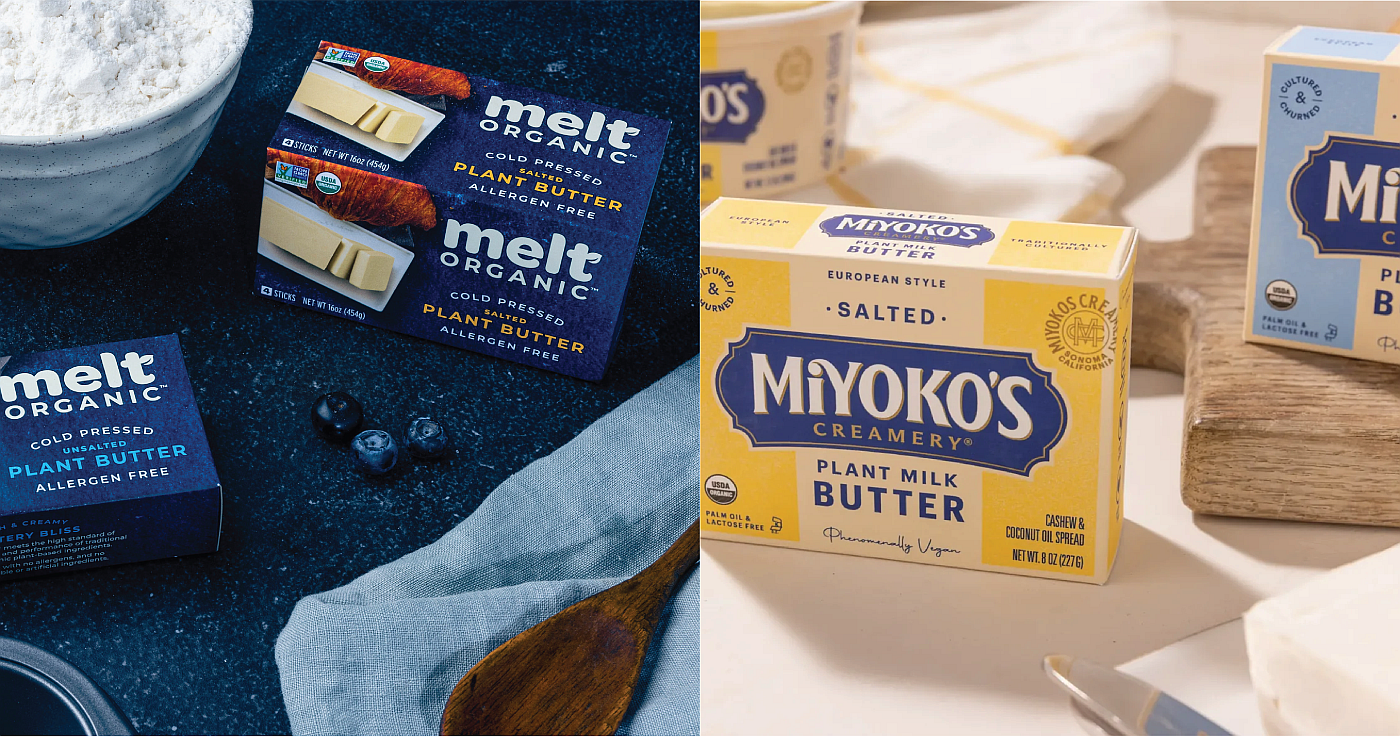
While Melt Organic and Miyoko’s both make organic plant-based butters, he said, the two brands have distinct audiences. The production processes also differ, with Melt Organic blending coconut, high-oleic sunflower, and sustainable palm oil, and Miyoko’s using a proprietary fermentation process with cultures and cashew milk or oat milk combined with coconut and high-oleic sunflower oil.
Asked about pricing, he noted that the cost of plant oils such as coconut, sunflower and palm had all increased in recent months while butter pricing had eased off, but noted the volatility in dairy pricing [with some commentators predicting the Iran war will put increase the price of dairy, which relies heavily on corn as a feedstock, for example].”
He added: “Obviously Miyoko’s sales declined as the products started coming off the market, but while they were still producing, the brand was still growing during a very challenging environment.”
A turbulent few years
Miyoko’s insolvency last October followed a turbulent few years at the firm, which was founded by chef, author, and animal rights activist Miyoko Schinner in 2014. It launched with artisanal cheese wheels made from cultured cashews and later expanded into plant-based butter, mozzarella, cream cheese, spreads, shreds and slices.
The firm, which raised more than $70 million (in public filings and likely more than $100 million) from backers including GroundForce Capital and Obvious Ventures, hit the headlines in early 2023 after it emerged Schinner had been removed as CEO by the board the previous year. Schinner claimed she’d had disagreements with the board over strategy, while board member James Joaquin told reporters he was looking for a CEO with “proven P&L experience who has scaled a larger business.”
The company followed up with a lawsuit accusing Schinner of “hatching a plot” to steal its IP , while Schinner responded with a countersuit alleging she was forced out of her own company after complaining to HR about male executives who “openly denigrated women.”
The parties subsequently resolved their differences after going through a court-mandated mediation process. In August 2023, ex-Coca-Cola exec Stuart Kronauge was brought in as CEO, telling us she saw “significant untapped potential” in the brand.
As part of a plan to drive efficiency, the firm later announced plans to close its production facility in Petaluma, California (which had struggled to produce the products economically) and work exclusively with co-manufacturers.
In a letter sent to shareholders in November 2023, quoted by Bloomberg, Kronauge said the firm was implementing a “financial stabilization plan” and exploring a “range of strategic alternatives, including selling the business”. According to the letter, sales hit $40m in 2021 but dropped to $33m in 2022.
Founder Miyoko Schinner ‘not associated in any way’
Speaking to us after submitting the winning bid for the firm last November, Fischer said: “The issue at Miyoko’s was not declining sales. You need a commercial model that enables you to survive. When liabilities exceed assets there has to be something wrong in the P&L. The fact that they had more than $100 million in investment but were not sustainable financially is very disappointing.”
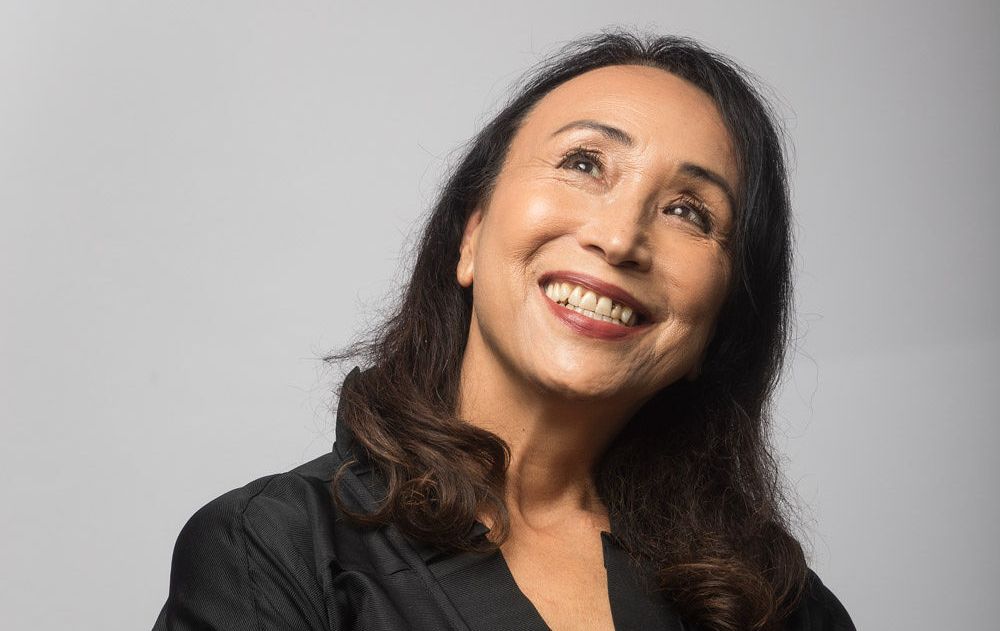
Miyoko’s founder Miyoko Schinner, who launched an unsuccessful bid to buy back the brand she created, told AgFunderNews at the time: “I am not associated in any way, and while they now own the trademark ‘Miyoko’s,’ they cannot allude to my involvement nor endorsement not use my name or image in any way.”
The ‘about us’ section of the brand’s website, for example, includes a timeline of the company’s history and evolution, but does not mention its founder.
Further reading:
Breaking: Miyoko Schinner fails to buy back namesake brand
Exclusive: Miyoko’s founder plans bid to buy back brand from liquidator