
[UPDATED Jan 21 to reference new docs issued by the FCC.]
On December 22, the US Federal Communications Commission (FCC) sent shockwaves through the US drone market, adding not just market leader DJI, but all new foreign made drones and critical components to the covered list of communications equipment and services “deemed to pose an unacceptable risk” to national security.
In an instant, this cut off FCC authorization for any new drone models—or essential components such as motors, flight controllers, navigation systems, and batteries—manufactured outside the US, a sweeping intervention in a sector where overseas suppliers dominate.
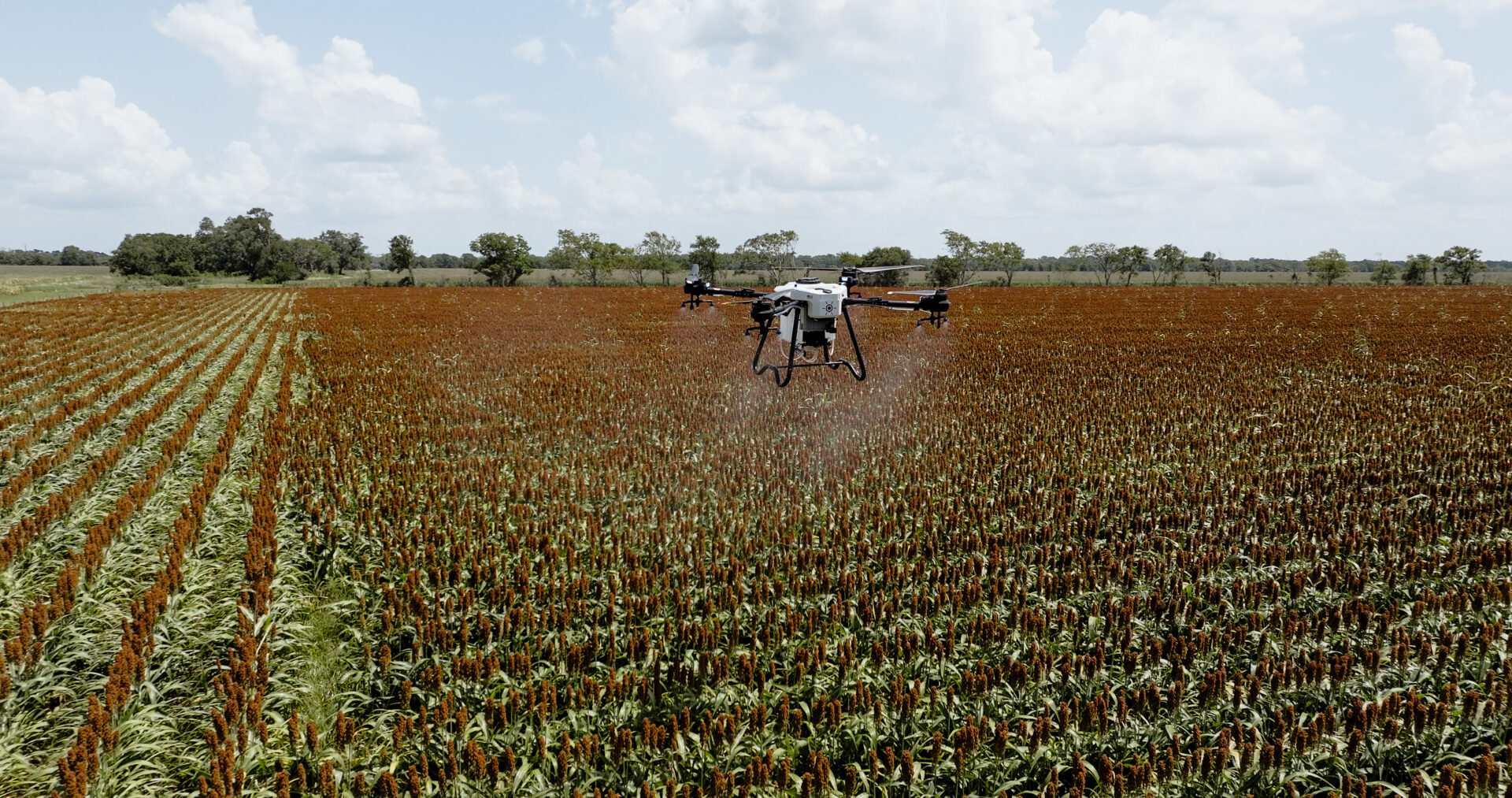
Crucially, the restrictions do not apply to foreign-made drones that already hold FCC authorization. That carve-out has averted an immediate supply shock, allowing US farmers to continue buying and operating existing models—no small concession in a market where, by DJI’s own estimate in 2024, roughly four out of every five ag spray drones used by US farmers were DJI-made.
Impacted companies can also apply to be exempted from the covered list by submitting requests for conditional approval, while certain drones and critical components on the Dept of War’s Blue UAS Cleared List or those that qualify as “domestic end products” under the Buy American Standard are exempted until Jan 1, 2027, according to a public notice issued by the FCC on Jan 7.
A Jan 21 update from the FCC also clarifies that drones from DJI, Autel, and other covered foreign manufacturers that were already authorized before Dec. 22, 2025 can continue to receive firmware and software updates through at least January 1, 2027.
But while today’s fleets remain legal, tomorrow’s upgrades are in doubt. Drone technology evolves rapidly, with manufacturers rolling out new platforms, sensors, and flight systems on a near-annual basis. Blocking new authorizations therefore places Chinese players such as DJI and XAG at a long-term disadvantage in the US.
The result is likely a rapid reshaping of the market, as domestic manufacturers scale up and overseas firms explore partnership models—licensing designs or software to US companies that can assemble and manufacture drones domestically.
According to FCC chairman Brendan Carr, the FCC is now poised to work with US drone makers to “unleash American drone dominance.”
Short-term disruption, long-term opportunity
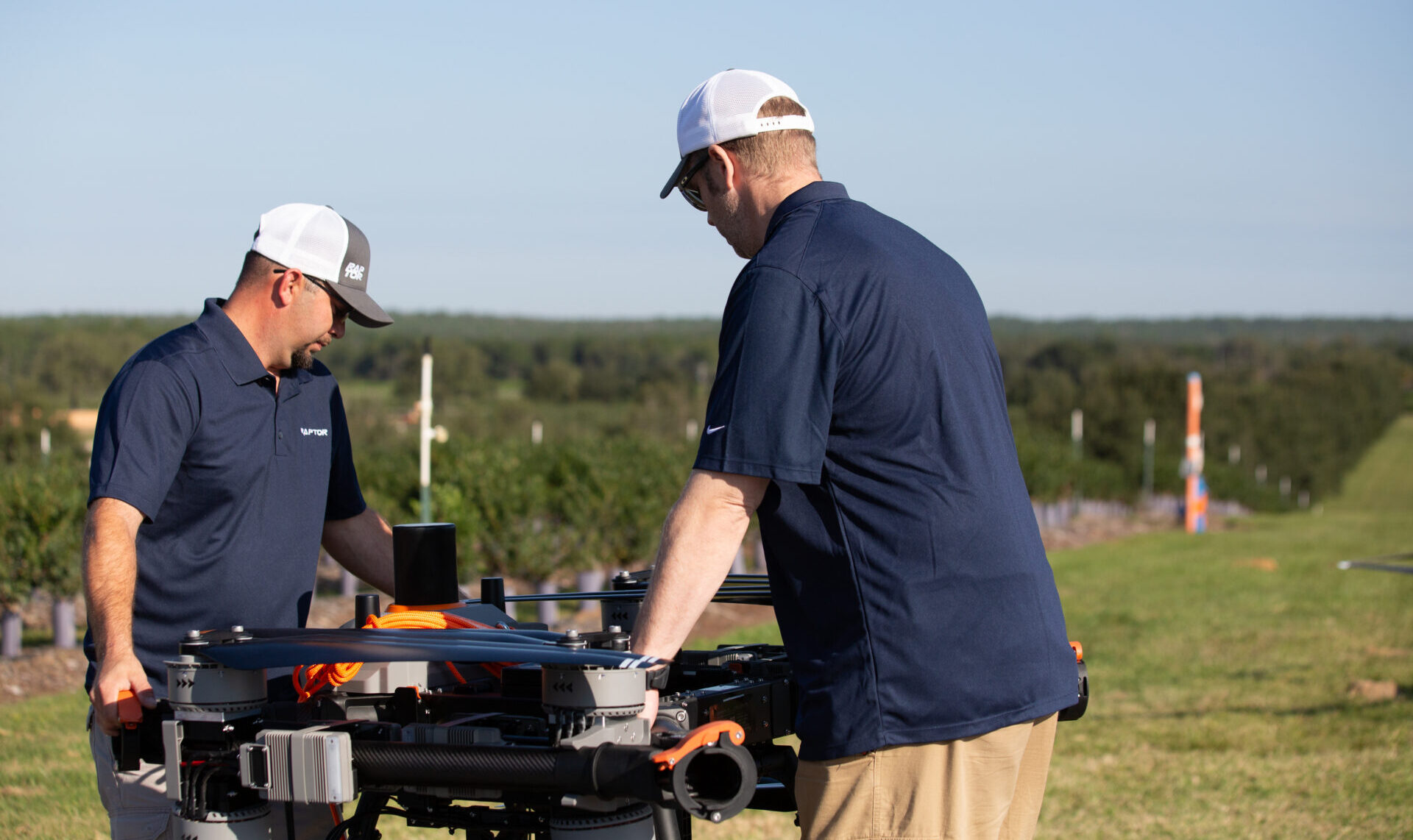
How smoothly this process will work remains to be seen, says Bryan Sanders at US-based Raptor Dynamic (formerly HSE-UAV), which supplies spray drones from a variety of providers. But whatever happens, the landscape is going to change significantly, he predicts.
In the medium and longer-term, we’ll likely see significant investment in domestic drone production, he says. But in the short term, “there’s going to be an innovation slowdown because all of the things that Chinese manufacturers were going to roll out in 2026 and beyond such as the latest flight controllers and LiDAR will be halted.
“This will have consequences for American farmers trying to keep up with our global competitors, because they’ll still have access to all the new stuff from DJI and others.”
Domestic players such Hylio, which manufactures spray drones in Texas, will likely pick up new business, along with Vermont-based Ceres Air, which is beginning US manufacturing of drones, predicts Sanders. “Ceres Air built its Black Betty Stacked first aircraft on a proven cargo platform from [Chinese firm] Vector AGR. Ceres fully redesigned the aircraft to its specifications and quality standards, so it’s tailored to the needs of American agriculture. The new US- made Black Betty models run on Ceres proprietary software and are now available to order.”
Agri Spray Drones, formerly a key US dealer of DJI spray drones, is also planning to set up US manufacturing for drones developed by Chinese firm EA Vision, while Exedy Drones, a division of Exedy Global Parts (owned by Japanese firm EXEDY Corporation) is building drone manufacturing capabilities in Michigan.
Other players to watch in the US include California-based Pyka, which offers alternatives to boom sprayers or manned crop-dusting aircraft that are used in broadacre crops in large farming operations, and SiFly, which recently emerged from stealth with drones its claims to fly faster, further, for longer, than anything else on the market.
The component bottleneck: motors, batteries, and LiDAR
What is still a little unclear, says Sanders at Raptor Dynamic, is how sourcing will work for US manufacturers in the short term. Notably, production of key components such as batteries and motors—which are now on the FCC’s covered list—cannot switch from China to the US overnight, he says.
“The process of building most of the covered components is actually fairly easy to do in the US, which has high tech manufacturing facilities that can already make those kinds of things once you have the design and blueprints,” he claims. “The most challenging things to make here at scale from what I understand are LiDAR [sensor tech used by drones for navigation and obstacle detection] and batteries.”
He adds: “Another question mark right now is if you have an aircraft that’s already FCC approved, is the battery in it [which didn’t use to be something the FCC would separately regulate] approved for use in a new drone? There’s some ambiguity there.
“There is a waiver process where you can submit for individual exemptions, however. We haven’t seen how this works yet, but I would assume that if you’re an American company, and you’re already making, say, five out of six components in the US but there’s one you cannot get here yet, I would hope that you could go to them and say ‘I need six months before we can do this domestically,’ for example.
“The first thing I’d do is advise everyone to look at the frequently asked questions section of the FCC website on how this will work.”
What farmers can still buy—and for how long
So what legacy foreign-made drones are still available for the US ag industry in 2026/2027 before domestic production can ramp up?
The situation with Chinese firm DJI—the clear market leader for ag spray drones in the US—is distinct, says Sanders. Existing DJI models can be legally bought and deployed under the new FCC rules. However, some shipments coming into the US have recently been blocked by US Customs and Border Protection on the grounds that DJI may be using forced labor, claims that it says are “unsubstantiated and categorically false.”
For other drones made in China from firms such as EA Vision, Vectoragr, and XAG, supplies have generally been good, say distributors. For DJI some dealers are still supplying them although it’s unclear if they are coming in from third countries or if DJI has been able to get certain shipments direct from China approved.
“The question for the longer term is whether distributors of these [legacy FCC-approved] Chinese drones will continue stocking parts and supporting customers over time,” says Sanders.
At Raptor Dynamic, he says, “We wanted to be Ceres Air’s first distributor because we saw the writing on the wall for Chinese-made drones. We knew we needed to team up with a company with a really solid plan on making drones in the US, so I feel like our dealers and company are really well positioned and I’m excited for what’s to come.”
US-made drones from Ceres Air use some shared Vector AGR tech, says Sanders. “But there are big differences from the existing Vector AGR models such as the HD580. Unlike the Ceres’ platform, the HD580 was designed and manufactured entirely by Vector AGR – it is a 20 gallon unit, runs on Vector AGR software and has an advanced radar array for obstacle and terrain following. Black Betty on the other hand is 31.7 gallons, uses LiDAR and radar, and runs fully on Ceres Air software.
“All of the data is housed and stored here in the US along with the techs. That makes flight log analysis, bug fixes and updates happen in a fraction of the time versus working literally across seas. Operators of these drones are going to love that, and I think dealers who are supporting them will too.”
Whether DJI or XAG will follow a similar model remains to be seen.
According to a DJI spokesperson, the Chinese firm “remains committed to the US market.”
The spokesperson did not comment on whether DJI has plans to manufacture products in the US, and stresses that the FCC allows firms to submit requests for individual exemptions to its blanket ban on new foreign-made drones or critical components, although it notes that the new restrictions are “have not been grounded in evidence.”
Whether the Dept of War or Homeland Security (who will review such requests) will take a dimmer view of waiver applications for products from China, vs, say, Japan or South Korea, is unclear. According to the FCC, firms making such requests need to show that they “do not pose unacceptable risks.”
When one door closes: US production via foreign partnerships
Taylor Moreland, founder of Missouri-based dealer and service provider Agri Spray Drones, which has worked with DJI for several years, says he is now focused on establishing domestic production for drones designed by Chinese firm EA Vision under license, adding: “When one door closes, another one opens.”
However, US production won’t happen overnight, and Moreland will likely have to secure waivers to source some components from overseas in the short term, he says.
“If we wanted to build 5,000 spray drones here in the US in a one-year time frame, that would be virtually impossible. I’d say motors and batteries are the two things that would be the most difficult to scale quickly. Everything else can be produced here in the US with non-Chinese components. But we’ll have to work through the process [of seeking exemptions for individual components] as motors and batteries have never had to have FCC approval before.”
He adds: “If the FCC would accept a plan for US manufacturing that would include continuing to source the majority of the components from China for the next 12 or 24 months, say, but by year three, you phase in US manufactured components, then that wouldn’t be too difficult.”
In the meantime, as manufacturing ramps up, Agri Spray Drones will continue to supply existing Chinese models that already have full FCC approval, he says.
Hylio accelerates as ‘Made in America’ demand surges
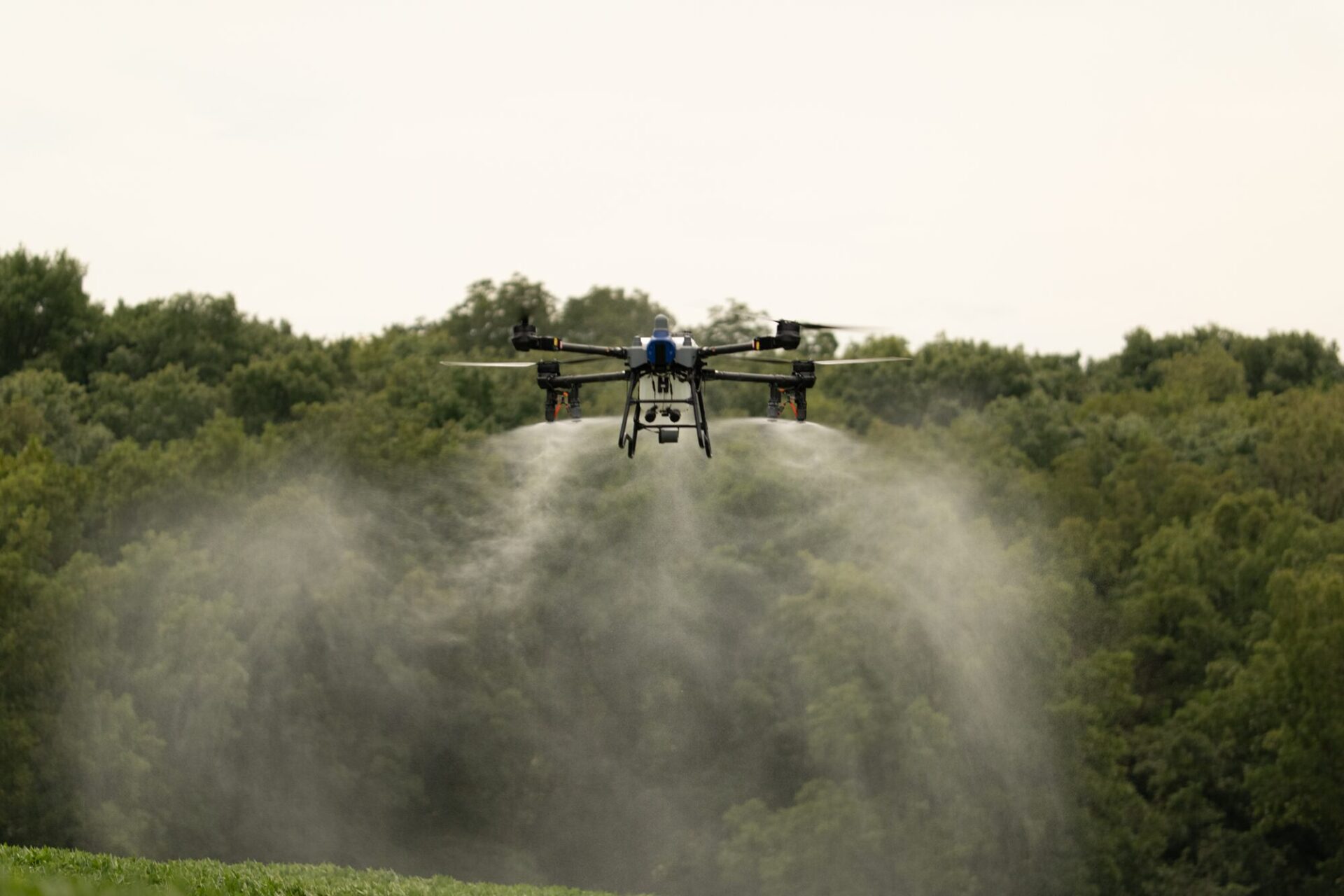
Texas-based ag drone maker Hylio, meanwhile, is aggressively ramping up production to meet demand after successive fundraising rounds on equity crowdfunding platform StartEngine.
The firm, which is positioning itself as a “Made in America” option for farmers in an “shifting global landscape” has proprietary software (“AgroSol”) that integrates with clients’ existing systems, says CEO Arthur Erickson. It also has swarm control with approval to operate up to three heavy duty drones simultaneously with one pilot, robust hardware, and precision ag tools such as spot-spraying, he says.
This is coupled with automated EPA/FAA reporting, work order management, billing, and other tools via Agrosol to help embed its products within the structures of big corporate customers.
“In 2025 there was a lot of ‘wait and see’ from customers and investors, with people saying I’m not going to make a decision until I see what happens with DJI,” he explains. “And then on December 22, the FCC came out against all foreign drones and critical components.
“We were never directly lobbying for it, and we’ve been competing with DJI, XAG and others for years and growing the whole time on merit. But of course, the FCC ruling benefits us and we’re going to make hay while the sun shines.”
While some of Hylio’s components are made in China, notably its batteries, the supply chain will evolve over time, he says.
“It was a surprise that the FCC unilaterally expanded its proclamation about critical components on the covered list to include motors and batteries, which is in a lot of ways impractical because we’re not yet making them on an appreciable scale for the drone industry in the US.
“You can get batteries for drones from Korea, Taiwan, and other places, although anything made in a foreign country is now on the covered list. But I have an expectation that they’re going to give waivers for motors that are made in Korea, for example.”
He adds: “In 2025 our revenue was just under $13 million and 2026 is looking good. We are not just an idea anymore; we’ve got products on the market and we’re making good, healthy cash returns. We’re going to carry on with the crowdfunding on Startengine, but we’re also raising on the private side. Our production rate right now is about 2,500 units per year but we hope to grow that to 5,000+.”
“We’re building them as fast as we can, and we have a backlog or production queue of about six weeks, so if you buy one today, you get it about six weeks from now. I think the US market can stomach 8-10,000 spray drones a year at least, right now. And so even at full capacity in this building, we can’t supply the entire market as one company, but I’ll damn well try; I’m going to take as much of the market as I can.”
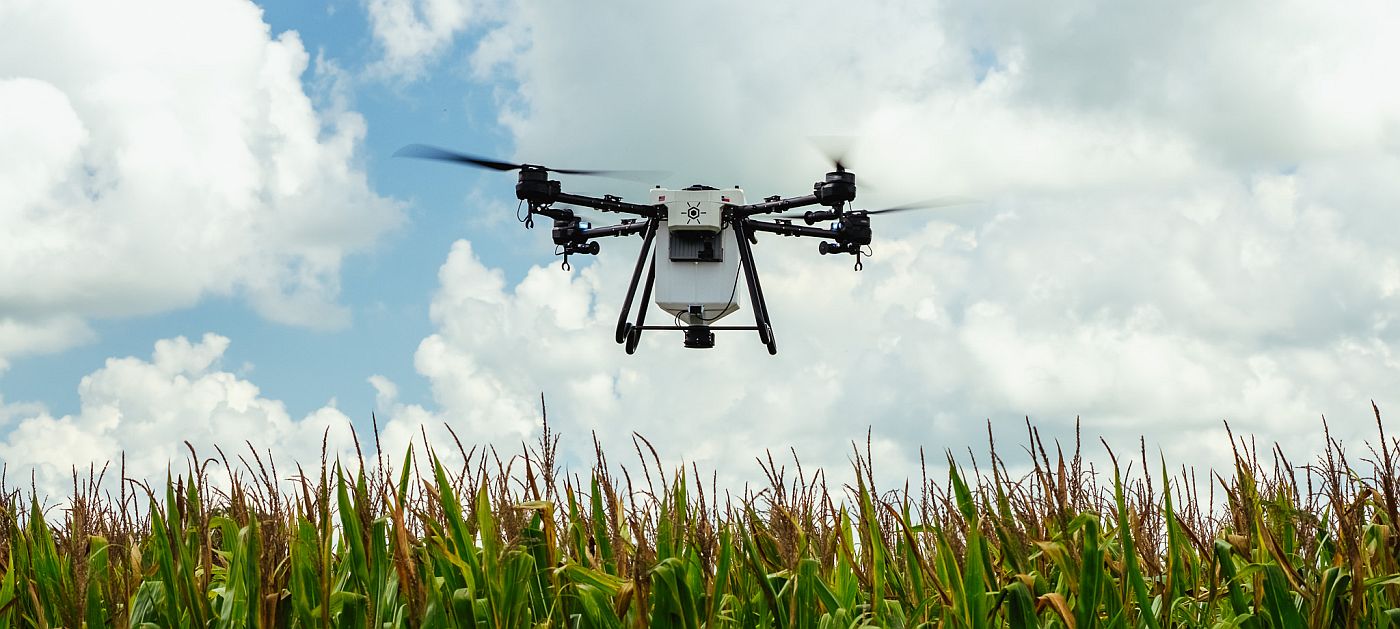
From hardware to software: rebuilding the spray-drone stack
Mariah Scott—who recently launched a new company called American Autonomy Inc to develop software for US drone makers—says it became pretty clear last year that DJI’s future in the US was bleak.
Scott, who was previously CEO at DJI dealer Rantizo, sold the spray services part of the business last year: “We were pretty active working with other spray drone distributors trying to raise awareness about impending bans on DJI but about six months ago, we had a strategy session saying, OK, what do we think is going to happen, and how do we turn this chaos into an opportunity?”
American Autonomy builds operating software for drones that gives farmers control of their own data and connects to other applications that farmers use such as John Deere Operations Center, she says.
“In October, we announced our first partner, Exedy Drones, an automotive manufacturer that will be building drones in Michigan and wanted a partner who could build high quality software and understood agriculture. We’re now going out and talking to other manufacturers who are also trying to get into the market. We’ve got probably close to 50 that we’re having conversations with right now.”
Further reading:
Ag spray drone leader DJI faces uncertain future in US; sector braces for realignment
Faster, further, longer: Can SiFly upend the ag spray drone market?
Robot cowboys: GrazeMate bets on fully autonomous cattle mustering drones
Drone maker DJI appeals court ruling: We’re not a ‘Chinese military company’