Multiple startups now offer tech for moving and monitoring cattle, from solar-powered smart collars (Halter, NoFence) to operator-controlled drones (SkyKelpie). New player on the block GrazeMate is offering a third, completely autonomous drone option that ranchers can set in motion with an app… and then get on with the day job.
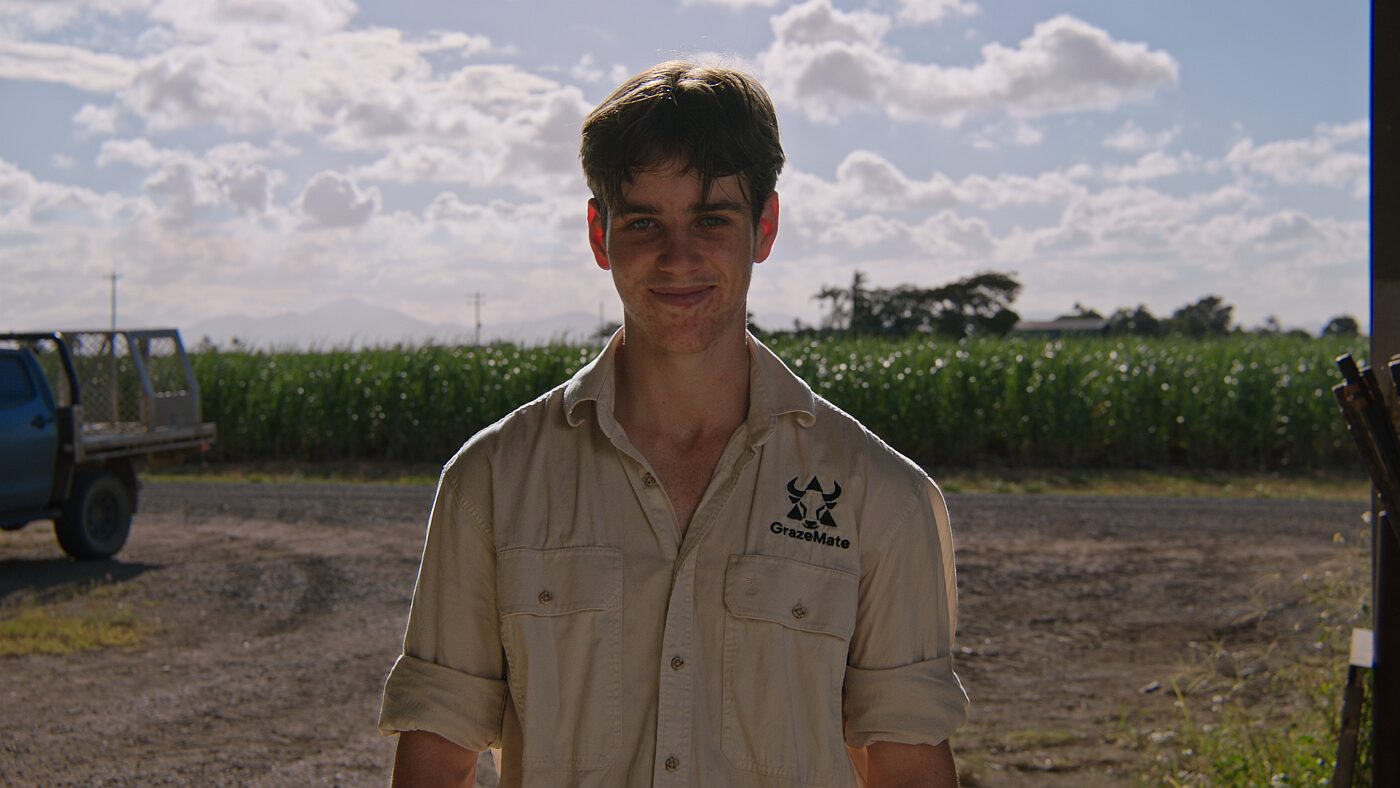
The brainchild of 19-year-old robotics and ML enthusiast Sam Rogers, who was raised on a cattle station in Australia, GrazeMate has just secured $1.2 million in pre-seed funding led by Y Combinator, with participation from Antler and NextGen Ventures.
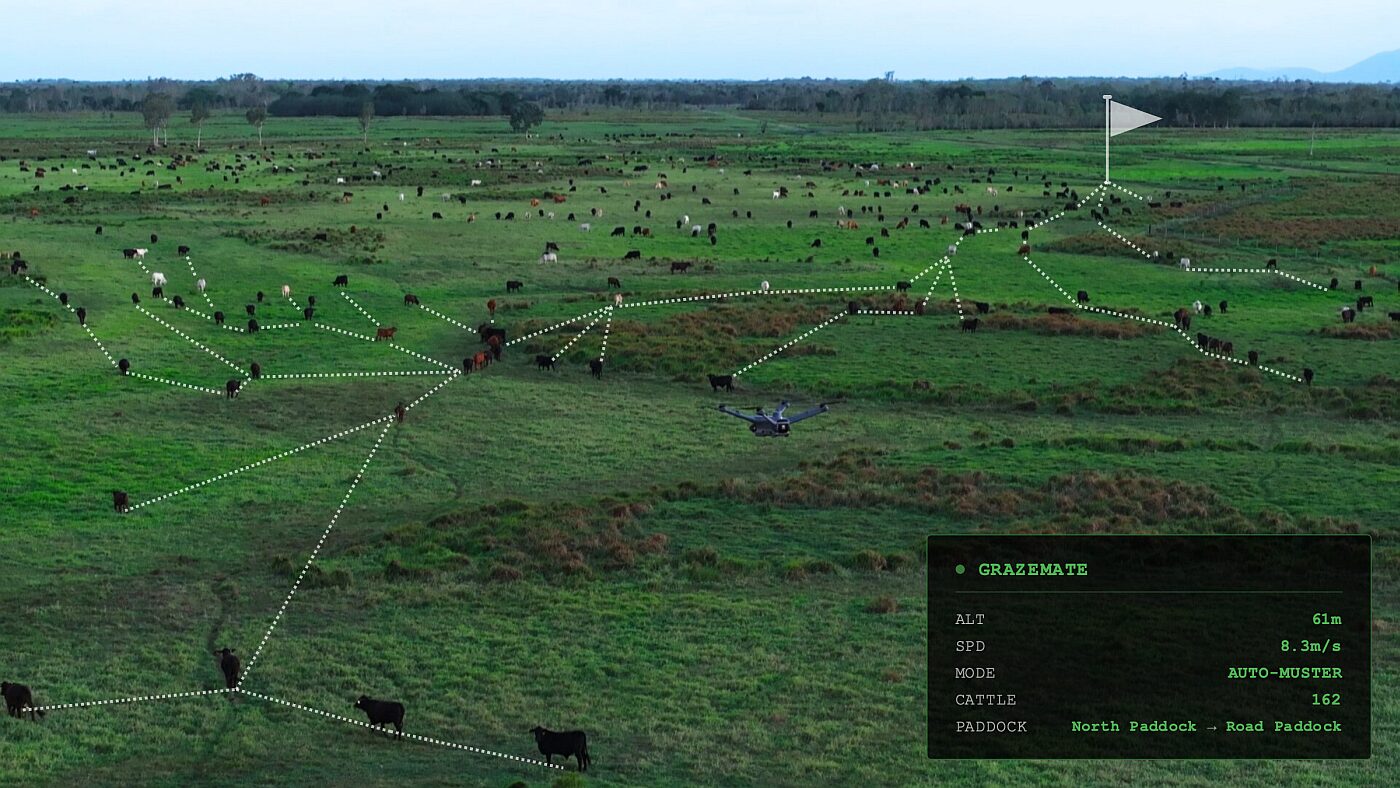
The tech, which Rogers is currently running on DJI drones (more on that later), utilizes proprietary reinforcement learning models that enable drones to autonomously respond to cattle behavior in real-time, mimicking stockmanship techniques that took generations to master.
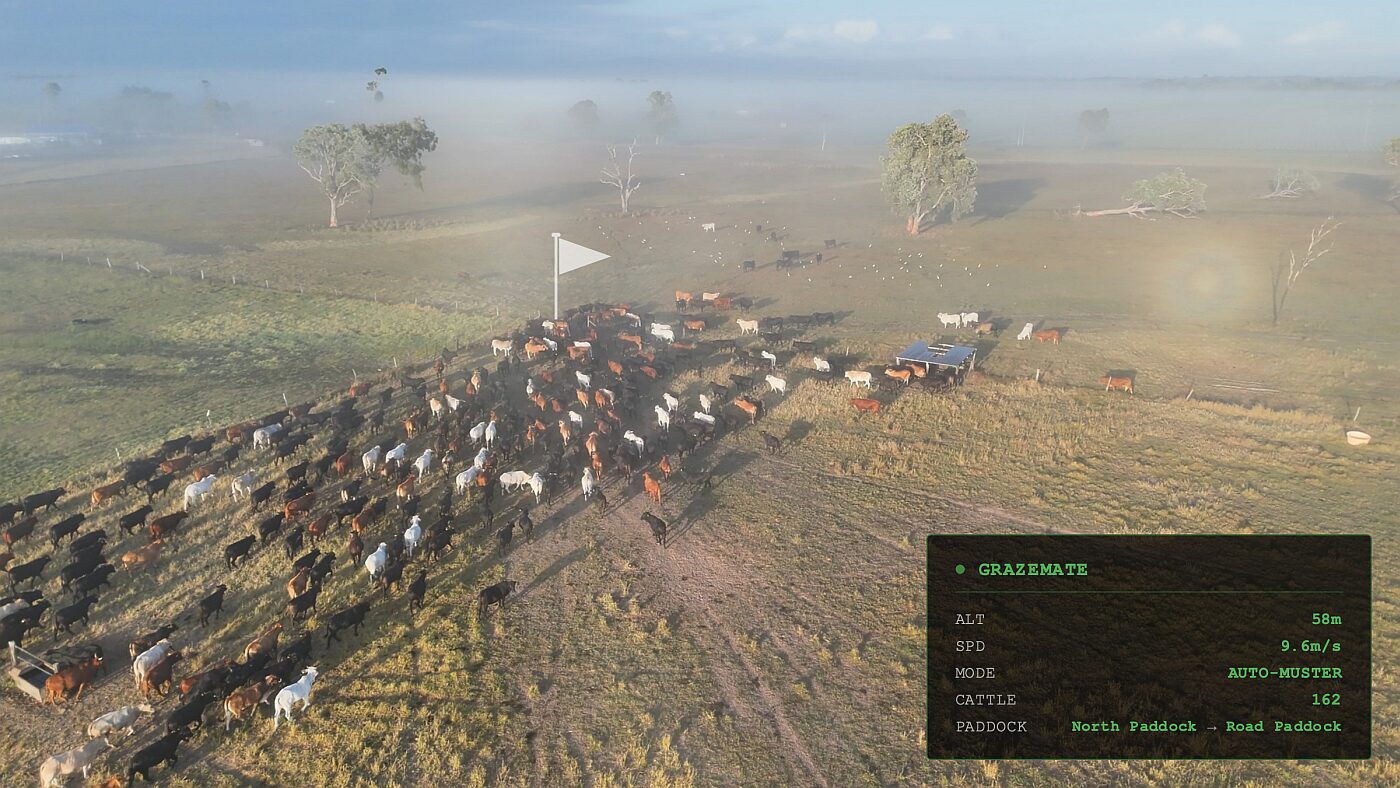
The first generation—controlled by a mobile app—focuses on mustering cattle, flying above cows to move them from one area to another in rotational grazing systems or from pasture to a paddock (or vice versa) on a seasonal basis. The drones can also take pictures of water troughs and fence lines, enabling ranchers to see at a glance if action is needed.
The second generation—in beta -testing mode—incorporates more advanced analytics, enabling ranchers to estimate cattle weight and dry matter availability, says Rogers. He is currently working with two pilot farms in Queensland and New South Wales mustering thousands of cattle per week over 1.7 million acres, and is now turning his attention to the US market.
“The hair on fire problem we’re looking to immediately address is that skilled labor is really difficult to find and often very expensive. And then we’re looking at what’s possible with monitoring and analytics.”
Lower maintenance than operator-controlled drones, cheaper than smart collars?
Typically, he says ranchers will spend hours on motorbikes, horses, or trucks to move their cattle around. GrazeMate enables them to upload info about their land into its platform and leave the drone to do the rest. “Farmers push a button on their phone, a drone autonomously guides animals from one paddock to another, and they get a notification when the herd has been moved. As long as the gates are open, they can do it from their couch, a tractor, or anywhere in the world.”
He added: “There are some great solutions emerging in this space. SkyKelpie [fellow Australian startup], for example, has done amazing work teaching farmers to operate drones for mustering. We’ve decided to come at it from a different angle, where we’re teaching the drone itself to make herding decisions. We’re particularly excited about the time this approach is going to be able to return to ranchers.”
While virtual fencing tech is attracting a lot of attention, meanwhile, cost is a challenge for some ranchers, he claimed. “When you are needing to deploy advanced technology on every single animal, it can become really difficult, particularly on larger properties, to make those economics make sense. Whereas we’re quite bullish about what’s possible by using one bit of hardware that can scale to thousands of cows.”
Rather than selling hardware, GrazeMate leases its drones and supplies software to customers who pay a monthly fee, said Rogers. And while some ranchers may only muster cattle on a seasonal basis, many are constantly moving cattle as part of regen ag/rotational grazing protocols or would move them more if they could afford the labor to do it.
Stress-free cattle
Cows, he says, respond well to the drones. “If cows starts running, we back away immediately as we want to make sure they’re moving calmly and efficiently. So we’ll look at everything down to the angle of an animal’s neck. Typically, if the head is down, it shows they’re not stressed and they’re moving along well. As soon as it pops up, our models are trained to back away.
“The great thing about an autonomous system is that you can also do things much slower than you may need to if you’re running with a whole team and helicopters and so on. I used to spend hours moving cattle, and it wasn’t an awfully pleasant job, and the biggest limitation that farmers and ranchers have is their time. Our platform gives farmers more autonomy about how to spend their time, so we’re seen some really positive feedback.”
While drone maker DJI has recently been blocked from introducing new models to the US market, existing models serve GrazeMate’s needs well, and remain fully supported by DJI, he said. “Being able to lean on that support and maintenance network has been huge because you have to have reliability. It either works 100% or it doesn’t work at all.
“We work with the off-the-shelf hardware and then build out our own computers that go on a base station with the charging station for DJI and talk to the app.”
Should there be further restrictions on DJI or if existing models no longer serve GrazeMate’s needs down the road, “We can reasonably quickly switch the hardware platform required,” he claimed.
A DJI spokesperson told us: “Existing DJI products can continue to be purchased and operated as usual. The FCC’s fact sheet also indicates that new products may, in the future, be cleared for launch based on determinations made by the Department of Defense and the Department of Homeland Security. DJI remains committed to the US market.”
The business model
From a commercial perspective, said Rogers, “The basic model must make sense [for GrazeMate to make money], where we provide end-to-end mustering support, and then, depending on what ranchers need and what’s useful to them, there’s additional upsells that can go in with that.
“We price based on the size of the ranch, primarily, how many cattle you’re running, and how much we can help with that. What we can say is that it will more than likely be less than you’re currently spending on mustering alone.”
As for a sweet spot, he said, the more you move cattle, the clearer the business case. And given the labor savings, GrazeMate users could also afford to move their cattle more often than they do currently, which has clear advantages, he said.
“If we can help you move your cattle more often and help you run an operation that’s more efficient with its grass usage, you can have a better impact overall, on grass, the soil, the cattle and the ranch.”
Further reading:
Ag spray drone leader DJI faces uncertain future in US; sector braces for realignment