
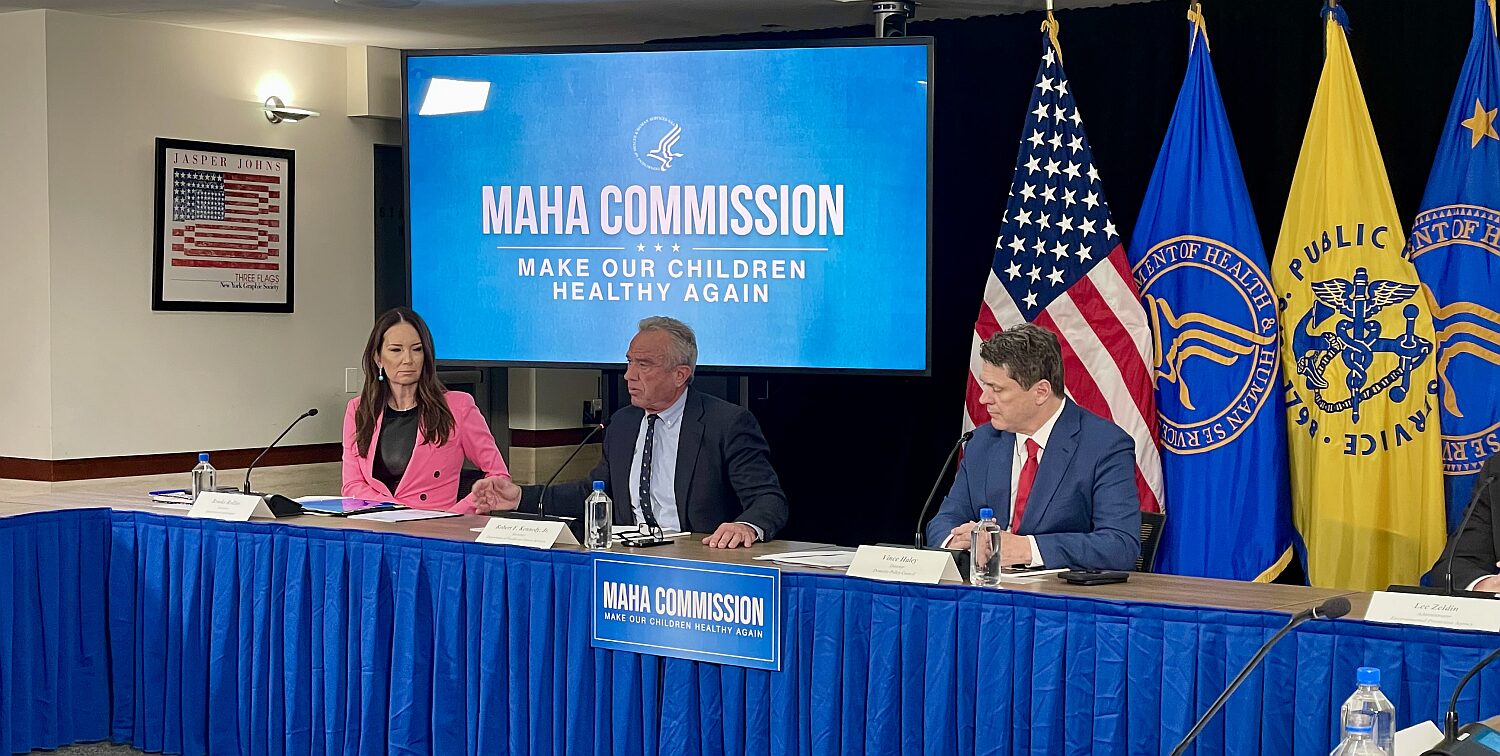
The final report from the Make America Healthy Again Commission doesn’t recommend stricter regulation of ultra-processed foods and pesticides, two top goals of the MAHA movement that fueled the rise of Robert F. Kennedy Jr.
Instead, the report — released by U.S. Health Secretary Kennedy today — mainly advises more research and voluntary industry action on ultra-processed food, synthetic food dyes, and pesticide use. The outcome was widely expected after a leaked draft in August indicated that the Trump administration had shifted away from linking specific chemicals, including the pesticides glyphosate and atrazine, to chronic health issues.
“The report has a lot of ideas for actions that really could improve health, but is short on specifics and weak on regulatory action,” Marion Nestle, PhD, M.P.H., Paulette Goddard Professor of Nutrition, Food Studies, and Public Health Emerita at New York University, told AgFunderNews. “Its overriding message is still ‘more research needed.’ It does not say nearly enough about what needs to be done to improve the diets of America’s children.”
She added: “The big issue for me is what are they going to do about food marketing to children? They will “explore” “potential” guidelines for industry. Really? That’s all? This is such an opportunity. I sure wish they had taken it.”
According to the report, “USDA will prioritize precision nutrition research,” something that NIH is already doing, and which some public health experts view as “the antithesis of public health research, the kind that really will make Americans healthier.”
MAGA vs MAHA
Several commentators also highlighted the clash between MAHA (Make America Healthy Again) and MAGA (Make America Great Again), arguing that the former’s stated goals are undermined by the latter’s policies.
The American Heart Association for example, noted that cuts to SNAP and Medicaid, “combined with the administration’s proposed cuts to other nutrition programs, will reduce access to healthy foods and critical health care services for the very families who need these supports the most.”
Other commentators also noted that USDA has ended two programs, totaling almost a billion dollars in funding, that helped schools and food banks make purchases from local and organic farms.
For the most part, the report will “bring a collective sigh of relief in food industry boardrooms, since it leans heavily in the direction of government deregulation, voluntary corporate action, and research likely to be decimated under the President’s proposed budget,” added Dr. Peter Lurie, president at the Center for Science in the Public Interest.
“If MAHA adherents were looking to its movement’s leaders to tackle chronic disease, they should be horrified by the administration’s actions on food assistance, healthcare, and medical research.”
Ultra-processed foods definition may inform future policy
The MAHA report is the Trump administration’s strategy to combat the “childhood chronic disease crisis” by targeting four issues: poor diet, chemical exposure, lack of physical activity and chronic stress, and overprescribing medicine.
HHS said it’s pursuing “rigorous, gold-standard scientific research to guide informed decisions,” although critics note that RFK Jr’s recent statements and actions around vaccines and other public health issues directly contradict expert advice.
The report directs federal agencies to study Americans’ cumulative exposure to chemicals and farming techniques that reduce pesticide use. The administration also plans to define ultra-processed food for “potential future research and policy activity,” continue working with industry to phase out synthetic food dyes, increase the testing of infant formula for heavy metals, and update the Dietary Guidelines for Americans to “align with science, data, and health recommendations.”
There is one regulatory action related to food: the FDA’s previously announced plans to close the “GRAS loophole” that allows some food ingredients to be ‘self-affirmed’ as safe following expert review and enter the food supply without notification to the agency or the public.
Pesticides
The final report could be seen as a win for some parts of the farming and agrichemical industry, which defended the federal government’s pesticide approval process and argued that banning the tools could threaten farmers’ businesses.
However, the report says that the Environmental Protection Agency (an agency that does not report to RFK Jr) will “work to reform the approval process for the full range of chemical and biologic products to protect against weeds, pests, and disease to increase the timely availability of more innovative growing solutions for farmers.”
It also notes that USDA and EPA will “launch a partnership with private-sector innovators to ensure continued investment in new approaches and technologies to allow even more targeted and precise pesticide applications” including “targeted drone applications, computer-assisted
targeted spray technology, robotic monitoring, and related innovations.”
The EPA’s “transparent, science and risk-based regulatory system is key to a safe and sustainable food supply,” said Alexandra Dunn, CEO at CropLife America, a trade group that represents companies including Bayer and Syngenta. “The United States regulatory system for pesticides is recognized as the gold standard around the world, and it is critical that American farmers and consumers can continue to trust the rigorous process and oversight.”
The MAHA movement — a coalition of health-conscious mothers and influencers, along with environmental groups that have long criticized the federal government and food and agrichemical corporations — disagrees. Supporters point out that the US allows at least 85 pesticides that have either been banned or phased out in the European Union, China, or Brazil, according to a peer-reviewed study in the journal Environmental Health.
“This administration did what every administration does, which is side with Big Ag,” Lori Ann Burd, senior attorney and director of the Center for Biological Diversity’s Environmental Health Program, told AgFunderNews. “When pressed, they absolutely folded.”
Burd pointed out several other actions by Trump administration officials that she claimed undercut its MAHA promises. The EPA has moved to approve several pesticides, including the herbicide dicamba, which was halted by a federal court in 2024 due to its tendency to drift onto neighboring farms and damage crops.
EPA said dicamba doesn’t pose a significant human health or environmental risk.
RFK Jr under pressure
The MAHA report lands as Kennedy faces another controversy: mounting calls to resign from current and former HHS employees, health and science organizations, several of his own family members, and congressional Democrats.
They said Kennedy poses a threat to Americans’ health, citing his vaccine policies, including cancelling more than $500 million in contracts for mRNA vaccine development and dismissing the director of the Centers for Disease Control and Prevention less than a month after her confirmation. In June, Kennedy also fired 17 members of the CDC’s vaccine advisory committee. Some of the replacements are vaccine skeptics.
Kennedy defended his actions last week during a combative hearing in the Senate Finance Committee, arguing that America is “the sickest country in the world.”
“That’s why we need to fire people at CDC. They did not do their job. This was their job to keep us healthy,” RFK Jr. said.
Further reading:
Leaked MAHA report frustrates food policy experts: ‘Everything is vague and voluntary’
‘Stunning’ MAHA report draws praise and fury: Stated goals undermined by GOP policies, say experts
RFK Jr: ‘He believes in nutrition, but MAHA and MAGA don’t really seem to square’