

David Protein—which launched in 2024 and predicts revenues “north of $300 million” in 2026—has increased manufacturing capacity five-fold for its flagship alt-fat ingredient EPG and is in talks to supply it to domestic and international CPG brands, while smaller firms continue to sue the company over access.
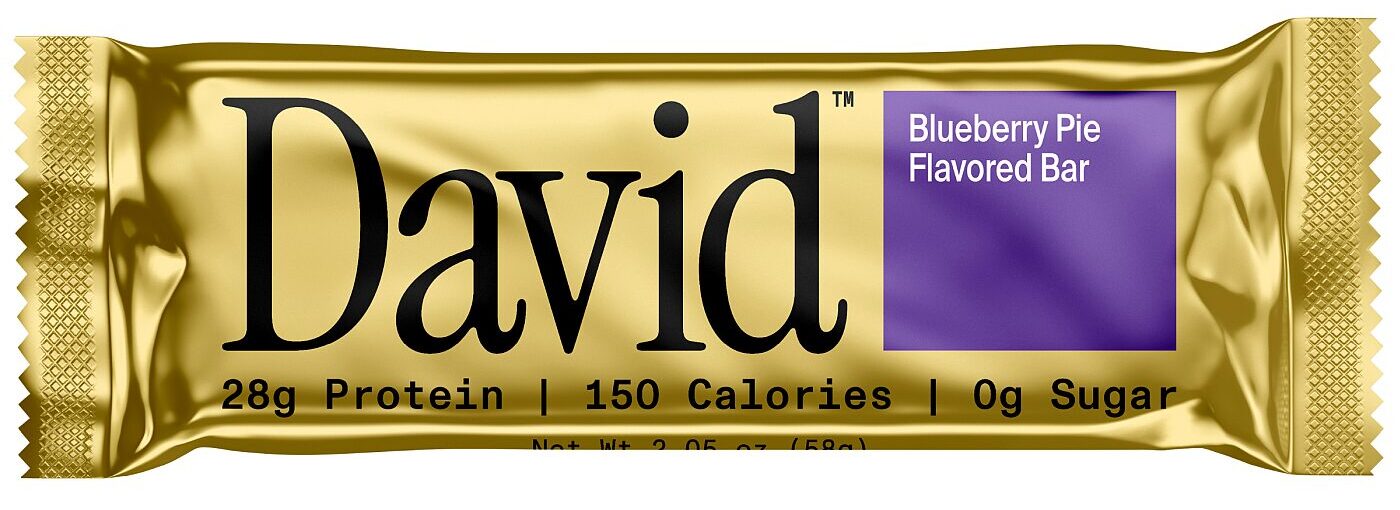
The brainchild of RXBAR founder Peter Rahal, David specializes in products with a high percentage of calories from protein, with its Gold bar packing in 28 grams of protein into a product with just 150 calories.
This is in part possible due to its use of high-intensity sweeteners and EPG, a patented ingredient manufactured by foodtech startup Epogee that looks and functions like fat, but has a fraction of the calories as it is metabolized differently.
Five-fold capacity expansion for EPG
As security of supply for EPG became “mission critical” given David’s explosive growth, David acquired Epogee last May and cut off supplies to other customers, three of which then filed a lawsuit* accusing David of excluding competitors and creating an artificial monopoly.
Several other former Epogee customers also gave sworn statements outlining the harm they suffered after losing access to EPG.
David said it was under no obligation to continue supplying EPG to plaintiffs without long-term contracts. However, Rahal acknowledged this week that none of Epogee’s customers had such agreements in place prior to the acquisition, while the plaintiffs say long-term contracts were neither offered nor solicited as they did not know that a sale was imminent.
Speaking to AgFunderNews on Tuesday, Rahal said: “The reality is our David demand, when we did the acquisition, was actually 120% or eventually 150% of Epogee’s capacity. Last summer, we had to go out of stock on all items.
“Now we’ve expanded EPG capacity to the point where we’re really going to go out and look for commercial partners. Interest is very high because this is a super innovative [ingredient].”
David, which brought on ex-Kraft Heinz principal scientist Dr. Mitchell Culler as director of R&D at Epogee last fall, has also been recruiting applications specialists and refreshing the firm’s website and marketing materials as it builds its b2b strategy.
New distribution in Walmart, Target, move planned into ice cream
David began life online as a direct-to-consumer brand, expanded onto Amazon, and is now building a presence in brick-and-mortar retail, said Rahal.
“We’re expanding distribution nationwide with Target and Walmart in Q1 and launching at Costco in the Texas region. Business is good, we’re ahead of our plan, and we’ve built redundancies on supply, so we are in a good position.”
When it comes to David’s explosive success, he said, the protein trend shows no sign of abating.
And most people shopping for protein are looking for “the most protein with the least amount of calories,” he claimed, which is David’s core proposition.
“The protein to calorie ratio concept is a really powerful message. People want protein; they value protein and their price elasticity is [less] sensitive when it comes to protein, because it’s [seen as] the most valuable macronutrient.”
For GLP-1 consumers, meanwhile, protein is also top of mind said Rahal, who is looking to take the David brand into the ice cream aisle later this year: “We can make a product that is very indulgent and has great nutrition. And I think there’s nothing in the market that can do that. We’re making a classic [snacking/dessert] occasion very permissible.”

EPG: Looks and behaves like fat, with a fraction of the calories
To make EPG (esterified propoxylated glycerol), which can be listed on food labels as “EPG (modified plant-based oil),” Epogee splits plant-based oils such as canola into glycerin and fatty acids, inserts a food-grade link, and reconnects them.
As EPG is resistant to lipase, an enzyme that breaks down fat in the body, hardly any of its calories are released. For context, 1g of fat contains 9 calories, while 1g of EPG contains just 0.7 calories.
This proved highly appealing to David, which seeks to reduce the percentage of energy coming from fats and carbohydrates in its protein bars.
Unlike Olestra, which had a lower melting point (and messy side effects) or fat replacers made from sugars, gums, starches or fibers, EPG functions like fat both in food products and in the human body because it’s made from fat.
Are David bars ‘ultra processed?’
While David is using several ingredients that might not belong in Grandma’s kitchen cupboard from EPG to sucralose, allulose, and maltitol, its success demonstrates that consumers will tolerate so-called “ultra-processed” foods if they see a clear benefit, claimed Rahal.
“If you’re eating a fried, salty snack that has no protein, but is delicious, that can create a problem. It’s really about nutrient density.”
Ultimately, David is hitting three boxes that many consumers are looking to tick when they shop for snacks, he said: “Highlighting protein, calories and sugar has been the most effective [marketing strategy].”
The EPG lawsuit
Asked whether Epogee’s former customers had been hung out to dry after the acquisition, Rahal said: “If you didn’t have a supply agreement, you weren’t getting supplies. David had a supply agreement that was most favored nations for inventory and that’s kind of an abstract thing that people don’t understand.”
As to whether David had sold any EPG to third parties since acquiring Epogee, Rahal said: “No. We’ve been working on terms with people and putting commercial effort towards that, but we haven’t sold any [yet].”
On whether David would now supply the firms that were suing him for access to EPG given that more capacity is now available, he said: “They sued us, so we have to go through the [legal] process. The lawsuit and Epogee having capacity to sell are separate things.” [Editor’s note: Plaintiffs in the case recently filed their third amended complaint vs David.]
On supplying companies with whom David might directly compete, Rahal said: “None of them we’re talking to are [direct competitors].”
Quizzed on whether he could have avoid getting embroiled in litigation by handling supply issues with former customers differently, he said: “I think in retrospect, perhaps, but it is what it is.”
*The case is OWN Your Hunger, Lighten Up Foods, and Defiant Foods vs Linus Technology (trade name: David Protein), Epogee, and Peter Rahal, filed in the Southern District of New York on June 2, 2025. Case: 1:25-cv-04544
Further reading:
More EPG customers share tales of woe in David Protein, Epogee litigation
Peter Rahal, David Protein, sued over ‘bait & switch’ scheme to monopolize Epogee’s fat replacer