
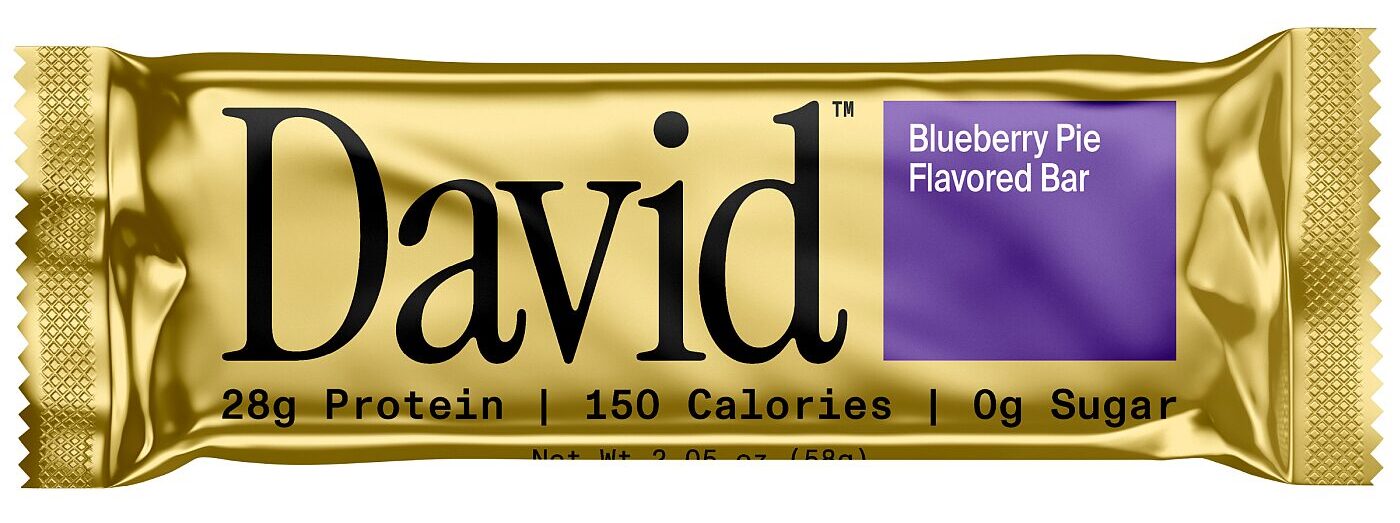
Plaintiffs suing protein bar maker David Protein in a high-profile antitrust suit say they face “imminent permanent closure” if the court does not grant a preliminary injunction forcing David to keep supplying them with a key ingredient while the case proceeds.
The dispute began earlier this year after David Protein acquired a foodtech firm called Epogee, which makes an ingredient called EPG that looks and functions like fat, with a fraction of the calories.
Three Epogee customers who claim that they built their business around EPG only to abruptly lose access filed a lawsuit accusing David of excluding competitors and creating an artificial monopoly.
Several other food companies have since supplied signed sworn statements outlining the harm they also claim to have suffered after losing access to the ingredient.
David Protein, however, says it is under no obligation to keep selling EPG to firms that have not signed long-term supply contracts and says formulators can choose from an “abundance” of alternatives.
Plaintiffs: ‘Moribund yet recoverable’
In a November 7 court filing, the plaintiffs—OWN Your Hunger, Lighten Up Foods, and Defiant Foods—say they face collapse unless the court forces David to restore supplies of EPG while the case proceeds.
“Plaintiffs, along with many other businesses… are moribund yet recoverable, teetering at the precise inflection point where judicial intervention can still preserve competition. But without immediate relief, they face imminent permanent closure as lease deadlines approach, skilled personnel accept other positions, and equipment maintenance lapses.”
If they win this injunction, but ultimately lose the case, David will only be required to supply a relatively small amount of EPG to the three plaintiffs for a limited time and can “discontinue supply immediately” if it wins, say the litigants.
Refusing to grant the injunction would cause “permanent elimination of the only alternative manufacturers in multiple food categories,” it adds, arguing that brands that have reformulated to replace EPG since David acquired Epogee have been forced to “compete in entirely different categories with degraded products.”
David Protein: Plaintiffs ‘do not come close to establishing unlawful monopolization’
David Protein, however, says the market it is alleged to have monopolized does not exist.
“No consumer is alleged ever to have asked a grocery clerk which supermarket aisle contains EPG-based products,” said the firm in a recent court filing. “And it is hard to imagine any consumer thinking he needs to choose between one plaintiff’s chicken sauce and another plaintiff’s chocolate bars; they do not compete with one another.”
As David owns Epogee’s patents on EPG, meanwhile, it is under no obligation to sell EPG to other companies, claims the firm, which says it needs “all available EPG supply at present to meet continued growing demand for our own products.”
Finally, plaintiffs’ “ill-defined theory that there must have been something nefarious in David Protein’s acquisition of Epogee because nobody would spend $75 million to buy a company that was losing money defies both logic and experience,” it argues.
“People buy unprofitable companies out of bankruptcy all the time. If a company is not well run or operating at sufficient scale, for instance, there can be any number of ways to turn around its performance such that an investment is economically rational.
“Plaintiffs have now filed three complaints and had multiple chances to explain why the second amended complaint is viable. They have failed to do so. The time has come to end this case.”
What is EPG?
- EPG (esterified propoxylated glycerol) is a fat that contains 0.7 calories per gram, compared with 9 calories for regular fat.
- It’s not Olestra: Unlike Olestra, which had a lower melting point (and messy side effects) or fat replacers made from sugars, gums, starches or fibers, EPG functions like fat because it’s made from fat, says Epogee.
- Low-calorie: As EPG is resistant to lipase, an enzyme that breaks down fat in the body, hardly any of its calories are released.
- Labeling: EPG can be listed on food labels as ‘EPG (modified plant-based oil)’
- How it’s made: Epogee splits plant-based oils such as canola into glycerin and fatty acids, inserts a food-grade link, and reconnects them.
*The case is OWN Your Hunger, Lighten Up Foods, and Defiant Foods vs Linus Technology (which operates under the trade name David Protein), Epogee, and Peter Rahal, filed in the Southern District of New York on June 2, 2025. Case: 1:25-cv-04544