Biographica, a startup deploying AI and machine learning to accelerate and improve the crop trait development process by identifying high value targets for gene-editing, has raised a £7 million ($9.5 million) seed round.
The round was led by Faber VC with participation from SuperSeed, Cardumen Capital, The Helm, and existing investors Chalfen Ventures and Entrepreneurs First. The cash injection will be used to expand Biographica’s proprietary data collection, extend its AI platform to new crop traits, and deepen commercial relationships across the seed industry.
The London-based firm, which has completed pilots with multiple partners including two of the top-five global seed companies, also announced a new partnership with BASF’s vegetable seeds business Nunhems, although it cannot yet share details of what the two will be working on.
“We’ve seen AI reshape pharma, turning trial-and-error pipelines into learnable biological systems. We’re bringing that same discipline to crops.” Cecily Price, CEO, Biographica
The discovery bottleneck
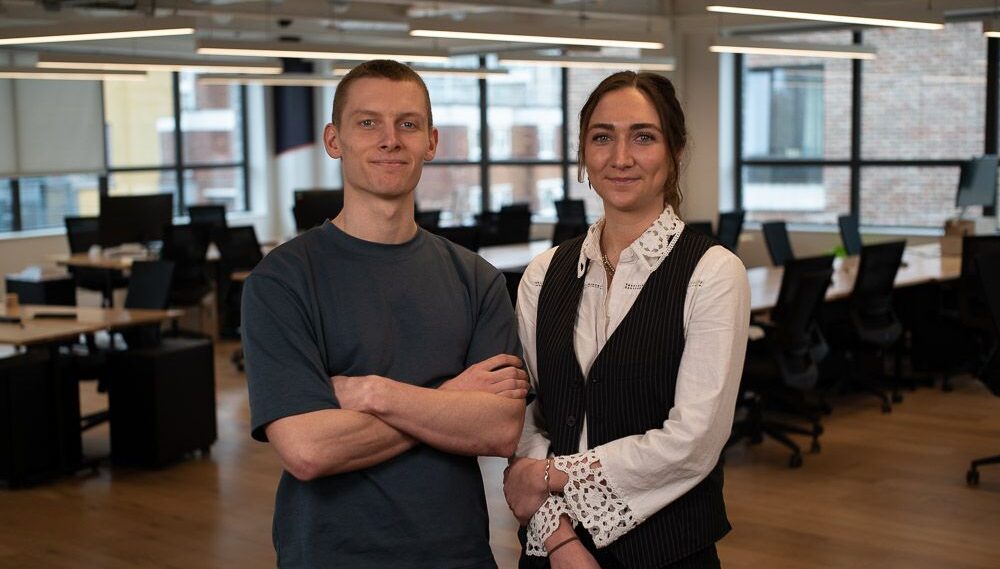
Developing improved crop varieties remains hugely costly and time-consuming, says Biographica, which was founded in 2022 by Cecily Price and Dominic Hall, PhD, who combine expertise in genetics, AI/ML, and computational biology.
The bottleneck, they say, is clear: We now have tools such as CRISPR that can edit genes with great precision, but they can’t tell us which genes control key traits such as drought tolerance, disease resistance, or nutrition, or how to edit them.
“Current pipelines rely on literature mining, scientist intuition, and high-throughput testing. These methods deliver <1% hit rates and force seed companies to test thousands of edits to find one that works, while overlooking many novel genes with real potential. Without better guidance, innovation remains slow, expensive, and risky.”
Biographica aims to break this bottleneck by applying AI to rapidly identify the genes that matter most and provide instructions on how to edit them.
In pilots with leading seed and breeding companies, it identified proven gene targets 12x faster than traditional methods but was also able to uncover novel targets that traditional methods miss, which could potentially enable new, high-value traits to reach the market, claims the firm.
It is now combining its platform with rapid experimental validation to create a “lab-in-the-loop” model popular in drug discovery whereby platforms continue to “self-improve” though constant feedback.
“With climate change intensifying the pressure on agricultural systems, improving crop genetics is the most powerful lever we have to sustainably increase yields and build resilience.” Sofia Santos, partner, Faber VC
Genes and traits: From correlation to causation
Currently, Hall told AgFunderNews, many firms still rely on GWAS (Genome-Wide Association Studies) that scan the genomes of many plants and statistically link DNA variants to traits by asking: which variants show up more often in plants with the trait?
QTL (Quantitative Trait Loci) mapping, in turn, crosses plants with different traits and tracks how DNA regions and the trait are inherited together in offspring, which narrows down regions of the genome likely influencing the trait.
The challenge, says Hall, is that these approaches prove correlation, not causation, and do not prioritize or rank genetic targets or “hits.” GWAS has “drawbacks in that it’s extremely hard to go beyond just ‘this variant is associated with this trait’ to get a more mechanistic understanding of why this variant might be associated with that trait.”
Biographica’s platform, by contrast, deploys multi-modal machine learning (combining sequential and structural data with wider physiological context) to predict which genes are most influential, how they interact with others, and which are likely to be the best targets for gene editing with fewer unwanted side effects.
At the root of this are foundation models trained on multi-modal genomic datasets that capture both gene/gene and gene/trait interactions. The models then predict genes most likely to causally impact a trait and then design edits accordingly. Experimental results are then fed back into the models, delivering continuous improvement.
Over time, this delivers higher hit rates (identifying the genes that matter), more quickly, claims the firm, which can provide partners with gene targets for high value traits in key crops that can serve as a starting point for their in-house trait development work, or it can provide experimentally validated traits that customers can move directly into the trial phase.
Commercial validation
As for raising money, having commercial validation in the form of partnerships with BASF, Cibus (on disease resistance in rapeseed/canola) and other key players was key, said Price.
“We had a slightly broader range of target VCs we could speak to because we’re at that intersection of AI/ML, climate, biotech, and ag, although the flip side of that is you’re speaking to investors who aren’t ag native or specialists and have quite a heavy skepticism of the market.
“So being able to say we have contracts with some of the largest seed companies globally, that definitely helped, especially with some of the ways those initial contracts and projects were structured, as they also served as some of the technical validation.”
Hall added: “We’re in a space where true technical validation is a multi-year process, but having initial proof points that show we’re able to achieve high accuracy rates within commercial settings definitely helped us.”

Crop- and trait-agnostic platform
According to Hall, Biographica’s models are “pre-trained on very large corpuses of sequencing and genetics data from the public domain. We then fine tune these pretrained models on data that we collect ourselves.”
“When we started out,” said Price, “We spoke to lots of different seed companies and potential customers, and I repeatedly heard people say, We’re tired of companies coming to us and saying: We’ve got great machine learning capabilities. Now give us all your data and we’ll show you how good they are.
“So from the get go, we set up to design the first iteration of our platform to be independent of customer or partner data. So the baseline is we use public data and Biographica-generated data from our lab, and then on top of that, we use cross species data and multimodal data to train our models.”
Biographica then compared the results from its platform with gene-trait data that partners had already proven internally. This validated both the speed and efficacy of Biographica’s approach, but also identified novel genes that partners “maybe hadn’t looked at before,” added Hall.
“Obviously crop trait development is a years-long process, but we already have multiple commercial partnerships with these novel targets progressing through to downstream R&D stages within customer pipelines.”
While many large seed and breeding companies are deploying AI and ML in-house, they are often tailored to very specific crops and traits, whereas Biographica’s platform is crop- and trait-agnostic, said Price, who said the firm had worked with partners across crops including vegetables, tomatoes, chickpeas, oilseeds, and major cereal crops.
Further reading:
InEdita Bio on gene editing 2.0: ‘We need to put together plant genetics with microbial genetics’
With trials underway in multiple markets, OlsAro takes salt-tolerant wheat closer to market
Phytoform and Corteva partner on AI to boost disease resistance in corn