
Foodtech company Edacious and the Regenerative Organic Alliance (ROA) have launched a four-year-long partnership to test the nutritional makeup of “regenerative organic certified” (ROC) foods and highlight the value of regenerative organic practices in agriculture.
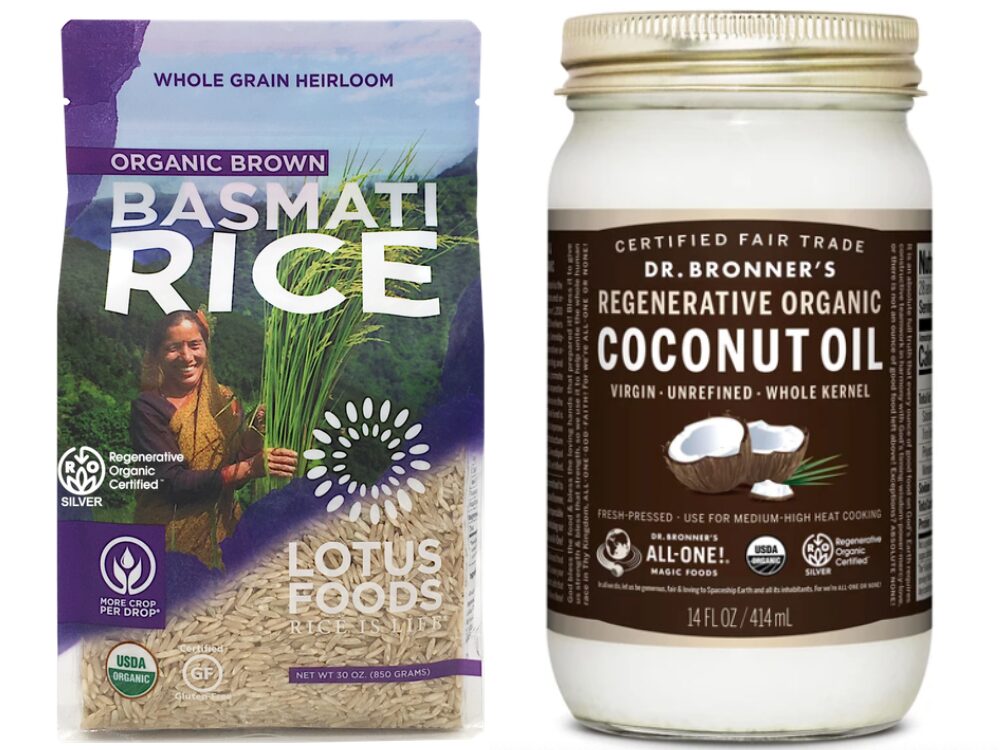
The ROC certification uses the USDA’s Certified Organic as a baseline, then adds additional criteria based on three regenerative-organic pillars: soil health, animal welfare, and social fairness. Products that meet this criteria can bear the ROC certification on packaging labels.
ROA and Edacious will use the latter’s rapid testing and data insights platform to analyze more than 200 food products bearing the ROC designation.
However, the project aims to go beyond simply cataloging nutritional facts.
“With Edacious and the Regenerative Organic Alliance, this data becomes more than numbers: it becomes a story about how regenerative organic systems deliver measurable nutritional benefits,” Eric Smith, CEO of Edacious, explains to AgFunderNews.

Turning data into product differentiation
Edacious has developed software that maps the nutritional density of whole foods—from meat and milk to fresh produce and grains—to show customers how their products stack up nutritionally vs industry averages. Customers can take this lab-verified data and show it to buyers and consumers to promote the superior quality of their items.
The Edacious platform measures the complete spectrum of macro and micronutrients including fats, proteins, carbohydrates, vitamins, minerals, and contaminants such as glyphosate and other common pesticides.
Earlier this year, at the RFSI Forum in Brussels, Smith said Edacious was “beginning to see strong, systematic evidence that shows how nutrition is actually mediated into the plant and thereby into our bodies.”
To that end, the Edacious-ROA project will highlight, “unique nutritional profiles” of ROC food and ingredients, and in the process show “the added value of regenerative organic practices,” says Smith.
Beyond the benefits for individual companies, collective insights from the project could “help build a broader narrative that regenerative organic practices are not only better for the planet, but also for human health—turning data into a powerful tool for differentiation, market positioning, and long-term industry change,” he adds.
22% YoY growth for ROC food products
The Edacious-ROA relationship was born earlier this year, around the time Christopher Gergen joined ROA as CEO.

“Before coming to ROA, I was aware of Edacious’ pioneering work and, in my new role, was keen to bring their rigorous scientific process for capturing the nutritional benefits of regenerative organic agriculture into the ROA community,” Gergen tells AgFunderNews.
The Regenerative Organic Alliance is a group of farmers, business leaders, and experts in soil health, animal welfare, and social fairness.
Founded by the Rodale Institute, Dr. Bronner’s, and Patagonia, it was initially established to continually review the framework for granting regenerative-organic certification to products. Today, other members of the Alliance include Compassion in World Farming, Fair World Project, and the Textile Exchange.
Gergen says ROA has put the ROC label on more than 592 crops to date, and that these crops show up in over 2,600 products ranging from coffee and cocoa to eggs, proteins, wines, beans, rice, and crackers.
Citing recent data from SPINS, he says ROC products have experienced 22% growth year over year.
“As consumers become more aware of the health benefits of ROC products through our partnership with Edacious, we think this will help drive demand and be a meaningful driver for more brands carrying ROC products.”
What’s next
Edacious and the ROA will work together over the next four years to test over 200 ROC products through the Edacious Food Lab.
Analyses will include assessments of both nutritional quality and any toxicity compared to the same items produced via organic, conventional, or regenerative non-organic methods. ROA members will be able to access Edacious’ full suite of testing and reporting services through the partnership.
Of course what happens after analysis will be equally important, suggests Gergen.
“Translating these findings into language that consumers easily understand is going to be critical to drive further awareness of the health benefits of ROC products, and drive ensuing demand,” he notes.
“ROA plans to work closely with Edacious, our brands, and our retail partners to launch a data-driven storytelling campaign that brings the nutritional benefits of ROC to life.”